
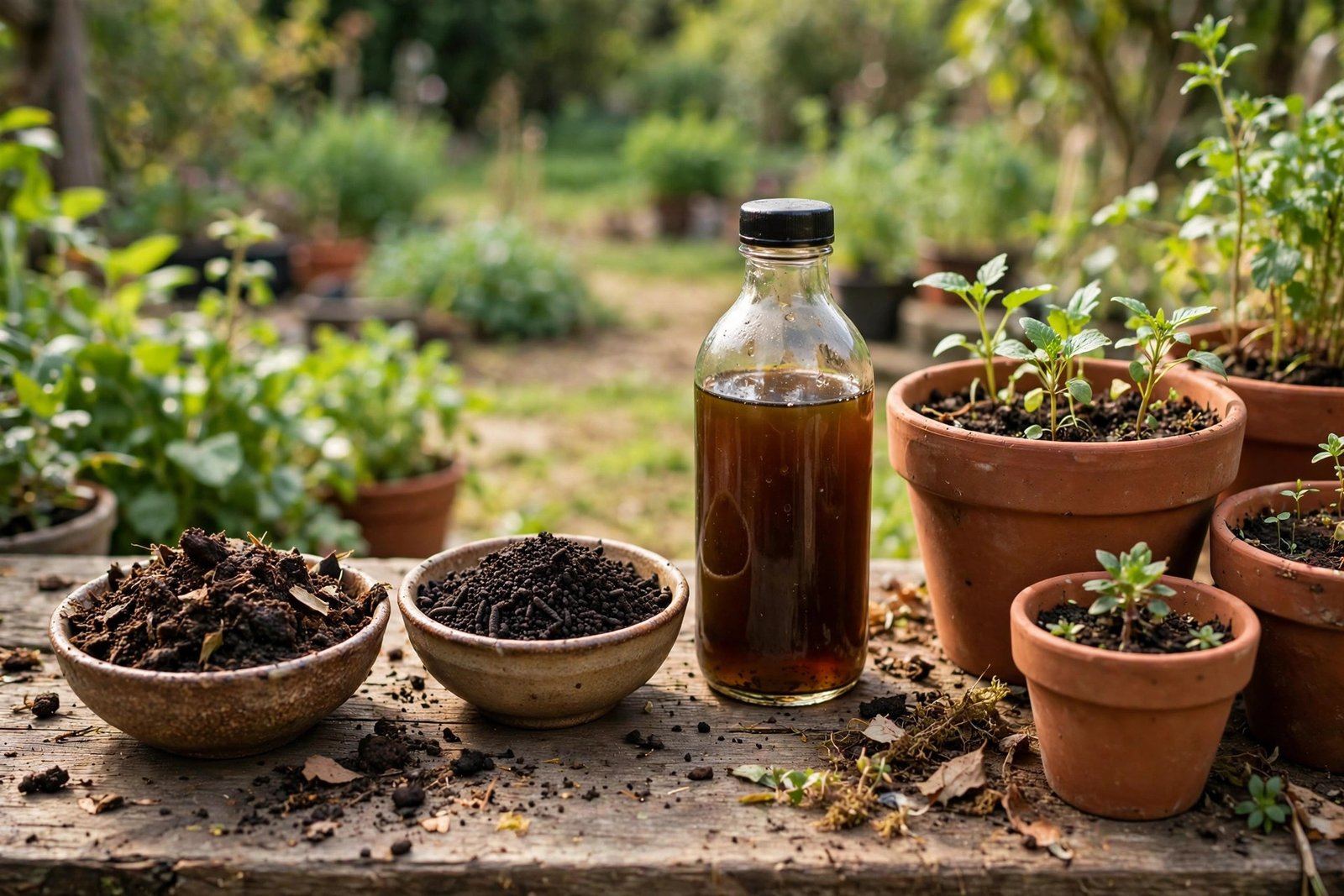
A fistful of chicken manure pellets on a basil plant, watered like trying to put out a fire — two days later the leaves had brown, crispy edges and the whole plant smelled faintly like a barnyard. That’s the moment many gardeners learn the hard truth: “natural” does not mean “can’t hurt your plants.” Rinsing the pot through with gallons of water, snipping off the burnt leaves, and apologizing to a basil plant is a rite of passage for beginners.
The options range from worm castings, compost tea, liquid seaweed, fish emulsion, coffee grounds, banana peels, and eggshells to one regrettable experiment with Epsom salt (covered below). Some of these natural fertilizers genuinely transform container plants. Others do absolutely nothing except make a balcony smell weird and attract fruit flies. Here’s the honest breakdown of what works, what sort of works, and what’s just gardening folklore dressed up as advice.
Why container plants are so hungry
Plants in garden beds sit in a huge volume of soil with a whole ecosystem feeding them. Your potted tomato has maybe three gallons of potting mix, and every time you water, nutrients wash out of the drainage holes. Cherry tomatoes (‘Tiny Tim’, the little balcony hero) can strip a 12-inch / 30 cm pot of nitrogen in about six weeks of summer watering. That’s why container plants almost always need feeding, and why “I used good potting mix” only carries you through the first month or so.
Most bagged potting mixes come with a starter charge of slow-release fertilizer that lasts 2–4 weeks. After that, you’re the plant’s only food source. If you’ve ever wondered why your second-year potted plants look sadder than your first-year ones despite identical watering, underfeeding is usually the answer — even “easy” plants stall out in depleted soil, as the easiest plants for beginner balcony gardeners guide shows.
Quick Tips:
- Feed only when plants are actively growing (spring through early autumn); never fertilize dormant or visibly stressed plants
- Always water your pots normally first, then apply liquid fertilizer — feeding dry soil is how roots get burned
- When in doubt, use half the label’s recommended strength; you can always feed again, but you can’t un-feed
- Worm castings are the safest beginner fertilizer because they’re nearly impossible to overapply
Natural Fertilizers That Genuinely Work
Worm castings: the gold standard
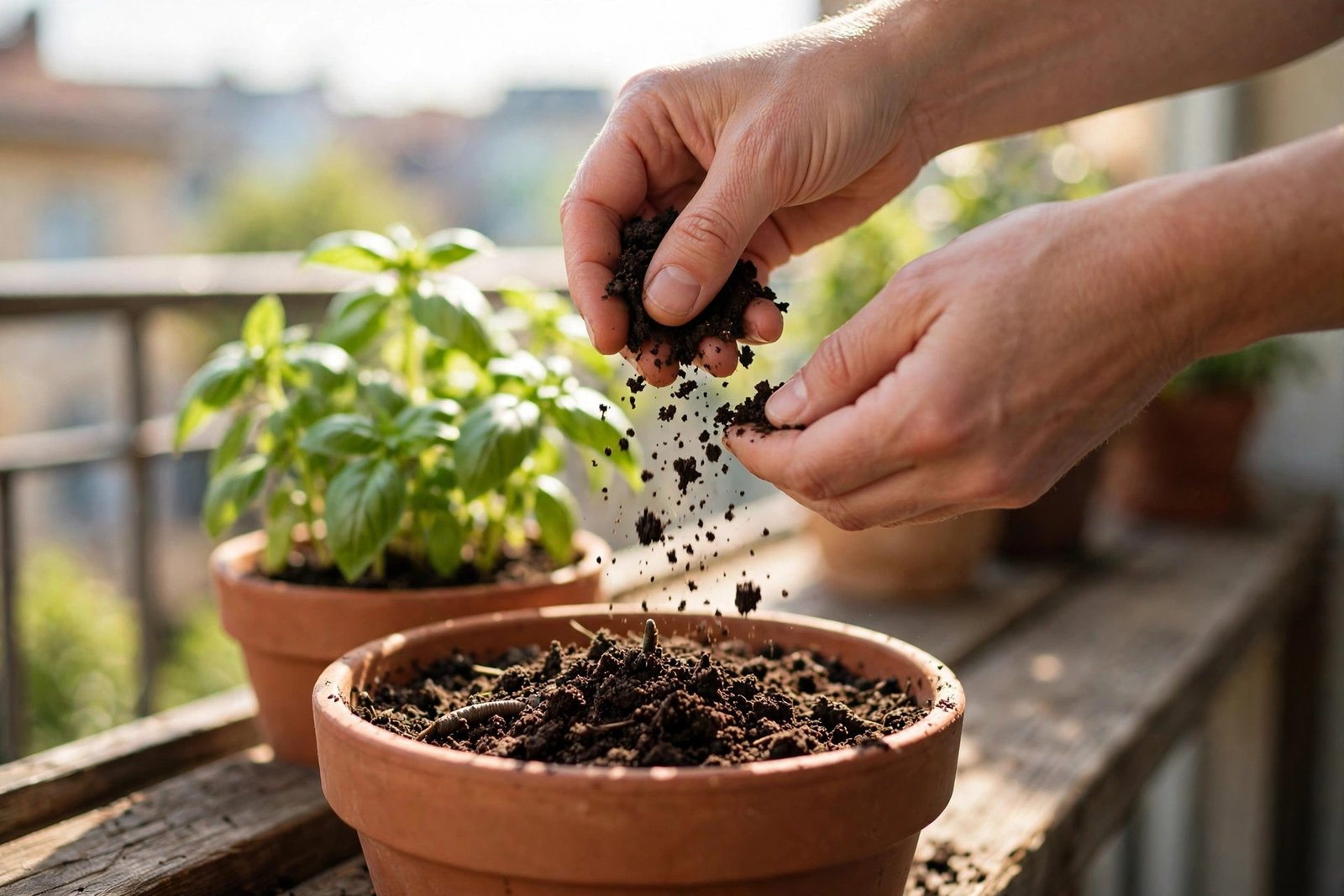
If you only buy one natural fertilizer, make it worm castings. They’re gentle (an NPK around 1-0-0), packed with beneficial microbes, and essentially impossible to overdo. Top-dress pots with a 1-inch / 2.5 cm layer every 4–6 weeks during the growing season, scratching it lightly into the top of the soil and watering it in. ‘Genovese’ basil responds within about ten days — deeper green leaves, faster regrowth after harvesting.
You can also make “worm tea” by steeping a cup of castings in a gallon (4 litres) of water for 24 hours, then watering with it. It’s not a miracle tonic the way some blogs claim, but it’s a nice gentle feed for seedlings and delicate herbs. One honest caveat: castings are low in nutrients, so for heavy feeders like tomatoes they work best as a supplement, not the whole diet.
If you make your own compost, by the way, finished compost does the same job — see the piece on composting in a small apartment for how to manage it in a one-bedroom flat without stinking the place out.
Liquid seaweed: my emergency rescue feed
Liquid seaweed extract (diluted about 1:100 — one capful per litre, roughly) is the go-to when a plant looks tired and the cause is unclear. It’s low in NPK but rich in trace minerals and growth hormones that help plants handle stress: heat, transplant shock, a missed watering. Foliar-spraying salad greens with it every couple of weeks in summer genuinely perks them up.
Is it “fertilizer” in the strict sense? Barely. Think of it as a vitamin supplement rather than a meal — use it alongside something with real nitrogen. It also won’t burn anything at proper dilution, which makes it very beginner-friendly.
Fish emulsion: powerful but pungent
Fish emulsion (usually around 5-2-2) is a proper nitrogen feed and container vegetables love it. Dilute it to half strength — one tablespoon per gallon (4 litres) — and apply every two weeks to heavy feeders like tomatoes, cucumbers, and peppers. ‘Patio Snacker’ cucumbers go from pale and sluggish to deep green and flowering within two weeks of starting a fish emulsion routine.
The catch: it smells like a fish market for about 24 hours. On a balcony with close neighbours, use it in the evening and never foliar-spray with it (the smell clings to leaves). If the odour bothers you, look for deodorized versions, or use it only for plants that live at the far end of the balcony.
Slow-release organic granular fertilizer
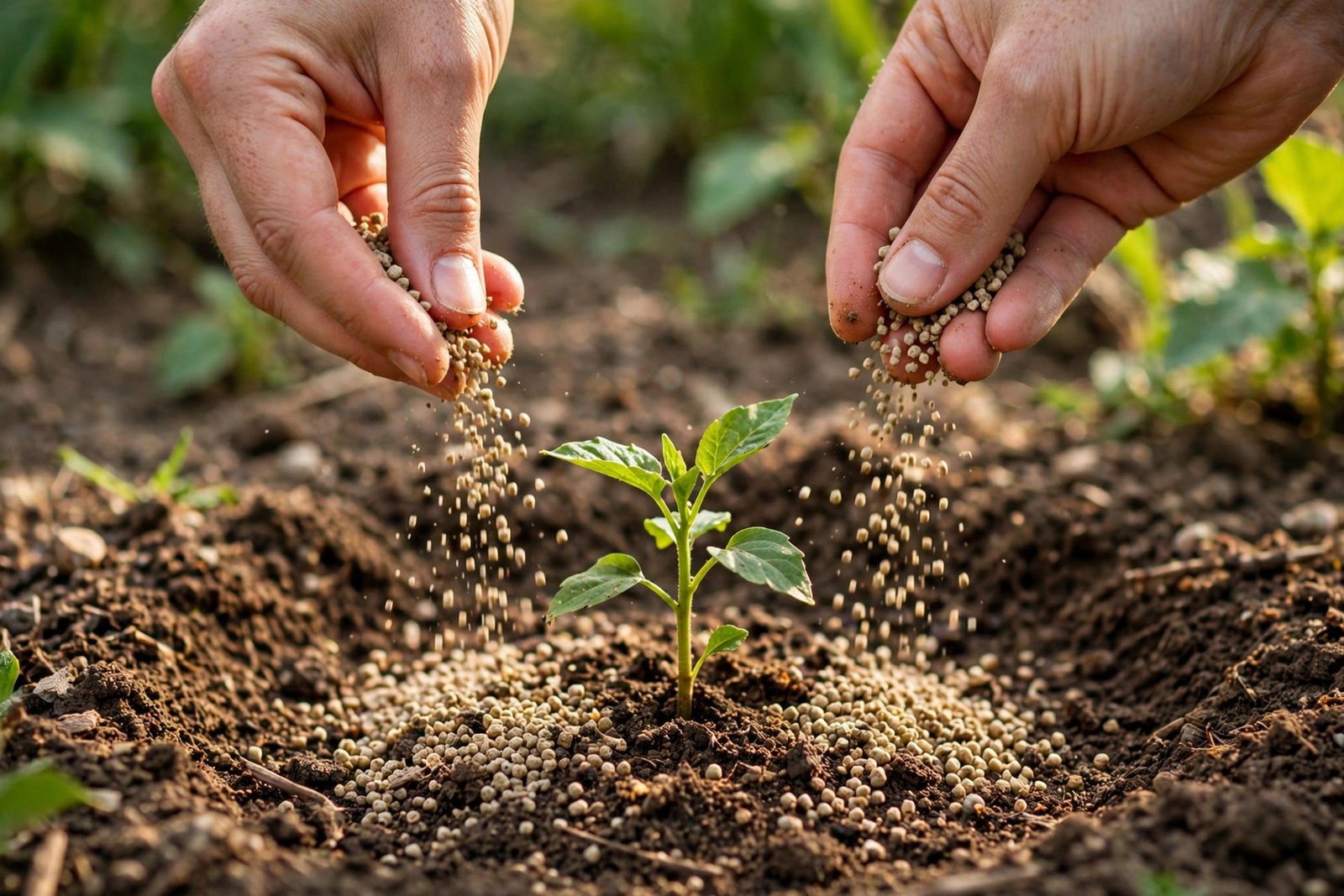
For people who forget to feed, a slow-release organic granular feed is the set-and-forget option. You scratch 1–2 tablespoons per 12-inch / 30 cm pot into the soil surface every 6–8 weeks, and the granules break down with watering. Look for something with a balanced NPK like 4-4-4 or a tomato-specific 3-4-6.
This is honestly the backbone of a solid routine. The liquids are for top-ups and rescues; the granules do the steady work. One warning from experience: don’t mix granules into dry soil and then leave the pot unwatered — water them in properly or they can sit in a salty little layer at the surface.
The “sort of works” category
Compost tea (aerated, made with an aquarium pump) has real microbial benefits, but the homemade bucket-steeped version is mostly just weak compost water. Many gardeners still make it for the ritual, but don’t count on it as actual feeding. If you want the real thing, it needs aeration for 24–36 hours and should smell earthy, never rotten.
Coffee grounds are fine in small amounts — a thin sprinkle worked into the top inch of soil, maybe once a month. They’re slightly acidic and add a bit of nitrogen as they break down. But piling them on thick as mulch is a classic beginner mistake: they compact into a water-repellent crust and grow mould. Thin layers only.
Eggshells are the most overpromised fertilizer in gardening. Crushed shells do add calcium eventually — over months to years, not days. For a container plant with an immediate calcium issue (like blossom end rot on tomatoes), eggshells are too slow to help this season. Finely ground to a powder and mixed into soil, they have some value long-term. Tossed in as chunky halves? That’s decoration, not fertilizer.
Epsom salt (magnesium sulfate): one regrettable experiment. It’s useful only if plants genuinely lack magnesium — yellowing between leaf veins on older leaves, confirmed by growing in a soilless mix. Dosing peppers with it “just in case” achieves precisely nothing. Don’t supplement blindly; most balanced fertilizers already contain magnesium.
What I actually do: my feeding calendar
Here’s a real routine, refined over years of practice. Adjust for your climate, but the rhythm works:
- March–April: When potting up seedlings and refreshing containers, mix slow-release organic granules into the perfect potting soil mix at planting time. New plants get worm castings around the base, nothing stronger, for the first two weeks.
- May–June: Everything gets its first full feed. Heavy feeders (tomatoes, cucumbers, peppers) get fish emulsion every two weeks at half strength. Herbs and salad greens get worm casting top-dressing monthly and seaweed spray every couple of weeks.
- July–August: Peak hunger season. Granules get topped up every 6–8 weeks. Anything flowering or fruiting stays on the fish emulsion schedule. Skip feeding entirely during heatwaves over 95°F / 35°C — stressed plants can’t use nutrients and the salts just accumulate.
- September: Taper off. Last feed for most things in early September so growth hardens before autumn. Herbs meant to overwinter indoors get their final feed mid-September at the latest.
And the mistakes worth pinning to the wall: never feed a plant you just repotted (wait two weeks — fresh mix already has nutrients and damaged roots burn easily; see how to repot a plant step by step), and never feed a plant that’s wilting from underwatering until you’ve rehydrated it first. The overwatering vs underwatering guide covers how to tell which is which, because feeding a drowning plant is one of the fastest ways to finish it off.
Frequently Asked Questions
Can natural fertilizers burn plants?
Yes, absolutely — as the chicken-manure-pellet basil incident shows. “Natural” means derived from natural sources, not “gentle.” Fresh manure, concentrated urine-based feeds, and over-strong fish emulsion can all burn roots. The genuinely hard-to-burn options are worm castings, liquid seaweed at proper dilution, and finished compost. With everything else, start at half strength.
How do I know if my plant needs feeding?
Pale new growth, smaller-than-usual leaves, slow growth despite good light and water, and lower leaves yellowing while the plant otherwise looks okay are all classic hunger signs. That said, yellow leaves have many causes — check the notes on yellow houseplant leaves before assuming fertilizer is the fix, because feeding a plant with root rot just makes things worse.
Is it worth making my own fertilizers?
Worm castings from a small worm bin: yes, if you have the space and don’t mind the worms (many find them weirdly charming). Banana peel tea and eggshell powder: honestly, the results are so mild that the effort is better spent elsewhere. A bag of quality worm castings and a bottle of liquid seaweed cover 90% of what a balcony garden needs.
Can I use natural fertilizers on houseplants too?
Yes, with two adjustments: feed at quarter to half strength, and feed less often (monthly in spring/summer is plenty). Indoor plants grow slower and their pots dry slower, so nutrients accumulate more easily. Fish emulsion works indoors but the smell will test your commitment — seaweed and castings suit indoor use; save the fish emulsion for the balcony.
Do I need to stop fertilizing in winter?
For most plants, yes. Growth slows or stops in low winter light, and uneaten fertilizer salts build up in the soil. Stop feeding outdoor containers around early autumn and houseplants by October, then resume when you see new spring growth. The exception: plants under grow lights that are actively growing can be fed lightly through winter.
If there’s one thing to take from all this, it’s that feeding container plants is less about finding a magic product and more about building a boring, consistent routine. A monthly handful of worm castings and a sensible liquid feed on schedule will outperform any exotic tonic applied in a panic. Start gentle, watch how the plants respond over two or three weeks, and adjust. Plants tell you what they need — the language just takes some learning, which mostly involves staring at leaves and feeling slightly ridiculous.

2 Comments on “Natural Fertilizers for Container Plants: What Actually Works”