A first attempt at overwintering often ends with a funeral: a gorgeous chilli plant grown all summer — covered in ripening peppers — carried inside when October turns cold, set on the kitchen windowsill, and watered exactly the way it was all summer. Within three weeks every leaf drops, the stems go soft, and the whole thing collapses into a sad, mouldy heap. Loved to death with water, in a dark corner, with no transition whatsoever. Three mistakes in one plant.
Chillies, pelargoniums, citrus, rosemary, bay, and fuchsias all overwinter well — most keep going strong for years. Overwintering isn’t complicated — it’s just a different set of rules from summer growing, and plants will forgive a lot if the big things are right: timing, light, water, and pests. Here’s the whole simple system.
Which plants are worth bringing in
Not everything deserves a winter indoors. Be honest about what earns its windowsill space, because indoor room is precious and every plant you bring in is a plant you’ll be caring for all winter.
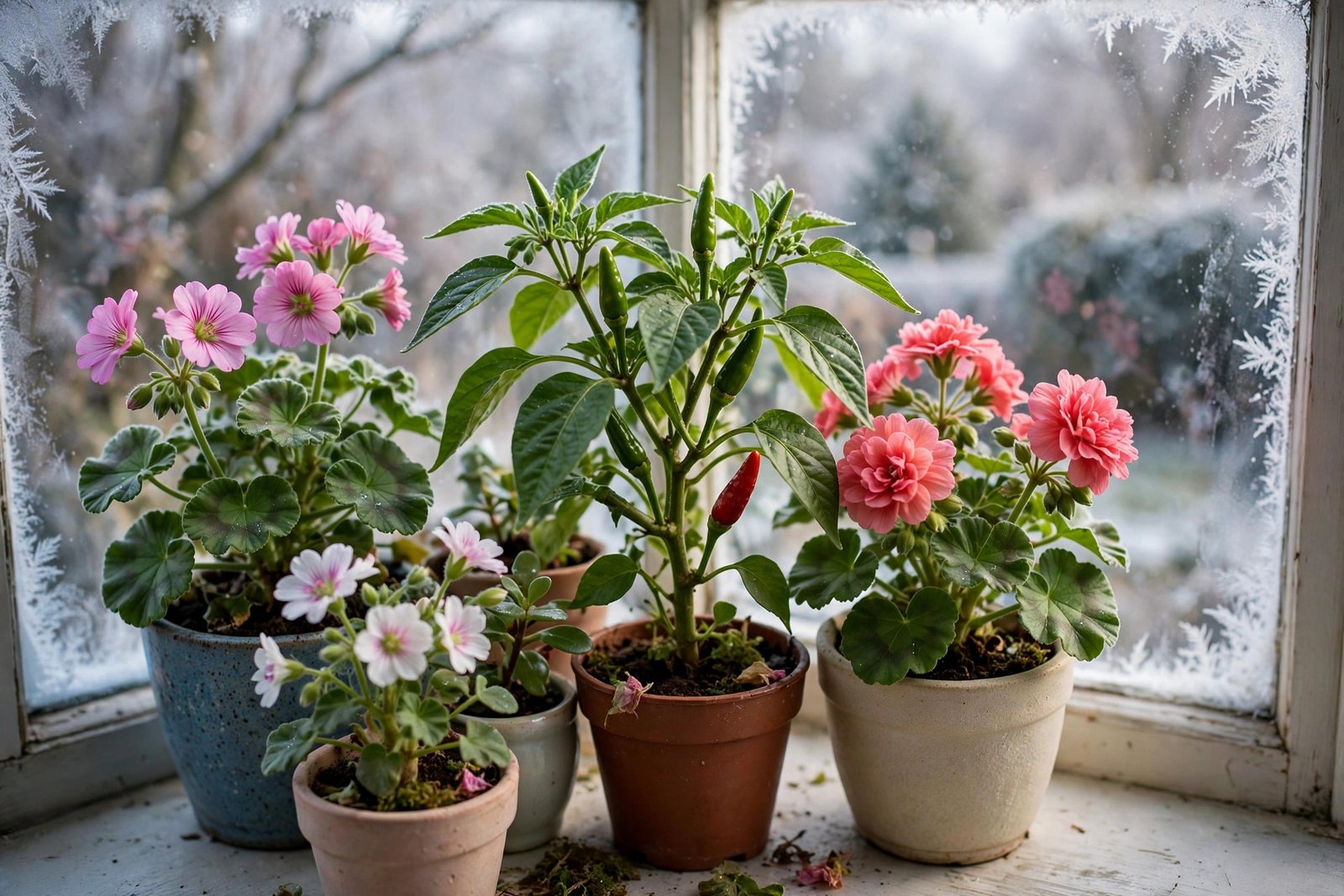
Definitely worth it: chilli and pepper plants (they’re perennial and produce far more in year two), pelargoniums/geraniums, citrus trees, bay, rosemary (in cold areas), fuchsias, brugmansia, and any expensive or sentimental plant. A second-year chilli plant will out-yield any first-year seedling — often twice the peppers, weeks earlier.
Maybe, if you have room: tender herbs like lemon verbena, scented-leaf pelargoniums, young lavender plants. These are borderline and need decent light to make it worthwhile.
Not worth it: annuals like tomatoes, cucumbers, and basil. They won’t survive indoors happily and they’re cheap to restart from seed in spring. Saving the tomato is tempting, but attempts usually end with a leggy, spider-mite-infested mess that produces nothing. Let them go. Save the seeds instead if it’s a variety you love.
Quick Tips:
- Bring plants in before night temperatures drop below 50°F / 10°C — don’t wait for frost warnings
- The number one killer of overwintering plants is overwatering, not cold — when in doubt, don’t water
- Quarantine new arrivals away from houseplants for two weeks while you watch for pests
- A plant that drops leaves after coming inside is usually adjusting, not dying — give it three weeks before panicking
The move indoors: timing and preparation
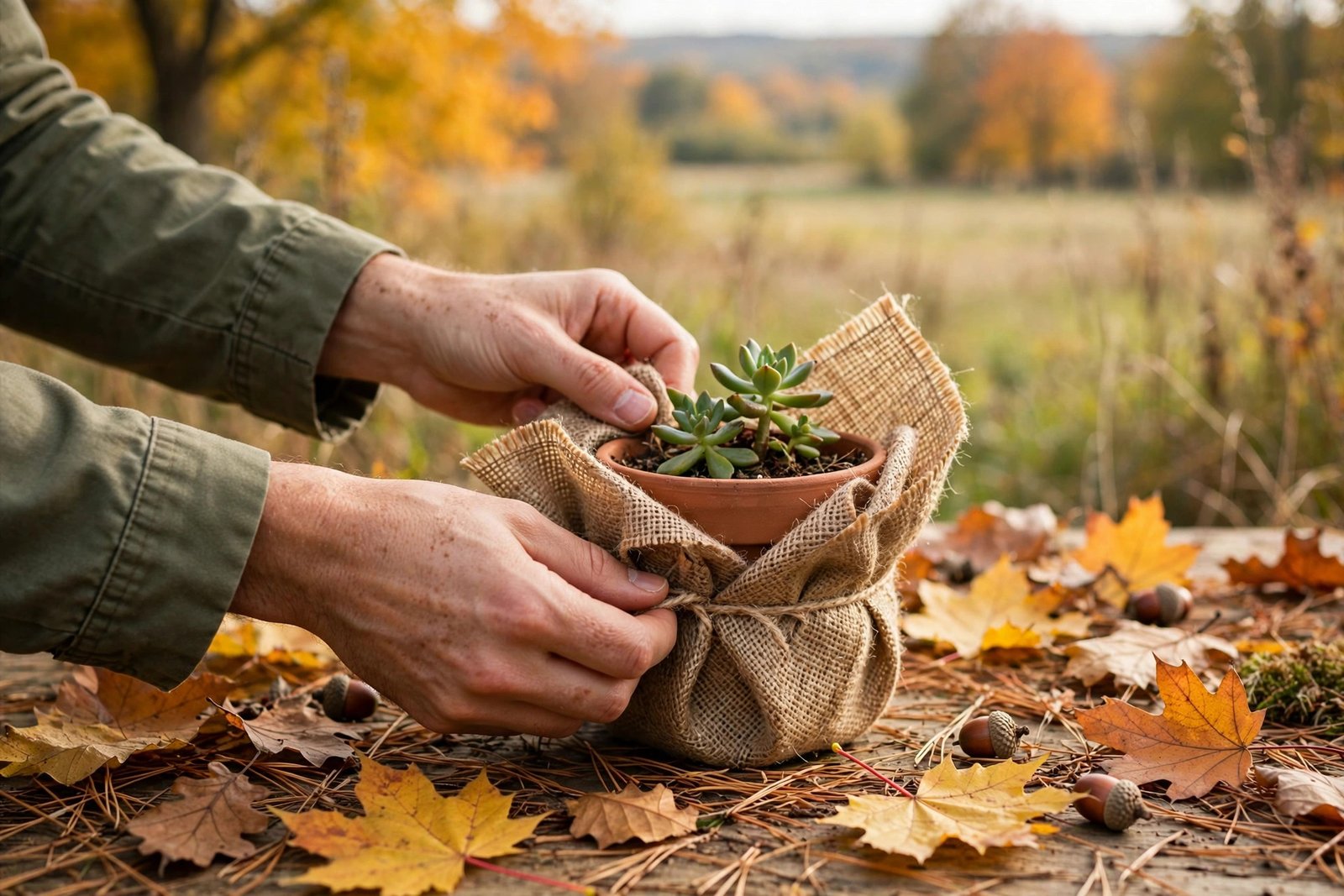
Timing: bring tender plants in when nights start dipping toward 50°F / 10°C, typically weeks before your first frost. Tropical plants (citrus, brugmansia) prefer to come in even earlier, around 55°F / 13°C nights. Waiting until frost is forecast means the plant is already stressed, and a stressed plant adjusts badly. Doing the big move-in over one October weekend works well as a seasonal ritual.
The pest inspection is the step everyone skips and regrets. Outdoor plants always carry hitchhikers — aphids, spider mites, whitefly, scale — and indoors, with no predators and dry warm air, those populations explode. Before anything crosses the threshold:
- Inspect every leaf, especially undersides, and all stem joints
- Hose the whole plant down hard with water, knocking pests off physically
- For anything suspicious, treat with insecticidal soap or neem oil, then repeat in a week
- Check the soil surface for fungus gnats and slugs hiding under the pot rim
Skipping this with a pelargonium can mean an entire winter battling whitefly across every houseplant in the home. Two hours of prevention beats four months of war. The natural pest remedies guide has the full treatment playbook if you find something.
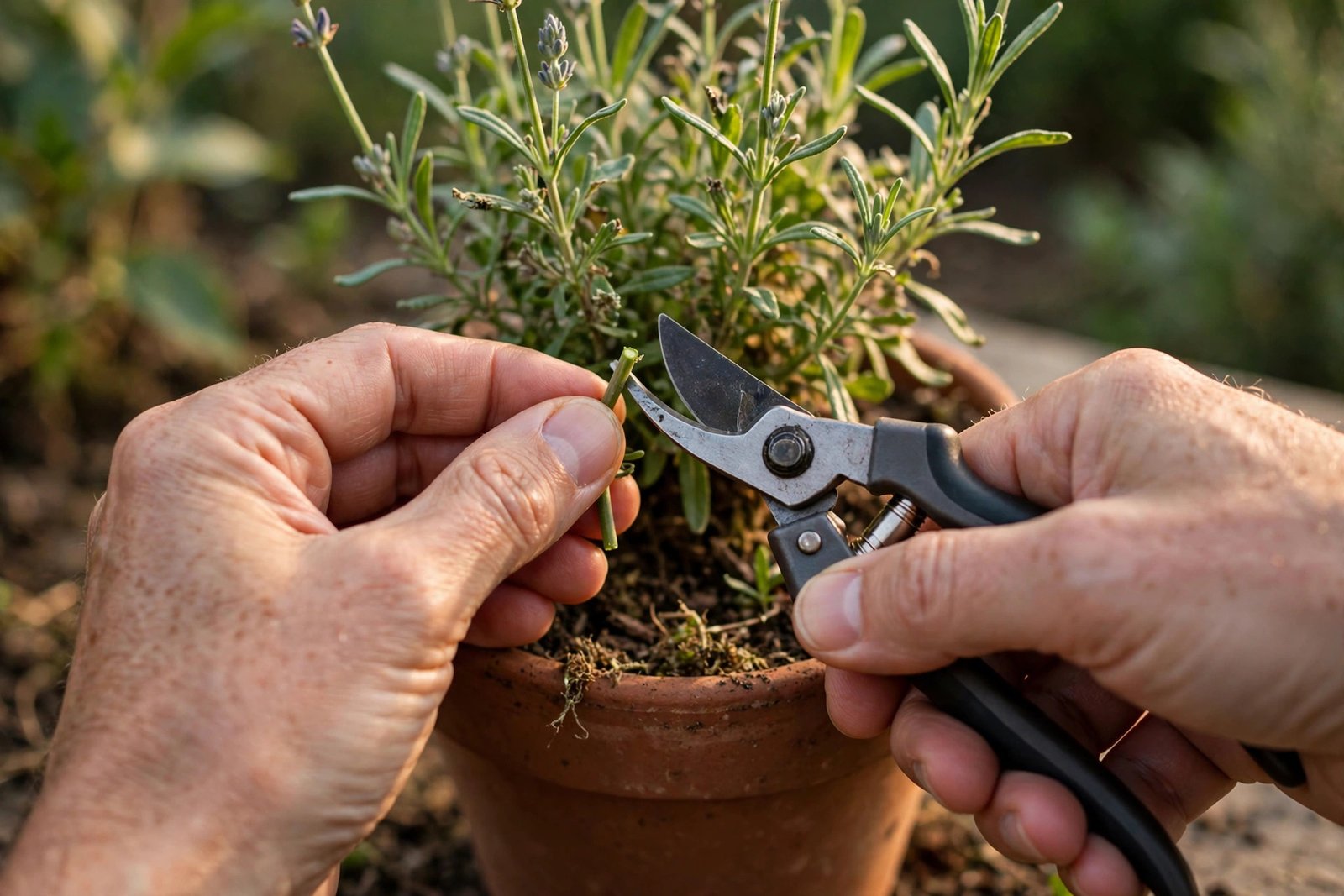
Prune before bringing in. Cut plants back by about a third — remove leggy summer growth, spent flowers, and any damaged stems. This does three things: it fits the plant in your space, it reduces the leaf area the roots need to support in low light, and it removes the pest habitat hiding in dense growth. Chillies and pelargoniums respond especially well to a hard autumn prune; they regrow vigorously in spring. Don’t prune citrus hard, though — just tidy it.
Repot only if necessary. If the plant is root-bound, move it up one size with fresh mix. But don’t repot just for fun — root disturbance plus the indoor transition is a lot at once. And check the pot has drainage; winter overwatering kills more plants than anything else, and a pot with no holes is a death trap indoors.
Indoor conditions: light, water, humidity
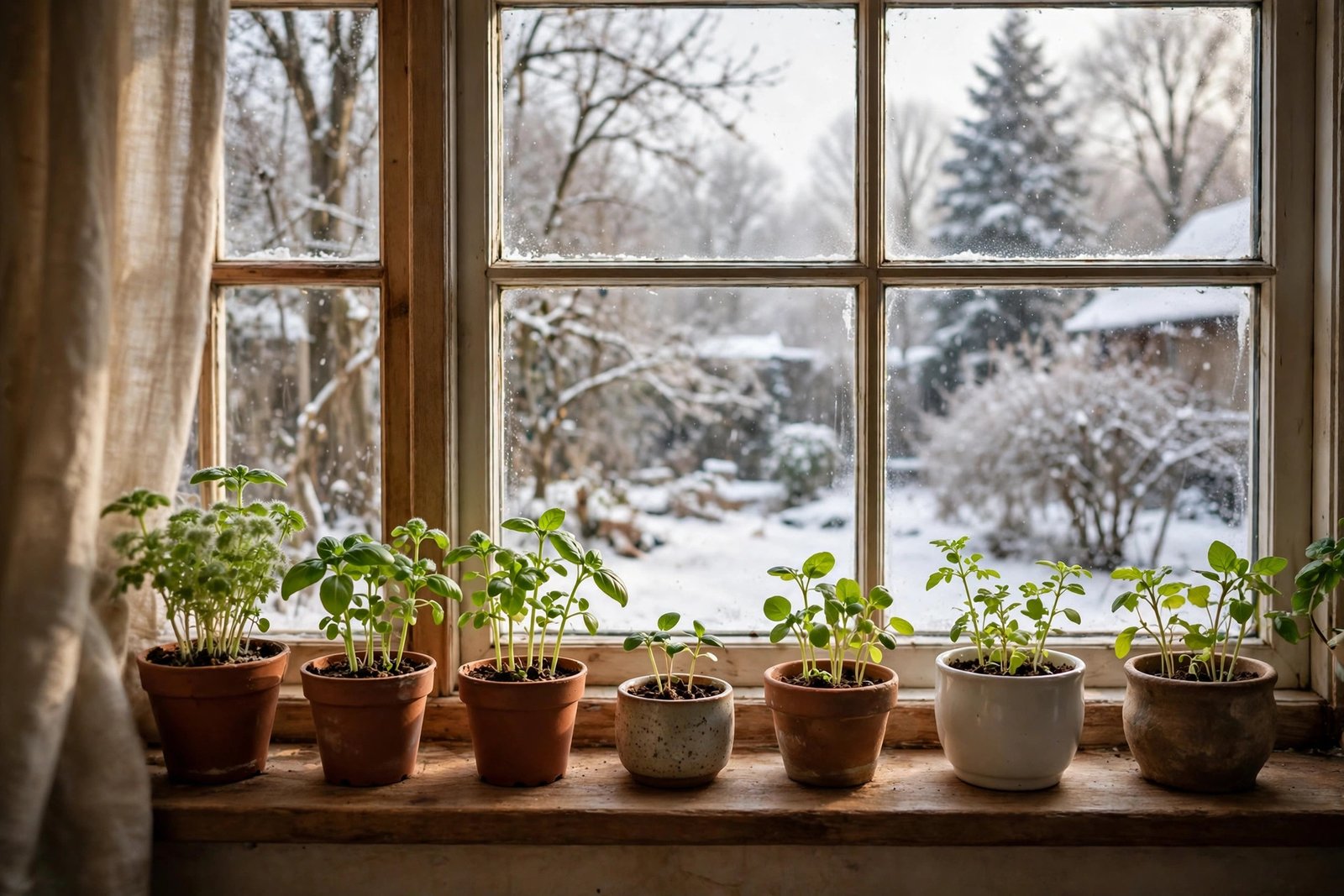
Light is the limiting factor. A bright south- or east-facing windowsill is the minimum for most overwintering plants. Even then, winter daylight is short and weak — chillies basically just survive on a windowsill, putting out no new growth until March. If you want plants to actually thrive rather than merely persist, a simple LED grow light on a timer (12–14 hours daily) makes an enormous difference. Running one over the overwintering shelf from November to March brings plants out of winter dramatically healthier. The full rundown is in grow lights explained.
Rotate pots weekly so all sides get light, and keep leaves clean — dust blocks a surprising amount of already-scarce winter light. A damp cloth wipe every month or so is enough.
Water far less than you think. This is where the first chilli died, and it’s where most overwintering plants die. Indoors in winter, with low light and cool rooms, plants barely drink. Let the top 2 inches / 5 cm of soil dry out completely between waterings, and for succulents and pelargoniums, let the pot go nearly dry. A good winter rule: check weekly, water maybe every 2–3 weeks for most things. Yellow dropping leaves in winter almost always mean too much water, not too little — the indoor watering guide explains the signs.
Humidity helps. Central heating drops indoor humidity to desert levels, and tropical plants notice. Group plants together (they humidify each other’s air), set pots on trays of pebbles with water in them, or run a small humidifier nearby. Brown crispy leaf edges in winter are usually dry air, not disease. Citrus and ferns appreciate this most.
Cool is fine, even good. Most overwintering plants prefer a cool room — 55–65°F / 13–18°C — over a toasty living room. Cool temperatures slow growth, which is what you want: the plant should be resting, not trying to grow in bad light. An overwintering shelf in a spare bedroom with the radiator turned low does far better than a warm kitchen ever would.
The Overwintering Routine: Benign Neglect
Once plants are in and settled, the routine is gloriously simple:
- Check weekly for water needs (finger test, two inches deep) and pest outbreaks
- Remove dead leaves promptly — they invite mould in still indoor air
- Don’t fertilize from October to March; the plant isn’t growing enough to use it
- Watch for spider mites especially — fine webbing and stippled leaves in dry indoor air are the classic sign; catch them early and they’re easy to treat
- Resist repotting, pruning, or “improving” anything until spring
Some leaf drop in the first few weeks is normal adjustment, not failure. Fuchsias drop about half their leaves every October like clockwork and leaf out beautifully in April. Give new arrivals three full weeks before judging. A plant that’s alive but ugly in January is a success story, not a problem.
Spring: the transition back out
This is the second-most-skipped step, and skipping it undoes the whole winter’s work. Plants that have spent months in soft indoor conditions will scorch and shock if you put them straight onto a sunny balcony in May.
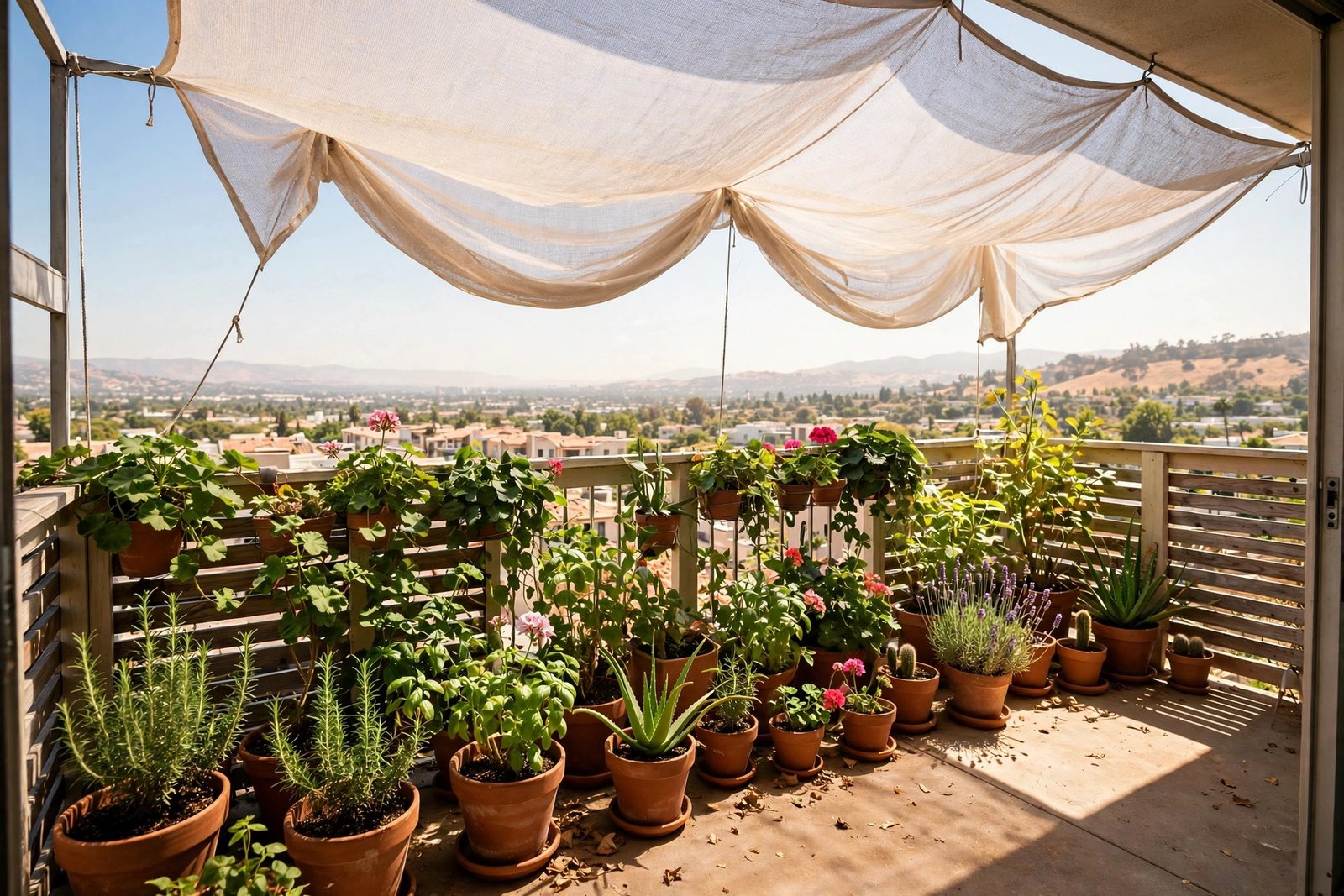
Harden off exactly like seedlings. Two hours outside on day one, building up over 7–10 days, bringing in at night. Even tough plants need this — indoor leaves are thinner and less UV-protected than outdoor ones. A perfectly overwintered citrus can get sun-scorched in one impatient spring — those bleached leaves never recover.
Resume feeding gradually. Start with half-strength liquid feed once you see active new growth, usually 2–3 weeks after the plant is back outside full-time. The natural fertilizers guide has the spring routine.
Prune for shape. Late March/early April, before the big spring push, prune overwintered plants into shape — remove any winter dieback, cut leggy stems back to strong buds. This is when a scraggly winter survivor transforms back into a handsome plant. Pelargoniums cut back by half every March flower non-stop from June.
Questions I Get Asked a Lot
My plant dropped all its leaves after coming inside. Is it dead?
Probably not. Scratch the bark on a stem with your thumbnail — green underneath means alive. Leaf drop is the plant’s standard response to the light and humidity shock of moving indoors. Keep the stems, water sparingly, give it light, and wait. Most plants push new leaves within a month. Only declare it dead if the stems go brown and brittle all the way down.
Can I overwinter plants in a garage or shed instead?
Only if it stays above freezing and has some light. An unheated garage that drops below 32°F / 0°C will kill tender plants as surely as leaving them outside. A frost-free garage with a window works for dormant plants like fuchsias and pelargoniums kept nearly dry all winter — they don’t need much light when fully dormant. But anything evergreen or tropical needs a proper bright, cool room.
Do I need a grow light, or is a windowsill enough?
A bright windowsill is enough for survival — the plant will live, just not grow. A grow light is worth it if you’re overwintering plants you want to harvest from (chillies, citrus, herbs) or if your windows are small or north-facing. For a fuchsia you just want alive until spring, the windowsill is fine. Match the investment to the plant’s value to you.
How do I deal with the pests that always appear in January?
Spider mites and aphids love dry winter air. Inspect weekly — catch them early and a strong spray of water plus insecticidal soap handles it. For recurring spider mites, raising humidity around the plants helps more than any spray, since mites thrive in dry air. And isolate any infested plant immediately; winter pests spread fast when plants are grouped together.
When is it safe to put plants back outside?
When nights are reliably above 50°F / 10°C — for tender plants, the same threshold as bringing them in, in reverse. In most temperate areas that’s mid-to-late May. Citrus and other tropicals want 55°F / 13°C nights. And even then, harden off gradually. A plant that survived your whole winter deserves better than sunscald in its first week of freedom.
Overwintering feels like advanced gardening — something for people with greenhouses and Latin names for everything. It’s not. It’s just moving a pot inside, watering it less than feels right, and leaving it alone until spring. Second-year chillies outperform anything buyable as a seedling, pelargoniums can go into their fourth year, and the whole thing costs nothing but a windowsill and a little restraint. Give it a try with one plant this autumn. It hooks most gardeners by spring.