
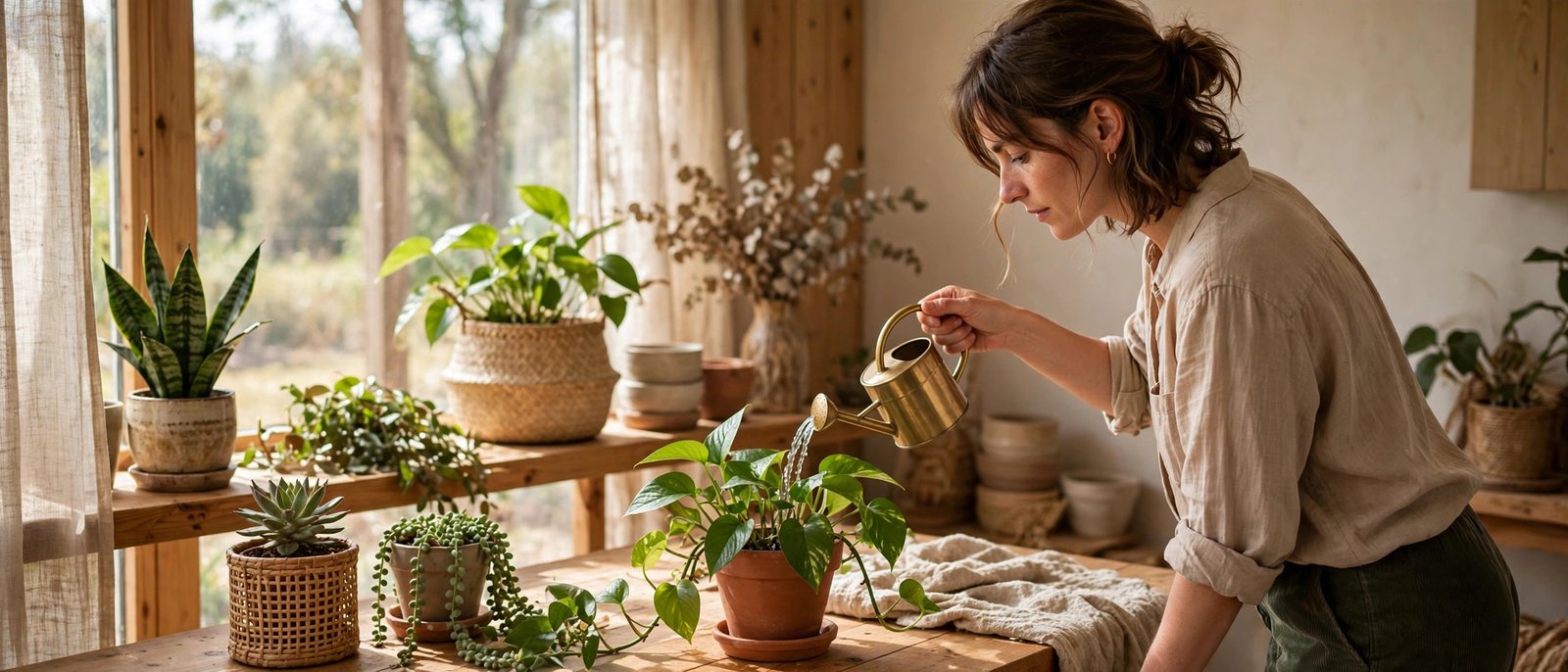
Here’s a bold opinion that dead plants teach quickly: there is no correct watering schedule. Not “once a week.” Not “every ten days.” Anyone handing you a fixed schedule is ignoring the dozen variables that decide how fast your specific plant, in your specific pot, in your specific flat, actually dries out. The real answer to “how often should I water?” is: when the plant needs it. And learning to tell when that is takes about two weeks of paying attention. This post will teach you how to water indoor plants with confidence.
Quick Tips:
- Water when the top 1–2 inches of soil are dry — check with your finger, not the calendar.
- When you water, water thoroughly until it drains from the bottom.
- Small pots, terracotta, and bright warm spots dry out fastest.
- In winter, most houseplants need roughly half the water they need in summer.
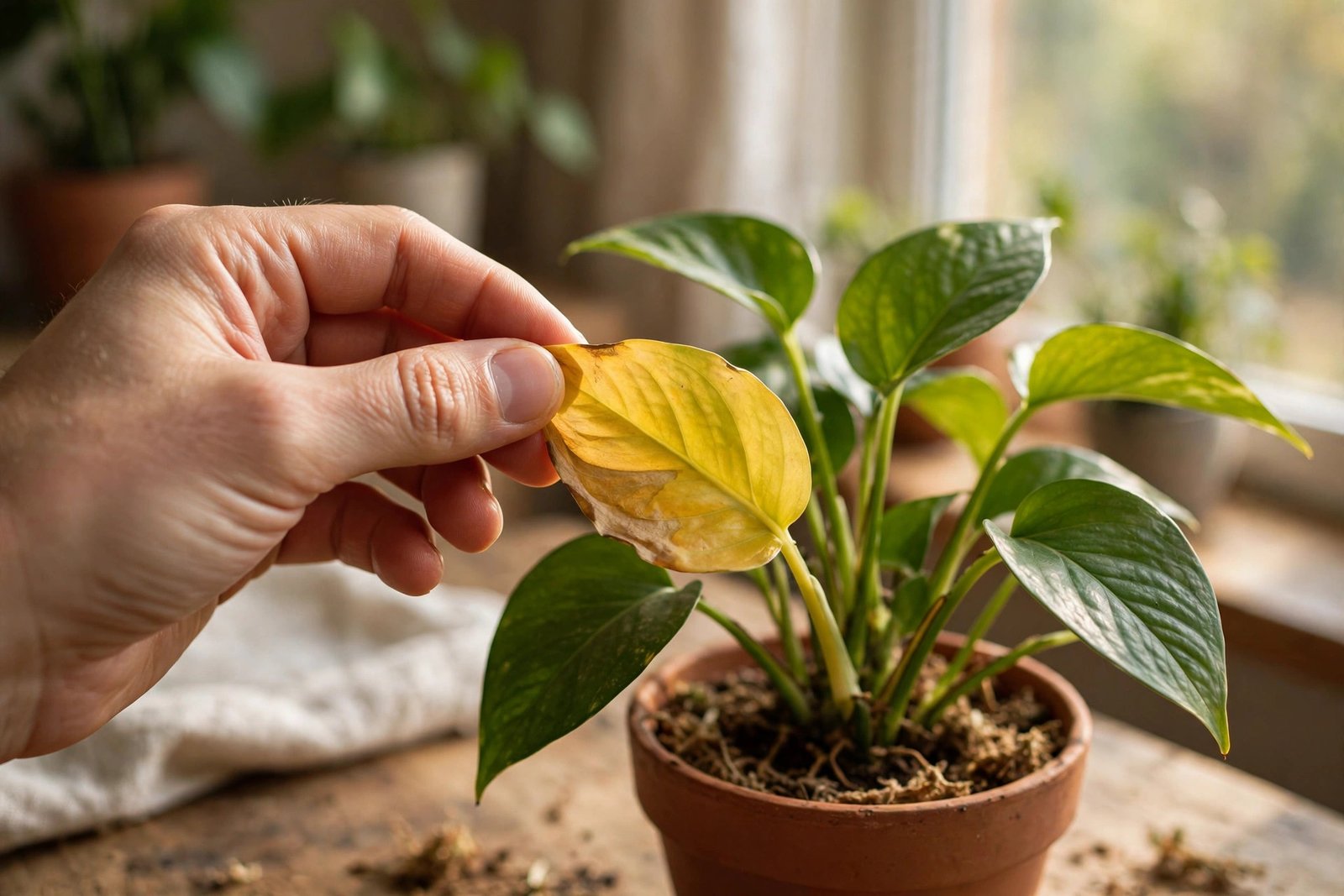
- Yellow, mushy leaves usually mean too much water; crispy brown edges usually mean too little.
Why “water once a week” fails
A weekly schedule assumes your home is a laboratory with constant conditions. It isn’t. Consider two identical pothos: one in a 4-inch plastic pot on a sunny south-facing sill, one in an 8-inch terracotta pot in a dim corner. The first might need water every 4–5 days in July; the second might go three weeks. Same plant, same week, wildly different thirst.
Everything that affects drying speed:
- Light. More light means more photosynthesis and more water use. A plant by a bright window can drink twice as fast as the same plant across the room. (This is also why low-light houseplants need so little water.)
- Pot size and material. Small pots dry faster than big ones. Terracotta breathes and wicks moisture away; plastic and glazed ceramic hold it. Terracotta herbs in summer need water daily; the same herbs in plastic go two days.
- Season. Growth slows in autumn and winter as light drops, so water needs plummet. Most houseplants get roughly half the water in January that they get in June.
- Soil mix. A chunky, fast-draining mix dries quickly; dense, peaty mix stays wet. If you mixed your own, you know what’s in it — the DIY potting soil recipe drains well by design.
- Humidity and airflow. Dry, heated winter air and breezy spots near vents pull moisture out of soil fast. A humid bathroom keeps soil damp much longer.
- The plant itself. A thirsty peace lily and a drought-proof snake plant live by completely different rules.
With all that variation, a calendar schedule is guesswork. Observation isn’t.
The finger test (your new superpower)
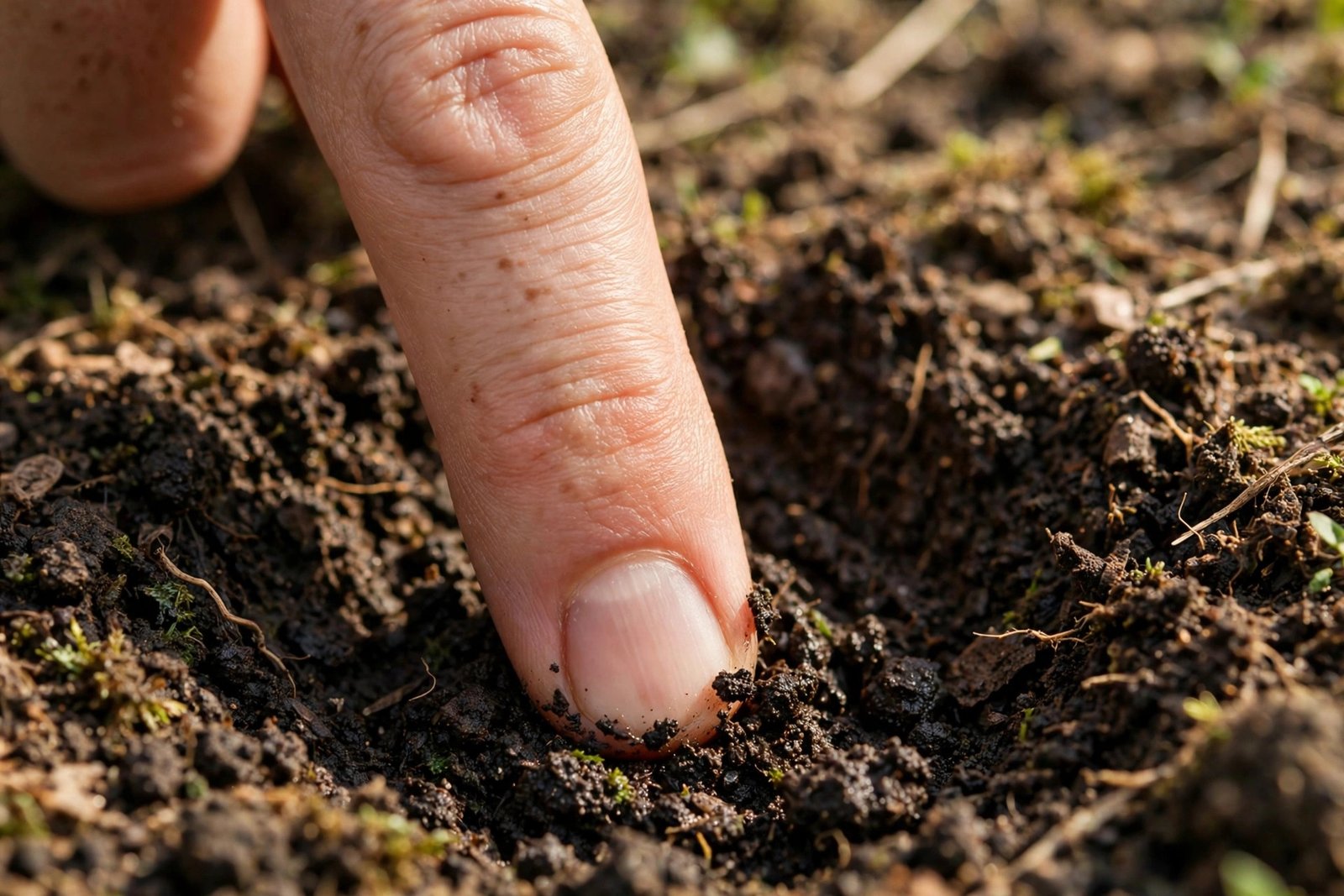
Forget apps and gadgets for a moment. The most reliable moisture check ever invented is attached to your hand. Push your finger into the soil up to the second knuckle — about 1–2 inches (2.5–5 cm) deep.
- Soil feels cool and damp, and bits stick to your finger? Don’t water. Walk away.
- Soil feels dry and crumbly, nothing sticks? Water.
- Not sure? Wait a day and check again. When in doubt, underwatering is far more forgiving than overwatering — a thirsty plant perks up within hours of a drink, while a rotted root system can take weeks to recover, if it does.
Do this every few days for a couple of weeks and you’ll develop a feel for each plant’s rhythm. Fussy plants still deserve the finger test. It’s free, it’s instant, and it has never once needed a firmware update.
Two backup methods worth knowing: the lift test — get to know how heavy a pot feels right after watering versus when it’s dry; the difference is obvious once you’ve felt it. And the wooden skewer test — stick a plain wooden chopstick or skewer into the soil for a few minutes; if it comes out damp and darkened, hold off on watering. Great for deep pots where your finger can’t reach the root zone.
What about moisture meters? The cheap probe kind are… okay. They measure electrical conductivity, not actual moisture, and they drift as salts build up. They’ve been known to read “wet” in bone-dry soil. Your finger is more honest. If you love gadgets, fine — but calibrate them against the finger test, not the other way around.
How much water to give (this matters as much as when)
Here’s the second thing beginners get wrong: the timid sip. A little splash every few days keeps the top inch moist while the lower roots stay dry, which trains roots to grow shallow and weak. Then the plant looks thirsty all the time, so you splash more often, and the surface stays constantly damp — hello, fungus gnats.
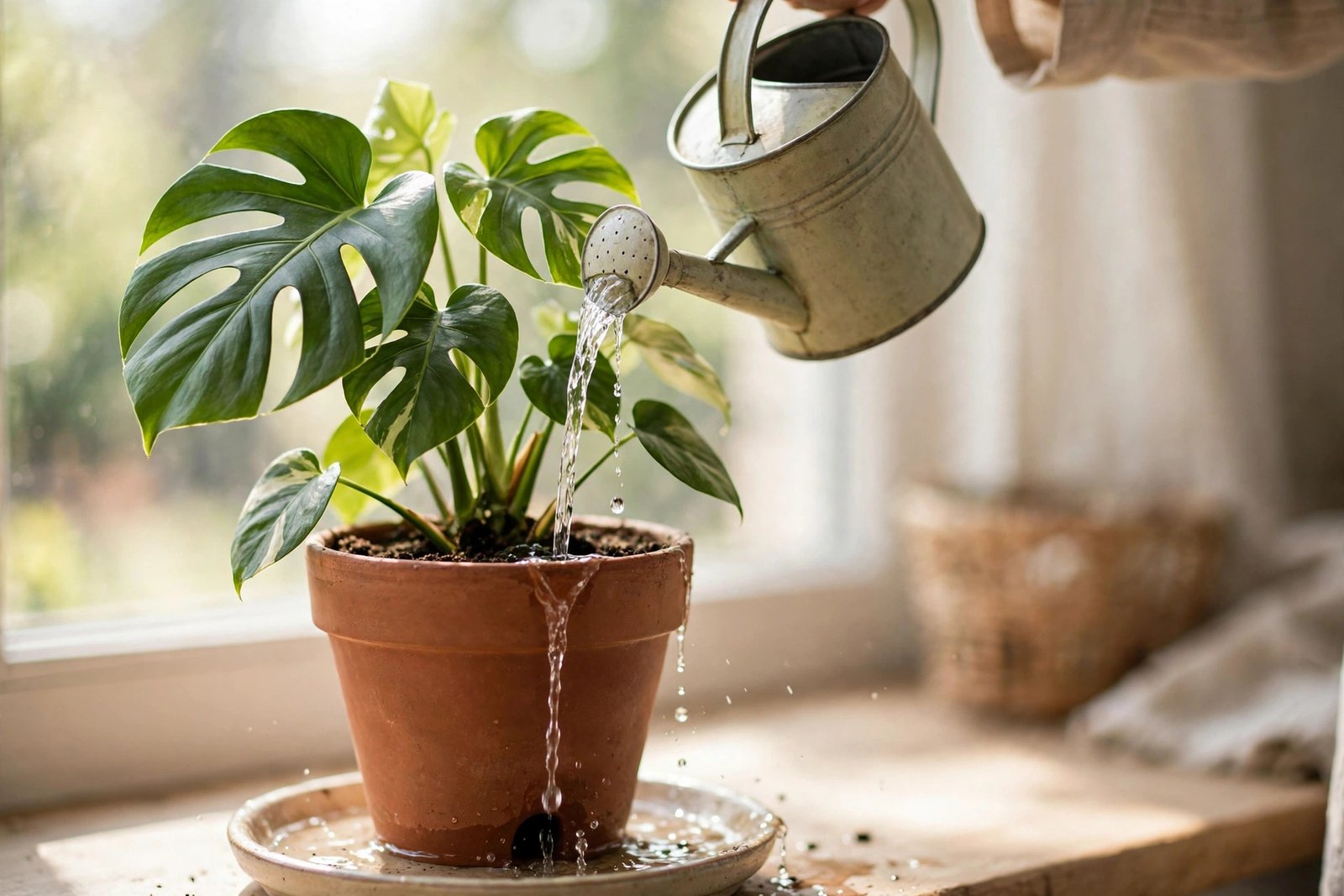
Instead: water thoroughly and infrequently. Drench the soil slowly and evenly until water flows freely from the drainage holes. Wait a few minutes, then do it once more — the first pass often runs down the sides of dry soil without soaking the middle. Then empty the saucer after 20–30 minutes so the pot isn’t sitting in a puddle. (If your pots don’t have drainage holes, stop and read the piece on drainage explained — it’s the foundation everything else rests on.)
Then don’t water again until the finger test says so. This soak-and-dry cycle mimics natural rainfall and encourages deep, strong roots.
One exception: tiny seedlings and fresh cuttings want consistently light moisture, not dramatic wet-dry cycles. But for established houseplants, thorough and infrequent wins every time.
How Often to Water Indoor Plants: Rough Frequencies by Type
With the giant caveat that your conditions decide everything, here are ballpark figures for average indoor conditions — medium light, spring through autumn:
- Succulents and cacti: every 2–4 weeks. Let the soil dry out completely, then wait a few more days. In winter, monthly or less.
- Snake plant, ZZ plant: every 2–4 weeks. These store water in their tissues and genuinely prefer to dry out fully.
- Pothos, philodendron, spider plant: every 1–2 weeks. Water when the top couple of inches dry out.
- Peace lily: every 1–2 weeks, or whenever it starts its dramatic droop. It’ll tell you.
- Ferns (Boston, bird’s nest): every 5–7 days. They like consistent light moisture and hate drying out fully.
- Calathea and maranta: every 5–7 days, with attention to humidity. Fussy, beautiful, worth it.
In winter, stretch all of these out — most houseplants go 1.5 to 2 times longer between waterings from November to February. And if you ever see the classic signs of trouble, there’s a full guide to telling overwatering from underwatering — because the symptoms look frustratingly similar at first glance.
Small details that make a big difference
Water temperature. Cold water straight from the tap can shock roots, especially in winter. Fill the watering can and let it sit for a few hours — room-temperature water, and as a bonus, some chlorine dissipates. Tropical plants like calathea are particularly grateful.
Water quality. Most houseplants handle tap water fine. If yours doesn’t — brown crispy leaf tips on spider plants, dracaenas, and palms are the classic complaint — try filtered water or letting tap water sit uncovered overnight. It’s usually fluoride or mineral buildup, not your watering frequency.
Time of day. Morning is ideal; the plant has the whole day of light to use the water, and foliage dries quickly. Evening watering is fine too — just avoid leaving leaves wet overnight in still, humid air, which invites fungal issues.
Bottom watering. Setting the pot in a basin of water for 20–30 minutes lets soil wick moisture up evenly — great for plants with dense foliage where top-watering runs off, and for anyone fighting fungus gnats (dry surface, moist depths). Just remember to let it drain afterward. African violets and peace lilies respond well to bottom-watering.
Going on holiday. For a week away, water thoroughly right before you leave and move plants slightly back from sunny windows to slow drying. For two weeks, group plants together (raises local humidity), and consider self-watering setups — the options are compared in watering cans vs self-watering pots. A trusted friend with clear written instructions beats any gadget, though. “Water the fern on Sunday” works; “water when needed” does not.
Quick Answers to Common Questions
Should I mist my plants instead of watering?
Misting raises humidity for about ten minutes and then it’s gone — it does nothing meaningful for soil moisture. If your plant needs humidity (ferns, calathea), misting is a pleasant ritual, not a solution; group plants together or use a pebble tray instead. And misting is never a substitute for watering the soil.
Is it better to water a little every day?
No — this is the timid-sip trap. Daily sips keep the surface damp (gnat paradise) while deeper roots go thirsty. One thorough soaking, then nothing until the soil actually needs it. The only plants that want constant light moisture are seedlings and a few bog plants.
Why are the leaves yellow if I’m watering “correctly”?
Yellow leaves have many causes, and watering is only one of them. Overwatering gives soft, yellow, sometimes mushy leaves, often starting lower down. But yellowing can also mean natural old-leaf shedding, low light, nutrient deficiency, or pests. Before changing your watering, check the soil moisture first — if it’s soggy, you have your answer; if it’s fine, look at light and feeding. The full diagnostic is in the post on yellow houseplant leaves.
How do I save an overwatered plant?
Act quickly: tip the plant out, inspect the roots, and trim anything brown and mushy back to firm white tissue with clean scissors. Repot into fresh, dry mix (don’t reuse the soggy stuff), in a pot with drainage holes. Then water lightly and wait — recovery takes weeks, not days. Some plants bounce back; some don’t. Either way, you’ll have learned the lesson that saves the next ten.
Do self-watering pots change the answer?
They change the mechanics, not the principle. Self-watering pots supply water steadily from a reservoir, which suits consistent-moisture plants like peace lilies and ferns, but can keep drought-lovers too wet. You still need to check the reservoir, still need to let some plants dry out, and you should still empty and rinse the reservoir occasionally so it doesn’t go stagnant.
So: how often should you water indoor plants? When the top inch or two is dry, thoroughly, with room-temperature water, in the morning, adjusting for season. It sounds like a lot of words for a simple habit, but once the finger test becomes reflex, you’ll spend less time worrying about watering than you ever did following a schedule — and your plants will show it.

3 Comments on “How Often Should You Really Water Indoor Plants?”