
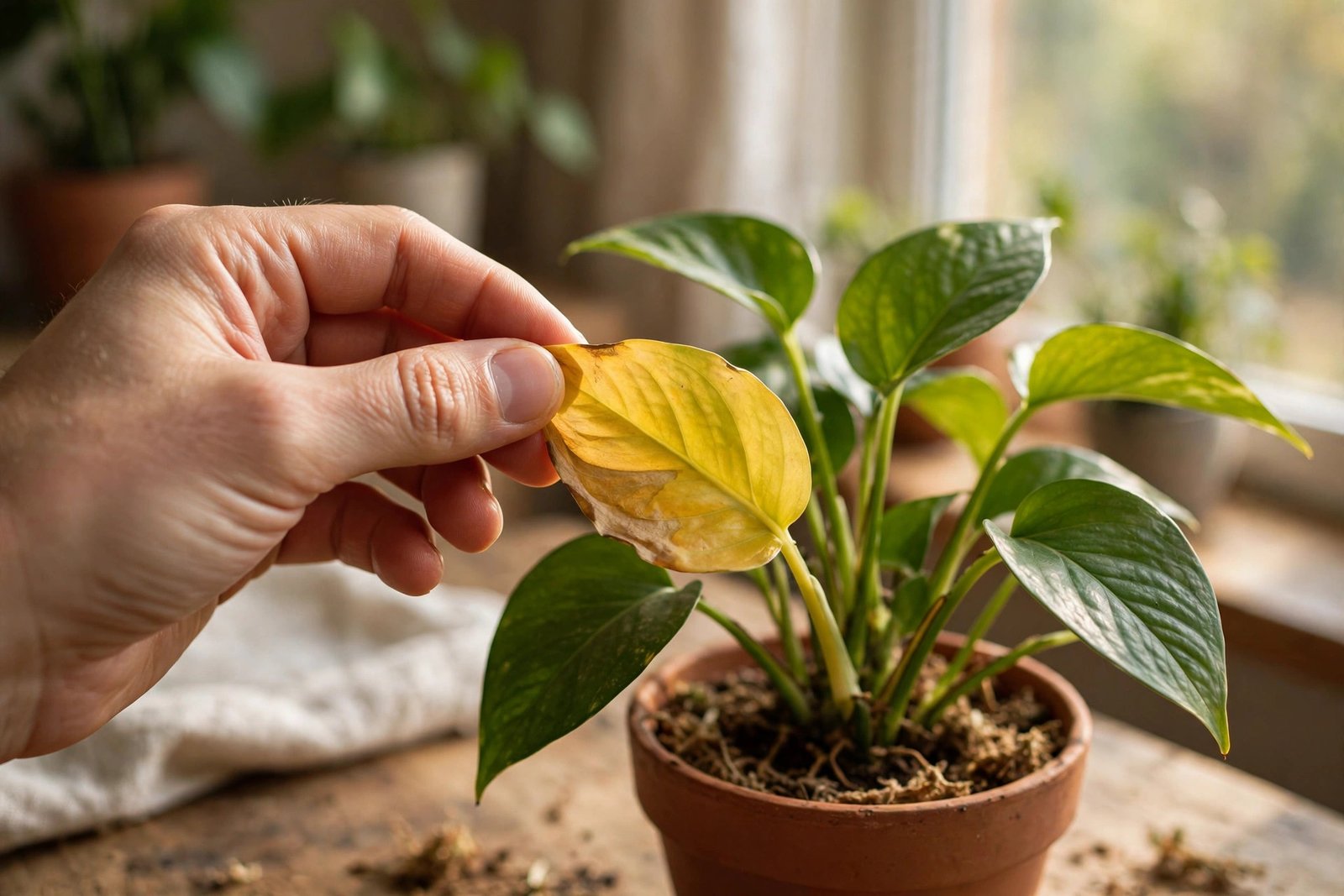
Here’s the uncomfortable truth about yellow leaves: a yellow leaf tells you almost nothing by itself. It’s a symptom, not a diagnosis — the plant equivalent of a fever. It could mean too much water, too little water, not enough light, a pest problem, or simply that the leaf is old and done. Beginners often respond to one yellow leaf by simultaneously repotting, fertilizing, moving, and misting a plant — four “fixes” for a problem they hadn’t identified, which is how a minor issue becomes a dead plant. So let’s do this properly: detective work first, fixes second.
Quick Tips:
- One yellow lower leaf now and then is usually normal aging — don’t panic.
- Check soil moisture FIRST before changing anything else.
- Soft, mushy yellowing = too much water. Crispy, dry yellowing = too little.
- Yellow leaves never turn green again — snip them off once you’ve fixed the cause.
- Fix one thing at a time so you learn what actually worked.
Start here: is it just an old leaf?
Before you diagnose anything, look at which leaves are yellowing. If it’s one or two of the oldest, lowest leaves on an otherwise healthy plant, and new growth looks fine — that’s normal. Leaves have lifespans. The plant is retiring an old leaf and redirecting energy to new growth, the same way trees drop leaves in autumn. No need to mourn every fallen pothos leaf — compost them and move on.
Worry when: multiple leaves yellow at once, new growth is affected, or yellowing spreads rapidly over days. That’s your cue to investigate the causes below, starting with the most common.
Cause 1: Overwatering (the usual suspect)
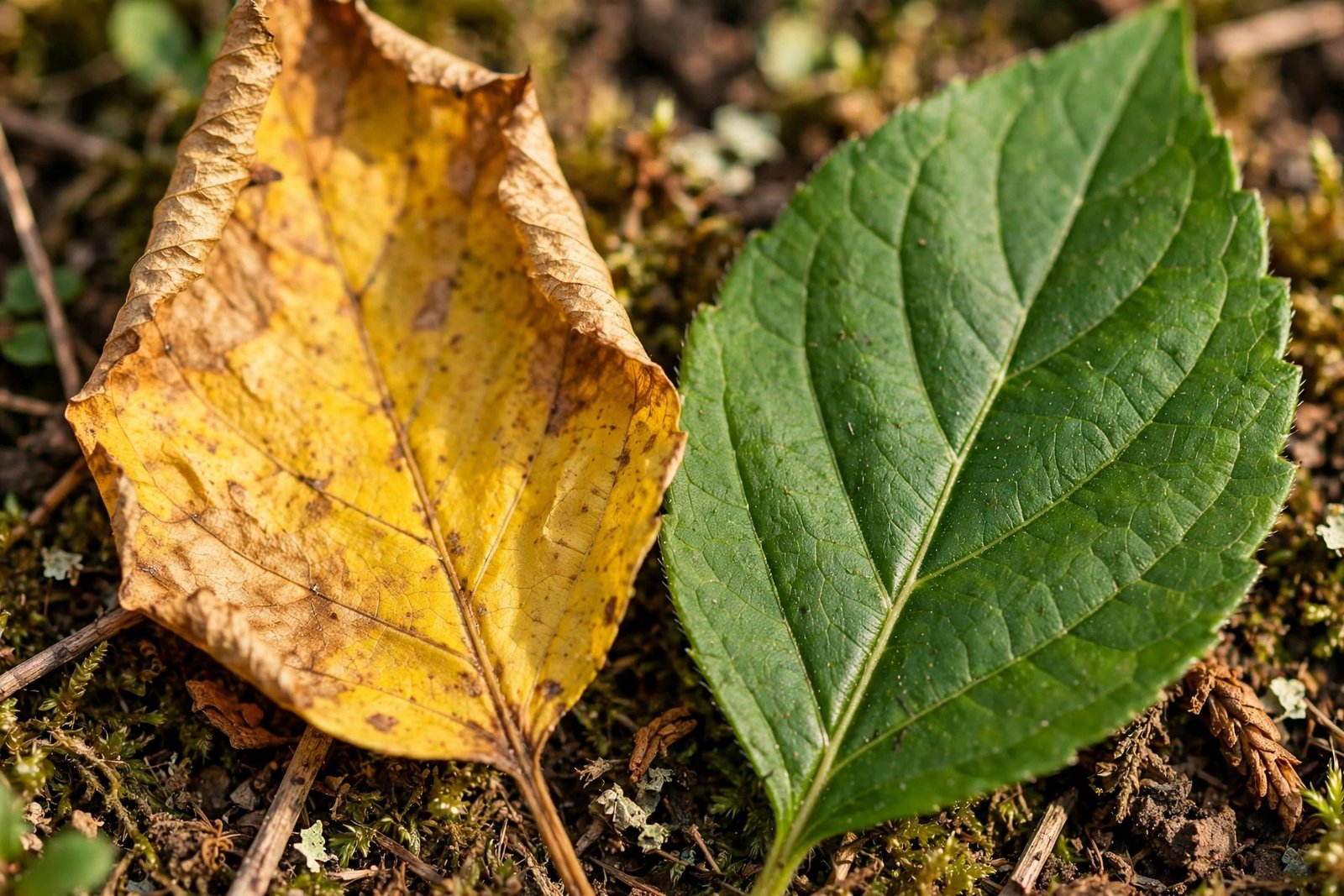
This is the number one cause of yellow houseplant leaves, and it’s not close. When soil stays soggy, roots suffocate and rot, and the plant can’t take up nutrients — so leaves yellow, often starting with the lower ones. The telltale signs: leaves are yellow and soft or mushy, stems feel soft near the base, the soil smells musty or sour, and the pot feels heavy days after watering.
The fix depends on severity. If you caught it early — soil is wet but roots are probably fine — just stop watering and let the soil dry out properly, somewhere with good airflow. If leaves keep yellowing or stems are mushy, unpot and check the roots: white and firm is healthy; brown and mushy is rot. Trim the rotted bits with clean scissors, repot into fresh dry mix in a pot with drainage holes, and water lightly. There’s a full walkthrough on telling overwatering from underwatering because beginners mix these up constantly — and the fixes are opposites, so getting it right matters.
Prevention is a watering habit, not a schedule: check the soil with your finger before watering, water thoroughly but infrequently, and always empty the saucer. The complete method is in the guide to how often to water indoor plants.
Cause 2: Underwatering
Less common than overwatering, but it happens — especially with thirsty plants in small terracotta pots in summer. Underwatered yellowing looks different: leaves turn yellow and then go crispy and dry, often starting at the edges and tips. The soil pulls away from the pot edges, the pot feels suspiciously light, and the whole plant may droop.
The fix is straightforward: water thoroughly until it drains from the bottom. If the soil has gone so dry it’s hydrophobic (water runs straight through without soaking in), bottom-water instead — set the pot in a basin of room-temperature water for 20–30 minutes. Droopy plants usually perk up within hours. Then adjust your checking routine so it doesn’t happen again.
Cause 3: Not enough light
A plant starving for light can’t photosynthesize properly, and one of its responses is yellowing — usually pale, washed-out yellowing, often paired with leggy stretched-out growth reaching toward the nearest window. If your plant is more than 6–8 feet from a window, or in a north-facing room, and the new leaves are small and pale, light is your prime suspect.
The fix: move it closer to the light, gradually — a plant that’s been in dim conditions for months can scorch if shoved straight into a sunny south window. Dust the leaves too; in low light, a film of dust meaningfully cuts the light a leaf receives. And if your flat is genuinely dark, consider plants bred for it — the list of low-light houseplants that survive almost anything — or a small grow light.
Cause 4: Nutrient deficiency
If watering and light check out, consider food. Plants in pots exhaust their soil’s nutrients within months, and deficiencies show up as yellowing with distinctive patterns:
- Nitrogen deficiency: older, lower leaves yellow first while new growth stays greenish. The plant is moving nitrogen from old leaves to new ones. Most common in plants that haven’t been fed in a year or more.
- Iron deficiency (chlorosis): new leaves emerge yellow with dark green veins — a striking, unmistakable pattern. Common in alkaline soil conditions or with certain plants like gardenias.
- Magnesium deficiency: yellowing between the veins of older leaves.
The fix: feed. A balanced liquid houseplant fertilizer at half strength, applied during the growing season (spring through early autumn), resolves most deficiencies within weeks. Gentle, natural options work well — the guide to natural fertilizers for container plants covers compost tea, worm castings, and the rest. One caution: don’t blast a stressed plant with full-strength fertilizer. More is not better; fertilizer burn causes its own yellowing, with crispy brown leaf edges.
Cause 5: Pests
Several common houseplant pests cause yellowing: spider mites (fine stippled yellowing, often with webbing underneath), thrips (silvery-yellow patches), mealybugs and scale (yellowing around their feeding sites, plus sticky honeydew). The pattern tends to be patchy and irregular rather than the uniform yellowing of watering issues.
The fix starts with inspection: check the undersides of leaves and the stem joints with your phone’s flashlight. Catching pests early makes treatment dramatically easier. Isolate the affected plant so nothing spreads, then treat — the guide to common houseplant pests and natural remedies covers the whole arsenal of gentle methods. A plant that’s already weakened by overwatering or low light is far more vulnerable to pests, so fixing the underlying stress matters as much as killing the bugs.
Cause 6: Temperature stress and drafts
Tropical houseplants sulk below about 55°F (13°C), and a cold draft from a window, door, or air conditioner vent can yellow leaves almost overnight. The pattern: leaves nearest the draft yellow first, sometimes with a sudden leaf drop that looks alarming but is just the plant’s dramatic response to cold shock.
The fix: move the plant away from the draft — not next to a radiator either, which brings its own problems (dry air, heat stress). Stable, average room temperatures suit nearly all common houseplants. If a cold snap yellows a few leaves, trim them and carry on; the plant itself is usually fine.
Cause 7: Transplant shock and acclimation
Recently repotted? Recently brought home from the shop? A few yellow leaves in the first couple of weeks is normal adjustment stress. The plant is redirecting energy to root establishment or adapting to your home’s light and humidity, which differ from the greenhouse it grew up in. As long as new growth looks healthy, give it time — not extra water, not emergency fertilizer, just time. The repotting guide covers the aftercare that minimizes this in how to repot a plant step by step.
How to diagnose: the order of operations
When you spot yellowing, work through this checklist in order — it goes from most common to least, and it stops you from “fixing” three things at once:
- Finger-test the soil. Soggy? Suspect overwatering. Bone dry? Underwatering. Moist and fine? Move on.
- Look at the pattern. Lower/older leaves only, or new growth too? Uniform yellow or patchy? Crispy or mushy?
- Assess the light. How far from the window? Has anything changed — shorter days, a moved curtain, a new building outside?
- Check for pests. Undersides of leaves, stem joints, soil surface. Phone flashlight, thirty seconds.
- Review feeding history. When did you last fertilize? Has it been over a year? (Or did you recently overdo it?)
- Consider recent changes. Repotted? Moved? Heating season started? New draft?
Write down what you find. Seriously — a phone note with “Oct 3: soil soggy, lower leaves mushy-yellow” turns guesswork into actual diagnosis, and it tells you whether your fix worked two weeks later.
Should you remove the yellow leaves?
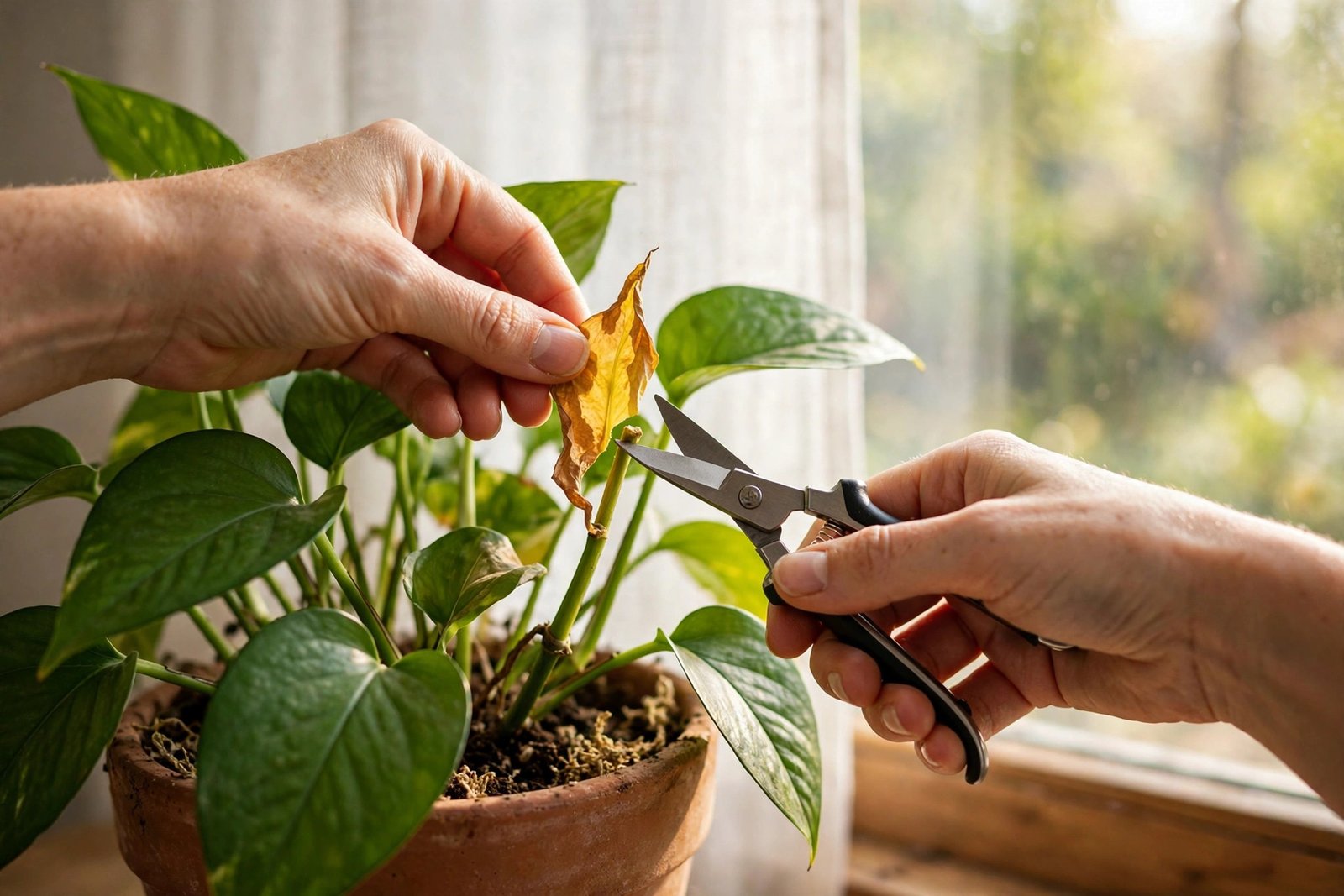
Yes — once you’ve addressed the cause. A yellow leaf will never turn green again; the chlorophyll is gone and the plant has already withdrawn the useful nutrients. Leaving dying leaves attached just gives pests and fungal issues a foothold.
Snip the leaf off at its base with clean scissors, or for trailing plants, trim the stem back to healthy tissue. If more than a third of the foliage is yellow, remove the worst offenders but leave the rest — the plant still needs whatever photosynthesis it can get. And wash your scissors afterward if pests were involved.
Questions I Get Asked a Lot
Will yellow leaves turn green again?
No. Once a leaf has fully yellowed, the change is permanent — the plant has dismantled the chlorophyll and moved the salvageable nutrients elsewhere. New growth, however, should come in green and healthy once you’ve fixed the underlying cause. Judge your success by the new leaves, not the old ones.
One of my plant’s bottom leaves turned yellow. Is it dying?
Almost certainly not. Single old leaves yellowing and dropping while the rest of the plant looks good is normal aging. Plants shed; it’s what they do. Start investigating only when it’s multiple leaves, new growth, or a rapid spread.
My plant turned yellow right after I repotted it. What did I do wrong?
Probably nothing. A few yellow leaves after repotting is classic transplant shock — the plant is settling its roots into new soil. Keep it in bright indirect light, don’t overwater out of guilt, skip the fertilizer for a few weeks, and it should stabilize. If yellowing accelerates after two weeks, unpot and check the roots.
The leaves are yellow with brown spots. Is that different?
Yellow with brown or black spots leans toward fungal or bacterial leaf spot, often from water sitting on leaves in still air, or from pests. Remove the affected leaves, improve air circulation, avoid wetting the foliage when you water, and check for pests. If spots keep spreading to new leaves after that, treat it as a disease issue rather than a care issue.
Can too much fertilizer cause yellow leaves?
Yes — fertilizer burn shows as yellowing with crispy brown edges and tips, sometimes with a white crust on the soil surface. Flush the soil with plain water (water thoroughly several times, letting it drain) to wash out excess salts, and hold off on feeding for at least a month. When you resume, use half strength. The rule of thumb: weak fertilizer, regularly, beats strong fertilizer occasionally.
The classic yellow-leaf story goes like this: a beloved monstera, five yellow leaves in a week, and a near-midnight repotting. It turns out to be a combination of a cold draft and a heavy winter watering hand. Move it, water less, trim the damage, and it usually recovers completely. Most yellow-leaf stories end the same way: not a tragedy, just a message. Learn to read it, fix one thing at a time, and your plants will tell you everything you need to know.

One Comment on “Why Are My Houseplant Leaves Turning Yellow? Causes and Fixes”