
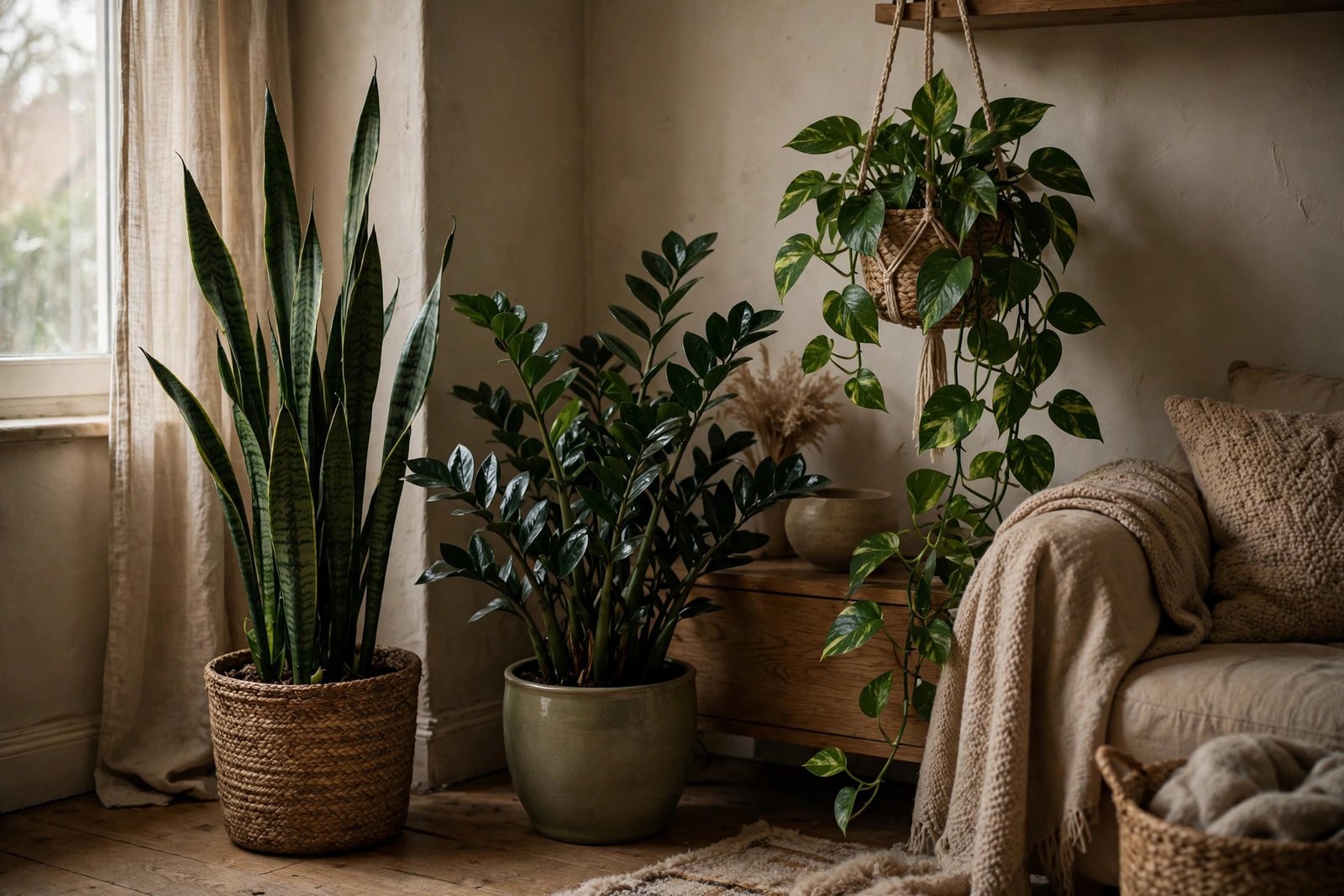
What if I told you the dimmest corner of your flat — the one where every plant you’ve tried has slowly faded into a yellow ghost — isn’t a plant graveyard, but just a corner waiting for the right plant? Most “low light tolerant” lists are full of plants that merely tolerate darkness while quietly declining. This list is different. These twelve low-light houseplants genuinely cope with dim rooms, irregular watering, and beginner mistakes — each one handles north-facing rooms, forgetful watering, and dark winters.
What “low light” actually means
Before the list, a quick reality check, because this is where most people go wrong. Low light means a spot a few feet from a north-facing window, or a bright room where the plant never gets direct sun. It does not mean a windowless bathroom or a hallway with no natural light at all. Every plant needs some light to photosynthesize. The plants below need less than most — but “less” isn’t “none.”
A useful test: if you can comfortably read a book in the spot during the day without turning on a lamp, most plants on this list will manage. If you can’t, consider a small grow light — the options are broken down in the guide to grow lights for indoor gardeners. Also note that in low light, plants grow slowly and drink slowly, so you’ll water far less often than the plant label suggests. More on that in the post about how often to water indoor plants.
The twelve
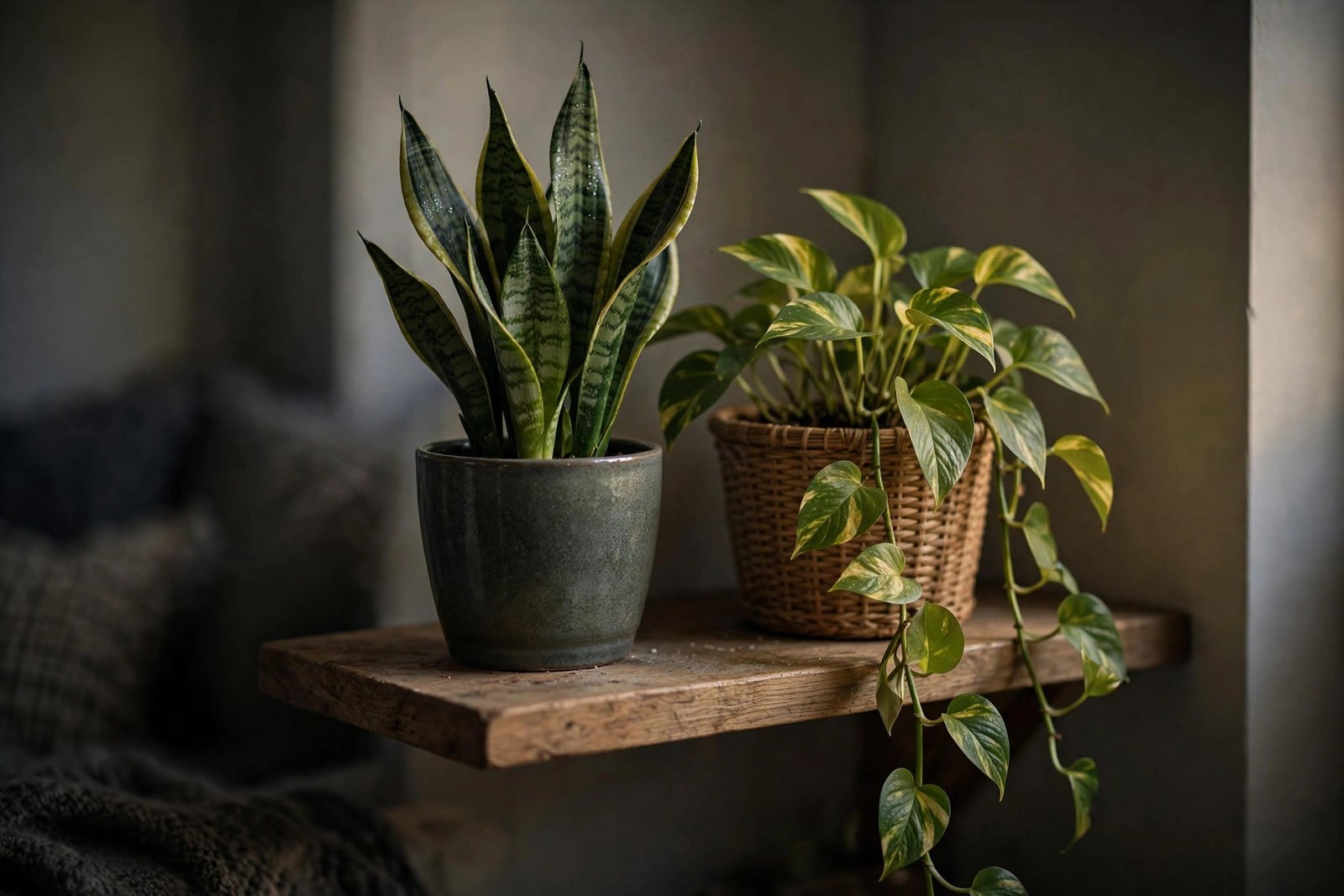
1. Snake plant (Sansevieria trifasciata ‘Laurentii’)
The undisputed champion of neglect. Snake plants tolerate low light, missed waterings, and dry air without complaint. Watering roughly once a month in winter, a bit more in summer, suits it — it just keeps standing there looking architectural. The only thing that kills them is sitting in wet soil — so a pot with drainage holes and a gritty mix is non-negotiable. Slow growing, so buy the size you want to look at.
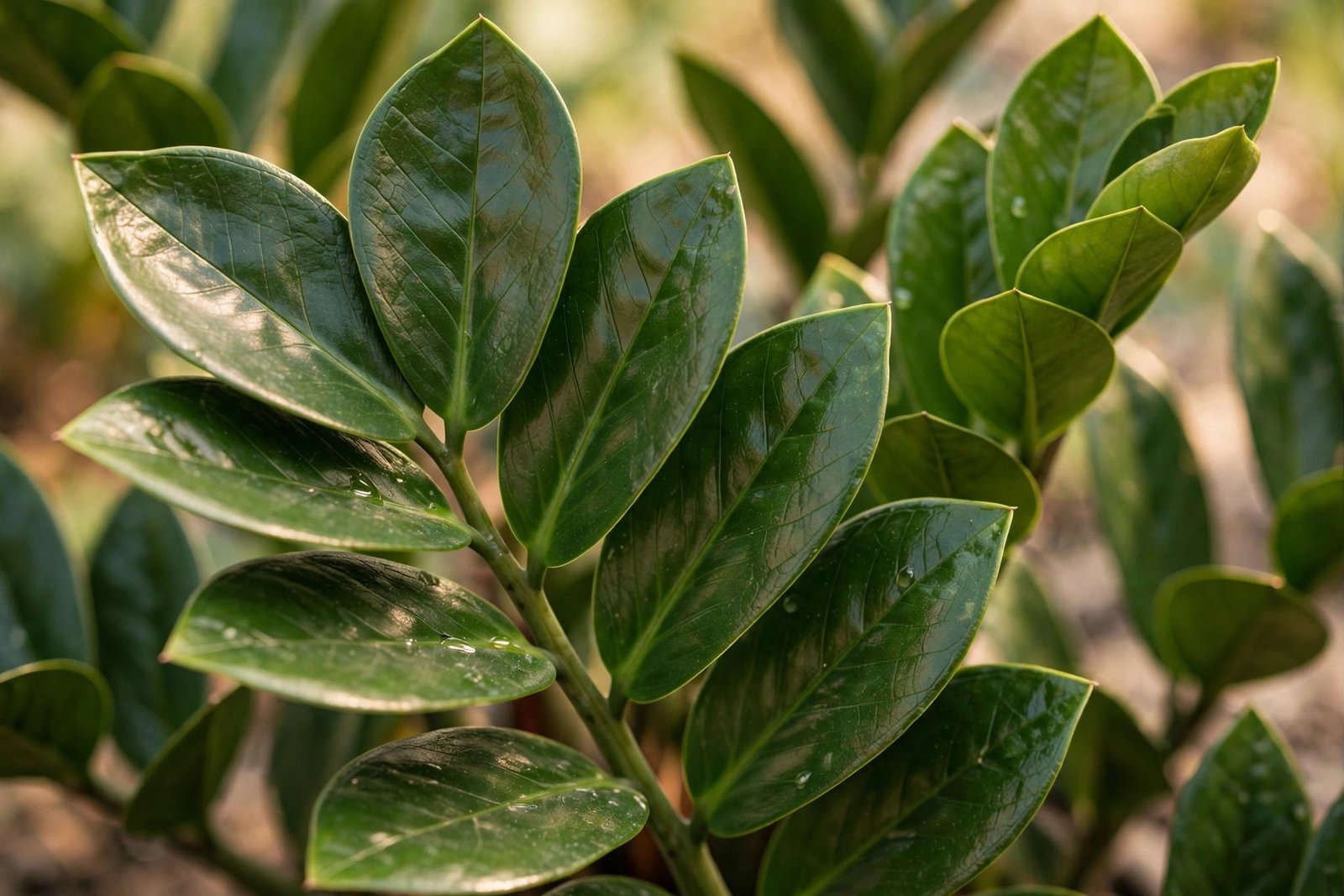
2. ZZ plant (Zamioculcas zamiifolia)
The ZZ plant stores water in its thick rhizomes, which means it forgives drought the way a camel forgives a desert. Glossy, deep green leaves; thrives in low light; wants to be left alone. Water when the soil is completely dry — in a dim corner that might be every 3–4 weeks. One caution: it’s toxic if chewed, so keep it away from curious cats and toddlers.
3. Golden pothos (Epipremnum aureum ‘Golden’)
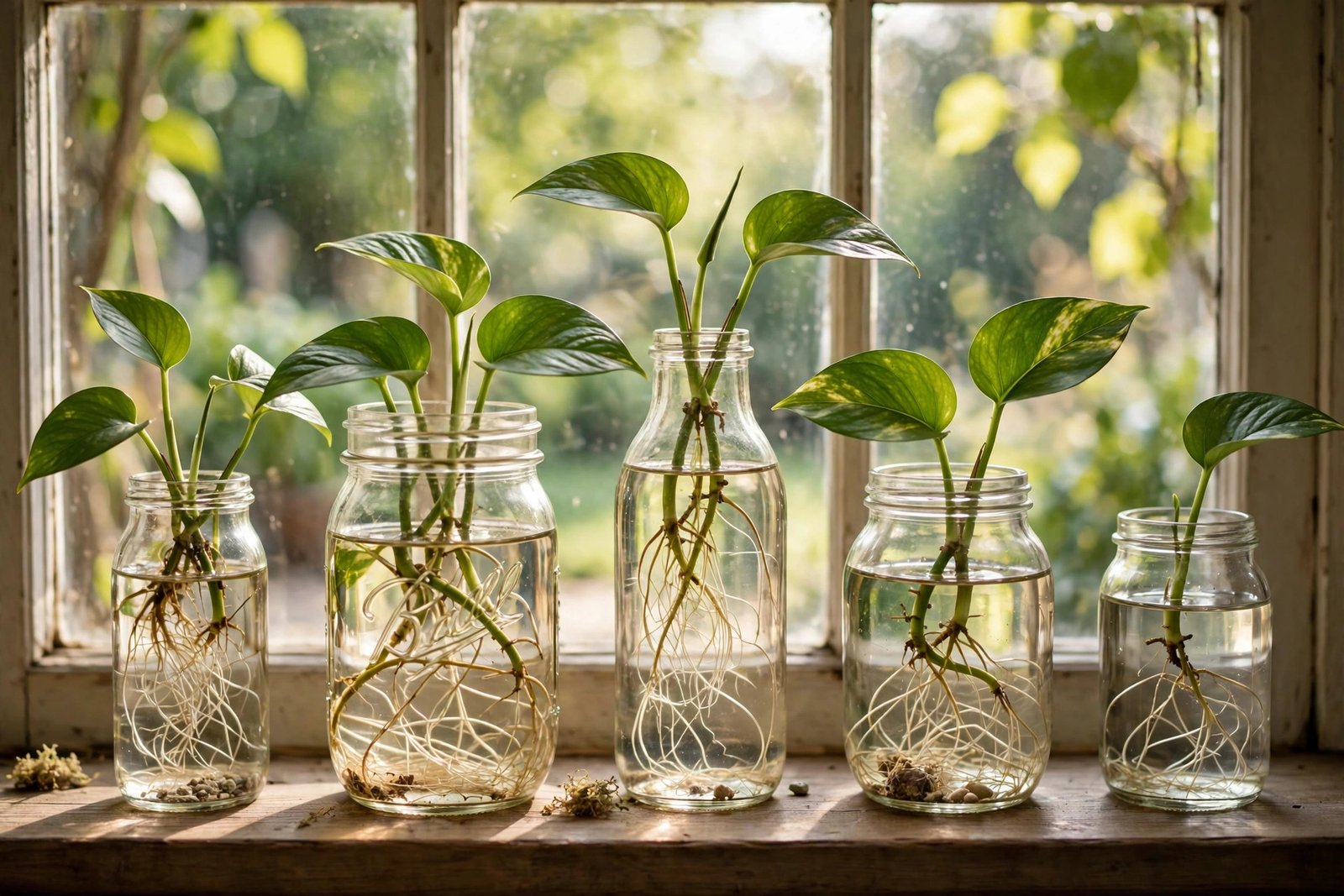
If you buy exactly one plant from this list, make it a pothos. It trails beautifully, tolerates low light, bounces back from underwatering with dramatic flair (droops, then perks up within hours of watering), and propagates in water so easily it feels like cheating — the guide to propagating houseplants in water covers the method. ‘Golden’ has the classic green-and-yellow marbled leaves; ‘Marble Queen’ is whiter and a touch slower growing. Both are mildly toxic to pets.
4. Heartleaf philodendron (Philodendron hederaceum)
Pothos’s softer-looking cousin. Heart-shaped leaves on trailing vines, happy in low to medium light, and very forgiving about watering — it droops when thirsty and recovers fast. A heartleaf philodendron in a hanging basket two meters from a north window will just keep going for years. Pinch back leggy vines to keep it bushy, and stick the cuttings in water for free plants.
5. Cast iron plant (Aspidistra elatior)
The name is the review. The cast iron plant was the Victorian parlor plant precisely because it survived dark rooms, coal dust, and neglectful servants. Wide, deep-green leaves; incredibly slow growing; almost impossible to kill except by overwatering. It’s not a fast or flashy plant — expect maybe four new leaves a year — but if the flat is genuinely dark, this is the most trustworthy pick.
6. Chinese evergreen (Aglaonema ‘Silver Bay’)
Aglaonemas bring actual color to low light — silvery-green patterned leaves that brighten a dim corner. ‘Silver Bay’ is one of the toughest cultivars. It likes its soil to dry out a bit between waterings and appreciates humidity, but it won’t punish you for average indoor air. Keep it away from cold drafts; it’s the one slightly fussy thing about it. Also toxic to pets, so note that if you share your home with a nibbler.
Quick Tips:
- “Low light” still means some natural light — if you can’t read there by daylight, add a grow light.
- In low light, plants drink slowly: always check the soil before watering, not the calendar.
- Dust the leaves monthly — a dusty leaf in dim light photosynthesizes even less.
- Rotate pots a quarter turn every few weeks so growth stays even.
- Skip the fertilizer in winter; low-light plants barely need feeding.
7. Parlor palm (Chamaedorea elegans)
The classic Victorian palm, and still one of the best small palms for low light. It grows slowly to about 2–3 feet (60–90 cm) indoors and asks for very little: indirect light, water when the top inch of soil dries, and the occasional dusting. Brown leaf tips usually mean dry air or fluoride in tap water — switching to filtered water or letting tap water sit out overnight often fixes it. Non-toxic to cats and dogs, which makes it a great pick for pet households (more pet-safe options in the pet-safe houseplants guide).
8. Peace lily (Spathiphyllum ‘Mauna Loa’)
The drama queen of this list, and I mean that affectionately. A peace lily in low light will grow fine and even bloom, and it tells you exactly when it’s thirsty by drooping theatrically — then perks up within hours of a drink. It’s the best plant for learning to read watering cues. Keep the soil lightly moist, wipe the big leaves occasionally, and note that it’s toxic to pets.
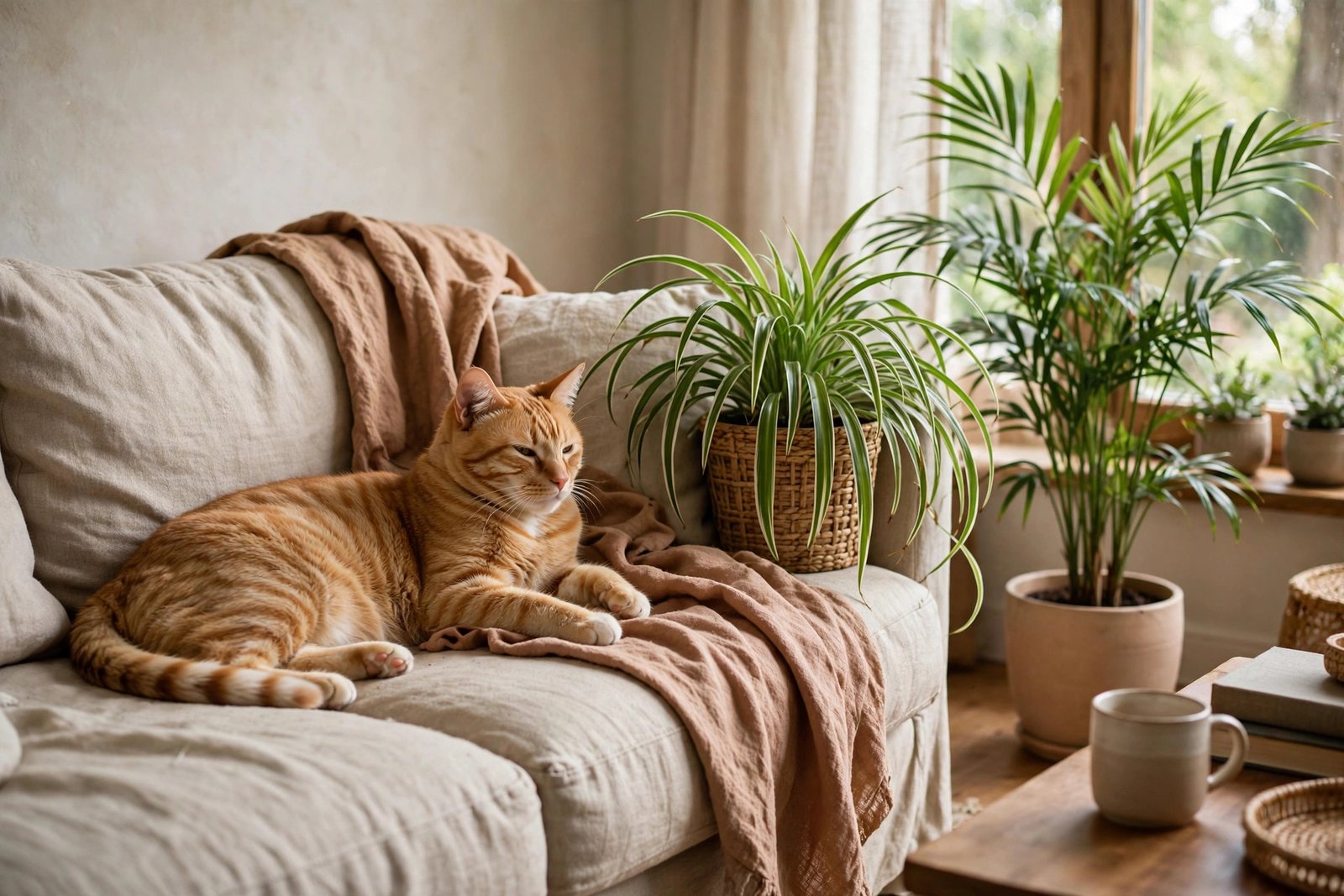
9. Spider plant (Chlorophytum comosum ‘Vittatum’)
Spider plants are nearly indestructible and they make babies — plantlets dangle from arching stems, and you can pot them up for an endless supply of gifts. They tolerate low light (though the variegation is bolder with a bit more), bounce back from missed waterings, and are non-toxic to pets. Brown tips are the main complaint; like the parlor palm, they often dislike fluoride and dry air.
10. Janet Craig dracaena (Dracaena fragrans ‘Janet Craig’)
If you want something with presence in a dark corner, this is it: broad, glossy, deep-green leaves on a cane stem, eventually reaching 4–5 feet indoors. It’s one of the most shade-tolerant dracaenas and famously unbothered by low light. Water when the top couple of inches dry out, and go easy — dracaenas are sensitive to overwatering and to fluoride. Toxic to pets, so place it out of reach.
11. Arrowhead vine (Syngonium podophyllum)
Young arrowhead plants have charming arrow-shaped leaves; as they mature, the leaves morph into a lobed shape and the plant starts to vine. It handles low light well, grows faster than most plants on this list, and is easy to prune into whatever shape suits your shelf. Keep the soil lightly moist and give it something to climb if you want the mature form. Toxic to pets — a hanging basket keeps it away from ground-level nibblers.
12. Lucky bamboo (Dracaena sanderiana)
Not actually bamboo, but nobody cares because it’s the easiest plant on this list to keep alive in truly dim spots. It grows in a vase of water — no soil, no drainage worries, just top up the water and change it every couple of weeks. Indirect light is perfect; direct sun scorches the leaves. On a bathroom shelf, its only demand is the occasional water change, year after year. Toxic to pets, so keep the vase somewhere a cat can’t knock it over.
Keeping Low-Light Houseplants Happy
The care routine for all twelve is basically the same, and it’s simpler than you’d think. Water less than your instincts say — in dim conditions a plant might need water half as often as the same plant in a bright spot. Check with a finger: if the top 1–2 inches are dry, water; if not, walk away. Learning the difference between too much and too little water is a whole skill, and there’s a full guide to overwatering vs underwatering because it trips up nearly every beginner.
Dust matters more than you’d expect. In bright light a dusty leaf still photosynthesizes fine; in low light, that dust film meaningfully reduces the little light the plant gets. A monthly wipe with a damp cloth takes two minutes and makes a visible difference.
Feed lightly. Low-light plants grow slowly and need a fraction of the fertilizer a sun-hog does. A half-strength liquid feed once a month in spring and summer suits them, and nothing at all from about October to March. And when a plant eventually outgrows its pot, here’s a step-by-step on how to repot without killing it.
Your Questions, Answered
Will these plants actually grow in low light, or just survive?
Honest answer: most will grow slowly and a few (pothos, philodendron, arrowhead) will grow at a decent clip even in low light. “Survive” plants — ones that sit unchanged for years — are still doing their job of greening your space. If you want lush, fast growth in a dark flat, that’s what a grow light is for. Low light plus a cheap LED grow bulb is a combination that genuinely works.
Can I put these in a windowless bathroom?
I wouldn’t. Bathrooms have lovely humidity, but without any natural light even the toughest plant on this list will decline over months. If your bathroom has even a small frosted window, a pothos, peace lily, or lucky bamboo will do well there. No window at all? That’s a job for a grow light or a very good fake plant — no shame in the fake plant, by the way.
How far from the window is too far?
As a rough rule: within 3–6 feet (about 1–2 meters) of a north or east window is low light; the same distance from a south or west window is medium light. Beyond about 8–10 feet from any window, light drops off dramatically, and even snake plants will stall. When in doubt, try the book-reading test from earlier, and watch the plant for a month — pale new growth or leaning hard toward the window means it wants to move closer.
Which of these are safe for cats and dogs?
From this list: parlor palm and spider plant. None of the others are reliably non-toxic. Snake plant, ZZ, pothos, philodendron, Chinese evergreen, peace lily, dracaena, arrowhead, and lucky bamboo are all toxic if chewed. If pets are your priority, start with the parlor palm and spider plant, then read the full guide to pet-safe houseplants for cats and dogs for a much longer list.
My low-light plant is getting leggy. What do I do?
Legginess — long stems with sparse leaves — means the plant is stretching for more light. First, move it closer to the window if you can. Second, prune back the leggy growth; most trailing plants on this list (pothos, philodendron, arrowhead) respond to pruning by branching out bushier. There’s a whole post on why plants get leggy and how to fix it if you want the full explanation.
Start with one or two low-light houseplants from this list, learn their rhythms, and enjoy the small miracle of something green thriving in the corner where everything used to die. A north-facing rental can go from plant graveyard to something worth quiet pride — not with fancy equipment, but with plants that were always built for exactly these conditions.

One Comment on “12 Low-Light Houseplants That Survive Almost Anything”