When a friend adopts a kitten, the first thing they often do — before buying a scratching post, before kitten food — is text a panicked photo of their monstera with the message “is this going to kill him??” The honest answer: yes, that particular plant is one to move out of reach. Rehoming the monstera to a high shelf the same day, then going plant shopping together for replacements that won’t keep anyone up at night — that’s the drill.
If you share your home with a cat, a dog, or both, you don’t have to choose between a green home and a safe one — pet-safe houseplants give you both. There are loads of genuinely beautiful ones that are widely considered non-toxic to cats and dogs. You just need to know which ones they are — and, equally important, which popular plants to keep away from curious mouths.
One important note before we start: this is gardening information, not veterinary advice. This article is general plant-choice information to help you shop smarter. Plant toxicity lists get updated, individual animals react differently, and “non-toxic” doesn’t mean “good to eat in large quantities.” Always check the ASPCA’s Toxic and Non-Toxic Plants list for the latest information, and talk to your vet if you have any concerns about your specific pet.
Quick Tips:
- The ASPCA Toxic and Non-Toxic Plants database is the gold standard reference — bookmark it and check any plant before you buy.
- “Non-toxic” means not poisonous; a cat that eats half a fern may still get an upset stomach, so discourage munching anyway.
- Hanging planters and high shelves keep even safe plants out of reach of dedicated chewers.
- When in doubt about a plant you already own, check the list and move it before your pet investigates.
Pet-Safe Houseplants: The All-Stars
These are plants widely listed as non-toxic to cats and dogs, and they’re also genuinely good houseplants — not sad compromises.
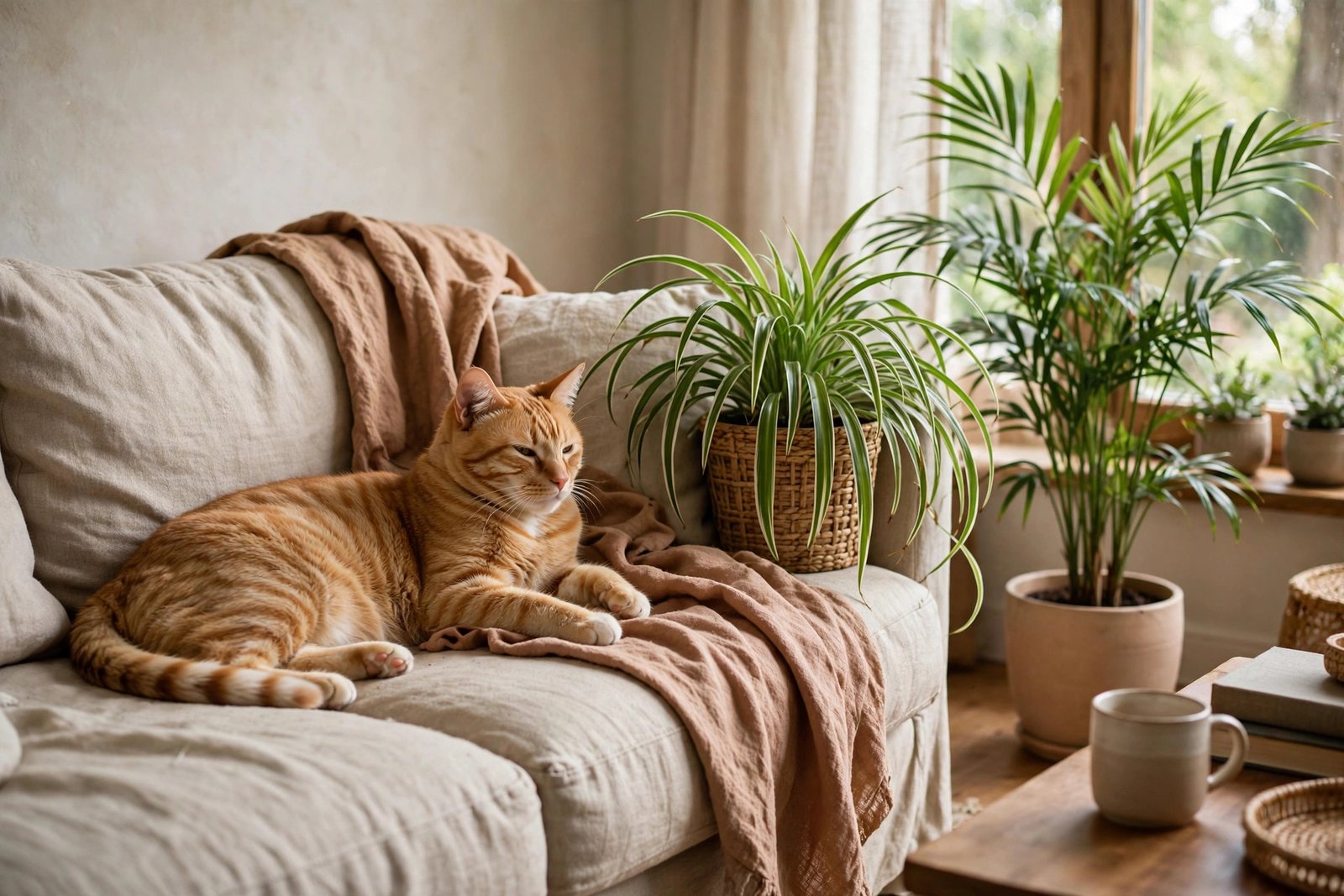
Spider plant (Chlorophytum comosum). The classic for a reason. Arching striped leaves, incredibly forgiving, produces baby plantlets you can propagate endlessly. It tolerates the occasional missed watering and bounces back from neglect. Fair warning: many cats find spider plants irresistible — the leaves apparently have a mild hallucinogenic effect on them, like a gentle catnip. It’s not harmful, but your plant may end up looking chewed. Hang it up.
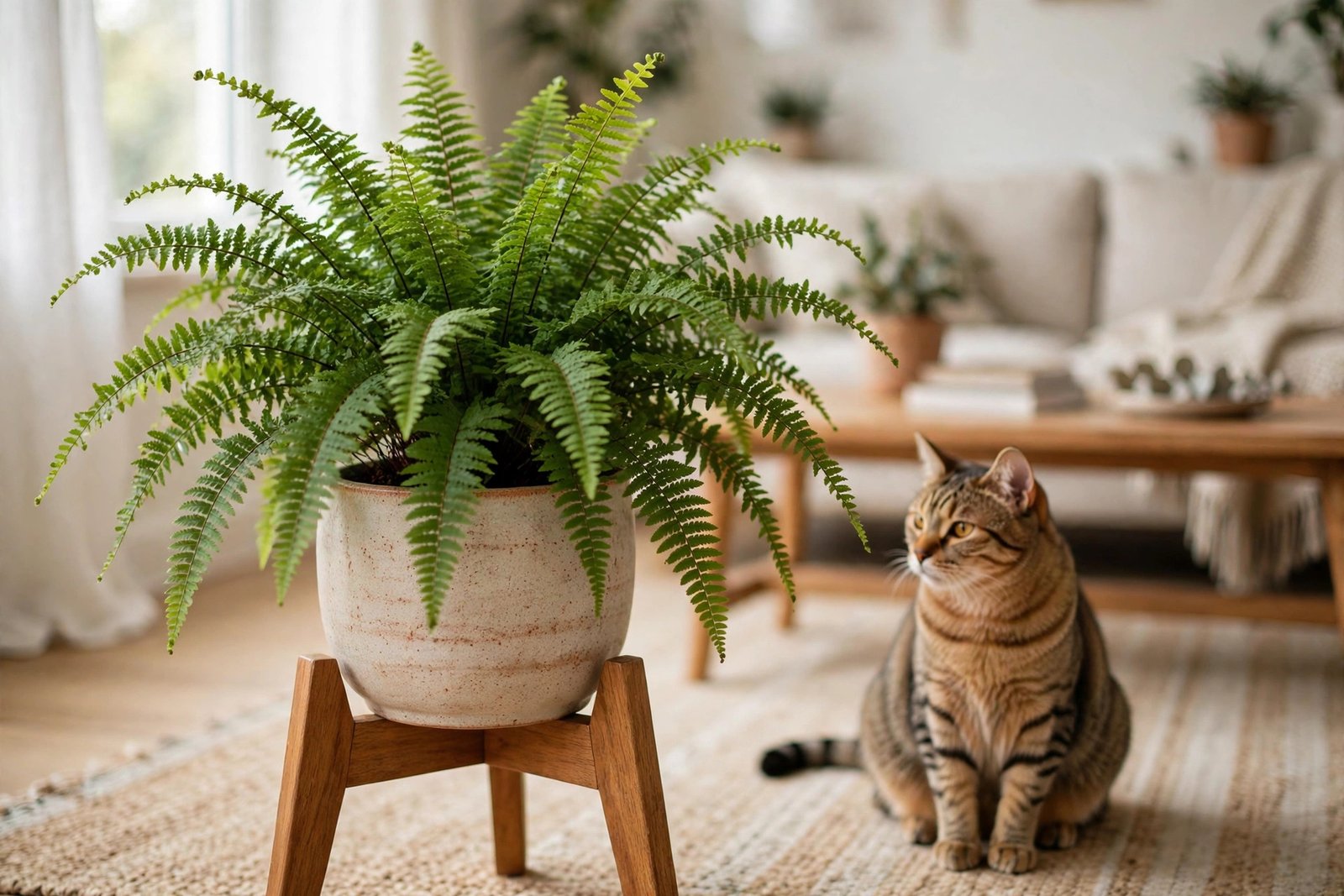
Boston fern (Nephrolepis exaltata). Lush, feathery, and dramatic in a hanging basket. Ferns want humidity and consistent moisture, so they’re a good fit if you’re an attentive waterer or have a steamy bathroom with light. Keep the soil evenly moist and mist occasionally.
Parlour palm (Chamaedorea elegans). Elegant, slow-growing, and tolerant of lower light — one of the best palms for beginners. It tops out around 2 to 3 feet indoors and asks for very little. Just note: while the parlour palm is considered safe, some other palms (like sago palm) are seriously toxic, so buy by the exact name.
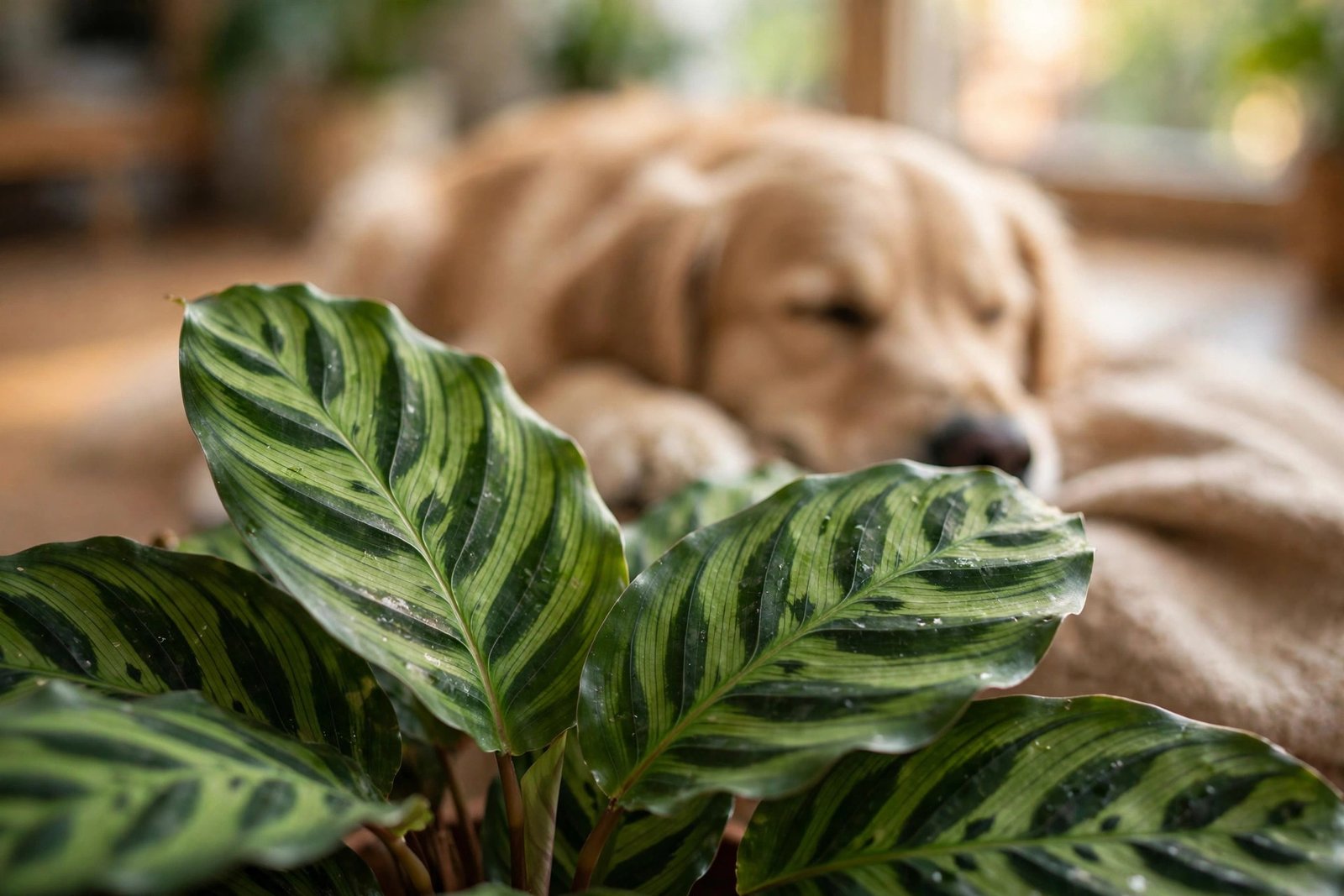
Calathea / prayer plants (Calathea, Maranta). The show-offs of the safe list — stunning patterned leaves in greens, pinks, and purples. They’re fussier than spider plants (they like humidity and dislike tap water chemicals), but if you want a statement plant that’s pet-safe, this is it.
African violet (Saintpaulia). Compact, flowering, and happy on a bright windowsill. They bloom for months with modest care — water from below, avoid wetting the leaves. A lovely pop of colour that’s widely considered safe.
Haworthia and echeveria (most). Good news for succulent lovers: many haworthias and echeverias are considered non-toxic, unlike some of their succulent cousins. They want bright light and very little water — perfect for a sunny sill. Always verify the exact species, though, as succulent toxicity varies.
Herbs. Basil, thyme, parsley, dill, and rosemary are all widely considered safe for cats and dogs — which is handy if you’re already growing herbs on your windowsill. A pot of cat grass (usually oat or wheat grass) gives nibblers something appropriate to chew and may spare your other plants.
Peperomia (most varieties). Compact, varied, adorable — peperomias come in dozens of leaf shapes and do well in moderate light. Most are listed as non-toxic. The ripple peperomia (Peperomia caperata) is a particular favourite.
Popular Plants to Keep Away From Pets
Just as useful as the safe list: the common houseplants that are widely reported as toxic to cats and dogs, so you can spot them in shops and steer clear (or place very carefully):
- Monstera (Swiss cheese plant) — contains calcium oxalate crystals; chewing causes mouth irritation and drooling.
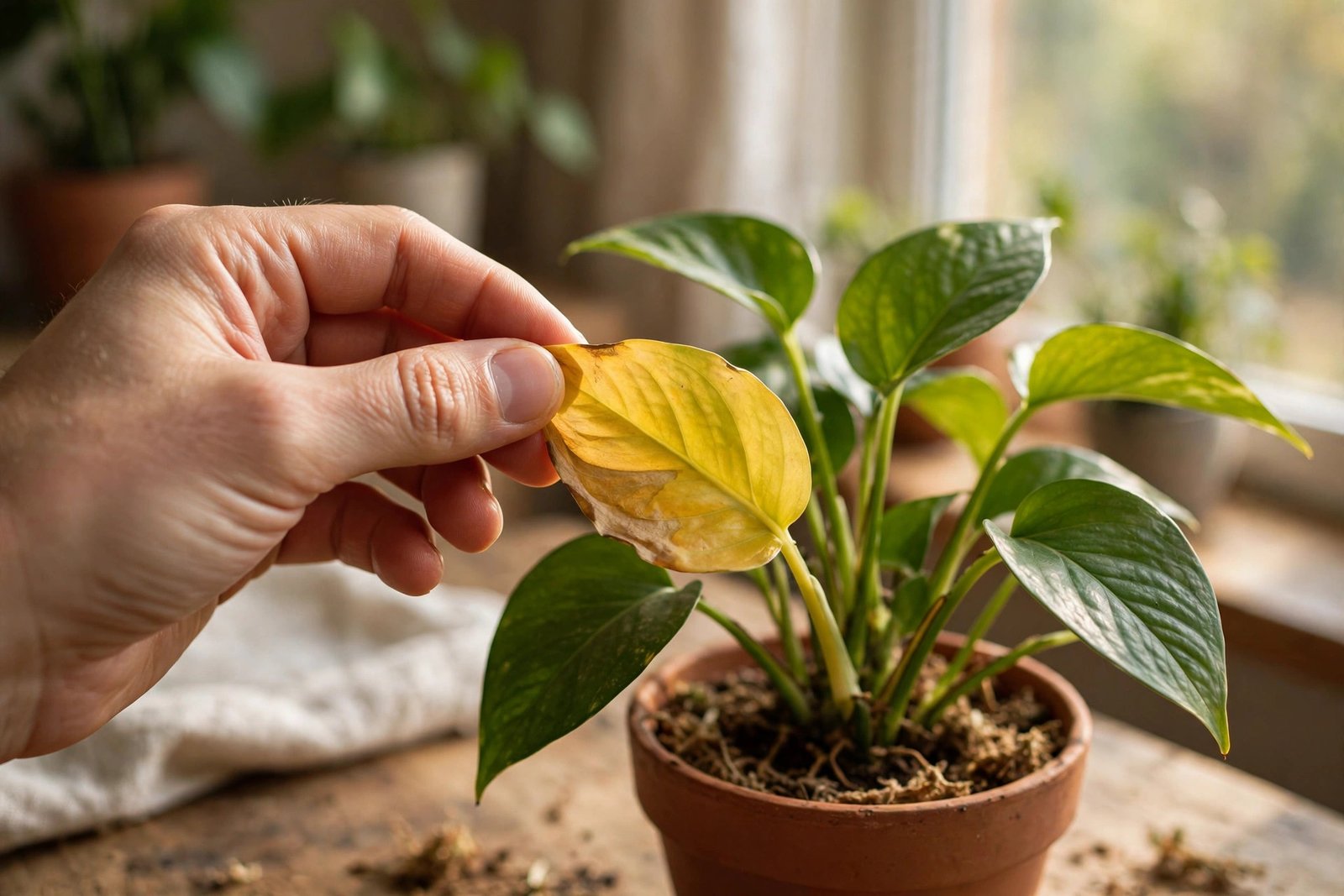
- Pothos / devil’s ivy — same oxalate issue. Heartbreaking, because it’s the easiest plant alive — but with a chewer in the house, hang it high or skip it.
- Snake plant (Sansevieria) — tough as nails, but toxic if ingested. One of the most common plants in pet-owning homes, usually fine on a high shelf away from cats.
- ZZ plant — beautiful and indestructible, but all parts are toxic. Keep it where pets can’t reach.
- Sago palm — this one is genuinely dangerous; all parts are highly toxic, especially to dogs. Avoid entirely if you have pets.
- Lilies (true lilies) — extremely toxic to cats; even pollen can be dangerous. If you have a cat, true lilies shouldn’t be in the house at all, including bouquets.
- Aloe vera — the gel is fine for humans, but the plant is toxic to pets if chewed.
To be clear: this isn’t a call to throw out every pothos. Many pet owners keep these plants safely on high shelves or in hanging planters. It’s about placement and knowing your animal — a dog that ignores plants is a different situation from a kitten that eats everything. Check the ASPCA list, assess your own pet’s habits, and decide accordingly.
Making Your Home Work for Both
Choosing safe plants is step one. Step two is setting things up so your greenery survives your pets:
Go vertical. Hanging planters, wall-mounted shelves, and tall plant stands keep plants out of reach. A kitten-proof setup can be basically a gallery wall of hanging spider plants and ferns — it looks fantastic.
Give them their own plant. A pot of cat grass or catnip on the floor gives nibblers an approved target. It won’t work on every animal, but it redirects many of them. Replace it every few weeks as it gets demolished.
Make pots unappealing. Cats love digging in potting soil. A layer of decorative pebbles or pinecones on the soil surface discourages excavation. Citrus peels on the soil work for some cats (most dislike the smell), though you’ll need to refresh them.
Secure your pots. A large dog’s wagging tail is a natural disaster for floor plants. Heavy, wide-based pots tip less. On balconies, remember that railing planters keep things up and away from dogs entirely.
Watch new plants closely. However safe a plant is listed, observe your pet’s interest level for the first week. Some animals ignore plants completely; others treat every new leaf as a personal challenge.
Shopping Smart: How to Check Before You Buy
Garden centres don’t always label toxicity, so build your own habit:
- Check the ASPCA list first. Search the plant’s Latin name on the ASPCA Toxic and Non-Toxic Plants database before buying. Common names vary; Latin names don’t.
- Photograph the label. As the guide to reading plant labels always says, snap the tag so you have the exact cultivar name for later checks.
- Ask, but verify. Shop staff are often knowledgeable, but “pet-safe” gets thrown around loosely. A quick ASPCA check takes thirty seconds.
- Bouquets count too. Those gorgeous lilies in a Mother’s Day bouquet are a classic cat emergency. If you have cats, specify no true lilies when ordering flowers.
Quick Answers to Common Questions
Is it true that cats instinctively avoid poisonous plants?
Not reliably, no. Some cats show little interest in plants; others chew everything green they meet. Kittens and bored indoor cats are the most likely to sample. Don’t rely on instinct — rely on plant choice and placement.
My cat chewed a plant — what should I do?
Stay calm, remove any plant material from their mouth, and identify the plant (this is where that label photo helps). Then call your vet or an animal poison helpline promptly — don’t wait for symptoms. Your vet is the right call, every time.
Are spider plants really safe? My cat eats mine constantly.
Spider plants are widely listed as non-toxic to cats and dogs. The compulsive chewing is common — cats seem mildly attracted to them. It’s not dangerous, but if your cat is stripping the plant bare, hang it out of reach and offer cat grass instead.
What about dogs that dig in outdoor pots?
The same safe-plant logic applies on the balcony. Choose non-toxic plants for accessible pots, use heavier containers that resist tipping, and consider a small barrier or raised bed for edibles. Most dogs lose interest once the novelty wears off.
Are air plants (tillandsia) pet-safe?
Most tillandsia species are widely listed as non-toxic to cats and dogs. They’re also naturally out of reach — mounted on walls or in hanging glass globes. Just make sure any mounting wire or glue is pet-safe too, and that globes are secured.
Can I still have a monstera if I have a cat?
Many people do — placed on a high shelf or in a room the cat doesn’t access. It depends entirely on your cat’s behaviour. If your cat is a determined chewer who climbs everywhere, it’s not worth the risk. Check the ASPCA entry, know your animal, and when in doubt, choose one of the safe alternatives above.
You really can have both: a home full of pet-safe houseplants and a pet who rules the place. It just takes a little label-checking up front and some thoughtful placement. A kitten grows to a year old, hanging ferns thrive, and the monstera lives happily at a sister’s cat-free house. Everybody wins — especially the kitten, who has a whole jungle of spider plants to (gently) terrorise.