A first attempt at apartment composting is often a disaster — vegetable scraps thrown into a lidded bin, no browns, never turned, left on a warm balcony all summer. What comes out is not compost. It’s a bin of slimy, foul-smelling regret that neighbours can smell through the wall, eventually disposed of at midnight like hiding evidence.
Here’s what every beginner should know: traditional composting — the big-pile, turn-it-with-a-fork method — doesn’t work in a small flat. But two other methods do, brilliantly. Bokashi fermentation and worm bins (vermicomposting) were designed for exactly this situation: no garden, minimal space, and a strong desire not to annoy the neighbours. Both systems run quietly for years, and container plants thrive on the results.
Why Apartment Composting Needs a Different Approach
A traditional compost heap works because of volume — a cubic metre of material generates enough heat to break down quickly and kill smells. A small bucket of scraps can’t do that. It just sits there, goes anaerobic (airless), and rots the smelly way.
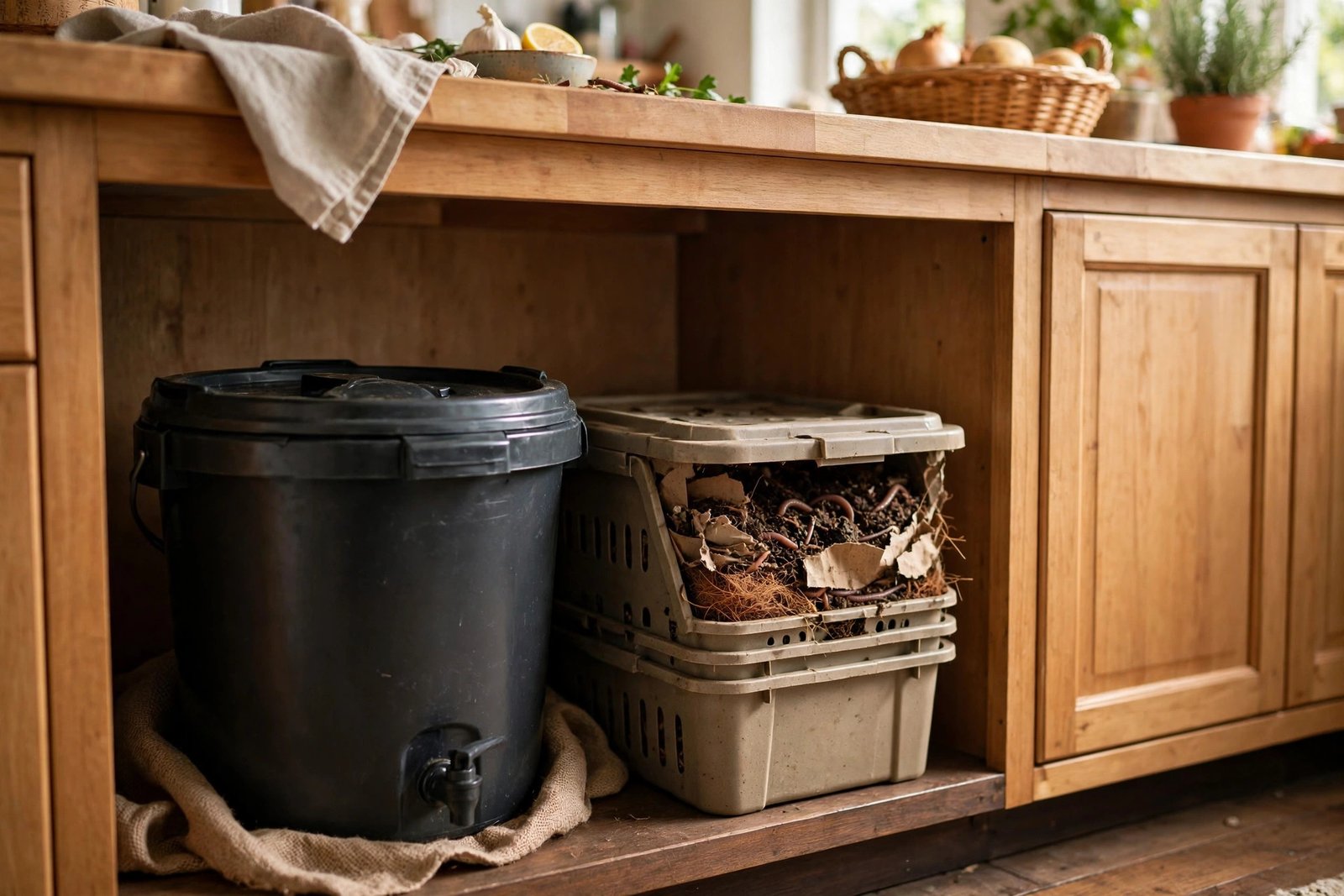
Bokashi and worm bins solve this differently. Bokashi doesn’t compost at all in the bucket — it ferments scraps with special microbes, pickling them like sauerkraut, with no smell and no heat needed. Worm bins use red wiggler worms to eat your scraps and turn them into the finest plant food on earth. Both fit under a sink or in a balcony corner. Neither smells when done right — a worm bin can live in a hallway cupboard without anyone noticing.
Bokashi: Ferment Your Scraps
How it works
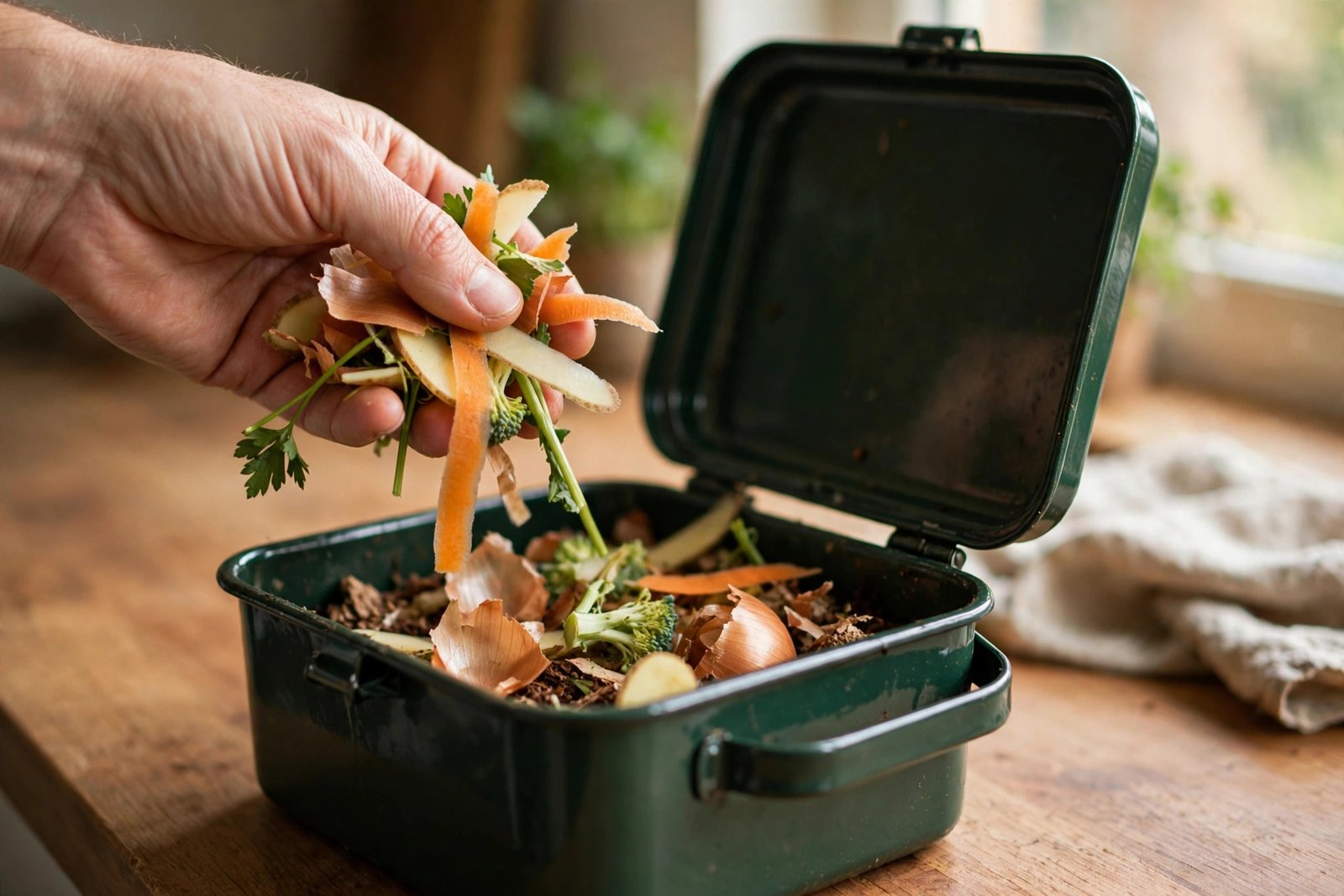
Bokashi is a Japanese method (the word roughly means “fermented organic matter”). You layer food scraps in an airtight bucket with a sprinkle of bokashi bran — wheat bran inoculated with effective microorganisms — press it down to squeeze out air, and seal the lid. The microbes ferment the scraps over about two weeks. The result isn’t finished compost; it’s pickled pre-compost that you then bury in soil or a planter, where it breaks down completely in another couple of weeks.
The magic part: because it’s fermentation, not rotting, there’s almost no smell — just a faint sweet-sour pickle tang when you open the lid. And unlike worm bins, bokashi handles everything: meat, dairy, cooked food, even small bones. Things you’d never put in a traditional compost.
Setup
You need a bokashi bucket (or two — here’s why), bokashi bran, and your scraps. A proper bokashi bucket has an airtight lid and a tap at the bottom to drain off the liquid. They cost roughly the price of a bag of potting mix and a bit. You can DIY one from two nested buckets with a tap fitted, but honestly the ready-made ones seal better and the seal is the whole point.
The two-bucket trick: while bucket one is sealed and fermenting (about 2 weeks), you need somewhere to put fresh scraps. So you fill bucket two. Then bucket one is ready to bury, and the cycle continues. Start with one bucket and you’ll see why two makes life easier within a month.
The routine
It’s genuinely low-effort. Chop scraps roughly (smaller pieces ferment faster), layer them in, sprinkle a handful of bran over each layer, press down firmly with a potato masher or your hand in a bag, and seal the lid. Drain the liquid — bokashi “tea” — every few days via the tap. Dilute it about 1:100 with water and it’s a fantastic natural fertiliser for your plants. Undiluted, it also works as a drain cleaner, which feels like a bonus superpower.
After about two weeks of sealed fermenting, bury the contents 8 to 10 inches (20–25 cm) deep in a large planter, raised bed, or a spare tub of soil. In two to four weeks it’s fully broken down into rich soil. A dedicated “soil factory” tub on the balcony — an old storage box where bokashi gets buried and left to finish — produces dark, crumbly soil that tomatoes go absolutely wild for.
Quick Tips:
- Press scraps down firmly and keep the lid sealed — bokashi needs an airless environment to ferment, not rot.
- Drain the bokashi tea every few days; diluted 1:100 it’s a brilliant free liquid fertiliser.
- Run two buckets in rotation so you always have somewhere to put fresh scraps.
- Bury fermented bokashi 8–10 inches deep in soil and wait 2–4 weeks before planting directly into it.
What can go in
Fruit and veg scraps, coffee grounds and tea bags (remove staples), eggshells (crushed), cooked food, meat, fish, dairy, bread, small bones. Basically all food waste. What stays out: large bones, excessive liquids, mouldy stuff in large quantities, and anything non-food. No garden waste needed — this is a food-scrap system.
Worm Bins: Let the Wigglers Do the Work
How it works
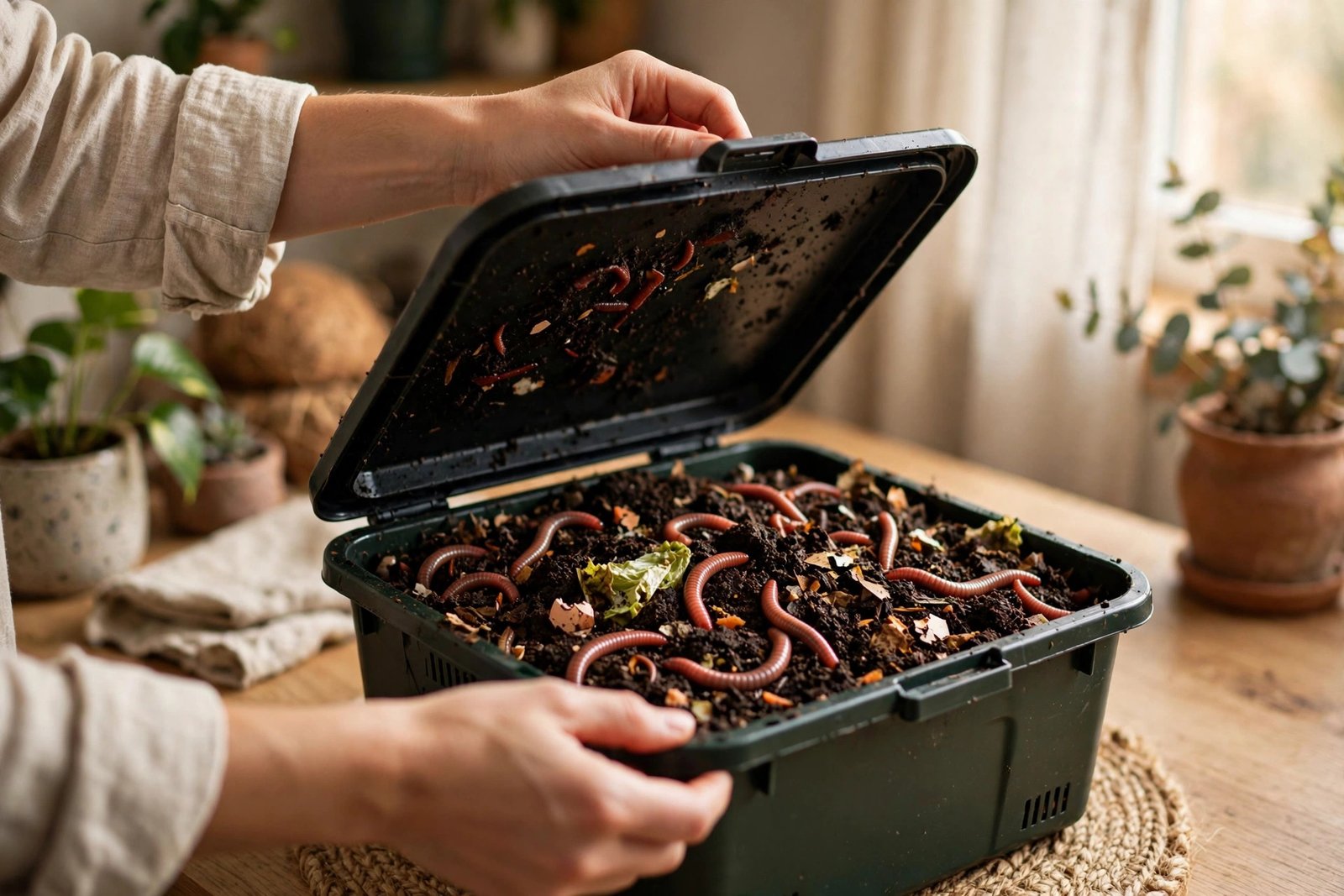
A worm bin is a stacked-tray or single-box system housing red wiggler worms (Eisenia fetida — not earthworms from the garden, which won’t thrive in a bin). You feed them your fruit and veg scraps; they eat them and excrete worm castings — a dark, crumbly, nutrient-rich material that is genuinely the best fertiliser there is. Better than anything in a bottle. Salad greens in casting-enriched soil grow visibly faster than control pots.
A well-run worm bin smells like fresh forest soil. Not “okay for compost” — actually pleasant. If a worm bin smells bad, something’s wrong (usually overfeeding or too wet), and it’s fixable.
Setup
You can buy a stacked tray system or make one from two or three nesting storage boxes with air holes drilled in the upper ones. The worms start in the bottom tray with damp shredded cardboard or coconut coir bedding; you add scraps; when the tray is full, you add a tray on top and the worms migrate upward, leaving finished castings below. Clever and low-mess.
You’ll need about 500g to 1kg of red wigglers to start — order from a worm farm supplier, not the fishing bait shop (different species). They cost roughly the same as a decent houseplant and they’ll double in population every few months if they’re happy. Bedding is shredded newspaper, cardboard, or egg boxes — free and plentiful.
Keep the bin somewhere with stable temperatures: 15–25°C (59–77°F) is ideal. A hallway cupboard, under the sink, or a sheltered balcony corner works. Avoid freezing in winter and baking in summer — worms are living creatures, not machines.
The routine
Feed them roughly their own weight in scraps per week to start, less at first while they settle in. Bury scraps under the bedding (this prevents fruit flies — the number one worm-bin complaint, and entirely avoidable). Add a handful of crushed eggshells or a sprinkle of lime now and then to keep acidity down. Keep bedding damp like a wrung-out sponge.
What goes in: fruit and veg scraps, coffee grounds, tea bags, crushed eggshells, shredded cardboard and paper, small amounts of bread. What stays out: meat, dairy, oily food, citrus and onions in large amounts (a little is fine), and glossy printed paper.
Harvest castings every 3 to 4 months by the tray-migration method, or by pushing finished material to one side and adding fresh bedding and food to the other — the worms move over on their own. Mix castings into potting soil at about 1 part castings to 3–4 parts soil, or sprinkle on top as a top-dressing. Your plants will notice.
Bokashi vs Worm Bin: Which Should You Choose?
Honestly? They complement each other beautifully — bokashi handles all food waste including meat and dairy, and its output can even be fed to the worms in small amounts once fermented. But if you’re choosing one:
Choose bokashi if: you want the simplest possible system, you produce a lot of cooked food waste, meat, or dairy, you’re short on attention (it forgives neglect for weeks), or you have outdoor planter space to bury the output.
Choose a worm bin if: you want the very best fertiliser for your plants, most of your waste is raw fruit and veg, you enjoy a slightly more hands-on hobby, or you have no outdoor soil space at all (castings store in a bag; bokashi output needs burying somewhere).
Choose both if: you’re three years in, slightly obsessed, and your plants have never looked better.
Troubleshooting: The Smell Question
Let’s address the fear directly, because it’s why most apartment dwellers don’t compost. Done right, neither system smells. If something’s off:
- Bokashi smells rotten: the seal failed or not enough bran. Add more bran, press down, ensure the lid is truly airtight. A healthy bucket smells faintly of pickles.
- Worm bin smells bad: usually overfeeding — uneaten food rotting. Stop feeding for a week, add dry shredded cardboard, and bury future scraps deeper.
- Fruit flies around the worm bin: scraps exposed on the surface. Always bury food under 2 inches of bedding and keep a dry cardboard layer on top.
- Bokashi tea smells awful: it does have a strong tang, honestly — that’s normal. Dilute it well and use it on soil, not leaves.
Frequently Asked Questions
Will my landlord or neighbours complain?
They shouldn’t ever know. Both systems are sealed and odourless when run correctly. A bokashi bucket can sit under a kitchen sink for two years and no guest ever notices. If you’re in a flat with strict rules, a worm bin in a cupboard is essentially invisible.
How much does it cost to start?
A bokashi bucket plus bran, or a basic worm bin plus worms, each costs roughly what you’d spend on a couple of bags of potting mix and a plant or two. After that, running costs are tiny — a bag of bran lasts months, and worms feed themselves on your rubbish. The fertiliser they produce would cost far more to buy.
Can I compost on the balcony instead of indoors?
Yes — both systems work on a sheltered balcony for most of the year. Just protect worm bins from freezing in winter (insulate or bring inside) and keep bokashi buckets out of extreme heat. A soil-factory tub lives happily on the balcony year-round.
What do I do with the compost if I only have a few pots?
Worm castings are easy — bag them and use a little at a time as top-dressing or mix into soil when repotting. Bokashi output needs burying, so keep one large tub as your soil factory and cycle soil through it. Finished soil from either system is also a lovely gift for gardening friends.
Do worm bins attract pests?
A healthy bin doesn’t. Fruit flies appear only if scraps sit exposed — bury them and the problem never starts. The bin itself is enclosed, so no rats, no mice, no drama. A well-run bin lives in a hallway cupboard for years without a single pest incident.
Is bokashi tea safe for all plants?
Diluted 1:100 with water, yes — it’s gentle and plants love it. Don’t pour it on undiluted; it’s acidic and strong. Use it every couple of weeks on herbs, vegetables, and houseplants through the growing season.
Midnight bin-disposal days can stay in the past. These days food scraps become plant food through two quiet little systems that ask almost nothing, and a balcony garden gets fed almost entirely for free. If apartment composting ever sounded impossible to you, let the slimy-bucket era be the cautionary tale — and let bokashi or a worm bin be the much better second attempt.