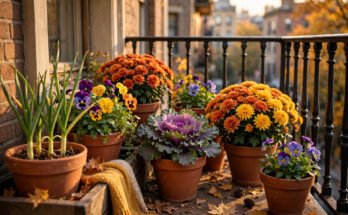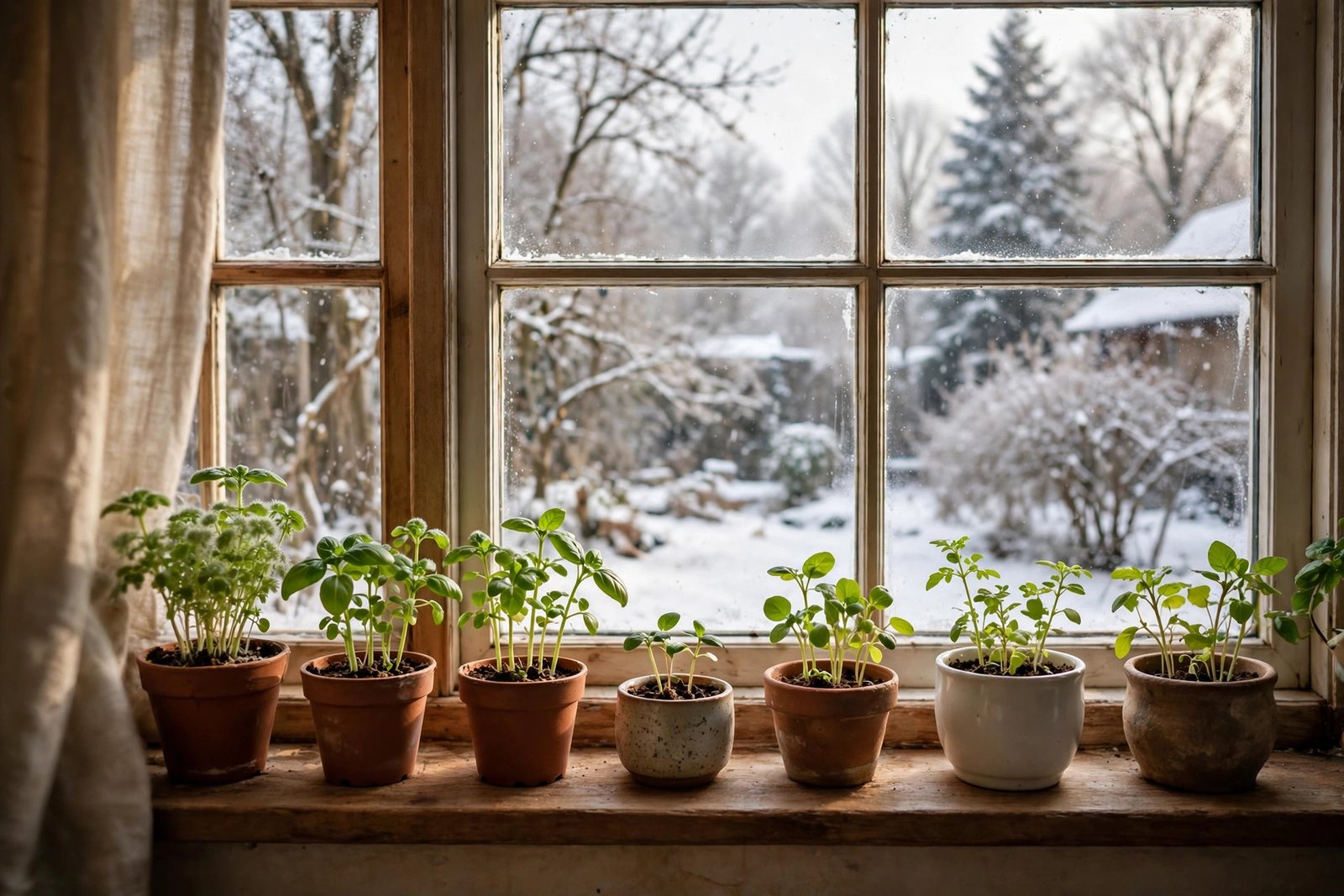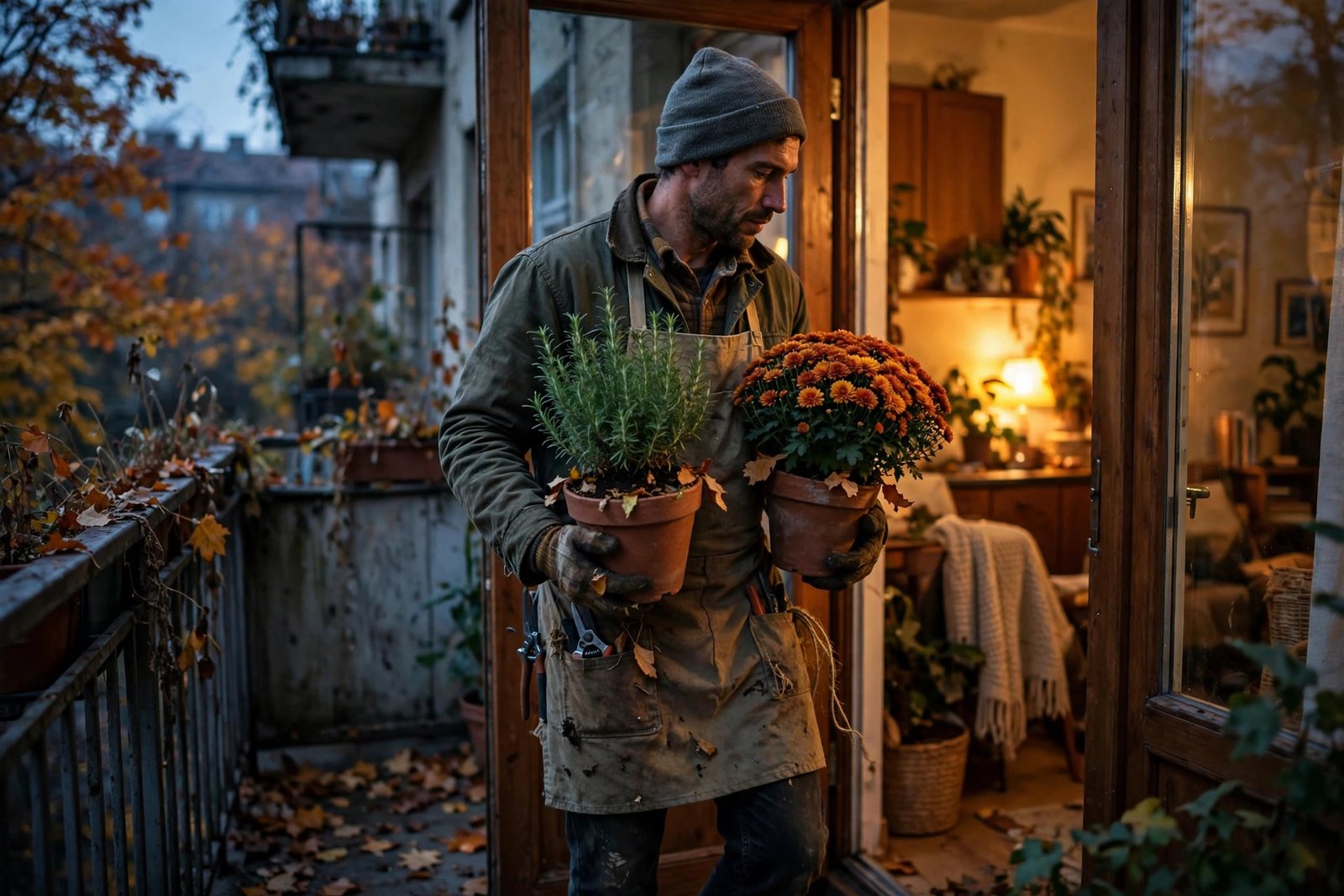
I’ve got the timing of bringing plants indoors for winter wrong in both directions, and I know exactly which mistake stings more. One October, seduced by a warm forecast, I hauled everything inside three weeks early — a month of pots on every surface, my poor monstera shoved into a dim corner where it sulked and dropped leaves in protest. The other year I swung the opposite way: left my lemon tree and two geraniums out through what the forecast called “a cool night” and woke up to blackened, translucent leaves. The geraniums forgave me. The lemon tree did not.
The lesson from both disasters is the same, and it’s the whole point of this guide: when to bring plants indoors for winter is a temperature question, not a calendar question. October means nothing. A thermometer means everything. Here’s how I time it now, plant by plant, after five autumns of getting it mostly right.
Quick Tips:
- Watch night temperatures, not the calendar — start moving tender plants in when nights consistently dip toward 50°F (10°C).
- Move plants before the first frost is forecast, not after it arrives — one frosty night can finish a tropical.
- Inspect every plant for pests on the balcony, shower it off, and only then bring it inside.
- Ease the transition: bring pots in at night for a week before they move in for good.
- Give indoor plants your brightest window, keep them away from radiators, and water less than you think.
The Temperature Rule (Forget the Calendar)
The only number that matters in autumn is the overnight low. Most tropical and tender plants start taking damage when nights drop below 50°F (10°C) — often invisibly at first, showing up a week later as yellowing, leaf drop, or stems that go soft. My working trigger is simple: nights consistently at or below 50°F (10°C) and the tender group starts coming in; a frost forecast within the next week and everything tender is in, no debate.
The calendar lies because autumn doesn’t arrive on schedule — I’ve had a balmy October with everything out happily until November, and a September cold snap with the leaves still green. So from mid-September onward, I check the 10-day forecast every morning with tea. Thirty seconds, and it has saved more plants than any gadget I own.
The calendar also hides your microclimate: my fifth-floor balcony runs a few degrees colder and much windier than street level on the same night. Put a cheap min-max thermometer where your pots actually live — the forecast may say 46°F (8°C) while your windy balcony is living 41°F (5°C). Ask me how I know.
Different Plants, Different Deadlines
Not everything needs to come in at once — hauling the whole collection inside in one panicked evening is how you end up with a living room you can’t walk through. I move mine in waves:
First in: true tropicals (nights near 50°F / 10°C)
Hibiscus, mandevilla, bougainvillea, citrus, plumeria — the divas. They come from places where 50°F (10°C) is a cold snap, and chilly nights mean leaf drop at best, stem damage at worst. My meyer lemon comes in the moment nights flirt with 50°F, and winters in my brightest window, mildly annoyed but alive.
Second wave: tender perennials (before first frost)
Geraniums (pelargoniums), fuchsias, lantana, cannas, potted dahlias — tougher, comfortable down to about 45°F (7°C), but a real frost blackens them overnight. This is the group I lost that fateful October. Now they come in at the first whisper of “frost” in the forecast, even ten days out. Forecasts change; dead geraniums don’t un-die.
Don’t forget: succulents and cacti
Desert plants are tough about drought, not about cold, wet autumns. Most common succulents want to be inside before nights approach 40°F (5°C), and they want to be dry: cold plus wet soil is the combination that rots them. I stop watering mine entirely about two weeks before they come in.
Can stay out: hardy herbs and tough customers
Thyme, sage, chives, mint — and in milder zones, rosemary — can stay out all winter, tucked against the house wall and out of the worst wind. My rosemary has overwintered on the balcony three years running. Mulch the surface, make sure pots drain freely (a frozen saucer of water is what kills them), and in harsh zones wrap pots in bubble wrap or hessian for insulation.
When in doubt, err early. A week too early costs you some floor space. One night too late can cost you the plant.
The Check-and-Clean Routine (Do It on the Balcony)
Here’s the step I skipped in my early years, and paid for with a winter of spider mites. Everything that lived outside all summer is carrying something — aphids tucked under leaves, spider mites too small to see, the odd mealybug in a leaf joint. Bring a plant inside unexamined and you’ve given every pest a warm, predator-free winter resort.
So every plant gets inspected before it crosses the threshold — on the balcony, not the sofa. Turn each pot, check leaf undersides, stem joints, and the soil surface. Found squatters? A strong blast of water knocks off most of them; I do it over the balcony edge and let gravity help. For anything persistent, the natural remedies for common houseplant pests I keep on hand handle the rest.

While you’re at it: scrape off the top inch of outdoor soil and replace it with fresh mix (balcony soil can harbour gnat eggs and other surprises), prune off dead leaves, and wipe the pot. Check for root-bound plants, but resist repotting now — autumn repotting stresses a plant facing lower light. Spring is kinder, unless one is truly bursting out of its pot.
The Two-Week Ease-In (Don’t Just Yank Them Inside)
In spring we harden plants off before they go outside; in autumn the same logic runs in reverse. A plant that’s spent five months in bright outdoor light reacts badly to a sudden move into a dim living room — my hibiscus dropped half its leaves within ten days the year I rushed it, and I spent November apologising to a bare stem.
Now I ease them in over about two weeks. Week one: pots come inside at night, back out by day — five minutes each evening, lined up by the door like commuters. Week two: they sit in the shadiest balcony corner for a few days, then come in for good. I also trim leggy summer growth first — less plant to support in low light, fewer leaves to drop, and the pots fit through the doorway.
Strictly necessary? No — tough plants survive the abrupt move. But the gentle version means far less leaf drop, and November leaf drop always feels like failure even when the plant is fine.
Setting Up the Winter Spot
Light is the limiting factor indoors, full stop. Your plants are about to live through the darkest months in the darkest spot they’ve known, so give them your brightest real estate: south-facing window first, east-facing second. I rearrange my living room every October — plants get the window, I get what’s left. Rotate each pot a quarter-turn weekly so they don’t all lean toward the glass.
Two placement rules from hard experience. First: keep plants away from radiators — hot, dry air crisps leaf edges fast, so no pot within about 3 feet (1 metre) of a heat source. Second: watch for cold drafts. A bright single-glazed windowsill can be icy on January nights; a tropical pressed against the glass gets chilled on one side and baked by the radiator on the other. A plant stand set a few inches back from the glass solves both.
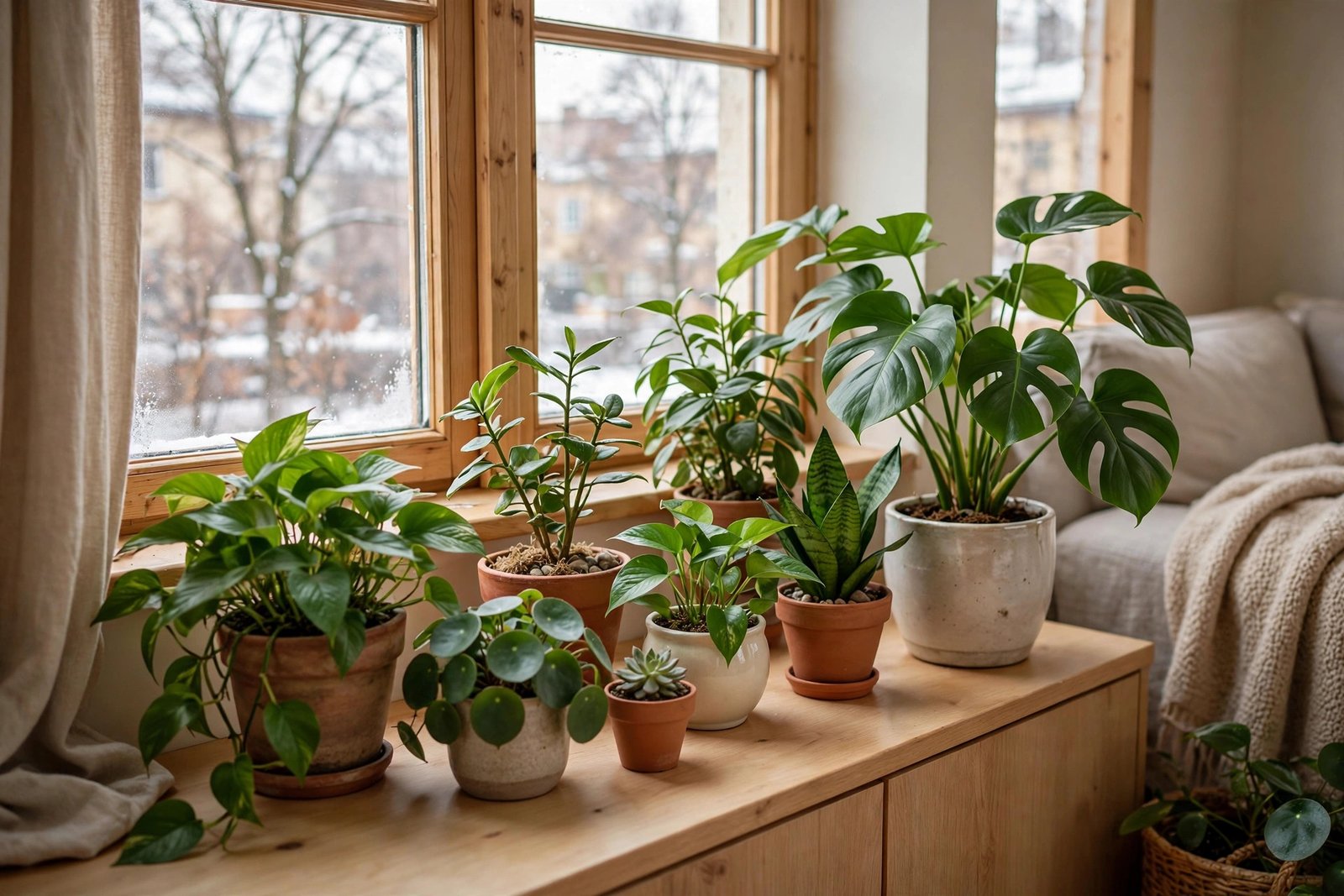
Winter air indoors is brutally dry, so group your plants to build a little pocket of humidity, and set the thirstiest ones on pebble trays (a shallow tray of pebbles with water just below the tops). For light-hungry tropicals in a dark flat, a basic LED grow light on a timer for 12–14 hours a day makes a genuine difference — mine cost less than a takeaway, and my citrus kept its leaves for once.
Winter Indoors Means a Different Routine
The biggest adjustment isn’t where the plants live — it’s how you treat them there. Growth slows to a crawl in low light, so dial everything back. Water far less: most of mine go two to three times as long between waterings as in July. The finger test still rules — and the guide to overwintering tender plants indoors goes deeper on the seasonal routine for the fussiest subjects.
Stop feeding entirely — no fertiliser from roughly October to March, since pushed growth in low light turns weak and leggy. Expect some leaf drop in the first weeks indoors; the plant is matching its foliage to the available light, not dying. Don’t panic-water a plant dropping leaves from low light — you’ll just add root rot to its problems.
Do watch for pests: warm, dry indoor air is spider-mite heaven. I check leaf undersides once a month — ten minutes for the whole collection. And if you’re sorting the balcony itself, preparing your container garden for autumn and winter covers the pots staying outside.
Questions I Get Asked a Lot
Is it worse to bring plants in too early or too late?
Too late, and it isn’t close. A plant brought in three weeks early deals with lower light and a crowded living room — annoying, fixable, survivable. A plant left out through one hard frost can lose every leaf overnight, and tropicals often don’t recover from stem damage. When I’m torn, I bring them in. The sofa can wait.
My plant is dropping leaves after coming inside — is it dying?
Almost certainly not. Shedding leaves is how a plant matches its foliage to lower indoor light — downsizing, not dying. Give it two to three weeks, keep watering steady (not extra — wet soil plus leaf drop is the classic overreaction spiral), and watch for tiny new growth at the stem tips. Firm, green stems under the bark mean you’re fine.
Can I just wrap my pots and leave everything on the balcony?
Only the genuinely hardy ones. Wrapping a pot in bubble wrap or hessian insulates roots against freeze-thaw cycles — which helps borderline-hardy herbs — but no wrapping saves a hibiscus or a citrus from freezing air. Insulation doesn’t make a tender plant hardy. Know which group each plant is in before you decide.
Should I repot when I bring plants indoors?
Try not to. Repotting stresses a plant that’s about to face plunging light — it must regrow roots exactly when it has the least energy. I note the root-bound ones in October and deal with them in March. The only exception: a plant so pot-bound it can’t take up water gets the upgrade regardless of season.
Do I really need a grow light, or is a bright window enough?
For most houseplants and overwintering tender perennials, a bright south or east window is genuinely enough — tired by February, but alive. Grow lights earn their keep for light-hungry tropicals like citrus and hibiscus, or anything you want to actually grow through winter rather than merely survive it. And it needn’t be fancy: a full-spectrum LED bulb in a desk lamp, close to the plant, beats an expensive panel three feet away.
Five autumns in, my October routine is almost enjoyable: the forecast-checking, the evening ferrying of pots, the living room slowly filling with green. Get the timing right and winter becomes something your plants simply sit out — and come March, you’ll carry them back out to a balcony that feels like a reunion.