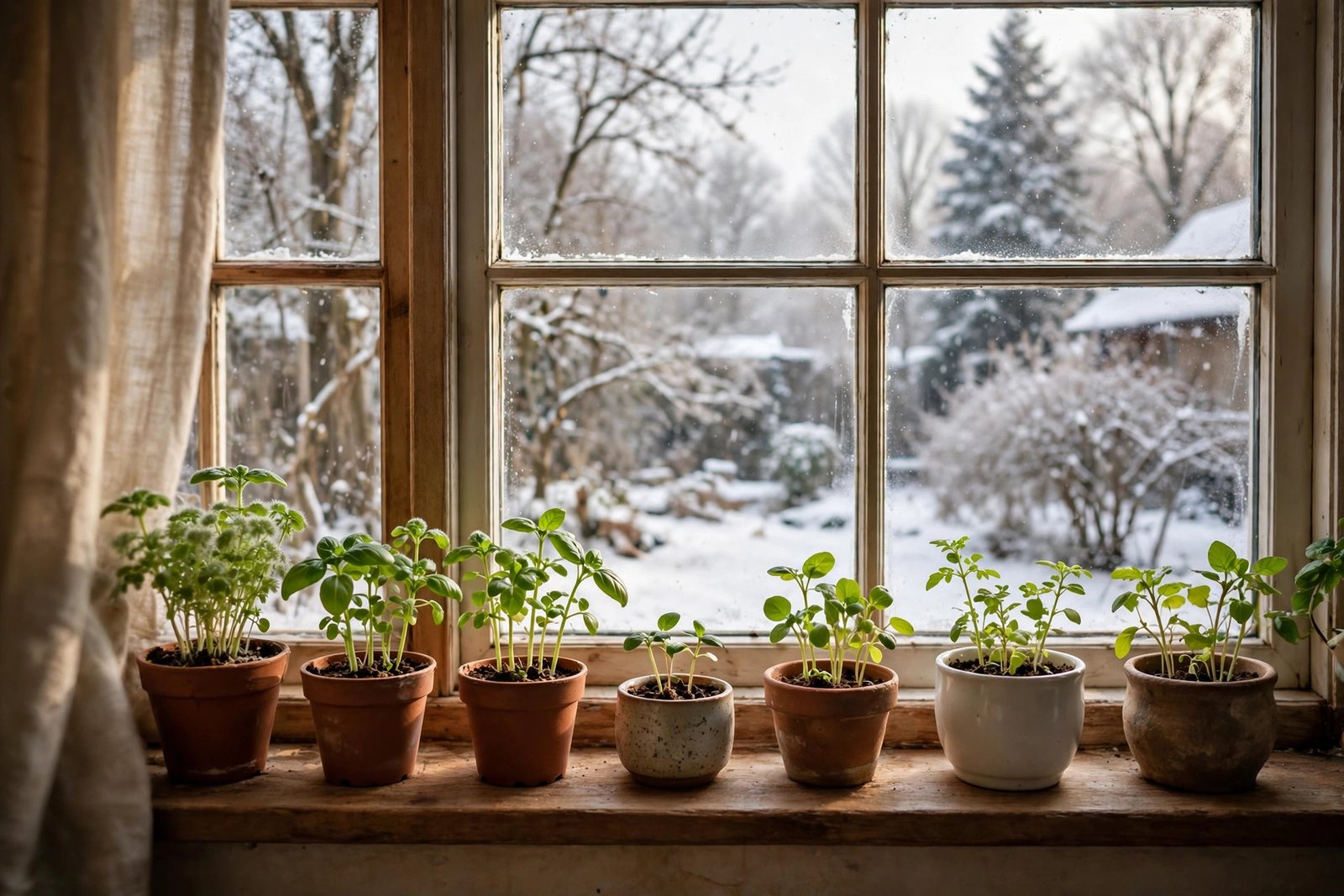
I’m going to say something that sounds wrong: October is a better planting month for container gardeners than April. Spring gets all the glory — the seed packets, the garden centre displays, the whole ritual — but October is when the smart money plants. The soil is still warm from summer, autumn rain does half your watering, there are no aphids to speak of, and everything you put in now gets a head start that spring sowings can’t touch. My best garlic, my earliest broad beans, and every spring bulb display I’ve ever been proud of were all planted in October, in pots, on a rented balcony.
If you’re wondering what to plant in October in pots, the short answer is: more than you think. Garlic and broad beans for next summer’s harvest, hardy herbs for winter cooking, spring bulbs layered like a lasagne, and enough cheerful colour — pansies, violas, ornamental kale, chrysanthemums — to keep the balcony looking alive through the grey months. Here’s my full October planting list, with the varieties and pot sizes that actually work.
Quick Tips:
- Plant garlic and broad beans in October for the earliest harvests next year.
- Use pots at least 10–12 inches (25–30 cm) deep for garlic, bulbs, and broad beans.
- Layer spring bulbs in one pot (lasagne planting) for months of staggered flowers.
- Autumn rain does most of the watering — check pots are draining, not drying.
- Move tender pots against a sheltered wall before the first hard frost.
Garlic: The Easiest October Win
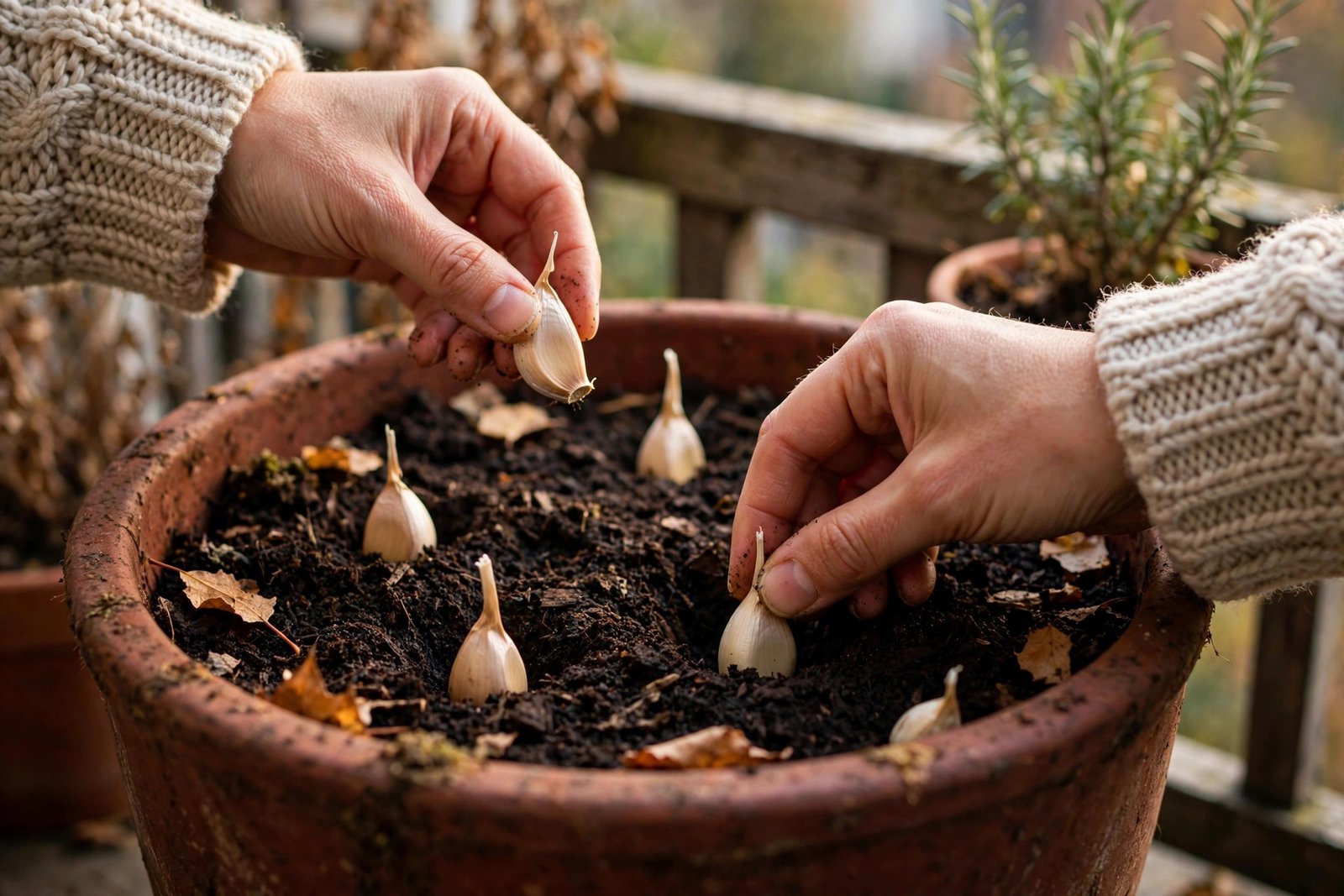
If you plant one edible thing this October, make it garlic. It’s absurdly easy in pots, it practically looks after itself all winter, and pulling up your own fat bulbs next July feels like a magic trick. I grow ‘Music’ and ‘Chesnok Red’ — both hardneck varieties that handle cold winters well and produce those curly scapes in early summer that are a delicacy on their own.
Use a pot at least 10–12 inches (25–30 cm) deep — garlic roots go down — filled with multipurpose compost mixed with a handful of grit for drainage. Break the bulb into cloves (keep the papery skins on), and push each clove pointy-end-up about 2 inches (5 cm) deep, spaced 4–6 inches (10–15 cm) apart. A 12-inch pot holds about five cloves comfortably. Water once, then let autumn rain take over.
The shoots will poke up within a few weeks and then just… sit there all winter, a few inches of green defying the cold. That’s normal — garlic needs that cold period to form proper bulbs. Don’t fuss over it, don’t feed it until spring, and don’t panic when the tips brown slightly in January. Come June or July, when the lower leaves yellow, you’ll dig up bulbs twice the size of what you planted.
Broad Beans: Next Spring’s First Harvest
October-sown broad beans are one of container gardening’s best-kept secrets. Sow a hardy variety now — ‘Aquadulce Claudia’ is the classic for autumn sowing, and ‘The Sutton’ stays compact enough for pots — and they’ll establish roots through autumn, sit quietly through winter, then race away in March while spring-sown beans are still in packets.
They need depth: a pot at least 12 inches (30 cm) deep and wide, or a deep trough. Sow two or three beans per pot, 2 inches (5 cm) deep, and thin to the strongest seedling. In my experience, autumn-sown broad beans in pots outperform spring-sown ones by a clear month — I was picking beans in late May from October sowings while my neighbour’s April sowings were still flowering.
One caution: in very cold areas (regular hard frosts below about -10°C / 14°F), young plants can suffer. A sheltered spot against the house wall is usually enough; in a truly brutal winter, a bit of horticultural fleece on the coldest nights does the job. Here’s my full month-by-month rundown of what to plant in September in pots if you want to compare the two months — September and October overlap a lot, but October is the last call for garlic and bulbs.
Hardy Herbs for Winter Cooking
October is prime time for planting the herbs that will feed you through winter. Parsley is my number one — a pot of flat-leaf parsley sown or planted now will keep producing through the cold months, and it’s the herb I reach for most. Chervil is another October favourite: sow it now and it grows slowly through autumn, giving you delicate anise-flavoured leaves for winter salads.
Perennial herbs planted now get their roots down before winter and come back stronger in spring. Chives, mint (always in its own pot — it takes over everything), thyme, and winter savory all do well planted in October. Use pots at least 8 inches (20 cm) across, decent compost, and a sunny-ish spot. Rosemary can go in now too in milder areas, though I’d wait until spring for it if your winters are harsh.
Coriander is the one herb I’d skip in October — it hates the cold and will bolt or sulk. Everything else on this list shrugs off frost. A row of herb pots by the kitchen door in October is one of the highest-return moves in container gardening: fresh flavour all winter from about twenty minutes of planting.
Spring Bulbs: The Lasagne Trick
Here’s the October planting I look forward to most: layering spring bulbs in big pots so they flower in succession from February to May. It’s called lasagne planting, and it turns one pot into three months of flowers.
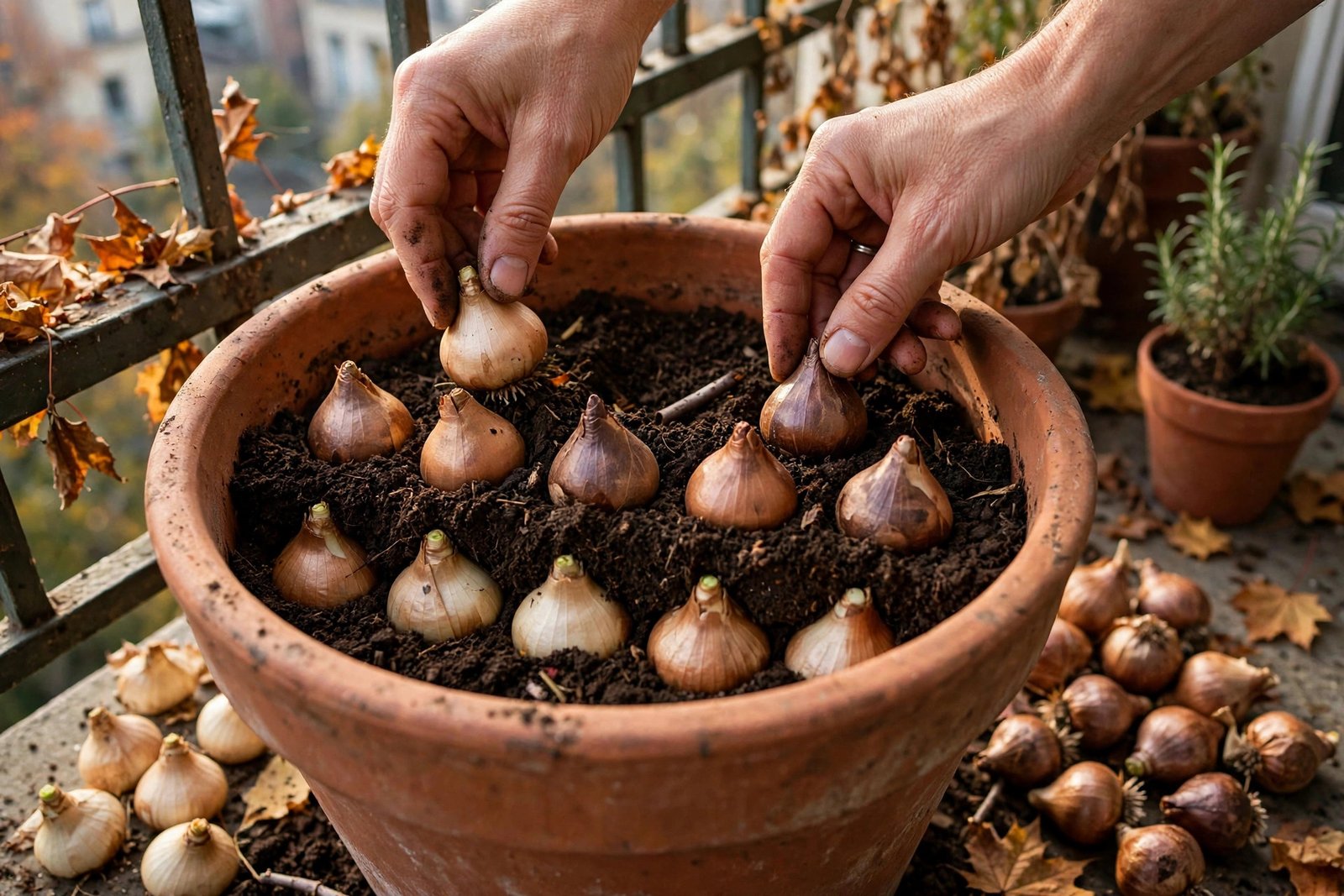
Take a pot at least 12 inches (30 cm) deep. Put a layer of compost in the bottom, then your latest-flowering bulbs — tulips — points up. Cover with a few inches of compost, add a layer of mid-season daffodils or narcissi, more compost, then a top layer of early crocuses or grape hyacinths near the surface. Water once. That’s it. The bulbs sort out the timing themselves: crocuses in February, daffodils in March and April, tulips in April and May, all from the same pot.
My go-to varieties: ‘Tete-a-Tete’ miniature daffodils (tough as old boots in pots), ‘Apeldoorn’ or any Darwin hybrid tulips for impact, and crocus ‘Ruby Giant’ for early colour. Buy bulbs now — October is peak bulb season, and the good varieties sell out. One warning from experience: squirrels love freshly planted tulip bulbs. A square of chicken wire laid over the pot surface stops them digging, and you can remove it once shoots appear.
Instant Colour: Pansies, Violas, Kale, and Chrysanthemums
Not everything in October is about right now — some of it is about right now. Summer bedding is finished, the balcony looks tired, and a few pots of autumn colour change the whole mood. Pansies and violas are the workhorses: plant them now and they’ll flower through autumn, pause in the depths of winter, and then burst back in March. I’ve had the same violas flowering from October to May.
Ornamental kale and cabbages are the drama queens of the autumn pot — their ruffled leaves turn pink, purple, and cream as the temperature drops, and they look better in December than they did in October. Chrysanthemums give you those big blowsy autumn blooms in bronze, gold, and rust. Group them in threes by the door or on the balcony railing, and the grey months feel a lot less grey.
All of these are happy in 8–10 inch (20–25 cm) pots of ordinary multipurpose compost. Deadhead the pansies and they’ll keep flowering; leave the kale alone entirely — cold is what makes it beautiful.
Winter Salads: Cut-and-Come-Again Leaves
One more October sowing that pays off all winter: hardy salad leaves. Winter lettuce varieties like ‘Winter Density’ and ‘Arctic King’, plus corn salad (lamb’s lettuce) and land cress, can be sown in pots now and will give you cut-and-come-again leaves through the cold months. They grow slowly in low light, but slowly is fine when the alternative is nothing.
Sow thinly in a wide, shallow pot or trough — 6 inches (15 cm) deep is plenty — keep the compost just moist, and start picking outer leaves once they’re a few inches tall. A sheltered spot helps enormously; against a south-facing wall is ideal. I keep a trough of winter leaves by the kitchen door from October to March, and it’s the thing I’m smuggest about all winter.
October Pot Care: What Changes This Month
October isn’t just about planting — it’s about switching your whole container routine to winter mode. The jobs:
- Check drainage, not dryness. Autumn rain does most of the watering now. Your job flips from watering to making sure pots aren’t waterlogged — clear drainage holes, tip saucers out after heavy rain, and raise pots on feet so water escapes.
- Move the tender stuff. Anything frost-tender — pelargoniums, tender fuchsias, citrus — needs to come under cover before the first hard frost. Against a sheltered house wall buys you a few degrees; a cold frame or unheated porch is better.
- Stop feeding. Most plants are winding down. The last feed should have been September. Feeding now encourages soft growth that frost will damage.
- Mulch the perennials. A 2-inch (5 cm) layer of bark or compost on pots staying out all winter protects roots from freeze-thaw cycles.
- Clean up, don’t strip. Remove dead summer bedding, but leave seed heads on anything wildlife-friendly — birds will thank you in January.
If you want the full winter-prep routine, my guide to preparing your container garden for autumn and winter covers it in detail. And October is also a good month to start a wormery or bokashi bin for kitchen scraps — my guide to composting in a small apartment will have you making free compost by spring.
Questions I Get Asked a Lot
Is October too late to plant garlic?
No — October is ideal, and early November still works in most areas. Garlic actually needs a period of cold to form proper bulbs, so planting in October gives it exactly what it wants. The only real deadline is getting cloves in before the ground (or your compost) freezes solid.
Can I plant spring bulbs in pots in October, or should I wait?
October is the perfect month for most spring bulbs — daffodils, crocuses, hyacinths, and narcissi all go in now. Tulips are the exception that prefer November, when the soil is cooler, because it reduces the risk of tulip fire disease. But honestly, tulips planted in late October do fine too.
Will my October plantings survive frost in pots?
The plants on this list are chosen because they can. Garlic, broad beans (hardy varieties), pansies, ornamental kale, and spring bulbs all handle frost — many of them need cold. The main risk isn’t the cold air, it’s pots freezing solid and thawing repeatedly, which is why sheltered spots and mulch matter more than wrapping everything in fleece.
Do I need to water much in October?
Much less than summer. Autumn rain usually handles it. Check pots after dry spells — pots under a balcony overhang or eaves miss the rain entirely and still need watering. But the classic October mistake is overwatering out of summer habit, so check the soil before you reach for the can.
What if I missed September planting — have I lost my chance?
Not at all. October overlaps heavily with September for garlic, broad beans, hardy herbs, and bulbs. You’ve missed the window for some tender things, but everything in this guide is still plantable now. October is a second chance disguised as a deadline.
So that’s my case for October: garlic in deep pots, broad beans for spring, herbs by the door, bulbs layered like lasagne, and enough pansies and kale to keep the balcony cheerful until March. Twenty minutes of planting now, and your future self — the one picking garlic in July and watching tulips open in April — will be very glad you bothered.