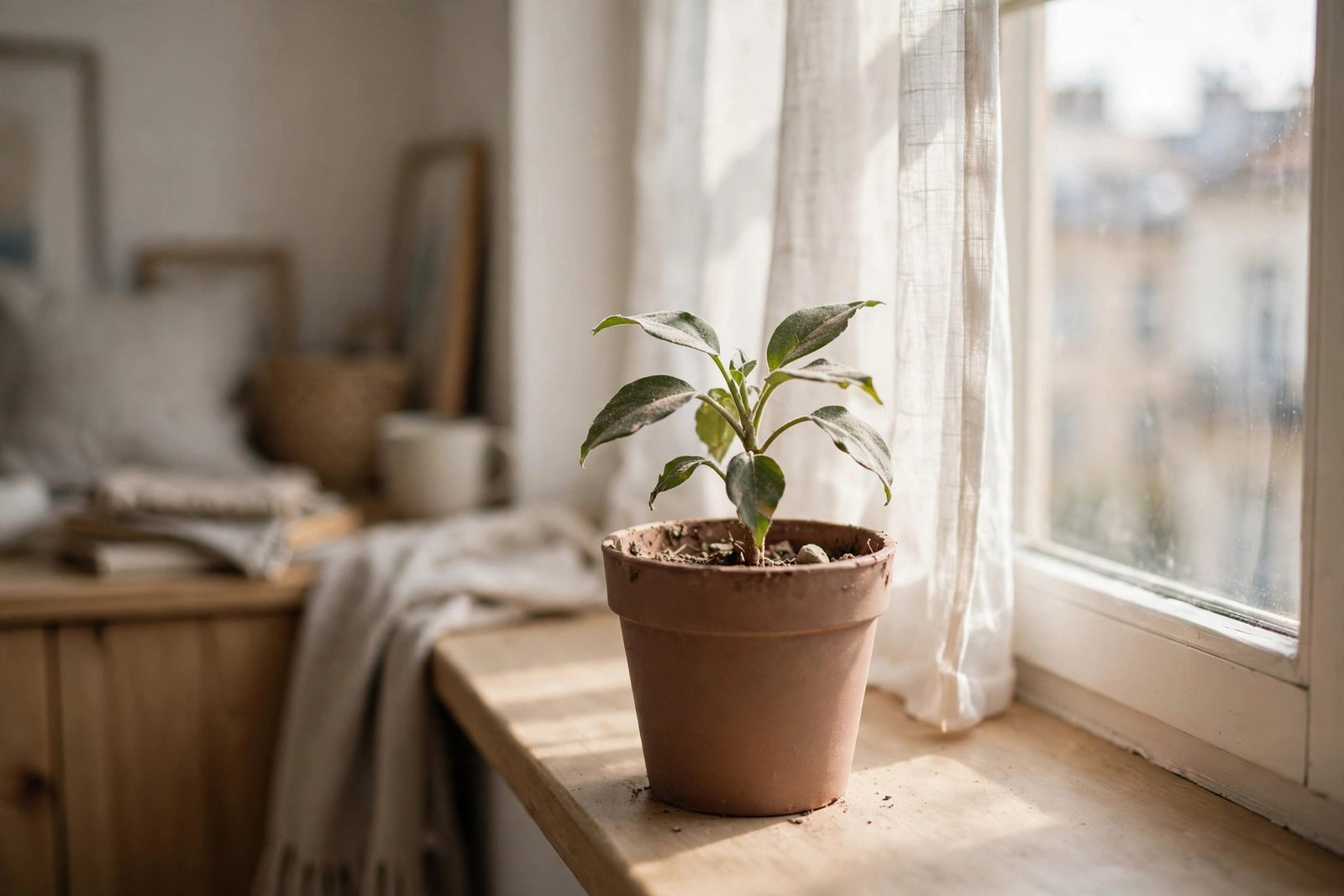
For an entire year, my golden pothos sat on the bookshelf and did absolutely nothing. Not one new leaf. It didn’t die — that would at least have been a clear signal — it just existed, green and stubborn and completely static, while the pothos in every plant forum grew like it was being paid by the leaf.
I blamed everything except the actual problem. I moved it closer to the window. I moved it away from the window. I bought fertiliser, then a different fertiliser. I repotted it into fresh compost — same pot, mind you, because I’d read that pothos “like being snug.” Finally, a year in, I tipped it out to check the soil and found the answer: a solid brick of circling roots with barely any soil left in it. The poor thing was so root-bound it couldn’t take up water or nutrients properly. I divided it, gave each half a bigger pot, and within two months both were trailing over the shelf edges.
If your houseplant isn’t growing — no new leaves for months, stems the same length they were in spring — the cause is almost always one of seven things. I’ve done all seven wrong at some point. Here they are, in the order I’d check them.
Reason 1: It’s Root-Bound
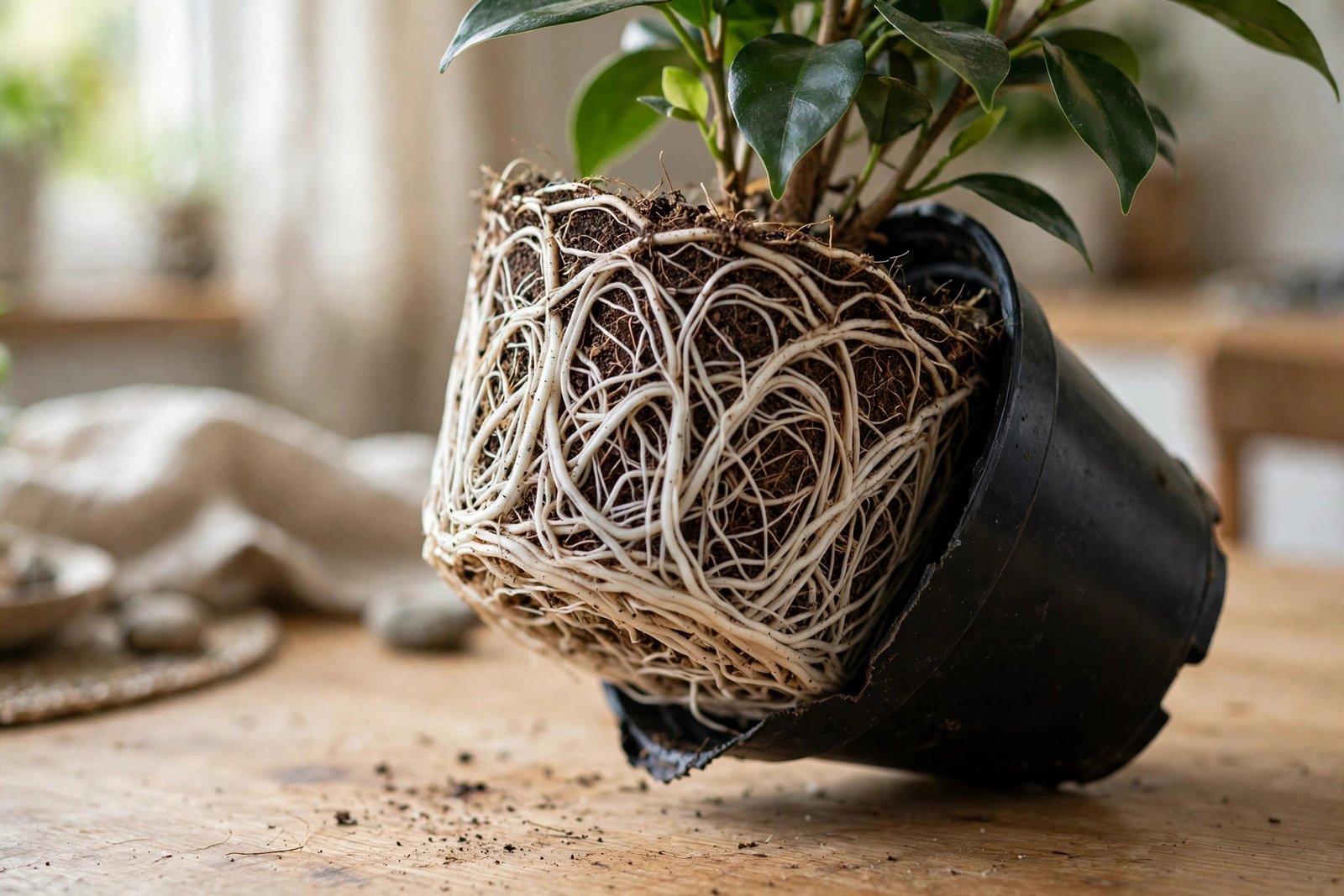
This is the cause I missed for a year, so it goes first. A plant that’s been in the same pot for two or three years fills every centimetre with roots. Water runs straight through, nutrients get used up, and there’s no room for the new root growth that drives new leaves. The classic signs: roots poking out of the drainage holes, the plant drinking water suspiciously fast (bone-dry again two days after watering), and growth that stopped months ago despite everything else looking fine.
Tip the plant out and look. If you see a dense mat of roots circling the bottom with almost no soil visible, that’s your answer. Move up one pot size — 1 to 2 inches (2.5–5 cm) wider — tease the outer roots loose with your fingers, and repot in fresh compost. Do it in spring if you can wait; if the plant is badly bound, don’t wait. Water it in well, and expect new growth within a few weeks.
Reason 2: It’s Not Getting Enough Light
Light is food for plants — no light, no energy, no growth. And what looks like “a bright room” to human eyes is often dim to a plant. Our eyes adjust brilliantly; plants can’t. That shelf three metres from the window where your plant sits? It might be getting a tenth of the light it would right at the glass.
Signs of light hunger: new leaves (if any) come out smaller than the old ones, stems stretch long and pale between leaves, and variegated plants revert to plain green. My pothos story had a second chapter, by the way — after fixing the roots, it still grew slowly until I moved it from the bookshelf to a spot a metre from an east-facing window. Then it went mad.
The fix is usually just placement. Move the plant gradually closer to your brightest window over a week or two — a sudden jump from dim corner to full sun can scorch leaves. If your flat genuinely lacks good windows, a cheap grow bulb in a desk lamp, running 10–12 hours a day, works surprisingly well. And if the plant is stretching tall and sparse, my guide on why your plant is leggy covers the rescue in detail.
Reason 3: You’re Watering It Wrong
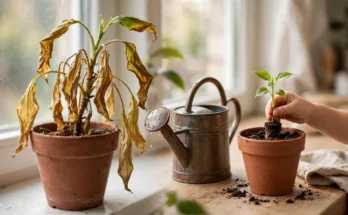
Here’s the uncomfortable truth about stalled growth: both too much and too little water stop a plant growing, and they can look confusingly similar. An overwatered plant sits in soggy soil, its roots suffocate, and it can’t take up anything — so it stops growing. An underwatered plant conserves itself the same way. In both cases you get a plant that just sits there.
I spent one whole summer convinced my calathea needed more water because it wasn’t growing. It was actually drowning — I was watering on a schedule instead of checking the soil, and the roots were rotting. The finger test saved it: push your finger in to the second knuckle. Dry? Water deeply. Damp? Walk away. If you’re honestly not sure which problem you’ve got, the comparison in my guide to overwatering versus underwatering will sort you out in about two minutes.
Quick Tips:
- Check the roots first — root-bound is the most commonly missed cause of stalled growth.
- Light is food: a plant three metres from a window gets a fraction of the light it needs.
- Water by checking the soil, not by the calendar.
- Don’t expect growth in winter — most houseplants rest from roughly November to February.
- One change at a time, then wait a month before judging the result.
Reason 4: It’s Hungry (or Overfed)
Plants in pots can’t go looking for nutrients — what’s in the pot is all there is. After a year or two in the same compost, the food runs out, and growth slows to a crawl. Pale new leaves, especially yellowing between the veins on older leaves, are the classic hunger signals.
But here’s the twist I learned the hard way: too much fertiliser stops growth too. I once fed a struggling spider plant every single week “to help it,” and the salt build-up burned the roots. The fix for hunger is gentle and regular: a half-strength balanced liquid feed every 2–4 weeks through spring and summer, nothing in winter. The fix for overfeeding is to flush the pot with plain water until it runs clear from the drainage holes, then leave the fertiliser alone for a month.
Reason 5: It’s the Wrong Time of Year
Sometimes the plant isn’t broken — it’s just winter. Most common houseplants slow down dramatically from about November to February when light levels drop and days shorten. My monstera puts out a leaf a month in summer and then nothing from December to March. Every year I briefly worry; every year it’s fine.
This is the reason to check before you do anything drastic. If it’s January, the plant looks healthy, and it simply isn’t growing, the kindest thing you can do is nothing — less water, no fertiliser, and patience until the light returns in March. Repotting or heavy feeding a dormant plant in midwinter usually causes more problems than it solves.
Reason 6: The Pot or Soil Is Working Against It
Two versions of this one. The first: a pot that’s far too big. Put a small plant in a huge pot and it spends all its energy filling the compost with roots before it bothers with leaves — meanwhile the excess wet soil sits around inviting rot. I did this with a snake plant pup in a 10-inch pot and wondered why it sat unchanged for eight months. It was busy underground.
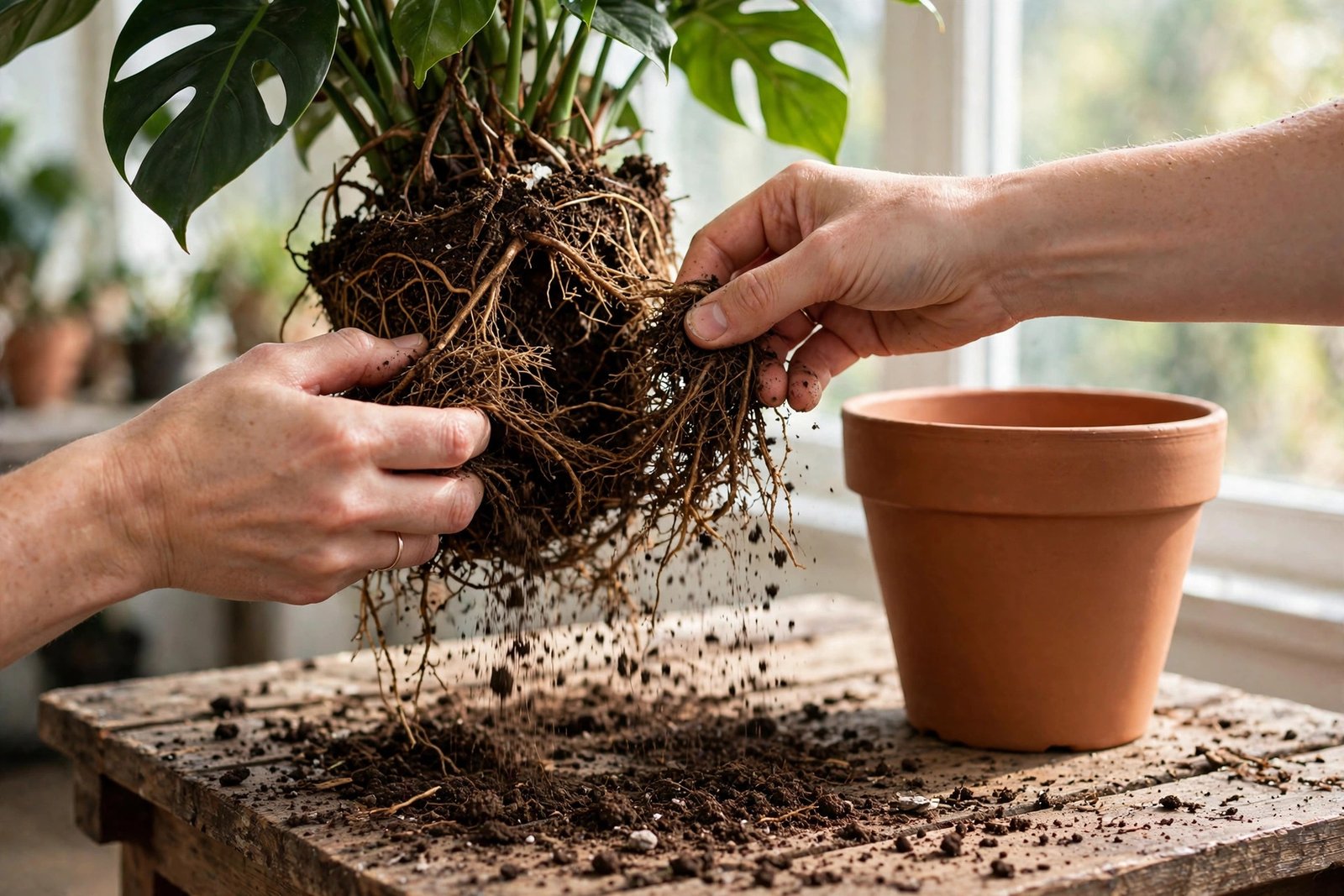
The second: old, compacted soil. Compost breaks down over time into a dense, airless mass that water either runs straight through or sits in. If you haven’t repotted or top-dressed in three years, the soil itself may be the problem even if the pot size is right. My rule: fresh compost or a good top-dress every spring, a full repot every two to three years.
Reason 7: It’s Stressed or Under Attack
Plants pause growth when they’re stressed, and the causes are easy to overlook. A recent repot, a move to a new flat, a cold draught from a window left open in January — all of these can stall a plant for weeks while it adjusts. My fiddle-leaf fig didn’t grow for three months after I moved flats. It wasn’t dying; it was sulking.
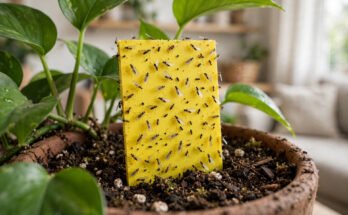
Then there are pests. Spider mites, mealybugs, and thrips drain a plant’s energy, and the first sign is often just… nothing happening. Check the undersides of leaves and the leaf joints with your phone torch every so often — fine webbing, sticky residue, or tiny moving dots mean you’ve found your growth thief. Catch them early and they’re a nuisance, not a disaster.
How to Diagnose Yours: My 10-Minute Checklist
When someone messages me a photo of a stalled plant, here’s the order I work through:
- When did it last grow? If it’s winter, it might just be resting. Note the month before you panic.
- Check the light. Is it within a metre or two of a decent window? Are new leaves smaller or paler than old ones?
- Check the water. Finger-test the soil. Is your routine actually matching what the soil is doing?
- Check the roots. Tip it out. Root-bound? Rotted and brown? Healthy and white?
- Check the calendar. When did you last feed it, and when did you last repot it?
- Check for pests. Undersides of leaves, leaf joints, with a torch.
Work through that list and you’ll find the answer nine times out of ten. And change one thing at a time — if you repot, move, feed, and prune all in one weekend, you’ll never know which fix worked. Plants are slow to respond; give each change at least a month before judging it. My guide on how often to water indoor plants is worth a read if step three made you uncomfortable.
Your Questions, Answered
My plant hasn’t grown in six months but looks healthy. Is it dying?
Probably not. A healthy-looking plant that isn’t growing is usually resting (winter), root-bound, or short of light — all fixable. Dying plants show distress: yellowing, mushy stems, dropping leaves. No growth with no distress is a puzzle, not an emergency. Work through the checklist above.
Will fertiliser make my plant start growing again?
Only if hunger is the actual problem. Feeding a root-bound plant in a dark corner won’t help it, and overfeeding can make things worse. Diagnose first, feed second. And never fertilise a dry plant — water it first, then feed, to avoid burning the roots.
Should I repot a plant that isn’t growing?
If it’s root-bound, yes — that’s the fix. If it isn’t, repotting a stalled plant “just in case” adds stress without solving anything. Always tip the plant out and look at the roots before deciding. Repotting is a treatment for a specific diagnosis, not a general tonic.
How long should I wait after fixing the problem?
Longer than you want to. Plants respond on a scale of weeks, not days. After repotting a root-bound plant, I’d expect to see new growth in three to six weeks in the growing season. After a light fix, maybe a month before new leaves appear. If nothing has changed after two months in spring or summer, re-run the checklist — there may be a second issue.
Can a plant just… stop growing forever?
A healthy plant with its needs met will grow. Some are just extremely slow — a ZZ plant might put out three stems a year, a snake plant barely more. “Not growing” sometimes means “growing slower than I’d like.” Compare against what the species normally does before declaring a problem.
That pothos of mine now trails halfway down the bookshelf, and I think about it every time a plant of mine stalls. The answer is almost never mysterious — it’s roots, light, water, food, season, pot, or stress, usually in that order. Check them one by one, fix what you find, and give the plant time. It got this far on your care; it just needs a small adjustment.