
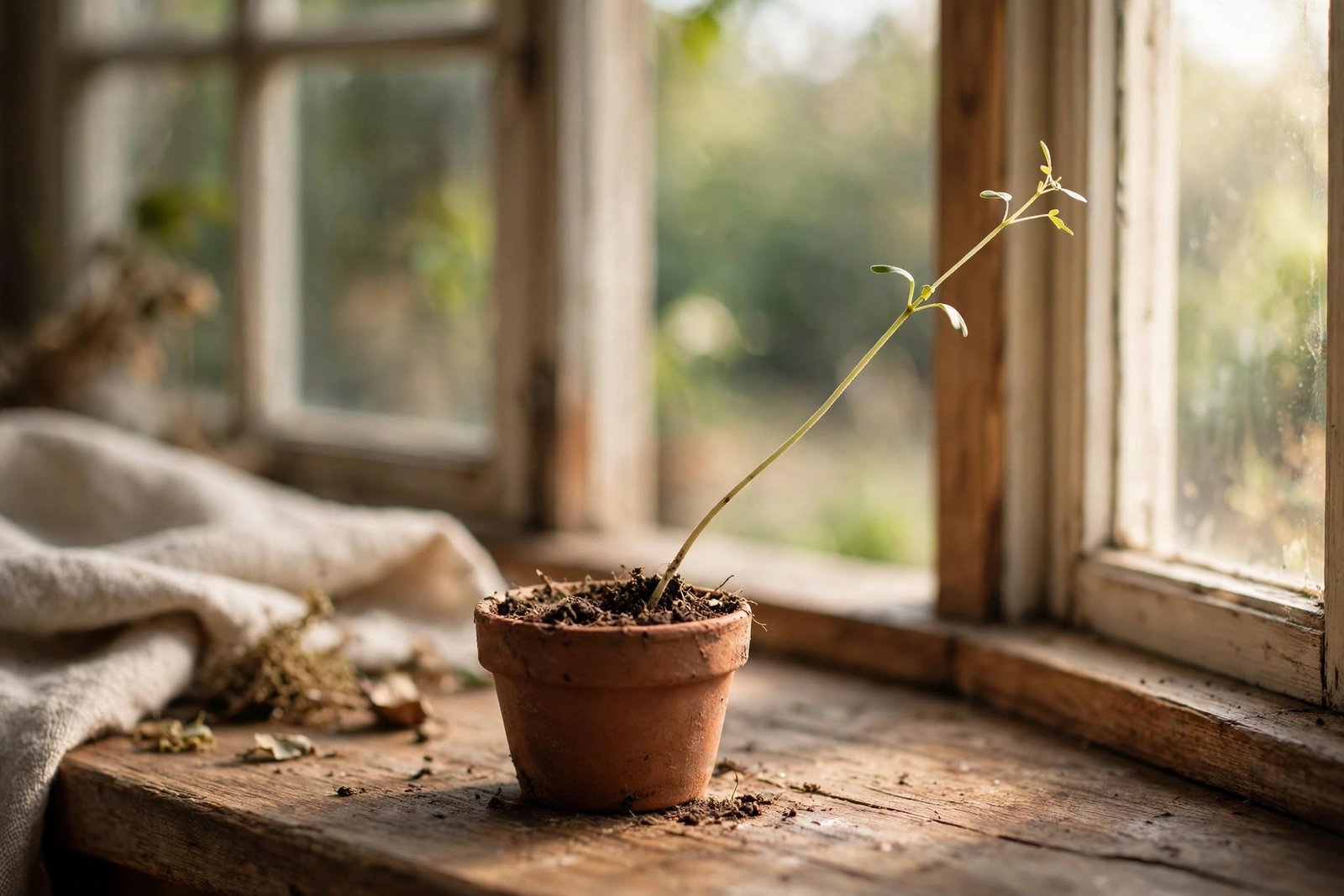
What if I told you your plant isn’t dying — it’s just desperately reaching for the sun, like a kid standing on tiptoes to see over a fence? That’s all legginess is: a plant stretching itself thin trying to find more light. The long bare stems, the tiny pale leaves spaced far apart, the floppy lean toward the window — that’s a plant spending all its energy on a rescue mission instead of growing properly. If that sounds like your plant and you’re wondering why is my plant leggy, you’re already asking the right question — the answer is almost always light.
First supermarket basil plants are textbook cases: six-inch bare stems with a sad little tuft of leaves at the very top, leaning so hard toward the glass they practically press their faces against it. New gardeners usually think they need more water, then fertilizer. What the plants actually need is to be about three feet closer to the sun. Once you understand what’s happening, fixing it becomes one of the most satisfying parts of gardening — leggy plants bounce back fast when you give them what they’re asking for.
Why Is My Plant Leggy? What’s Actually Happening (Etiolation)
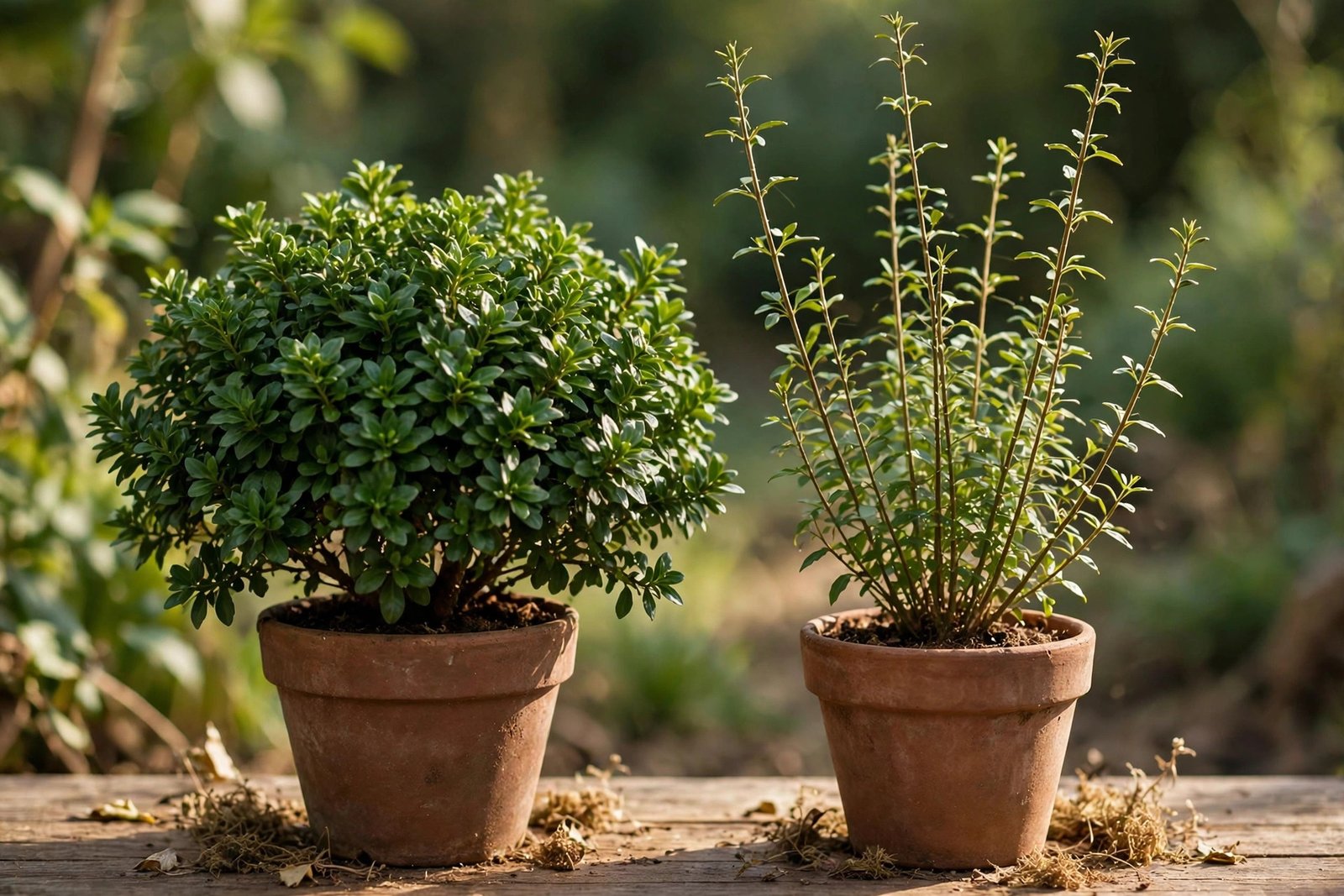
The technical term is etiolation, and it’s a survival strategy. In low light, a plant stretches its stem cells longer than normal to push its leaves toward brightness. The trade-off is brutal: those stretched stems are thin, weak, and pale because the plant is spending energy on height instead of on sturdy tissue and chlorophyll. Leaves grow smaller and farther apart (botanists call the gaps between leaves “internodes,” and long internodes are the signature of legginess).
Here’s the part beginners miss: the plant will never un-stretch. A leggy stem stays leggy forever — the stretched cells can’t shrink back. What you can do is stop the stretching and encourage fresh, compact growth. That distinction matters because it changes your strategy from “fix this stem” to “help the plant start over properly.”
Light is the cause about 90% of the time. The other 10% is usually seedlings grown too warm with too little light (a classic windowsill-in-March situation), or plants that were over-fertilized with nitrogen, which pushes soft, stretched growth. But if you’re reading this, it’s probably light. If you’re unsure how much light your spot actually gets, the guide on how much sunlight your balcony garden needs walks through how to measure it without any gadgets.
The fixes, in order of impact
1. Give it more light (the actual cure)
This is the fix. Everything else is management. Move the plant closer to your brightest window — right up against the glass if you can — or to the sunniest spot on the balcony. South-facing (in the northern hemisphere) is best; east-facing morning sun is the runner-up. Moving basil from a side table to directly on the windowsill typically brings compact new growth within two weeks.
Rotate the pot a quarter turn every few days so all sides get light. Otherwise you fix the stretching but end up with a plant that’s bushy on one side and bald on the other — a lopsided improvement many gardeners have produced more than once.
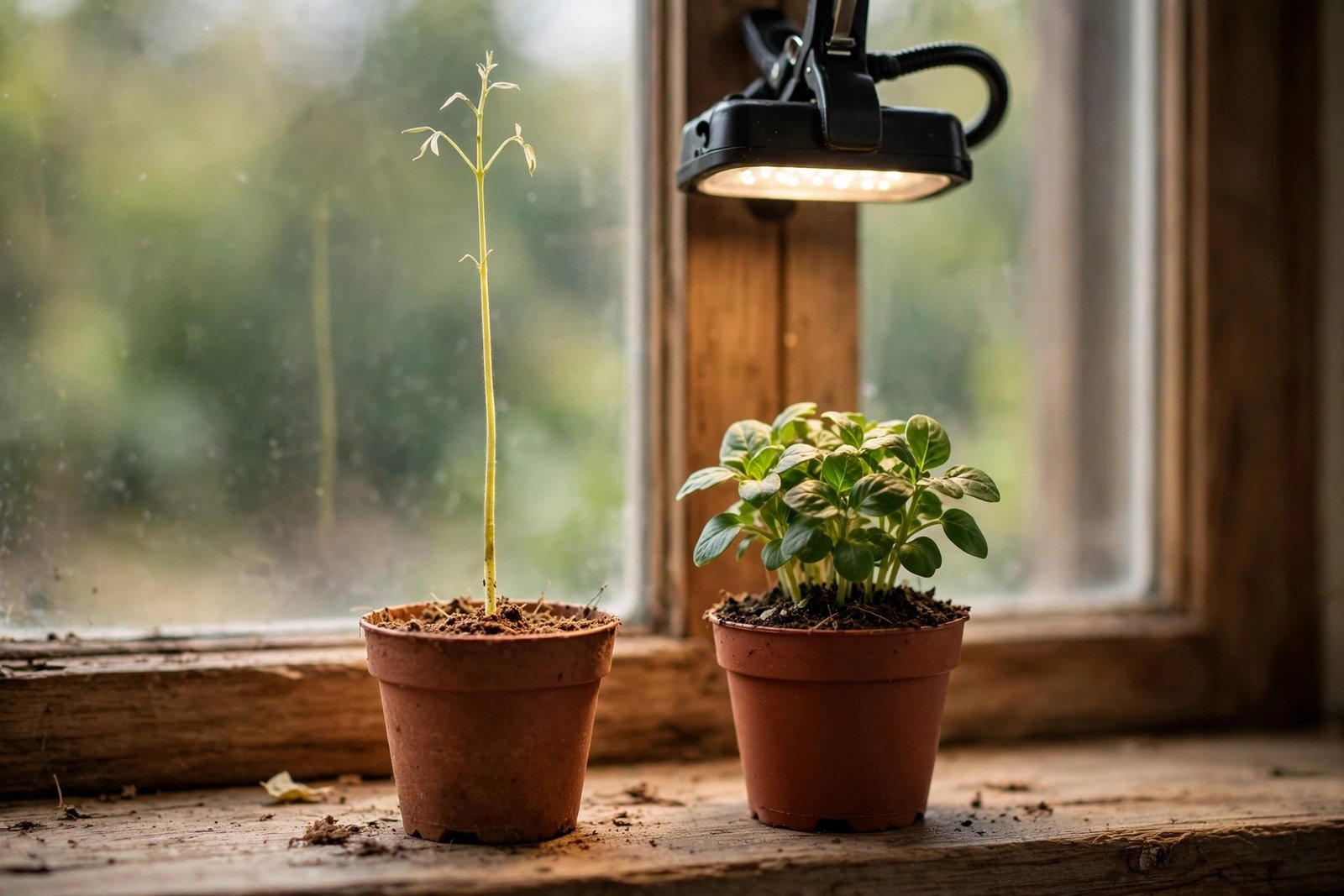
If you’ve genuinely run out of bright spots, this is where grow lights earn their keep. A simple full-spectrum LED panel hung 6–12 inches / 15–30 cm above the plants, running 12–14 hours a day, completely transforms a winter herb setup. The options are covered in grow lights explained for indoor gardeners — nothing fancy or expensive needed.
Quick Tips:
- New growth tells the truth: if fresh leaves come in close together and deep green, your light fix is working
- Move plants gradually into strong direct sun over 5–7 days to avoid scorching leaves that grew up in dim conditions
- Seedlings need light within an inch or two — a sunny windowsill is often not enough in early spring
- A plant leaning hard toward the window is sending you a message; rotate it and move it closer to the glass
2. Prune or pinch it back (the reset button)
Since stretched stems never un-stretch, pruning is how you get a good-looking plant back. It feels brutal the first time — hovering over a leggy basil with scissors for a full minute is a common scene — but plants respond to pruning by branching out, which is exactly what you want.
For basil and other soft herbs: pinch or cut the stem just above a pair of leaves, removing the top third to half. Within a week or two, two new stems sprout from that point, and the plant grows bushier instead of taller. Keep pinching regularly and the plant stays compact. Never remove more than about a third of the plant at once.
For leggy seedlings (tomatoes, peppers): tomatoes are the wonderful exception to the “can’t fix a stretched stem” rule. You can bury a leggy tomato seedling deeper when potting it up — right up to its first true leaves — and the buried stem sprouts roots. It’s practically magic and it works every time. Peppers and most other seedlings can’t do this trick, so for them it’s better to start fresh with more light.
For houseplants like pothos or coleus: cut the stretched stems back to just above a leaf node, and root the cuttings in water. You get a bushier mother plant plus free new plants. The leggiest pothos can become three healthy plants this way, which softens the trauma of the haircut considerably.
3. Check temperature and feeding
Warmth plus dim light is the worst combination — it tells the plant to grow fast while giving it nothing to grow with. Seedlings on a warm windowsill above a radiator in March are the classic victims. If you’re starting seeds indoors, keep them slightly cool (65–70°F / 18–21°C) and get light on them immediately after sprouting. A small fan blowing gently nearby also helps: the slight movement encourages sturdier stems. It sounds like folklore but it genuinely works — it’s called thigmomorphogenesis, and it’s fun to say.
Also ease off the nitrogen if you’ve been feeding heavily. Too much nitrogen pushes soft, rapid, stretched growth — the plant equivalent of a sugar rush. If you’ve been enthusiastic with the fertilizer, flush the pot with plain water and pause feeding for a couple of weeks. The natural fertilizers guide covers feeding rates that won’t cause this.
Prevention: the habits that stop legginess before it starts
Honestly, prevention is a one-line rule: give plants enough light from day one. But a few specific habits help:
- Start seeds under lights or in your brightest spot from the moment they sprout. The first two weeks decide the plant’s whole shape. Leggy seedlings almost never fully recover their vigor, so this is the highest-leverage moment.
- Don’t overcrowd. Seedlings packed shoulder-to-shoulder shade each other and all stretch upward competing for light. Thin them ruthlessly — it hurts, but one strong seedling beats five spindly ones.
- Pot up on time. A root-bound plant in a tiny pot often stretches too, stressed and reaching. When roots circle the bottom of the pot, move up one pot size. The repotting walkthrough shows exactly when and how.
- Choose the right plant for your light. This one takes most gardeners years to accept. If your balcony gets three hours of sun, don’t fight it with sun-loving tomatoes — grow salad greens and herbs that tolerate partial shade. Matching plant to spot is the whole game, and it’s the first thing most beginners should learn. The guide to starting a balcony garden starts with this for a reason.
Questions I Get Asked a Lot
Will the leggy parts ever fill back in?
No — stretched stems are permanent. But that’s fine, because the fix isn’t repairing old growth, it’s encouraging new growth. Prune back the leggy stems, fix the light, and the plant will produce fresh compact growth that eventually dominates. Within a month or two, you’ll barely notice the old stretched sections, especially on fast growers like basil and coleus.
Should I just throw a leggy plant away and start over?
For mature herbs and houseplants, no — prune and relight, they’ll recover. For seedlings that are extremely stretched (long white stems, tiny yellow leaves), starting over is honestly faster and less frustrating. A fresh seedling with proper light will overtake a struggling leggy one within weeks. Restarting leggy tomato seedlings without guilt is the pragmatic move; nursing them for months rarely ends with thriving plants.
My plant is leggy but it’s already in my brightest spot. Now what?
Then your brightest spot isn’t bright enough for that particular plant, and that’s useful information, not failure. Either add a grow light (even a small one makes a huge difference) or swap in a plant suited to your light levels. A north-facing windowsill grows mint, parsley, and lettuce beautifully — things that would sulk on a sun-blasted south balcony. Work with what you have.
Is legginess the same as the plant “reaching”?
Reaching or leaning is the early warning; legginess is the advanced stage. A plant leaning toward the window is asking for more light before it commits to stretching. If you catch it at the leaning stage — move it closer, rotate it — you can prevent legginess entirely. Think of leaning as the polite request and legginess as what happens when the request gets ignored for a month.
Can too much water cause legginess?
Not directly, but overwatering weakens roots, and a plant with struggling roots can’t support compact growth — so it often looks stretched and sad in a way that mimics legginess. If your plant is leggy AND the soil is constantly soggy, fix the watering first. The overwatering vs underwatering guide helps you tell what’s actually going on below the soil.
Every leggy plant teaches the same lesson: the plant was saying exactly what it needed, and the wrong problem was being solved. Once you’ve fixed one, you’ll never wonder why is my plant leggy again — you’ll see the light problem straight away. When those long pale stems appear, don’t panic — move the plant toward the light, give it a confident haircut, and let it do what plants do. They want to grow. You just have to stop accidentally making it hard for them.

2 Comments on “Why Is My Plant Leggy? Fixing Stretched, Weak Growth”