
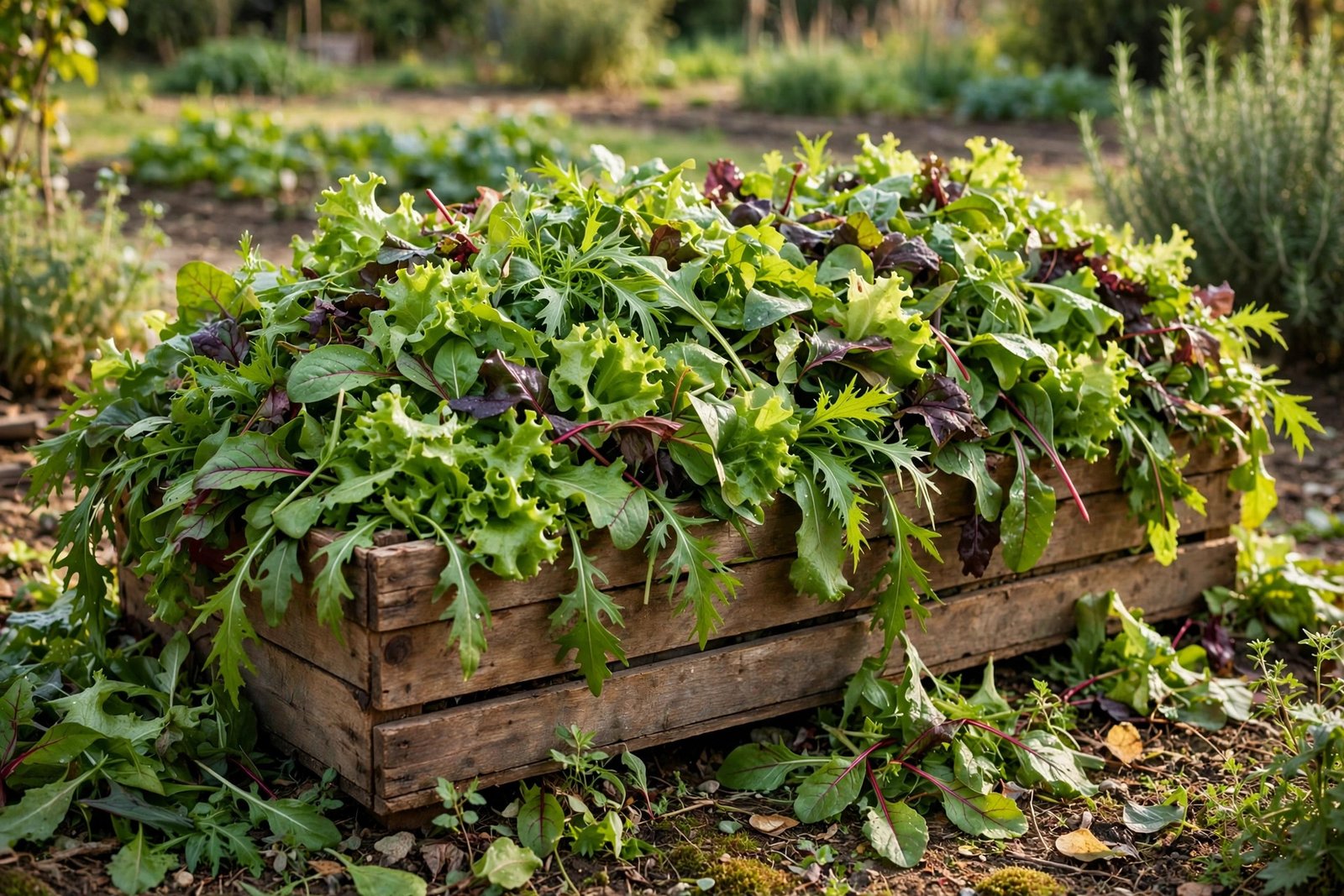
A common first attempt at growing salad ends with yanking entire lettuce plants out of the pot by their roots, rinsing them in the sink, and feeling disproportionately proud of the tiny harvest. One meal’s worth of leaves, and the pot is empty. It takes most beginners an embarrassingly long time to learn that this is not how salad works — or rather, not how it has to work. There’s a method called cut-and-come-again, and once understood, a single trough of lettuce starts feeding for months instead of minutes.
The idea is beautifully simple. Instead of waiting for a plant to form a full head and then harvesting the whole thing, you pick the outer leaves when they’re young and let the centre keep growing. The plant responds by producing more leaves. Harvest a little, harvest often, and one sowing can give you fresh salad from spring to autumn. It’s the highest return on effort of any container crop, and it’s genuinely hard to mess up.
What “Cut-and-Come-Again” Actually Means
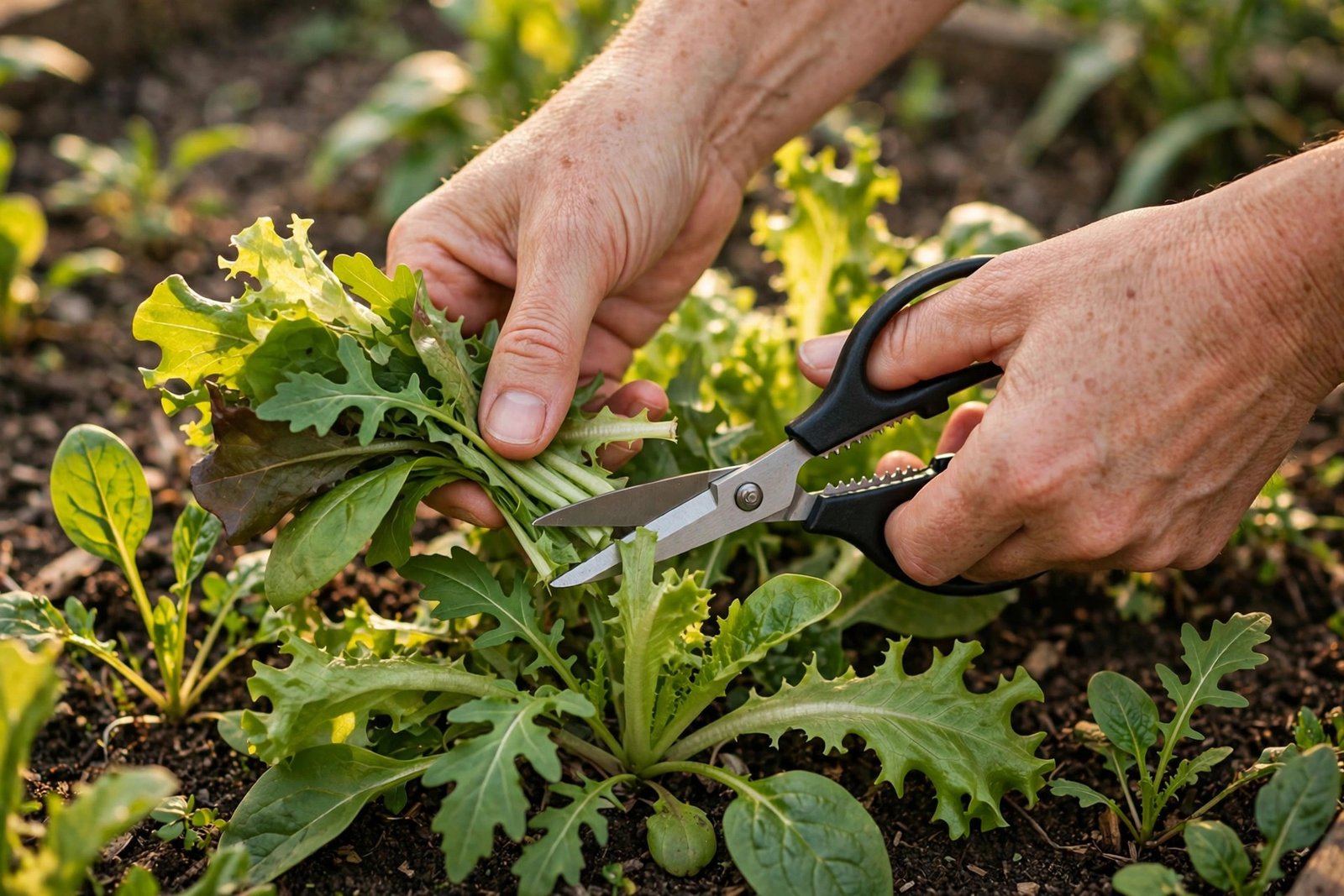
Some plants are naturally suited to repeated harvesting because they grow from a central crown — new leaves keep emerging from the middle while you take the older ones from the outside. Lettuce, rocket, mizuna, spinach, chard, and kale all behave this way. The technique is the same for all of them: when leaves reach a usable size (usually 3–4 inches / 8–10 cm), snip the outer ones about an inch above the base, leaving the central growing point untouched.
The golden rule is never taking more than about a third of the plant at once. Strip a plant bare and it can’t photosynthesise enough to recover; take a third and it bounces back within days. Harvest in the morning when leaves are crisp and full of moisture, using scissors for a clean cut. Clean cuts heal fast; torn leaves invite disease.
There’s a second approach for the truly impatient: the “cut the whole lot” method. Let a sowing of salad reach 4–5 inches tall, then shear the entire container down to about an inch above the soil. Most loose-leaf varieties regrow from the stumps and give you a second — sometimes third — flush of leaves. It feels brutal the first time you do it. It works.
The Best Varieties for the Job
Not all salad is equal for this method. Head-forming lettuces like iceberg want to make one head and be done; loose-leaf types want to keep producing. These are tried-and-true picks:
Lettuce: ‘Salad Bowl’ (oak-leaf type, incredibly reliable), ‘Lollo Rosso’ (frilly red edges, looks gorgeous), ‘Red Sails’ (slow to bolt, good in heat), ‘Green Deer Tongue’ (an heirloom that tolerates shade). Avoid hearting types for cut-and-come-again.
Rocket (arugula): Peppery, fast, and almost absurdly easy. ‘Astro’ is slower to bolt than standard varieties. Rocket self-seeds cheerfully, so don’t be surprised to find it popping up in neighbouring pots next year.
Mizuna: A grower favourite. Mild mustard flavour, feathery leaves, ferociously productive, and more heat-tolerant than most salad greens. ‘Red Coral’ adds colour.
Spinach: ‘Medania’ and ‘Palco’ resist bolting well. Spinach prefers cool weather — it’s a spring and autumn star that sulks in midsummer heat.
Chard: ‘Bright Lights’ gives you rainbow stems and leaves you can harvest for months. It’s practically perennial in mild climates and shrugs off neglect.
Kale: ‘Red Russian’ and ‘Dwarf Blue Curled’ give baby leaves for salads when young and bigger cooking leaves later. Extremely cold-hardy — often the last thing standing on a balcony in December.
Mustard greens: ‘Red Giant’ and ‘Osaka Purple’ add a wasabi-like kick. A little goes a long way in a mixed salad.
Quick Tips:
- Sow little and often — a pinch of seeds every 2–3 weeks beats one giant sowing.
- Never harvest more than a third of a plant at once; leave the central growing point intact.
- Morning harvests are crispest; evening leaves can taste slightly more bitter.
- In summer heat, move pots to afternoon shade and water daily to delay bolting.
Containers and Soil: Shallow and Wide Wins
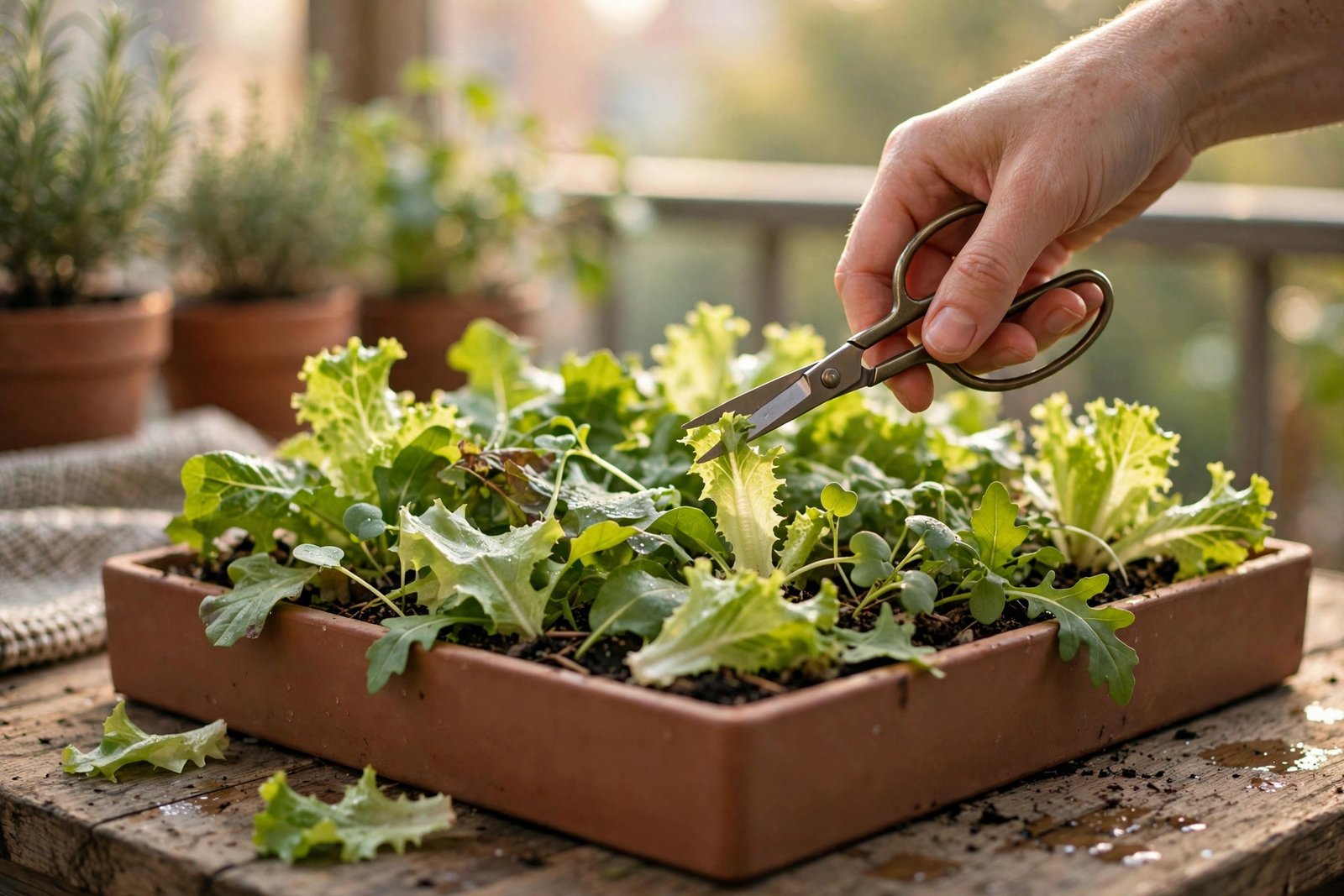
Here’s the good news: salad greens have shallow roots, so you don’t need deep pots. Wide, shallow containers — troughs, window boxes, even a washing-up bowl with drainage holes drilled in — outperform tall narrow pots because they give you more growing surface. A 24-inch (60 cm) window box holds a serious amount of salad. Depth of 6–8 inches (15–20 cm) is plenty for most leaves; chard and kale appreciate 10–12 inches.
Drainage still matters — every container needs holes — but salad likes consistently moist soil, so use a moisture-retentive peat-free multipurpose mix straight from the bag, no added grit. The DIY potting soil recipe works too; just skip the extra perlite for salad. A railing planter is a brilliant spot for a salad trough: easy to reach, good airflow, and it frees up floor space.
Sow seeds about half an inch deep, a couple of inches apart, or simply scatter and thin later — salad forgives crowded sowing better than almost anything. Water gently after sowing (a rose attachment or mister, so you don’t wash seeds into corners), and keep the soil moist until germination, which usually takes 5–10 days in warm weather.
The Succession Sowing Habit
The difference between “some salad in May” and “salad all season” is succession sowing: planting a little bit, regularly, instead of everything at once. Sow a pinch of seeds every two to three weeks from March through August. Each sowing takes over just as the previous one starts to tire. It takes about ninety seconds and it’s the single most impactful habit in this whole guide.
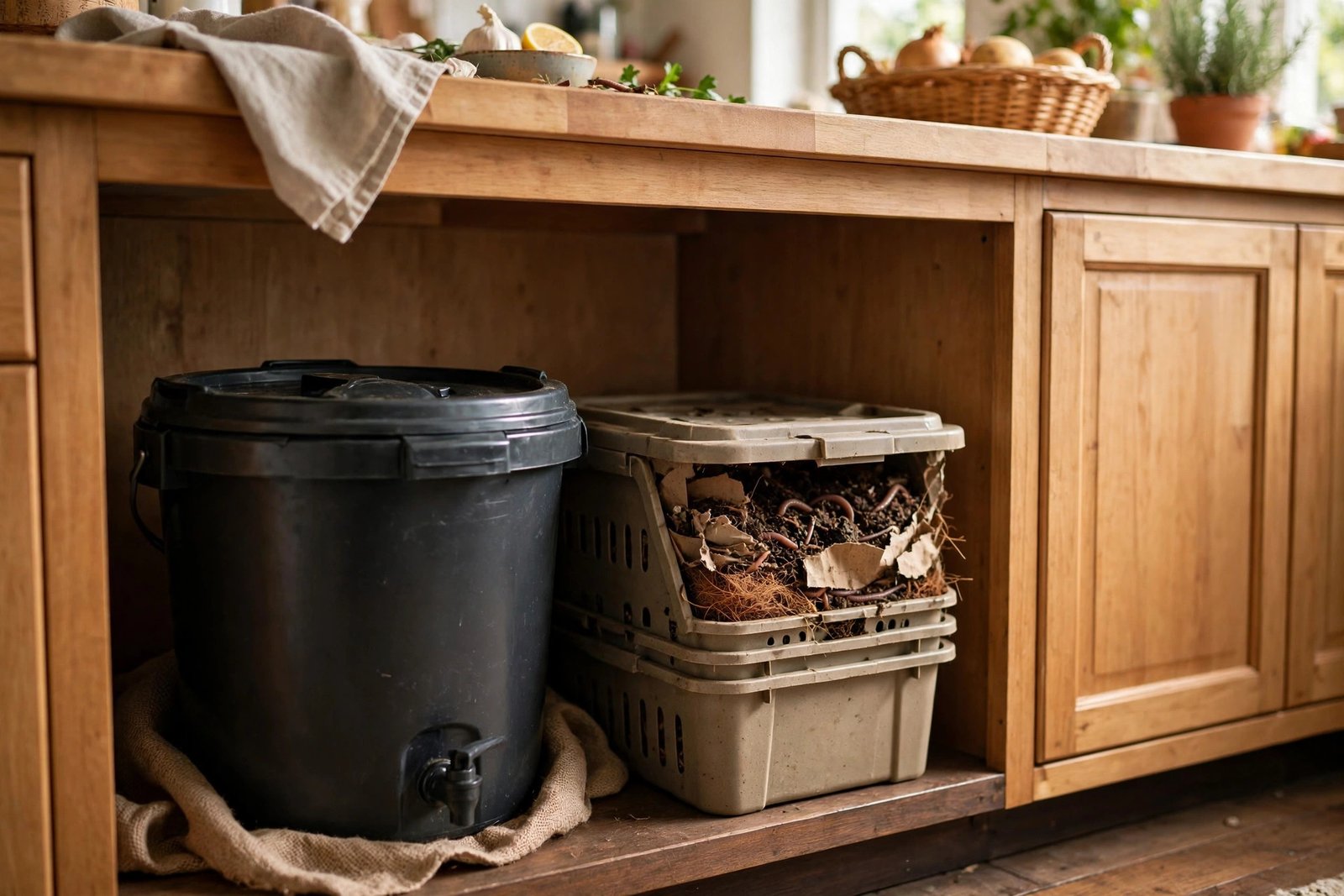
Keep it simple: one container gets sown while another is being harvested. Old, bolted plants get pulled and composted (or they go in a little apartment compost setup), the soil gets topped up with fresh mix, and new seeds go in. The cycle never really stops between March and September.
For winter, sow hardy varieties like ‘Winter Density’ lettuce, mizuna, and corn salad (lamb’s lettuce) in late summer for autumn harvests, and consider a cold frame or fleece cover to stretch the season. Kale and chard will often stand through winter entirely.
Watering and Feeding
Salad leaves are mostly water, so consistent moisture is the whole game. In summer, a shallow trough in full sun can need watering every day — sometimes twice in a heatwave. Dry soil triggers bolting (premature flowering), which turns leaves bitter overnight. Mulching around (not over) young seedlings with a thin layer of straw helps, as does moving pots into afternoon shade in July and August.
Feed lightly. A half-strength liquid seaweed feed every two to three weeks keeps leaves coming, but heavy feeding makes soft, bland growth — salad isn’t as hungry as tomatoes or courgettes. If your potting mix was fresh this season, you might barely need to feed at all. More on gentle options in the natural fertilisers guide.
Bolting, Bitterness, and Other Setbacks
Bolting — when salad suddenly shoots up a flower stalk — is the main frustration. It’s triggered by heat, long days, and drought. Once a plant bolts, the leaves turn bitter and there’s no reversing it; pull it and sow fresh. Prevention: choose bolt-resistant varieties, water consistently, provide afternoon shade in summer, and harvest regularly (letting plants sit unpicked encourages them to move on to flowering).
Slugs love salad, and balconies aren’t immune — they climb. Check pots at night with a torch, use copper tape around containers, or set beer traps. Aphids cluster on tender new growth; blast them off with water or use insecticidal soap. The pest guide covers natural controls that work outdoors too.
Bitter leaves in summer are usually heat stress. Move the pot somewhere cooler, water deeply, and harvest young leaves, which are milder than older ones. Some varieties — ‘Red Sails’ lettuce, mizuna — simply handle heat better; lean on them in July and August.
Quick Answers to Common Questions
How many times can I harvest from one sowing?
Typically 3–5 good harvests over 6–10 weeks for lettuce, rocket, and mizuna, sometimes more for chard and kale, which can produce for months. Production slows as days shorten and temperatures drop. When harvests get sparse and leaves get small, it’s time to pull the plants and sow fresh — with succession sowing, the next batch is already coming along.
Can I grow salad greens indoors on a windowsill?
Yes for microgreens and baby leaves, with enough light. A sunny sill works for small harvests of rocket, mizuna, and loose-leaf lettuce, though growth is slower than outdoors. For serious production you want outdoor containers. If your sill is dim, leafy greens are actually more shade-tolerant than fruiting plants — see the guide to growing herbs indoors for the light requirements, which are similar.
Why did my salad go bitter?
Almost always bolting from heat or drought stress. Once flower stalks appear, bitterness follows within days. Harvest earlier in the plant’s life, keep soil consistently moist, give afternoon shade in summer, and switch to heat-tolerant varieties like mizuna and ‘Red Sails’ for the hottest months. Bitter older leaves can sometimes be salvaged by picking only the youngest central leaves.
What’s the easiest salad green for a complete beginner?
Rocket. Sow it, water it, and try to stop it — it germinates in days, grows in mediocre soil, tolerates partial shade, and self-seeds for next year. Mizuna is a close second. Both are far more forgiving than fussy head lettuces, and both give you that cut-and-come-again magic with almost no skill required.
Can I mix different salad leaves in one container?
Absolutely — it’s one of the best ways to grow them. A mixed trough of lettuce, rocket, mizuna, and mustard gives you varied flavours and colours in every harvest, and different growth rates mean something is always ready. Just avoid mixing in aggressive spreaders like mint (keep that in its own pot, always) and give everything enough elbow room to breathe.
That first sad yanked-out lettuce is a common memory — nowadays a handful of snipped leaves lets the plant carry on like nothing happened. Cut-and-come-again feels like a small magic trick, except the only secret is picking outer leaves and letting the middle do its thing. Sow a trough this weekend — you’ll be eating from it within a month, and still eating from it when summer’s nearly over.

One Comment on “Cut-and-Come-Again Salad Greens: Fresh Leaves All Season”