
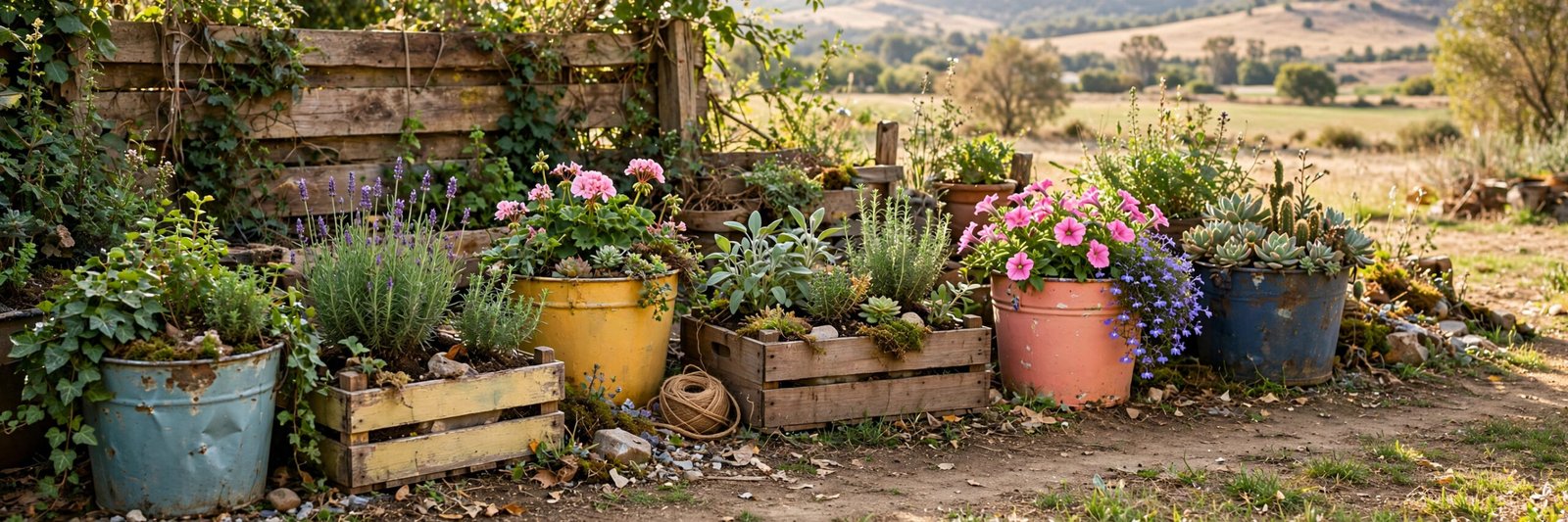
What if the most expensive pot on a balcony cost more than everything else combined — and it’s the one liked least? A heavy glazed ceramic thing, bought in a fit of optimism during year two. It’s beautiful. It’s also impossible to move, cracks if you look at it in winter, and one sad cherry tomato sulks in it every summer because the drainage hole is barely the size of a pea.
Meanwhile, the best-performing plants live in pots that cost next to nothing. Gardening has a way of convincing beginners that they need to spend money to start. You don’t. Some of the happiest container plants ever grown lived in things found, given away, or bought for pocket change. Here is where the bargains are — this is my honest rundown of the best budget-friendly planters I know, and what to check before you plant anything in them.
The Cheap Pot Hall of Fame
Standard black plastic nursery pots. The absolute workhorses. Plants from garden centres come in these, and most people throw them away. Don’t. A 1-gallon (roughly 4-litre) nursery pot is a perfect home for a herb, and the big 3-gallon ones grow a respectable tomato. Ask at garden centres in spring — many have a recycling pile and will let you take pots for free. Few gardeners have ever been told no.
Terracotta. The classic clay pot. Cheap at discount stores and supermarkets, breathable (which means soil dries faster — great for Mediterranean herbs like rosemary and thyme, less great if you’re a forgetful waterer), and they age beautifully. A 6-inch (15 cm) terracotta pot usually costs less than a coffee. Downsides: they dry out fast in summer heat and can crack in hard freezes, so bring them into the sheltered corner for winter.
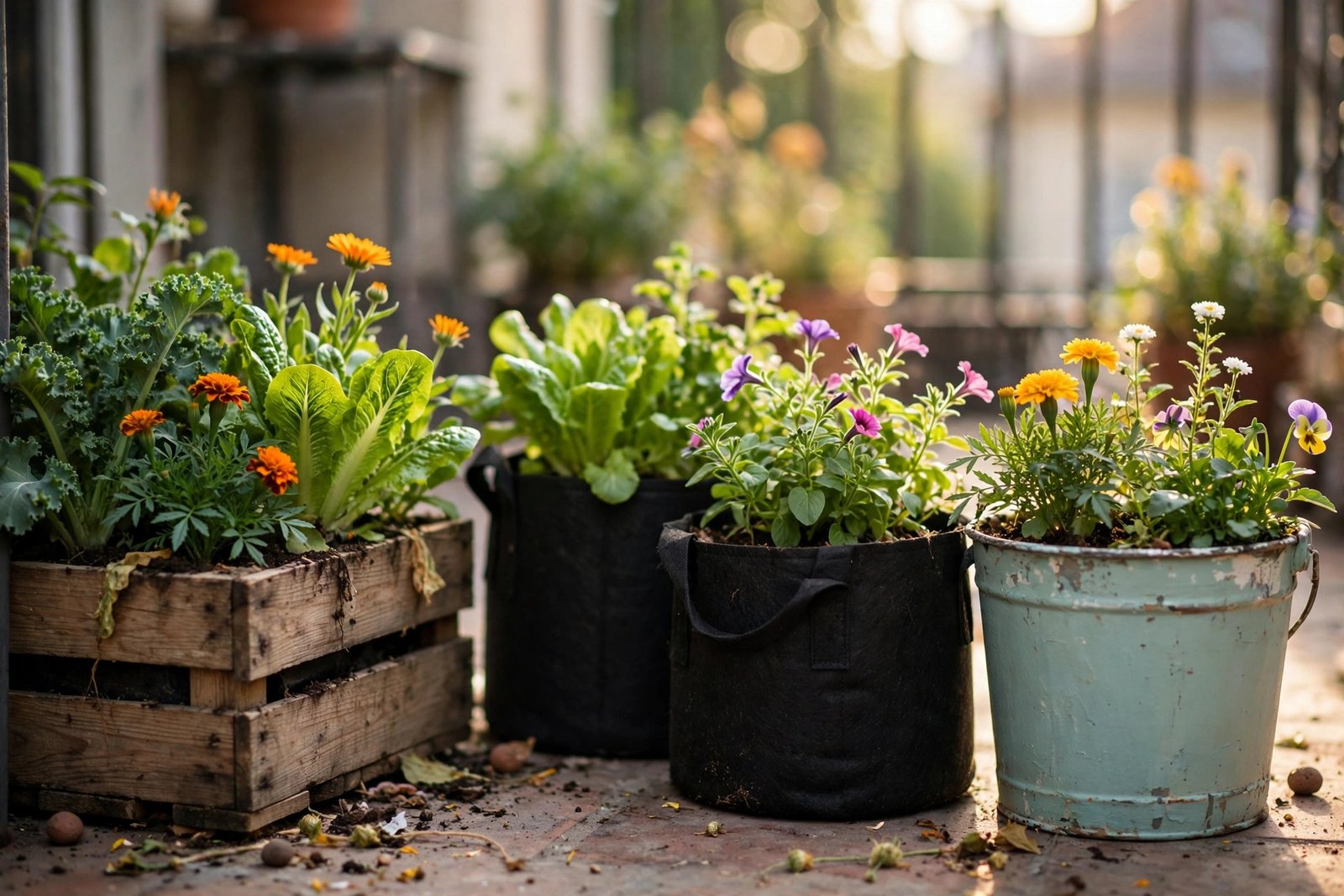
Fabric grow bags. These have become a favourite budget option. A 5-gallon (19-litre) fabric pot costs very little, weighs almost nothing, has excellent drainage and airflow, and folds flat for storage. Roots get air-pruned instead of circling, which means healthier plants. Salad greens live happily in a row of 3-gallon fabric bags. The only catch: they dry out faster than plastic, so check them daily in summer.
Buckets and tubs. A standard 5-gallon bucket with holes drilled in the bottom is a perfectly good planter, and food-grade ones are cheap at hardware stores. Mop buckets, storage tubs, even old washing-up bowls — if it holds soil and you can drill drainage holes, it can grow something.
Second-hand and thrifted pots. Charity shops, flea markets, and the “free” section of local buy-nothing groups are goldmines. People give away perfectly good pots constantly when they move or give up on gardening. Two of the biggest planters — 14-inch (35 cm) glazed pots that would cost a fortune new — came from a neighbour who was moving abroad. Free.
Where to Actually Find Them
Here’s an honest ranking of where to shop for pots, cheapest first:
- Free first: Buy-nothing groups, freecycle sites, neighbours, garden centre recycling piles, family members clearing sheds. Half a collection can arrive this way.
- Thrift and charity shops: Glazed pots, baskets, tins, and odd containers for a pound or two. Check for cracks and drainage (more on that below).
- Discount stores and supermarkets: In spring they stock terracotta, plastic, and basic glazed pots at silly-low prices. Stock up in March and April when the range is best.
- Hardware stores: Buckets, tubs, storage boxes, and the drill bits to put holes in them. Also the cheapest saucers you’ll find.
- Garden centres (end of season): September and October bring clearance sales. Pots that were full price in spring go for half price or less.
- Online marketplaces: Fine for fabric grow bags in bulk packs, which are genuinely good value. Be wary of “designer” pots with big markups — a pot is a pot.
One honest warning about the very cheapest online pots: ultra-thin plastic cracks in one season of sun. Slightly thicker is worth the tiny premium. If you can flex the pot wall easily with two fingers, it’ll be brittle by August.
What to Check Before You Plant (The Bit Everyone Skips)
A cheap pot is only a bargain if it actually works. Run through this quick checklist:
- Drainage holes. Non-negotiable. No holes, no plant — roots sitting in water rot. If a container you love has no holes, drill them (a 1/4-inch / 6 mm bit works for plastic; use a masonry bit for ceramic, slowly, with water). For more on why this matters so much, read the drainage explainer.
- Size. Match the pot to the plant. A tiny 4-inch pot will never grow a happy tomato; a huge pot for a tiny seedling stays soggy. A rough guide: herbs in 6 to 8 inches (15–20 cm), salad greens in anything 6 inches deep or more, tomatoes and peppers in 5 gallons (19 litres) minimum.
- Material and your watering style. Forgetful waterer? Plastic or glazed pots hold moisture longer. Chronic overwaterer? Terracotta or fabric dries faster and forgives you. Be honest with yourself here.
- Weight. A big terracotta pot full of wet soil can weigh 30+ kg. On a balcony, especially an upper floor, weight matters. This is where fabric bags and plastic genuinely win.
- Previous contents. If you’re reusing a container that held chemicals, paint, or non-food substances, don’t grow edibles in it. A bucket that held birdseed? Fine after a wash. One that held paint thinner? Absolutely not. When in doubt, use it for flowers.
- Stability. Tall narrow pots tip over in wind. On a windy balcony, wide-based pots or railing planters are safer bets.
Quick Tips:
- Drill drainage holes in anything that doesn’t have them — a 1/4-inch bit and two minutes is all it takes for plastic.
- Buy pots in spring for the best selection; buy them in autumn for the best prices.
- Fabric grow bags are the best value per plant: cheap, light, great drainage, and they store flat.
- Always check a thrifted pot for cracks and old chemical residues before planting edibles in it.
My Favourite Budget-Friendly Planters by Plant
Herbs: A row of 6-inch terracotta pots on a windowsill or a cheap window box. ‘Genovese’ basil, chives, and parsley all do brilliantly. Total cost: very little, especially if you start from seed.
Salad greens: A shallow storage tub (at least 6 inches / 15 cm deep) with drainage holes drilled in the bottom. Sow cut-and-come-again mixes thickly and harvest for weeks. One tub feeds a surprising amount of salad.
Tomatoes: A 5-gallon fabric grow bag or bucket per plant. ‘Tiny Tim’ or ‘Patio Choice Yellow’ stay compact enough for this. One bag, one plant, one cane for support — done.
A whole starter balcony: Honestly? Ten nursery pots scrounged for free, one bag of potting mix, and a packet each of basil, lettuce, and radish seeds. You could start an actual productive little garden for less than the cost of two takeaway lunches. Most gardeners wish someone had told them that at the start instead of letting them browse £40 ceramic pots.
A Quick Word on Saucers
Whatever your pots cost, saucers save balconies. Water draining straight through onto the neighbour’s balcony below is a fast track to complaints. Cheap plastic saucers cost almost nothing — or use old plates, baking trays, or cut-down lids. Just remember to empty standing water after heavy rain so roots aren’t sitting in it.
Questions I Get Asked a Lot
Is it okay to use old food containers like yoghurt pots as planters?
Absolutely — they’re perfect for seedlings. Poke a few drainage holes in the bottom with a skewer, and a standard yoghurt pot is a fine starter home. Just transplant up before the plant gets root-bound, usually after 3 to 4 weeks.
Do dark-coloured pots overheat roots in summer?
They can, yes. Black plastic in full sun gets hot, and roots don’t love it. In heatwaves, shade dark pots with a bit of cloth or move them where they get afternoon shade. Light-coloured or fabric pots stay cooler. It’s one more reason to think about protecting plants in summer heat.
How long do cheap plastic pots actually last?
Decent-quality nursery pots last 3 to 5 years outdoors before going brittle. The ultra-thin decorative ones from discount stores might manage one or two seasons. When they crack, recycle them and replace — at that price, it’s not a tragedy.
Can I paint ugly pots to make them look nicer?
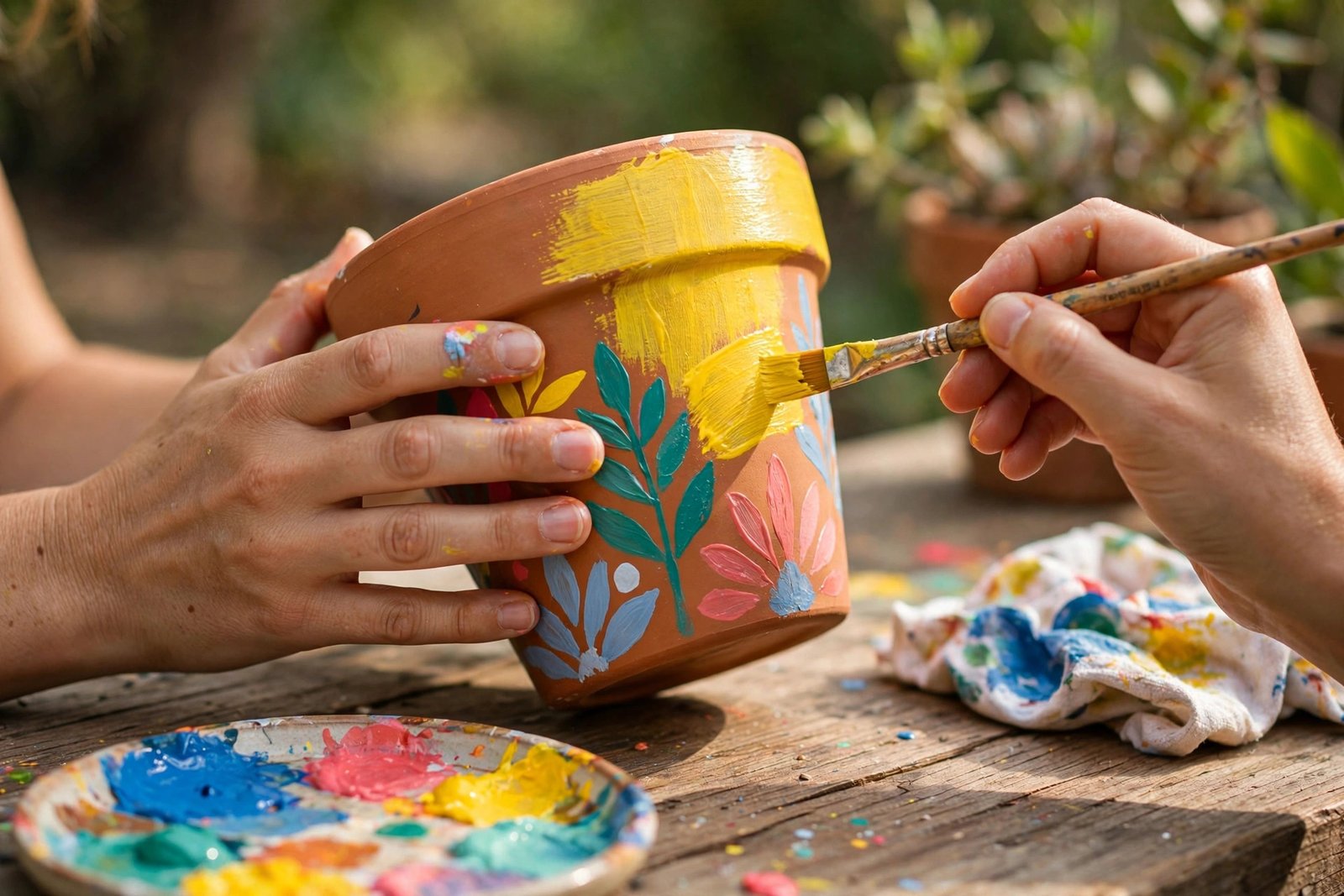
Yes, and it’s a great rainy-day project. Use outdoor acrylic or masonry paint, let it cure fully, and don’t paint the inside below the soil line if you’re growing edibles. A row of matching painted pots looks surprisingly smart.
Are self-watering planters worth the extra money?
For thirsty plants and forgetful waterers, they can be. But they’re not magic — you still have to refill the reservoir. There’s a whole comparison of watering cans versus self-watering pots if you’re deciding.
What’s the single best budget pot for a total beginner?
A 5-gallon fabric grow bag. It’s cheap, forgiving on drainage, light enough to move, and big enough for almost anything a beginner wants to try — a tomato, a pepper, a big bunch of basil, or a whole salad patch. If only one type of pot could be kept, it’d be that.
The moral of the glazed-ceramic-pot story is simple, and the best budget-friendly planters prove it: plants don’t care what their home costs. They care about drainage, size, and soil. Spend your money on good potting mix and decent seeds, and let the pots be the cheap part. Your wallet — and your plants — will be happier for it.

2 Comments on “Best Budget-Friendly Planters and Where to Find Them”