
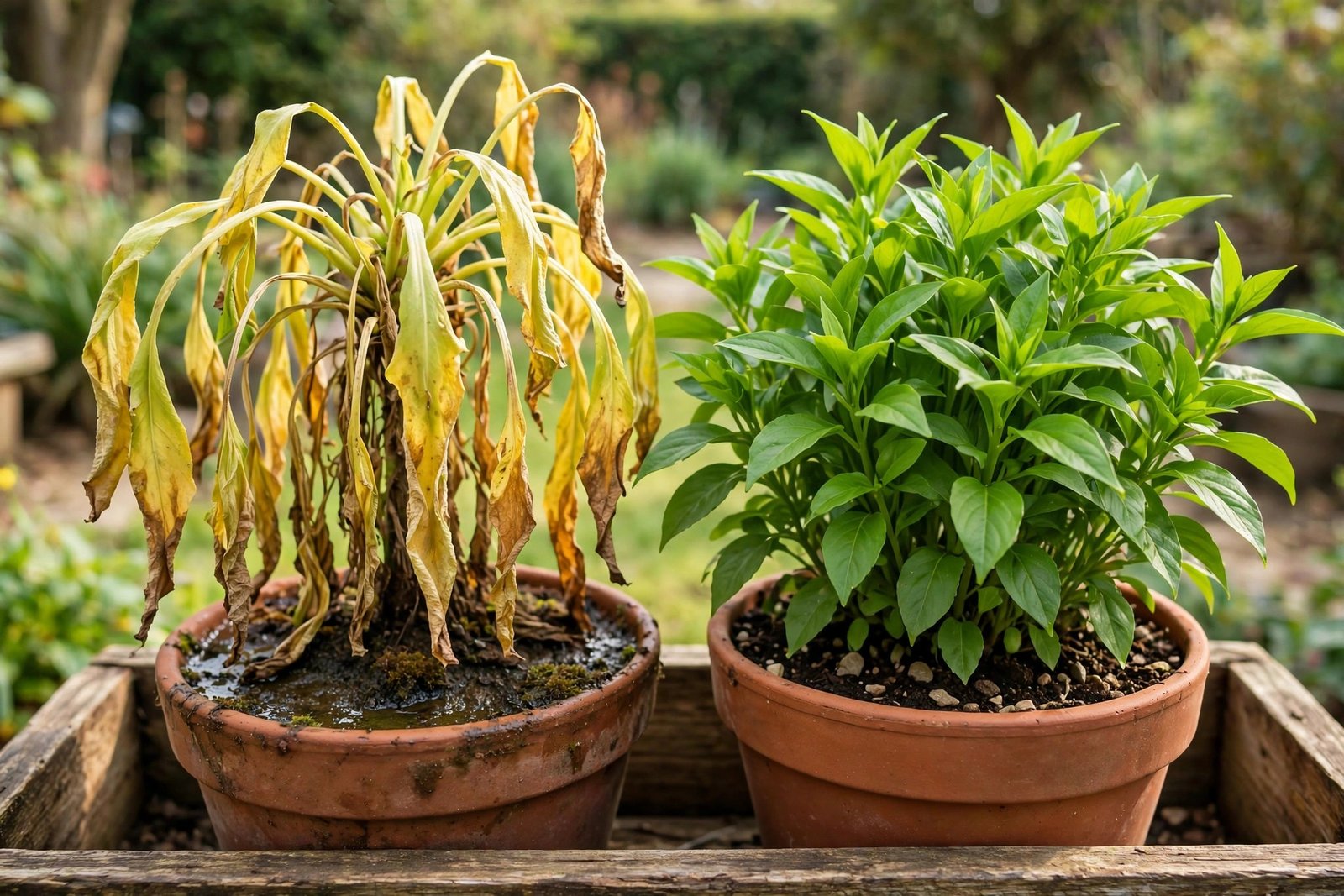
Which kills more houseplants: too much water or too little? Most beginners guess underwatering — it feels intuitive that a thirsty plant dies faster. But ask anyone who’s worked in a plant shop and they’ll tell you the truth: overwatering is the number one houseplant killer, by a mile. More plants die from kindness than from neglect — including the classic fiddle-leaf fig watered on a strict twice-weekly schedule until its roots turned to mush. The cruel twist is that overwatering and underwatering can look almost identical at first glance — both cause wilting, both cause leaf drop. That’s the overwatering vs underwatering puzzle, and this guide will help you solve it — symptoms, tests, and rescues for both sides.
Why They Look So Similar
Both problems starve the plant of water at the leaf level, which is why the symptoms overlap. An underwatered plant can’t get water because there isn’t any. An overwatered plant can’t get water because its roots are rotting in soggy soil and can no longer absorb it. Either way, the leaves wilt and suffer. The difference is in the details — the texture of the leaves, the state of the soil, and what the roots look like. Learn to read those clues and you’ll diagnose correctly nine times out of ten.
Signs of Overwatering
Overwatering is about frequency, not volume — it means watering again before the soil has had a chance to dry appropriately. Watch for:
- Yellow, soft, mushy leaves, often starting with the lower ones. They feel limp and waterlogged rather than dry.
- Wilting despite wet soil. This is the giveaway. If the plant is drooping but the soil is damp, the roots are drowning, not thirsty.
- Brown, mushy stems, especially near the soil line. Healthy stems are firm; rotting ones feel soft and may smell unpleasant.
- Mould or algae on the soil surface, or a musty, sour smell from the pot — both mean the soil is staying wet too long.
- Fungus gnats hovering around the pot. Those tiny black flies breed in constantly damp soil and are practically a billboard advertising overwatering.
- Leaf drop of green leaves. An overwatered plant often sheds leaves that still look green, because the damaged roots can’t support them.
A peace lily kept on a “helpful” weekly schedule through winter, when it barely needs water at all, can drop green leaves for a month while the soil at the bottom of the pot — where nobody checks — is a swamp. The top inch can lie to you; always check deeper.
Signs of Underwatering
Underwatering is more straightforward, and honestly more forgiving — most plants bounce back from drought faster than from rot:
- Dry, crispy, brown leaf edges and tips. Underwatered leaves feel papery and brittle, not soft.
- Wilting with dry soil. The plant perks up noticeably within hours of a good watering — that’s the classic test.
- Soil pulling away from the pot edges, leaving a visible gap. Very dry potting mix shrinks and becomes hydrophobic, so water runs straight through without absorbing.
- Slow growth and small new leaves, as the plant conserves resources.
- Lower leaves yellowing and dropping, but they feel dry and crisp rather than mushy.
The good news: a severely wilted plant that’s just thirsty will usually recover dramatically after a thorough soak. A calathea that looks completely dead — flat, crispy leaves — can revive with twenty minutes in a basin of water. Plants are tougher than we think, at least against drought.
Overwatering vs Underwatering: The Diagnostic Tests That Actually Work
When you’re unsure, run through these checks in order:
1. The finger test. Push your finger two inches into the soil (right down for small pots). Damp? Don’t water. Dry? Water. This single habit prevents more deaths than any gadget. For more on watering rhythms through the seasons, see the guide on how often to water indoor plants.
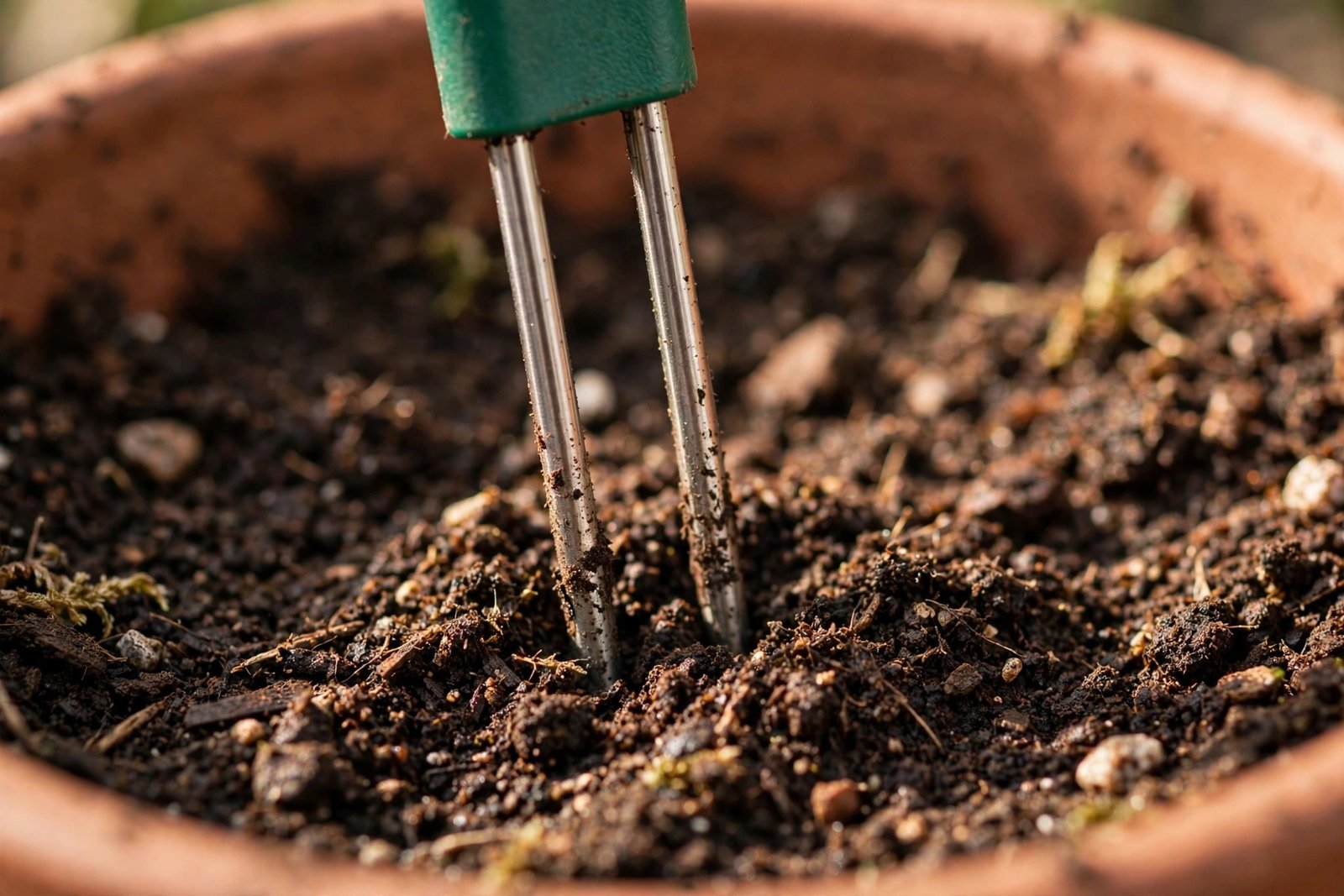
2. The weight test. Lift the pot after watering and memorise how heavy it feels. Lift it again a few days later. Light as a feather means dry; still heavy means wet. Within a couple of weeks the weight test becomes second nature.
3. The chopstick test. Stick an unfinished wooden chopstick or skewer into the soil for ten minutes. Damp soil darkens the wood and leaves particles stuck to it; dry soil leaves it clean. Cheap, simple, surprisingly accurate.
4. Check the drainage. Tip the pot slightly and look underneath. Is water sitting in the saucer? Are the drainage holes blocked? A pot with no drainage will overwater a plant no matter how careful the schedule is — a doomed thyme in a hole-less ceramic pot teaches that lesson fast.
5. Inspect the roots (the definitive test). If the plant is struggling and you can’t tell why, slide it out of its pot and look. White, firm, healthy-smelling roots mean the watering is probably fine and something else is wrong. Brown, mushy, foul-smelling roots mean rot from overwatering — trim the dead roots with clean scissors and repot into fresh, dry mix.
Quick Tips:
- Water based on soil moisture, not the calendar — check before every watering.
- Yellow + mushy + wet soil = overwatering. Brown + crispy + dry soil = underwatering.
- Always empty saucers 10 minutes after watering; never let pots sit in water.
- When in doubt, underwater slightly — most plants recover from drought, not from rot.
How to Rescue an Overwatered Plant
Act quickly but don’t panic. First, stop watering immediately and move the plant somewhere with good airflow and indirect light — not direct sun, which stresses an already struggling plant.
Tip out any standing water from the saucer. If the soil is sodden, slide the plant out of its pot and wrap the rootball in newspaper or an old towel for a few hours to wick away excess moisture. Inspect the roots: trim away anything brown and mushy with clean scissors, keeping only firm, pale roots. Repot into fresh, dry potting mix in a pot with drainage holes — don’t reuse the soggy old soil.
Then — and this is the hard part — leave it alone. Don’t water until the soil has dried appropriately for that plant. It may drop more leaves while it recovers; that’s normal. New growth is the sign of success, and it can take weeks. For step-by-step repotting technique, the repotting guide walks through the whole process.
Prevention going forward: check soil before watering, use pots with drainage, and consider a chunkier, faster-draining mix for plants that hate wet feet. Terracotta pots also help — they breathe and wick moisture away from the soil.
How to Rescue an Underwatered Plant
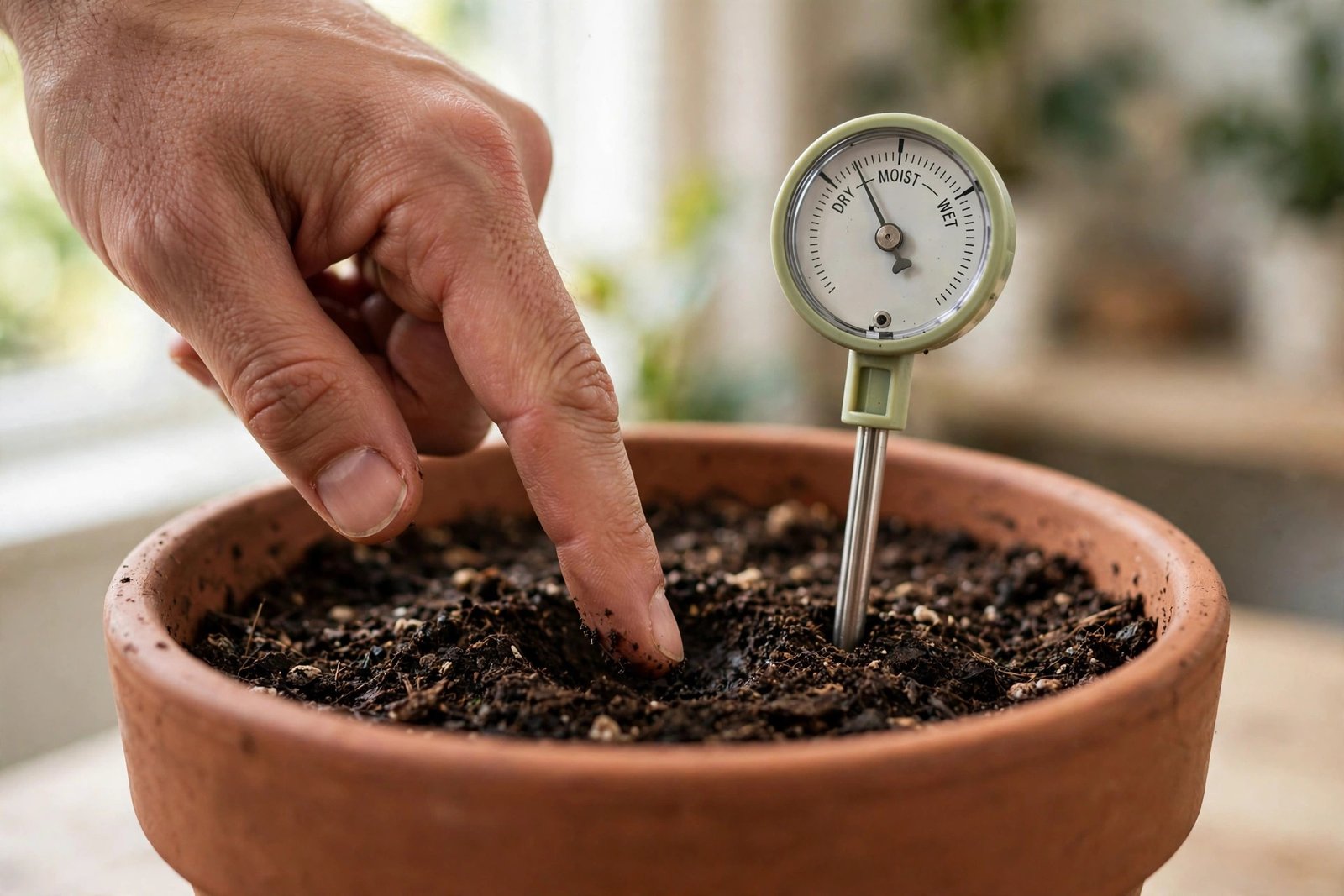
This is the easy rescue. Water thoroughly until it runs from the drainage holes — and if the soil has gone hydrophobic (water runs straight through without absorbing), set the whole pot in a basin of room-temperature water for 20–30 minutes so it can soak from the bottom up. You’ll often see the plant perk up within hours, which is deeply satisfying.
After the rescue soak, trim off any fully crispy dead leaves (they won’t recover), but leave anything with green in it — the plant can still use it. Then resume normal watering, checking the soil first each time. A layer of mulch on the soil surface slows evaporation for thirsty plants.
If underwatering keeps happening because life is busy, that’s useful information, not a failure. Switch to more drought-tolerant plants (snake plants, ZZ plants, succulents — see the low-light survivors list), group pots together to raise humidity, or try self-watering pots — a practical choice for thirsty balcony tomatoes during absences.
The Mindset Shift
Here’s what fixes watering for good: stop asking “when should I water?” and start asking “does it need water right now?” The first question leads to schedules, apps, and dead fiddle-leaf figs. The second leads to the finger test, the weight test, and plants that thrive. Schedules ignore seasons, weather, heating, pot size, and soil type — all of which change how fast soil dries. Your finger doesn’t.
It also helps to learn plants’ personalities. Ferns and calatheas like steady moisture; succulents and snake plants want to dry out completely; most leafy houseplants sit happily in the middle. The plant label guide shows how to decode the care instructions that come with new plants so you start from the right baseline.
Questions I Get Asked a Lot
My plant is wilting — should I water it?
Check the soil first, always. Stick your finger two inches in. If it’s dry, water thoroughly. If it’s damp, do not water — wilting in wet soil points to root problems from overwatering, and adding more water makes it worse. This one habit — checking before watering — will save more plants than anything else in this article.
Can a plant recover from root rot?
Yes, if you catch it in time and there’s still healthy root left. Trim away all brown, mushy roots with clean scissors, repot into fresh dry mix, and water sparingly until new growth appears. If all the roots are mush and the stem is soft at the base, the plant is unfortunately beyond saving — take cuttings from any healthy top growth if the species allows it (many do; see the propagation guide).
How do I stop overwatering? I can’t help myself.
You’re not alone — overwatering is almost always an act of love. Practical fixes: switch to terracotta pots (they dry faster), use a grittier fast-draining mix, set a “check, don’t water” reminder instead of a watering reminder, and keep a wooden chopstick in each pot as a moisture gauge. Some people also find it helps to have fewer, more deliberate watering days — say, a Sunday soil-check ritual rather than daily hovering.
Do moisture meters work?
They can help, but with caveats. Cheap probe meters measure electrical conductivity, not moisture directly, and they can misread in very loose or fertiliser-heavy mixes. They’re a decent training aid while you learn the finger and weight tests, but I wouldn’t rely on one forever. The analogue methods in this article are free, never need batteries, and teach you to actually read your plants.
Is yellowing always a watering problem?
No — yellowing is a symptom with many causes. Natural ageing drops old lower leaves; nutrient deficiency yellows in specific patterns; too little light causes pale yellowing; pests can yellow leaves too. The guide to yellow leaves walks through the full diagnostic. But if you’re a beginner and leaves are yellowing, watering is the most likely culprit, so start there.
Watering is a skill, not a talent — the fiddle-leaf fig died on a schedule, and the plants that thrive now do so because the soil gets checked first. Learn the difference between mushy-yellow and crispy-brown — that’s overwatering vs underwatering in a nutshell — and trust your finger over your calendar. Remember: when in doubt, it’s usually too much water, not too little. Your plants will thank you by simply staying alive, which is honestly most of what we’re aiming for.

2 Comments on “Overwatering vs Underwatering: How to Tell the Difference”