Every balcony gardening story seems to start the same way: with two basil plants from the supermarket — the kind sold in those little plastic pots in the herb aisle — sitting on a rented apartment balcony. They’re usually leggy, pale, and already half-dying, because supermarket herbs are grown fast and kept alive just long enough to sell. Most beginners don’t know that. They just see green, smell that amazing scent, and feel like someone who finally has her life together.
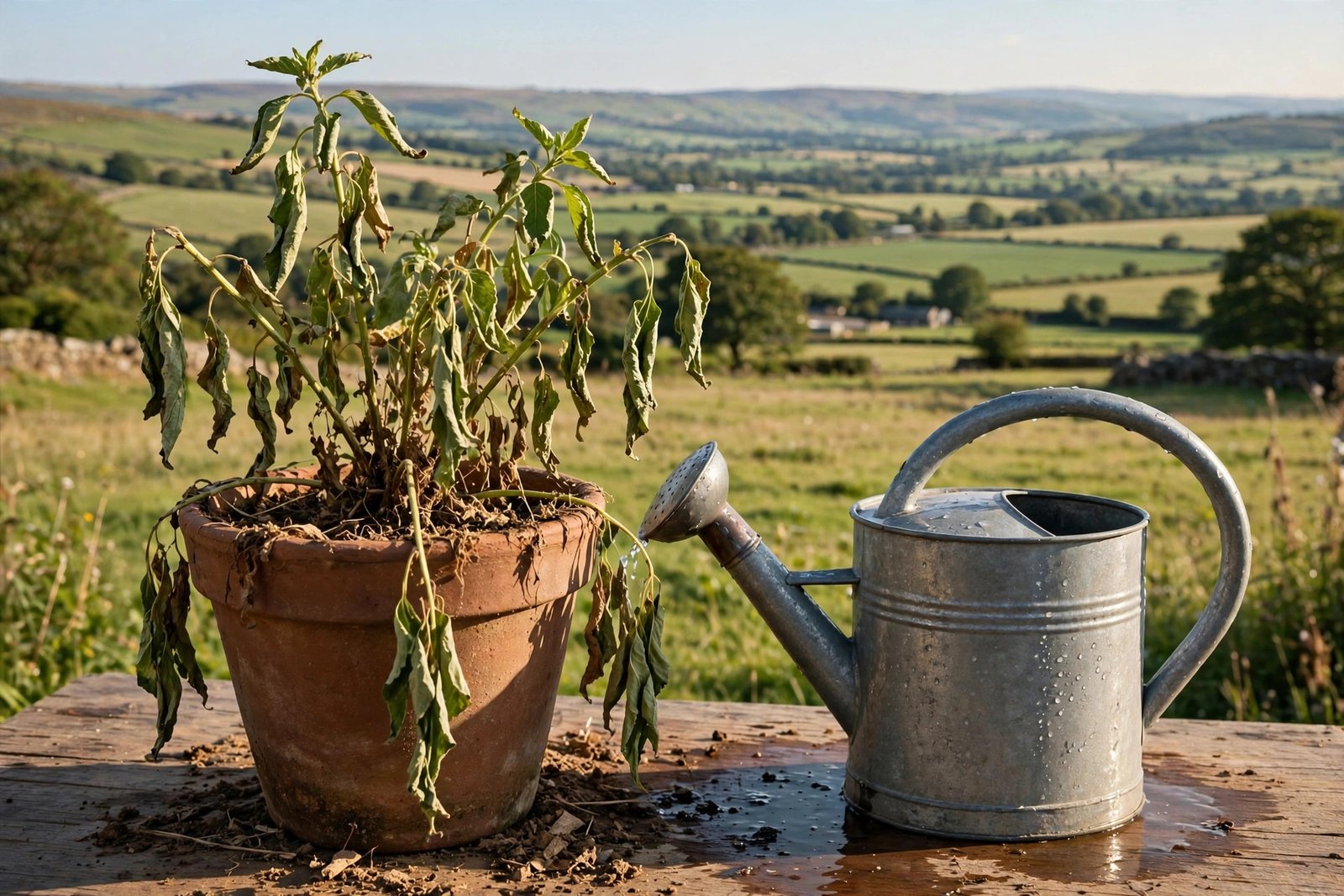
Within three weeks, both are usually dead. Watered every single day — because that seems like what a caring plant owner would do — the roots rot in tiny pots with no drainage to speak of, and there’s the new gardener standing on the balcony holding two brown sticks, feeling genuinely sad about it. It’s funny in hindsight, but at the time it stings. Killing something that millions of people grow without thinking about feels like a verdict.
That failure is the reason this blog exists. Because the gardeners who stick with it aren’t the ones with a magic touch — they’re the stubborn ones. They read, they ask questions, they buy more plants and kill a fair number of them, and slowly — so slowly — things start to live. This is the story of that first year of balcony gardening: what goes wrong, what goes right, and what we’d whisper to any brand-new gardener if we could.
Spring: Enthusiasm, Meet Reality
After the basil incident, most gardeners do what any sensible person does: buy more plants. A tomato seedling, a bag of mixed salad seeds, a lavender because it looked pretty, and three succulents because the internet said succulents were unkillable. (The internet lied, or at least it lied in that specific case.)
The tomato went into a pot far too small — maybe 6 inches across — because how to choose the right pots was still a mystery. It grew anyway, bless it, all stem and optimism, and produced exactly four cherry tomatoes. Four. Eaten standing on the balcony like they were made of gold.
The succulents died one by one — killed by overwatering. The plants famous for surviving neglect, loved to death with water. Many beginners read “succulents are easy” and translate that to “water them like everything else.” Their leaves went translucent and mushy, and the first real lesson emerged: every plant has its own logic, and “easy” doesn’t mean “the same as everything else.” If you’re starting out, the guide to how often to water indoor plants is the article every beginner wishes they’d had.
The salad seeds were the first real win. Scattered too thickly in a shallow tub — classic beginner overcrowding, warned about in the beginner mistakes post — but lettuce is forgiving, and that tub produced actual salads for weeks. Cut a few leaves, they grew back — it felt like magic.
Quick Tips:
- Start with 3–4 plants, not 15 — you’ll learn faster and lose less when (not if) something goes wrong.
- Supermarket herbs are a fine cheap way to start, but repot them immediately into bigger pots with drainage.
- Write down what you plant and when; a year later you won’t remember, and the notes become gold.
- Your first failures are tuition fees, not verdicts on your ability. Every gardener has a compost heap of dead plants in their past.
Summer: The Balcony Gets Serious
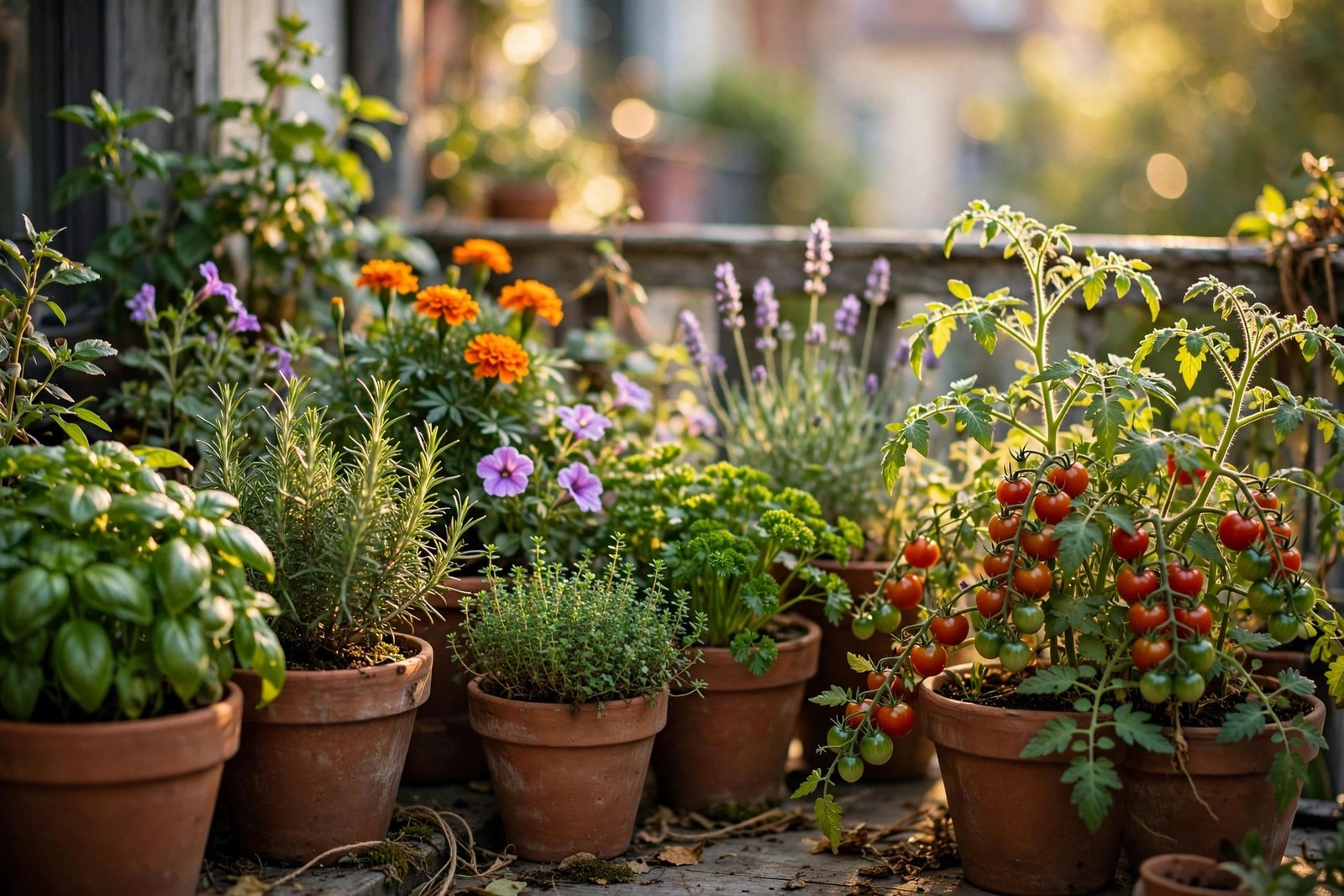
By June, something had shifted. The balcony stopped being decoration and started being a garden — a small, scrappy, rented one, but a garden. Drainage holes drilled in everything (after learning about drainage the wet way) and the first batch of proper potting soil instead of the cheapest bag — the difference was immediate. Plants that had been nursed along suddenly looked… perky.
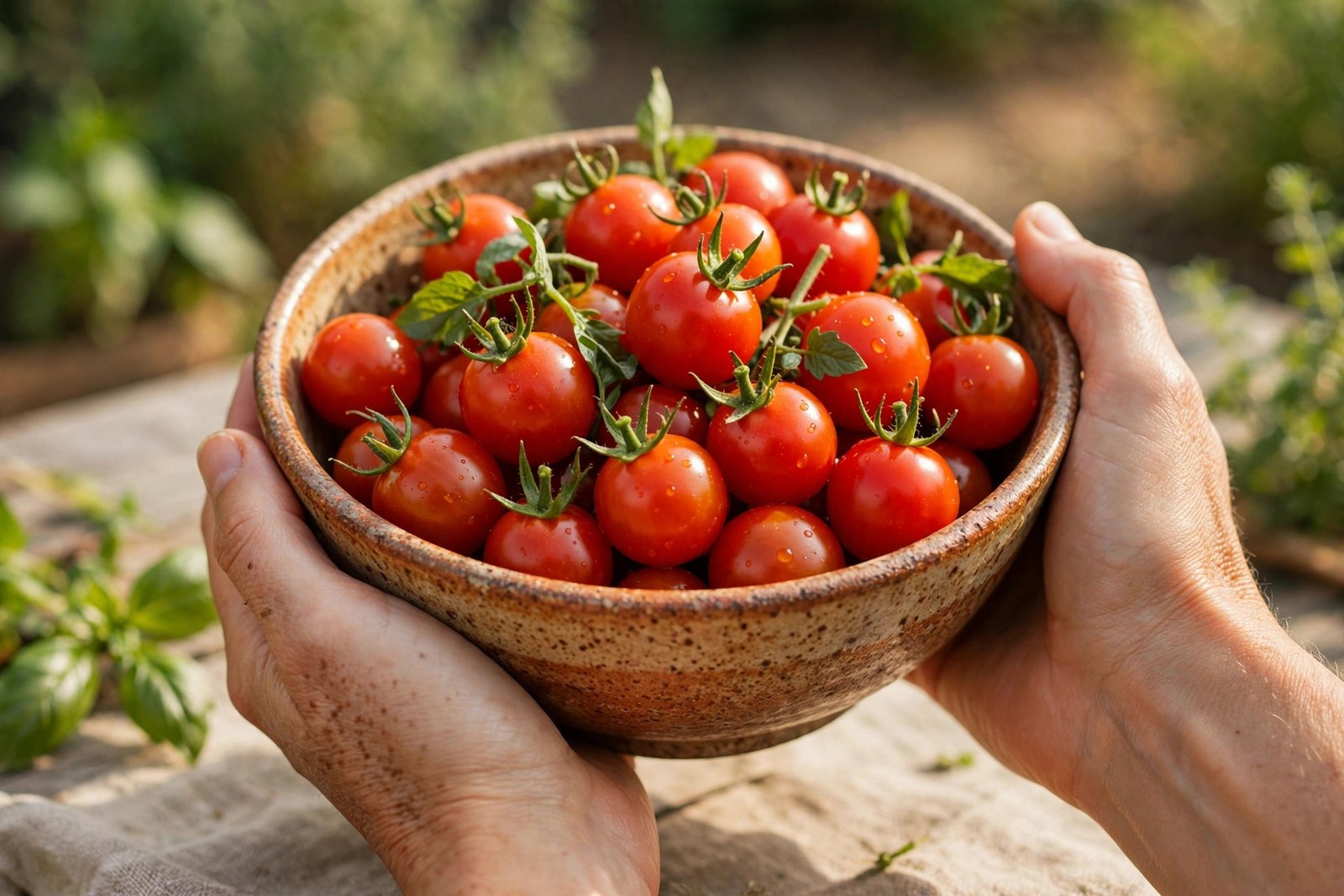
‘Tiny Tim’ tomatoes that summer were the first plant that made a beginner feel like they knew what they were doing. Handfuls of sweet red cherries from a 3-gallon pot — proof that variety choice matters enormously in small spaces. The right cultivar in the right pot does half the work. There’s a whole piece on tomatoes in containers because that little plant changes everything.
The first pest drama: aphids on the basil, a colony of them, seemingly overnight. A blast of water and mild soap spray sorted it — the natural remedies still in use today. Nobody’s plants are immune; managing pests is just part of the deal, not a sign of failing.
And the classic summer error: going away for a long weekend in August without arranging watering. Coming home to a balcony of crisps. Most things recover with a deep soak and a trim — plants are tougher than they look — but the lavender gets lost, and the lesson is to always, always have a watering plan. A neighbour arrangement and a stash of self-watering setups for holidays solves it.
Autumn: The Season That Taught Me the Most
Autumn is when many stop being just summer gardeners. Assuming gardening ends in September — then sowing the first autumn salad greens — mizuna, rocket, winter lettuce — in the tubs the tomatoes vacated. They grow slowly through October and November, with leaves harvested in December, which feels like a small miracle.
Overwintering gets learned the hard way, losing a beloved chilli plant. Brought inside when nights turned cold, stuck on a dark hallway shelf, watching it drop every leaf within a fortnight. It needed light, not just warmth — a lesson that eventually leads to a grow light setup. The chilli doesn’t make it, but the lesson does: bringing plants indoors is only half the job; they need decent conditions once they’re there. The overwintering guide is basically that chilli plant’s memorial.
The biggest autumn project: building the first worm bin. A friend gives a starter colony of red wigglers, and an evening goes to drilling air holes in storage boxes feeling like a proper homesteader. A worm bin like that can run for years, quietly feeding every plant grown.
Winter: Planning and Patience
Winter on a small balcony is quiet. Most things dormant or dead, the pots empty, and a lot of time spent looking at the space and thinking. Measuring the sunlight at different times of day (which becomes a sunlight guide), sketching layouts, reading gardening books with a highlighter.
First seeds started indoors that February — tomatoes and peppers on a bright windowsill. They went leggy, of course — pale and stretched. Almost thrown out, but potted up deeper instead (tomatoes root along buried stems), given as much light as possible, and most recovered into perfectly good plants. That near-disaster teaches that seedlings are resilient and that legginess is a correctable problem, not a death sentence.
Looking back, winter is when a gardener is actually made — not when things are growing, but when the planning, learning, and paying attention happen. The growing season is the reward; winter is the education.
What a Year of Balcony Gardening Added Up To
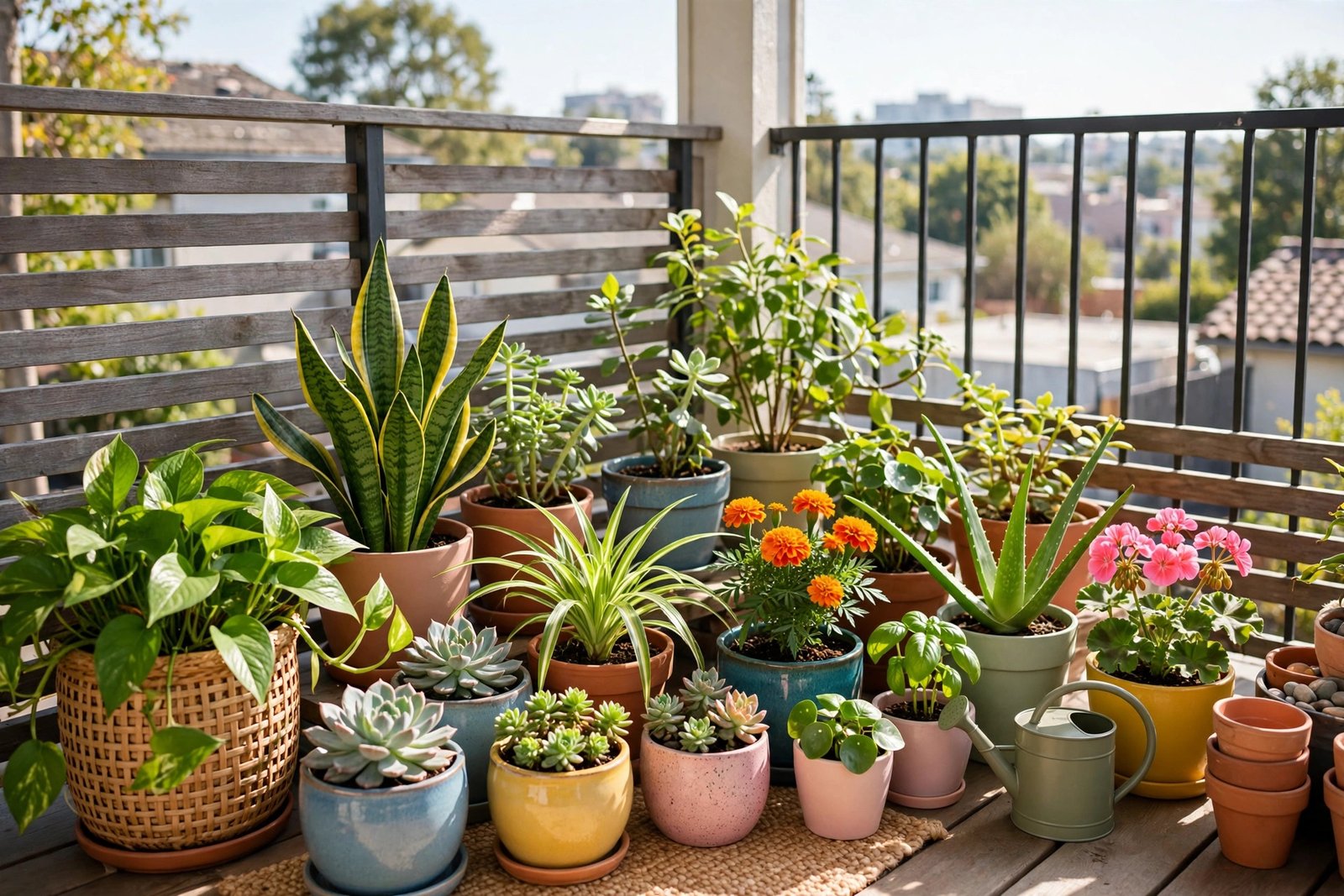
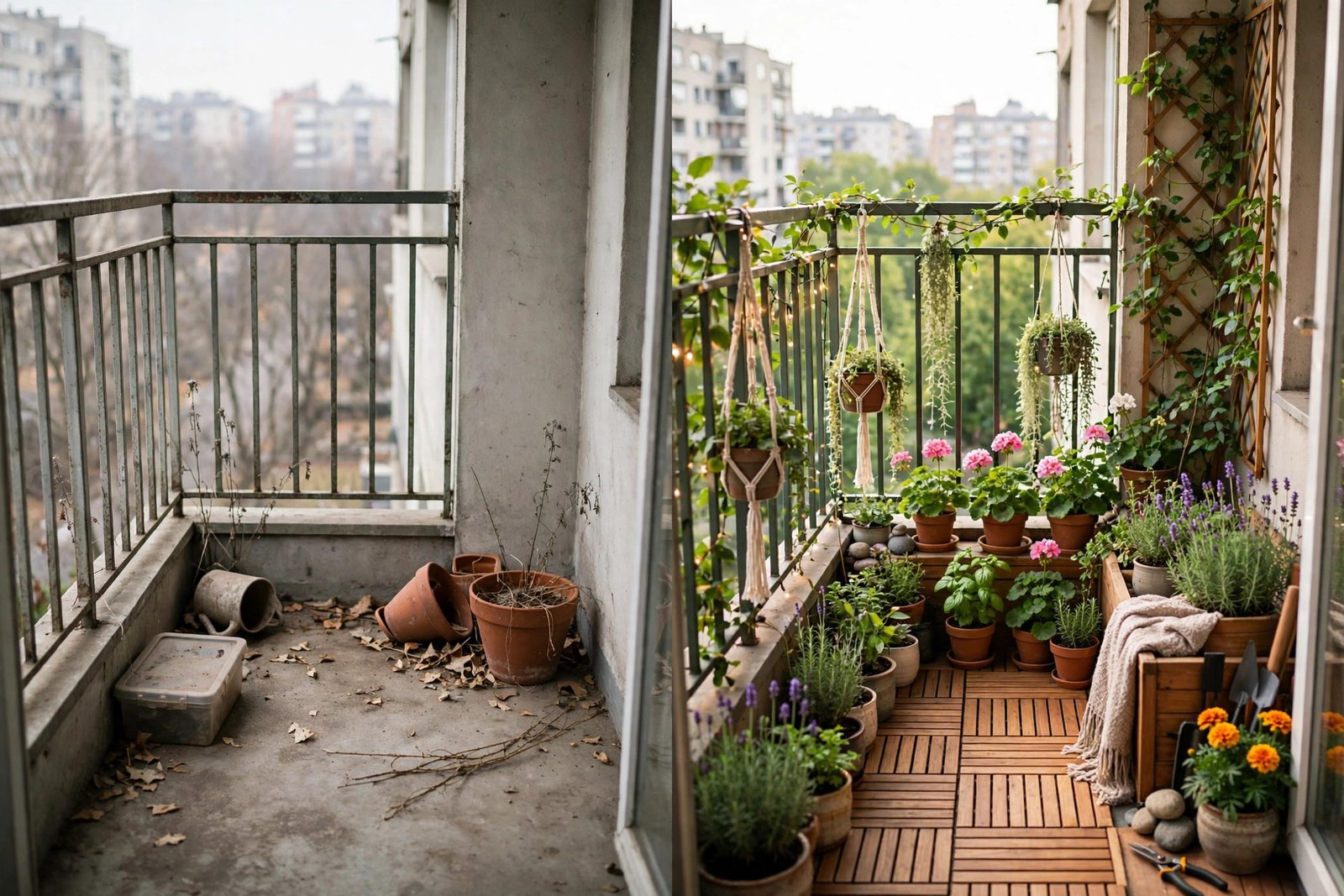
By the following spring, one year in, here’s where a new gardener stands: basil can be kept alive (a genuine achievement given where it started). Tomatoes, salads, herbs, and chillies harvested from about fifteen pots. Succulents, a lavender, a chilli, and countless seedlings lost along the way — and each one taught something specific. The balcony went from two dead supermarket herbs to a scrappy little garden that fed the household salads all summer.
But the real harvest wasn’t the food. It was a set of instincts: the feel of soil that’s ready for water versus soil that’s still damp, the look of a plant that’s hungry for light, the confidence to prune something hard knowing it’ll come back bushier. You can’t read your way to those instincts. You earn them one dead succulent at a time.
If you’re standing where every beginner stands — holding a dying basil and wondering if you’re just not a plant person — here’s what we’d tell you: there’s no such thing as a plant person. There’s just people who’ve killed enough plants to learn. Start small, expect losses, write things down, and give it a year. A year from now you’ll be the one giving advice over the fence — or over the balcony railing, in our case.
Your Questions, Answered
Did you really kill succulents? Aren’t they unkillable?
Really. Three of them, by overwatering in pots without drainage. “Unkillable” assumes they get what they actually want: bright light, gritty fast-draining soil, and water only when completely dry. Daily water in soggy soil gave the plants no chance — and taught the lesson to learn each plant’s needs instead of trusting labels like “easy.”
What was the single most useful thing you learned that year?
That drainage and pot size matter more than almost anything else. Most early deaths trace back to waterlogged roots in pots with no holes, or plants crammed into containers two sizes too small. Fix those two things and beginners’ survival rates skyrocket. Everything else is refinement.
How much did your first year cost?
Less than people assume: potting mix and a few decent pots are the biggest expenses; seeds are cheap, and half the containers were free or thrifted. The whole year costs less than a modest monthly grocery run — with salads and tomatoes eaten for months. The budget planters guide covers how to keep costs down.
When did you stop feeling like a beginner?
Honestly? Many gardeners never fully do — and that’s a good thing. There’s always a new plant, a new problem, a new season to figure out. But somewhere around month ten, the panic when something looks off usually turns into diagnosing instead. That shift — from panic to curiosity — is when it clicks.
What would you do differently if you started over?
Three things: start a worm bin on day one instead of month eight, buy a grow light before the first winter instead of after losing plants to it, and photograph everything — the failures especially.
Is one year really enough to learn?
Enough to stop killing everything and start growing real food? Yes. Enough to know everything? Never — and that’s the joy of it. A year gives you the foundations: watering instincts, light awareness, soil basics, and the confidence that dead plants are lessons, not verdicts. The rest is just more years, and they’re fun years.
These days the balcony is fuller, the instincts are sharper, and far fewer things get killed. But every gardener remembers standing out there with two brown sticks, feeling sad about supermarket herbs. If that was you recently: welcome. You’re exactly where every gardener starts. Give balcony gardening a year — it’s worth it.