I’ll say the unfashionable thing first: most beginners obsess over “full sun” and “partial shade” labels on plant tags while having absolutely no idea what their own balcony actually receives. I know, because I was one of them. I bought a tray of sun-loving lavender for a north-facing balcony in 2019, watched it sulk for a month, and blamed the compost. The compost was fine. My balcony got two hours of direct sun a day, and no plant label can fix not knowing that.
Here’s the part that took me another year to learn: not all sun is the same sun. Morning sun and afternoon sun behave like different climates. A balcony with four hours of gentle morning light and one with four hours of fierce afternoon heat grow completely different plants — and matching your plants to the kind of sun you get, not just the hours, is one of the biggest upgrades a beginner can make.
Why the Kind of Sun Matters More Than You’d Think
Sunlight isn’t just brightness; it’s heat, and heat is what stresses plants. Morning sun arrives when the air is cool, often with dew still on the leaves. Afternoon sun arrives when the air is already hot — on a July day a west-facing balcony can hit 35°C (95°F) — and every hour costs the plant water it can barely replace from a small pot.
This is why two balconies with “four hours of sun” can have opposite results. Four morning hours: most plants thrive, including many labelled “full sun”. Four afternoon hours in midsummer: only the tough stuff survives without daily rescue watering. The tag counts hours; your plants experience heat. Once you think in those terms, plant choices get much easier — and your watering can gets lighter. The full breakdown of hours is in the guide to how much sunlight a balcony garden needs.
Morning Sun: The Gentle Shift
East-facing balconies get the morning shift: direct sun from sunrise until roughly midday, then bright indirect light. It’s the kindest sun a balcony can have — temperatures stay low, evaporation is slow, and leaves dry off early, which means less fungal trouble as a bonus.
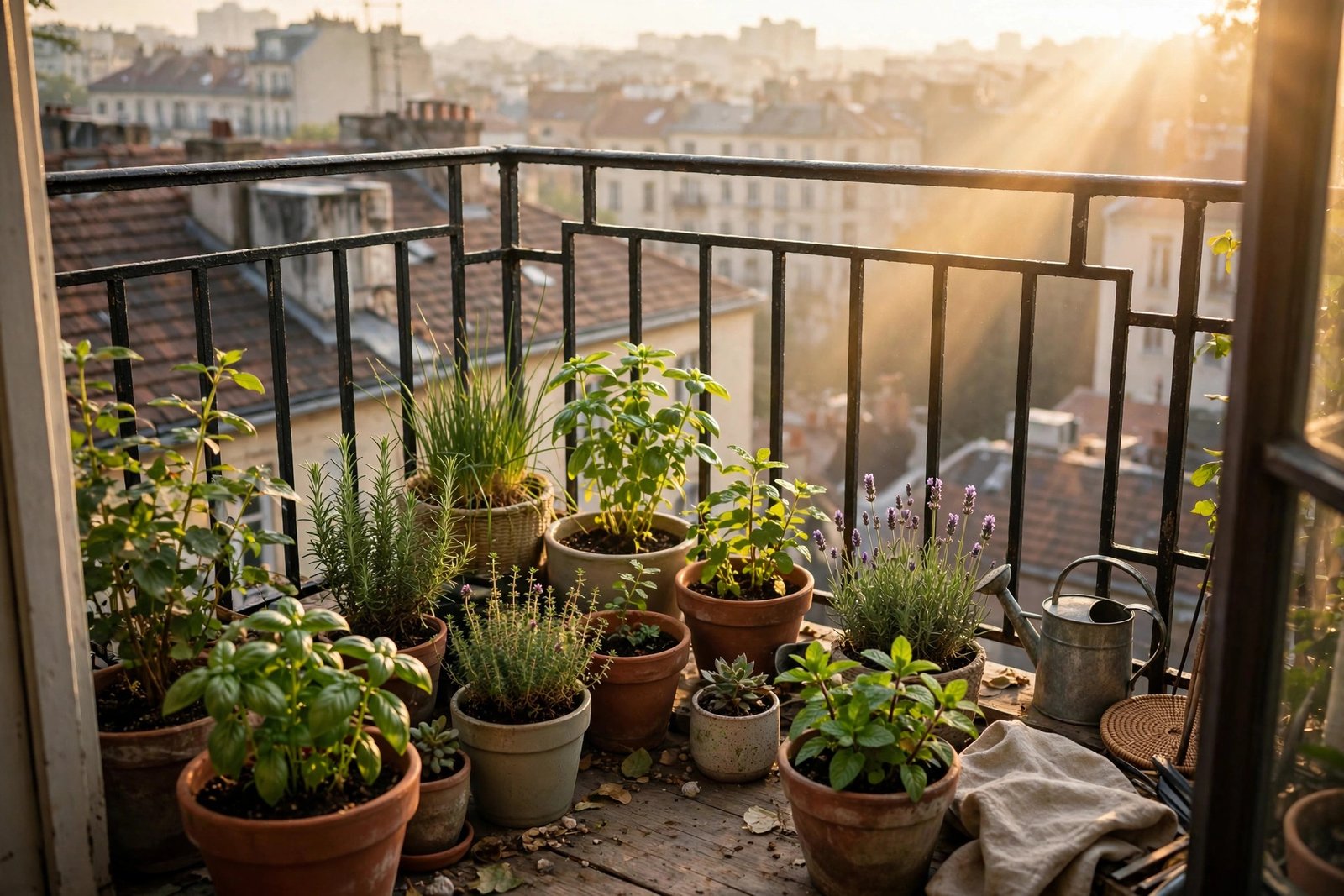
This is the balcony for the widest range of plants. Herbs love it: basil, parsley, chives, mint, and coriander all do brilliantly on four to six hours of morning sun. Salad leaves and spinach — which bolt in hot afternoon sun — stay sweet for weeks longer in morning light. Impatiens, begonias, fuchsias, and lobelia, which scorch facing west, flower their heads off facing east.
What morning-sun balconies can’t quite do: ripen heat-hungry fruit fast. My east-facing friend grows beautiful herbs, but her tomatoes run two or three weeks behind mine. Morning sun works for tomatoes — just pick a fast cherry like ‘Gardener’s Delight’ or ‘Tumbling Tom’ over a beefsteak that needs a long hot season.
Afternoon Sun: The Fierce Shift
West-facing balconies get the afternoon shift: shade all morning, then direct sun from early afternoon until sunset. In spring it’s lovely; in a July heatwave it’s a furnace — and this is the sun beginners underestimate most, because “afternoon sun” sounds pleasant and at 4pm on a 32°C day, in a black plastic pot, it is not.
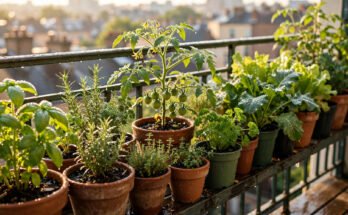
The plants that thrive here are sun-worshippers with deep roots and leathery leaves: lavender, rosemary, thyme, sage, geraniums, petunias, marigolds, and Mediterranean herbs generally. Tomatoes, chillies, and peppers love afternoon heat — my south-west balcony ripens cherry tomatoes from late July. Succulents and cacti shrug at conditions that would cook a fern.
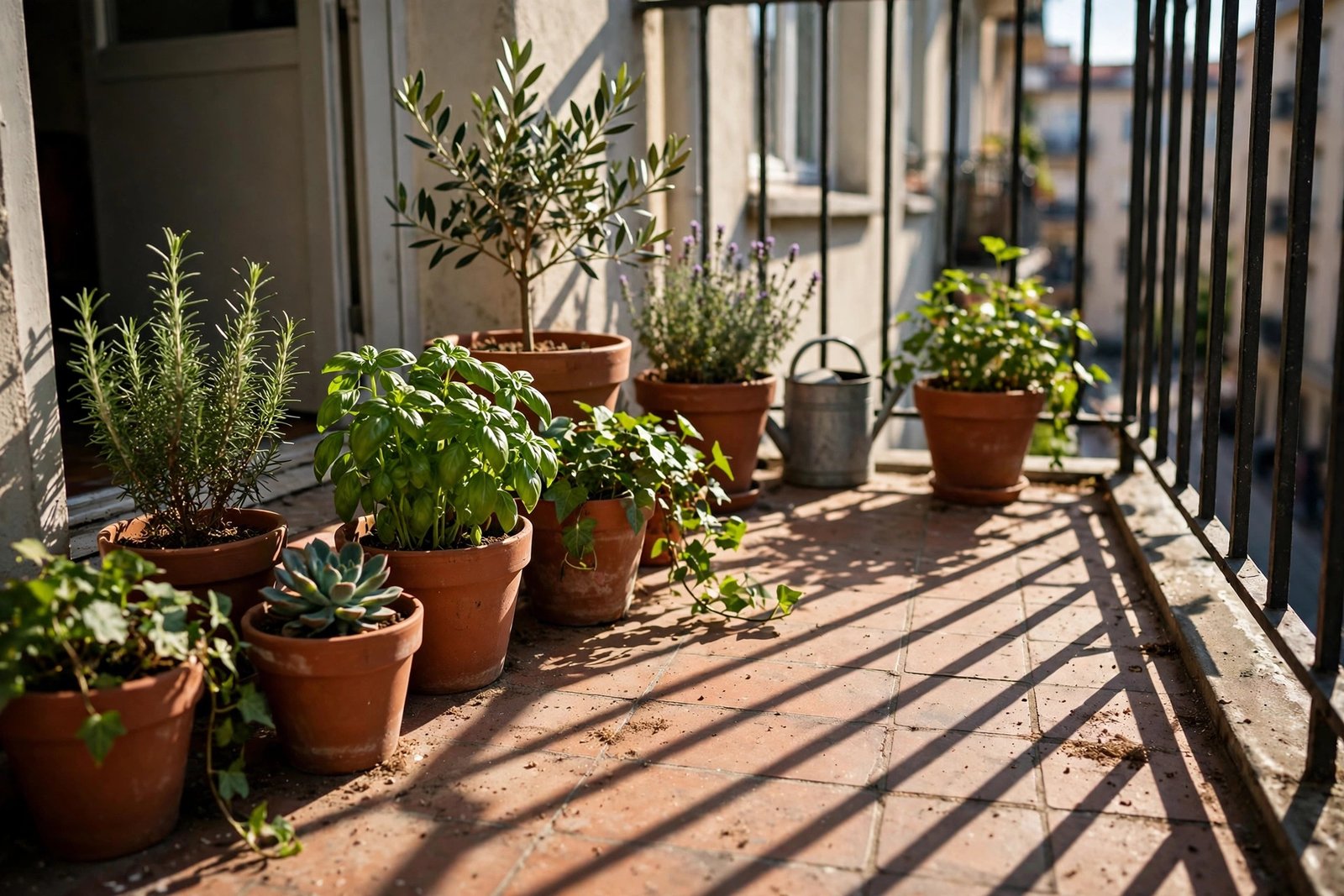
What afternoon-sun balconies struggle with: anything cool and moist. Lettuce bolts within days, coriander flowers instead of leafing, and impatiens crisp at the edges. You can grow them — I do — but they need the shadiest corner and bigger pots. I stopped fighting it: my salads grow in the shade of the tomato pots, which works surprisingly well.
The other cost of afternoon sun is water. A west-facing balcony in midsummer can need daily watering for every pot, twice daily for small ones. Light-coloured pots help, mulching is non-negotiable, and grouping pots shades the compost. My 2pm watering round in August isn’t a planning failure — it’s just what afternoon sun costs.
South-Facing: Both Shifts (Lucky You, Mostly)
South-facing balconies get the full day: morning sun straight through to evening, often eight-plus hours in midsummer. The most productive orientation — tomatoes, peppers, cucumbers, and sun-loving flowers all peak here — and the most demanding. Shade cloth, generous pots, and mulch aren’t optional in August; they’re how things stay alive.
North-Facing: The Shade Shift (Not Hopeless)
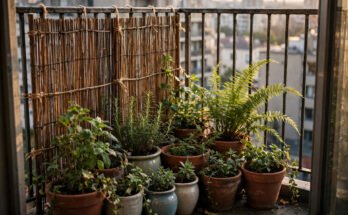
North-facing balconies get no direct sun in winter and maybe an hour or two in midsummer. Beginners treat this as a death sentence; it isn’t — it’s a different plant list. Ferns, hostas, ivy, begonias, impatiens, fuchsias, mint, parsley, and chives all do well. Skip tomatoes, lavender, and rosemary. A north balcony can be the lushest, lowest-maintenance one on the street — my north-facing friend waters half as often as I do and her ferns look like a rainforest. The low-light plants that survive anything guide has the full list.
Quick Tips:
- Morning sun (east) is gentle and cool — best for herbs, salads, and delicate flowers that scorch in heat.
- Afternoon sun (west) is hot and intense — save it for tomatoes, chillies, lavender, rosemary, and other sun-lovers.
- Count hours of direct sun separately from bright indirect light; plant tags mean direct.
- In afternoon sun, use light-coloured pots, mulch every surface, and expect daily watering in summer.
- North-facing isn’t hopeless — ferns, hostas, mint, and begonias thrive where tomatoes won’t.
The Simple Test I Use Every Spring
Every March, before buying a single plant, I do what I should have done in 2019: track the sun for one day. Three quick checks, no equipment:
Morning (around 9am): is direct sun hitting the balcony floor or railing? Note which end. Midday (around 1pm): still direct, or has the building started shading it? Evening (around 5–6pm): direct sun again, and until roughly when?
Write down the answers. “Direct sun 8am–12pm, shade after” tells you: east-facing, morning sun, four hours — worth more than any plant tag. I keep mine on a sticky note inside the kitchen cupboard until planting season is over.
Two refinements. First, test in the season you’ll grow in — a March reading underestimates July, when the sun climbs higher and days lengthen. Add roughly an hour each side for midsummer. Second, watch for the building itself: overhangs, the balcony above, and opposite buildings steal sun in ways a compass can’t predict. My “south-west” balcony loses the last two evening hours to the building across the courtyard from October to February. The phone-compass trick gives orientation; the three checks tell you what actually lands on your floor.

Matching Plants to Your Sun (My Cheat Sheet)
Once you know your sun, shopping gets simple. Here’s how I sort it:
Morning sun / east (3–6 hrs gentle): basil, parsley, chives, mint, coriander, lettuce, spinach, radishes, impatiens, begonias, fuchsias, lobelia. The forgiving list — these are also the easiest plants for beginner balcony gardeners, and morning sun is the most forgiving light to learn in.
Afternoon sun / west (3–6 hrs intense): tomatoes, chillies, peppers, lavender, rosemary, thyme, sage, oregano, geraniums, petunias, marigolds, verbena, succulents. Water generously, mulch everything, and use the biggest pots you can fit.
Full sun / south (6+ hrs): everything in the afternoon list, plus cucumbers, courgettes (in very big pots), sunflowers, and dahlias. Add shade cloth in heatwaves and never let small pots dry out — they can go from moist to crispy between morning and evening.
Little/no direct sun / north: ferns, hostas, ivy, heuchera, begonias, impatiens, fuchsias, mint, parsley, chives, lettuce (slower, but it grows). Embrace the shade garden — it’s lower maintenance than any sunny balcony I’ve owned.
The Mistakes I Made So You Don’t Have To
Mistake one was the lavender on the north balcony — buying for the garden I wished I had. Mistake two was subtler: basil (a morning-sun herb) in my south-west balcony’s sunniest spot, where it bolted and turned bitter by July. It wanted four gentle hours; I gave it eight fierce ones. Now it lives in the shade of the tomato pots and produces all summer.
Mistake three was assuming sun is constant. The spot that’s perfect in May can be a furnace in August and shaded by November. I move pots around more than I’d admit — geraniums to the sunniest corner in October, lettuce behind the tomatoes in July. Plants in pots are portable. Use that.
Questions I Get Asked a Lot
How many hours of sun do most balcony vegetables need?
Fruiting vegetables — tomatoes, peppers, chillies, cucumbers — want at least six hours of direct sun, preferably warm, so south or west facing. Leafy veg like lettuce, spinach, and radishes manage with three to four hours and prefer morning sun, since heat makes them bolt. Most herbs want four-plus hours, with rosemary and thyme wanting your sunniest spot.
Is morning sun enough for tomatoes?
It can be, with the right variety. Four to five hours of morning sun will ripen fast cherry tomatoes like ‘Gardener’s Delight’ or tumbling container types — expect a later, smaller harvest than a south-facing balcony, but a real one. Big beefsteaks need more heat and longer days than morning sun alone provides.
My balcony only gets afternoon sun and everything burns. What grows there?
Lean into heat-lovers: lavender, rosemary, thyme, sage, geraniums, petunias, marigolds, portulaca, and succulents. Then manage the heat: light-coloured pots, thick mulch, and pots at least 12 inches (30 cm) wide so compost doesn’t overheat. Water in the morning so plants face the afternoon fully hydrated — and tuck delicate plants in the shade cast by bigger pots.
How do I measure sun hours without any gadgets?
The three-checks method: look at 9am, 1pm, and 5–6pm on a clear day and note whether direct sun hits your balcony floor at each check. That brackets your sun window well enough for plant shopping. A phone compass gives orientation — but the direct observations matter more, because buildings and overhangs change everything.
Does the sun change through the year on a balcony?
A lot. In winter the sun sits low, so buildings and the balcony above block more of it — a south-facing balcony can lose hours of direct sun from October to March. In summer the sun is high and days are long, so even north-facing balconies may catch early morning or late evening sun. Track your sun in spring for summer growing; don’t assume July looks like March.
Can I grow anything with zero direct sun?
Yes — just not sun-lovers. Ferns, hostas, ivy, heuchera, and many begonias evolved for woodland shade and are happy with bright indirect light. Mint, parsley, and chives will grow (slowly). What won’t work: tomatoes, peppers, lavender, and rosemary — they’ll stay leggy and flowerless. A north balcony isn’t a failed garden; it’s a shade garden waiting for the right plant list.
So before you buy another plant, spend one day watching your balcony. Three glances, one sticky note, and you’ll shop like a different gardener — one who buys for the sun she has, not the sun she wishes she had. That habit would have saved my 2019 lavender, my bolted basil, and a shelf of crispy impatiens. The sun does most of the work in a garden; the least we can do is notice which shift it’s working.