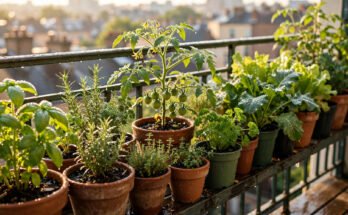
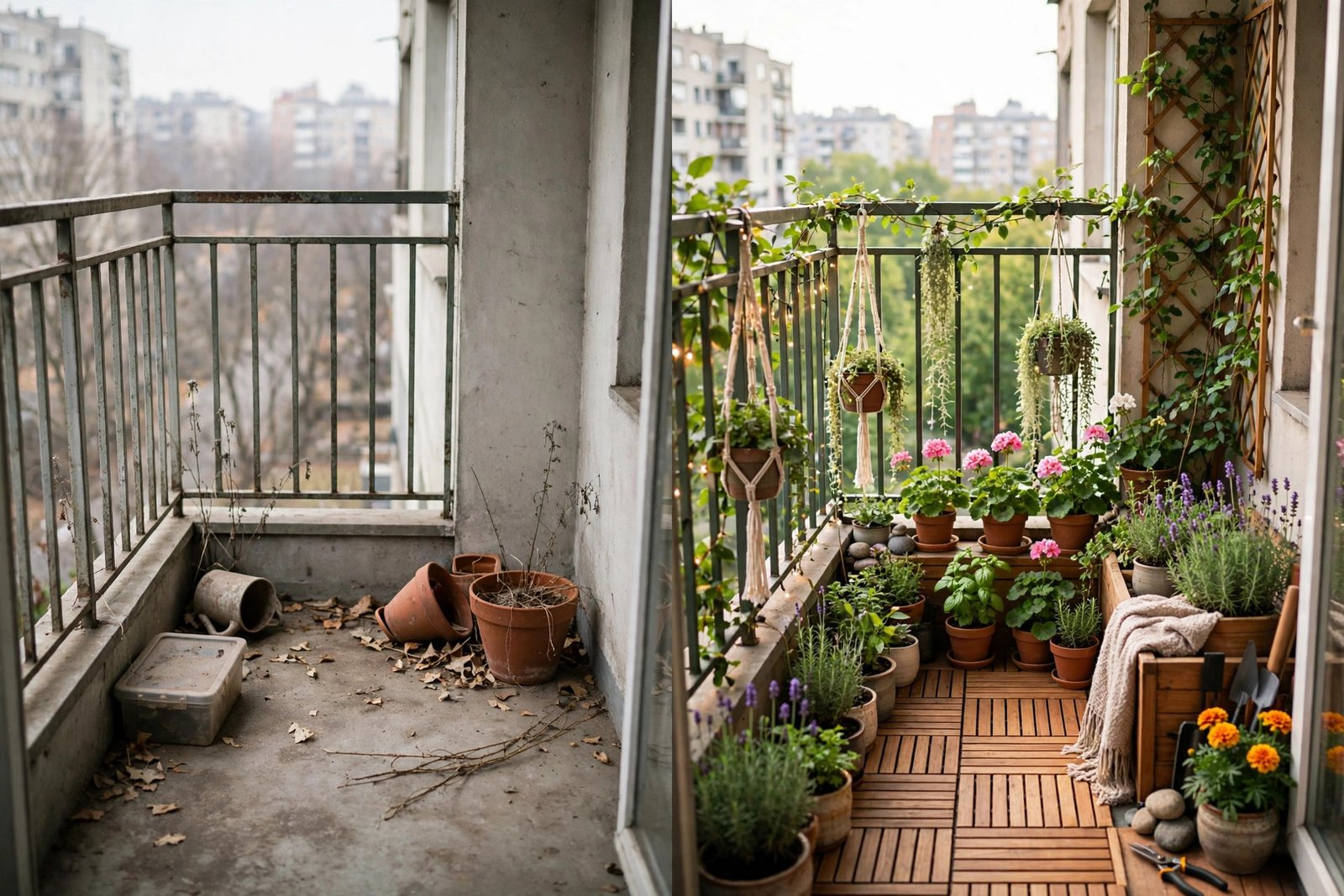
In August 2021, I came home from a friend’s barbecue to find my balcony looking like it had been through a tumble dryer. A thunderstorm had rolled through while I was out, and the wind had done a spectacular demolition job: my cherry tomato was lying on its side with the main stem snapped clean through, my basil looked like someone had attacked it with a paper shredder, and the railing planter full of petunias had been knocked sideways, compost spilled all the way to the drainage corner. I realised I’d spent two years obsessing over watering schedules and sunlight hours and had given exactly zero thought to the wind.
Here’s what nobody tells beginner balcony gardeners: wind is a growing condition, just as real as sun and shade. It shreds leaves, topples pots, and dries soil fast — and on high balconies it never really goes away. This is the guide I wish someone had handed me before that storm: everything here is stuff I’ve actually done on my own fifth-floor balcony, mistakes included.
What Strong Wind Actually Does to Balcony Plants
Let’s start with the damage report, because understanding what wind does tells you exactly how to fight it. The obvious one is physical: gusts snap stems, shred leaves, and knock pots over. My basil that day lost maybe a third of its foliage, and those torn edges never really healed — the plant spent the rest of August looking tired and producing less.
But the sneakier damage is drying. Wind strips moisture from leaves and from the surface of the compost far faster than sunshine alone. A pot that would normally stay moist for two days can be bone-dry in 24 hours on a windy balcony. Upper-floor balconies are the worst for this — I’m on the fifth floor, and my pots drink noticeably faster than my friend’s identical pots on the ground floor of the same building. If you’ve ever wondered why your balcony containers seem constantly thirsty, wind is often the thief, and it pairs badly with hot weather. The guide to protecting balcony plants in summer heatwaves talks about heat, but wind plus heat is the real killer combination.
Then there’s the slow, invisible one: root rocking. Hours of swaying loosens the soil around the stem and damages the fine feeder roots. The plant won’t fall over — it just quietly underperforms. My first-year peppers looked fine but fruited pathetically, and I now know the daily gusts were rocking their roots loose all season.
The First Fix Costs Nothing: Rearrange What You’ve Got
Before you buy anything, walk out onto your balcony and find the leeward side — that’s the sheltered side, away from wherever the wind mostly comes from. On my balcony, the wind barrels in from the south-west, so the north-east corner, right against the building wall, is my calm zone. Everything tall, top-heavy, or precious lives there.
Group your pots together. A lone pot takes the full force of every gust; a tight cluster breaks the wind for its members. I keep my tomatoes, peppers, and big herbs in one huddle in the sheltered corner, foliage almost touching. It costs nothing and it’s the fastest improvement you can make.
Put tall plants low. A tall plant in a tall stand is a sail on a mast — bring it down to floor level and the wind hits it less. My cherry tomato grows in its 14-inch pot directly on the balcony floor now, never on a stand. And never put a tall plant in a light plastic pot up high in the windiest spot — that was my 2020 setup, and it ended exactly how you’d expect.
Windbreaks: The Best Money You’ll Spend
A windbreak is anything that slows the wind before it hits your plants, and it’s the biggest single upgrade I made. Here’s the counterintuitive bit: you don’t want a solid wall. A solid panel or a fully blocked railing just forces the wind up and over, and it crashes down on the other side in turbulent eddies that can be worse than the original breeze. What you want is something permeable — a screen that lets about half the air through and turns a gust into a gentle flow.
My solution is a bamboo roll screen, 3 feet (90 cm) tall, cable-tied to the inside of my railing on the windward side — reed screens work the same way. It cost very little and cut the wind speed behind it roughly in half. I fastened it with small cable ties every 12 inches: firm enough to hold, easy to take down for winter. I’d tried a solid plastic panel first, and the turbulence behind it was worse. Permeable was the fix.
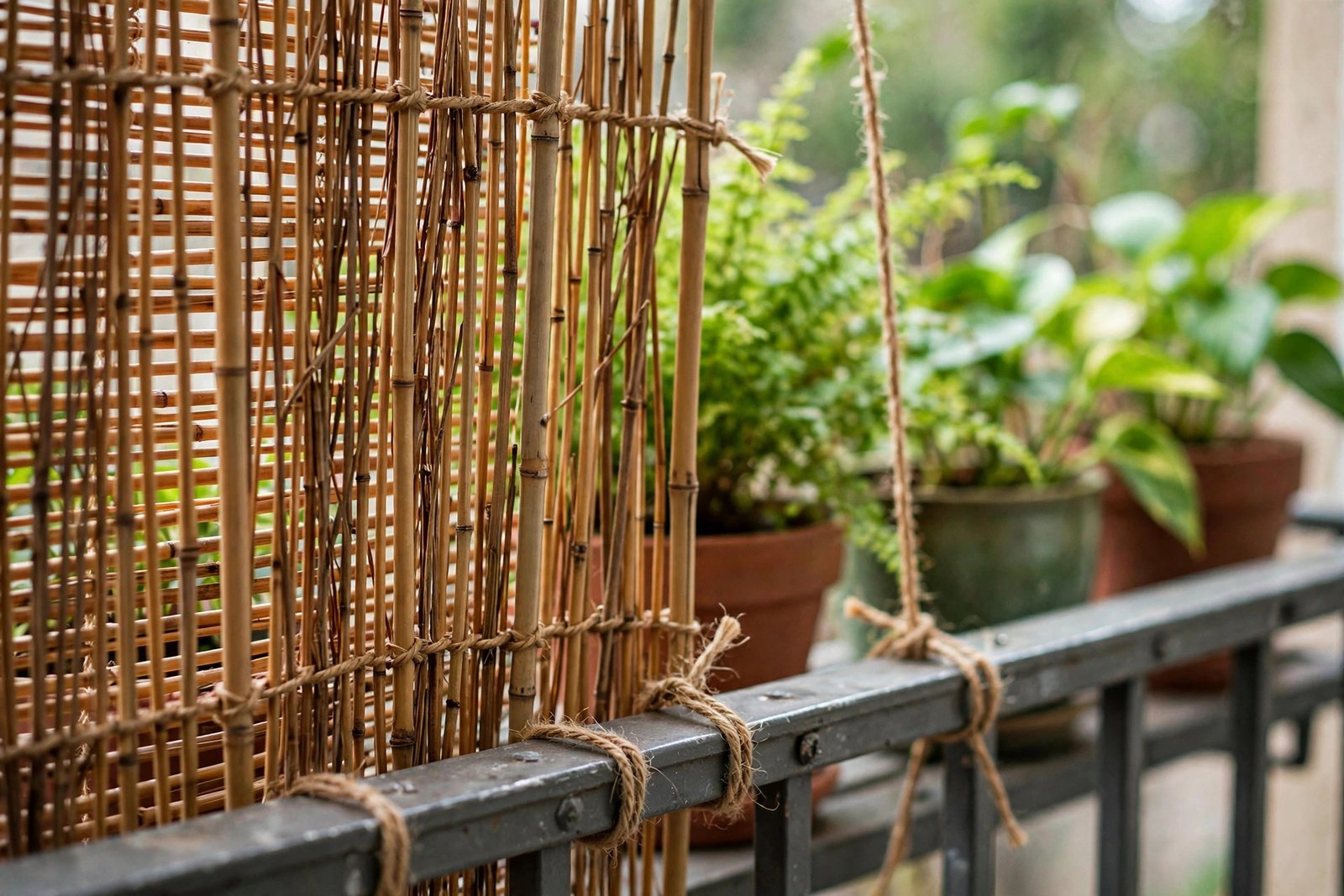
Other good options: shade cloth (50–70% density) strung along the railing, which doubles as sun protection; clear polycarbonate panels, which block wind while keeping your view; or proper windbreak mesh. Whatever you choose, leave a 2-inch (5 cm) gap at the bottom so air bleeds underneath instead of piling up.
You can also build a living windbreak. A row of sturdy plants — lavender, rosemary, or even tall ornamental grasses in heavy pots — along the windward edge takes the first hit and shelters everything behind. My lavender hedge-in-pots is my favourite part of the balcony: it smells wonderful, the bees love it, and it’s doing quiet wind duty every day. Plant it in the heaviest pots you own, because it’s standing in the most exposed spot.
Heavy Pots Beat Clever Tricks
Here’s my honest rule after five seasons: a heavy pot solves more wind problems than any gadget. Terracotta and glazed ceramic pots, once filled with damp compost, weigh a serious amount. My 14-inch (35 cm) terracotta tomato pot, freshly watered, weighs close to 15 kg — no gust that’s ever hit my balcony has moved it. The featherweight plastic pots I started with, meanwhile, would skitter across the floor in a stiff breeze.
If you love plastic pots (cheap, and they hold moisture well — I still use them), make them heavier: gravel in the bottom before the compost goes in, or set the plastic pot inside a heavier decorative outer pot. Weight is wind insurance. Choosing featherweight pots without thinking about 40 mph gusts was one of my classic beginner balcony gardening mistakes.
Quick Tips:
- Group pots into tight clusters so they shelter each other — free and immediate.
- Use a permeable windbreak (bamboo screen, shade cloth, mesh), not a solid wall.
- Heavy terracotta or ceramic pots resist toppling far better than light plastic.
- Put tall, top-heavy plants on the floor in the most sheltered corner.
- Water deeply before a storm — a soaked pot is a heavy pot.
- Wind dries soil fast, so check moisture daily on exposed balconies.
When a Storm Is Coming: My 20-Minute Prep Routine
When the forecast shows gusts over 40 mph or a proper summer thunderstorm, I do a quick balcony batten-down. It takes twenty minutes and I’ve never regretted it:
- Move everything vulnerable to the sheltered corner. Hanging baskets come down off their hooks — they’re the first casualties in any storm. Light pots get grouped tight against the leeward wall.
- Soak every pot deeply. Wet compost is heavy compost — water until it runs out of the drainage holes.
- Lay the smallest, lightest pots on their sides in the sheltered corner. Seedlings in 4-inch pots are almost impossible to anchor, so lying them down is the pragmatic option.
- Stake tall plants. My tomatoes get a sturdy bamboo cane and a couple of soft ties before storm season even starts — not after. A plant that’s already staked just rides out the wind.
- Secure or remove railing planters. Those over-the-railing planters catch wind like sails. Mine are bolted with proper brackets now, but in a serious storm forecast I still take the lightest one down. If you’re thinking about railing planters as a way of doubling your growing space, wind-proofing the brackets is part of the job.
- Bring in anything decorative and light — empty saucers, plant labels, that cute little watering can. They become projectiles.
Choose Plants That Don’t Mind the Breeze
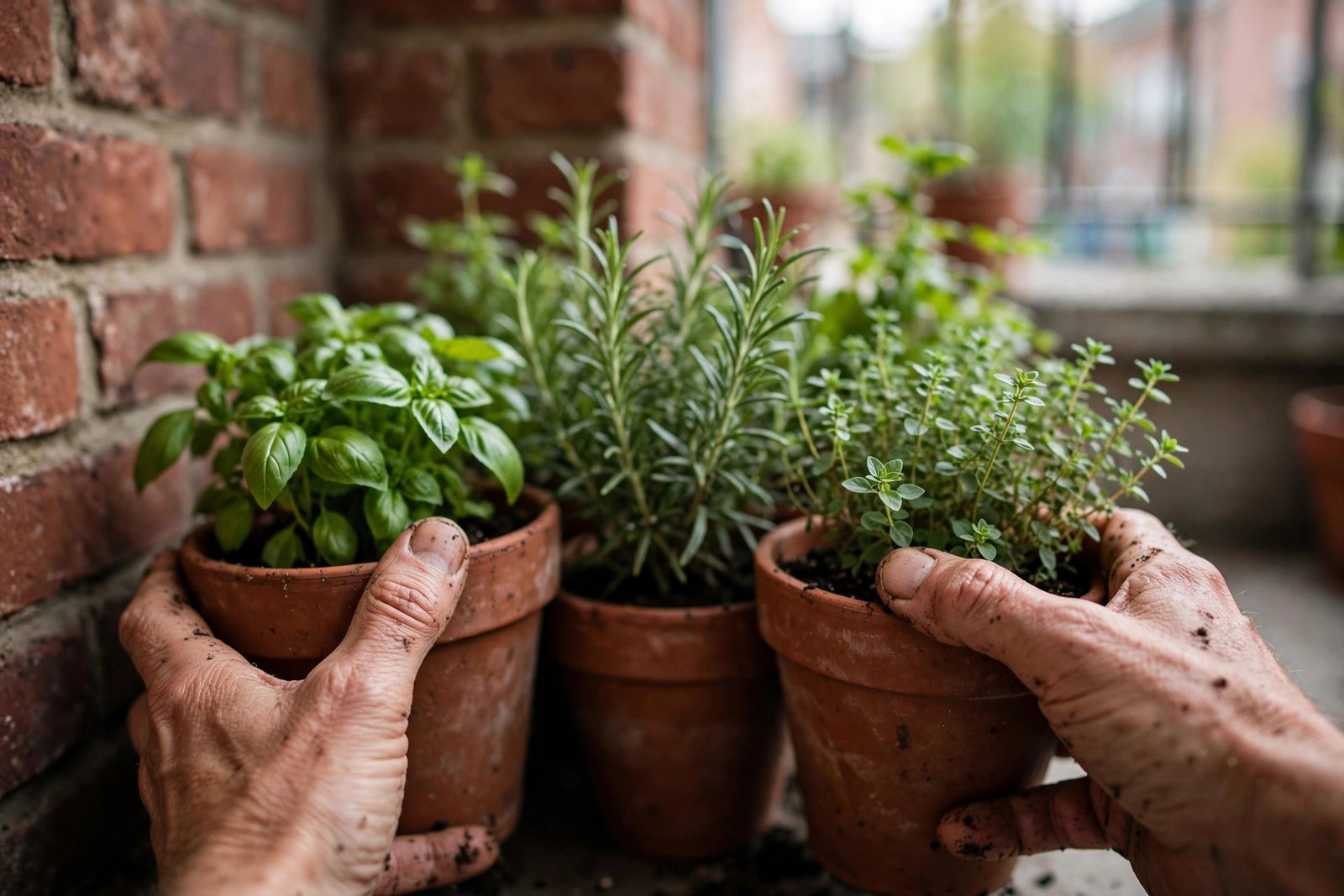
Some plants handle wind gracefully and some never will, and matching the plant to your balcony’s personality saves a lot of heartbreak. The tough customers: lavender, rosemary, thyme, sage, ornamental grasses, geraniums, and sturdy succulents. They have small, tough, or waxy leaves that don’t shred, and compact habits that don’t catch the wind.
The drama queens: large-leafed basil varieties, cucumbers, tall delphiniums, anything with delicate papery flowers. I still grow basil — but it lives in the sheltered corner behind the lavender. Tall, top-heavy plants like standard tomatoes are fine too, staked early and potted heavy. The wind didn’t stop me growing anything; it just changed where each plant lives.
Questions I Get Asked a Lot
Will a windbreak block the sunlight my plants need?
A permeable windbreak — bamboo screen, mesh, or 50% shade cloth — reduces light only slightly, and most balcony plants won’t notice. The exception is dense shade cloth on an already shady north-facing balcony; there, use the lightest mesh or a clear acrylic panel instead. My south-west balcony with a bamboo screen still gets six hours of direct summer sun — plenty for tomatoes and herbs.
How do I stop my railing planters from blowing off?
Use proper metal brackets that clamp or bolt to the railing — not the flimsy hooks from the box. Make the planter heavy: gravel in the bottom, dense compost, watered well. In a serious storm forecast, just take it down — ten minutes of prevention beats sweeping compost off the floor. Position planters on the leeward railing if you have the choice.
My plants look battered after a windy week. Will they recover?
Usually, yes. Trim shredded or broken leaves with clean scissors — they won’t heal and they drain the plant’s energy. Give it a good drink, a light feed in the growing season, and a week of shelter. Most herbs and sturdy perennials bounce back in two to three weeks. A fully snapped main stem is usually the end of that plant, though a partially broken tomato stem can sometimes be splinted with a cane and twine.
Can I even garden on a very windy high-rise balcony?
Yes — mine’s on the fifth floor and it’s a jungle. You just garden differently: heavier pots, a proper windbreak, sheltered placement, wind-tolerant plants. Avoid anything tall and top-heavy in a light pot. Start with the tough stuff — herbs, lavender, geraniums — and add the ambitious plants once you’ve seen a season go by.
Should I stake all my plants?
Just the tall, top-heavy, or stem-snappy ones: tomatoes, peppers, anything over 18 inches (45 cm) with a thin stem. Push a bamboo cane deep into the pot and tie loosely with soft twine in a figure-of-eight so the stem doesn’t chafe. Low, bushy plants like thyme and chives don’t need staking.
Do those windbreak mesh nets actually work, or is it marketing?
They genuinely work. A mesh with about 50% open area slows the air passing through and breaks big gusts into gentler turbulence — hold your hand behind the screen and you’ll feel the gust become a breeze. Cheap ones last a season or two; UV-stabilised ones last years. Just fasten it properly — a flapping net is worse than no net.
That August storm cost me a tomato plant and a month of sad-looking basil, but it taught me something worth more than both: wind is a growing condition, not bad luck. Once you treat it like sun or shade — something you plan for rather than react to — a breezy balcony becomes one of the best places to garden. Group the pots, get a screen up, go heavy, and your plants will ride out anything short of an actual hurricane.