
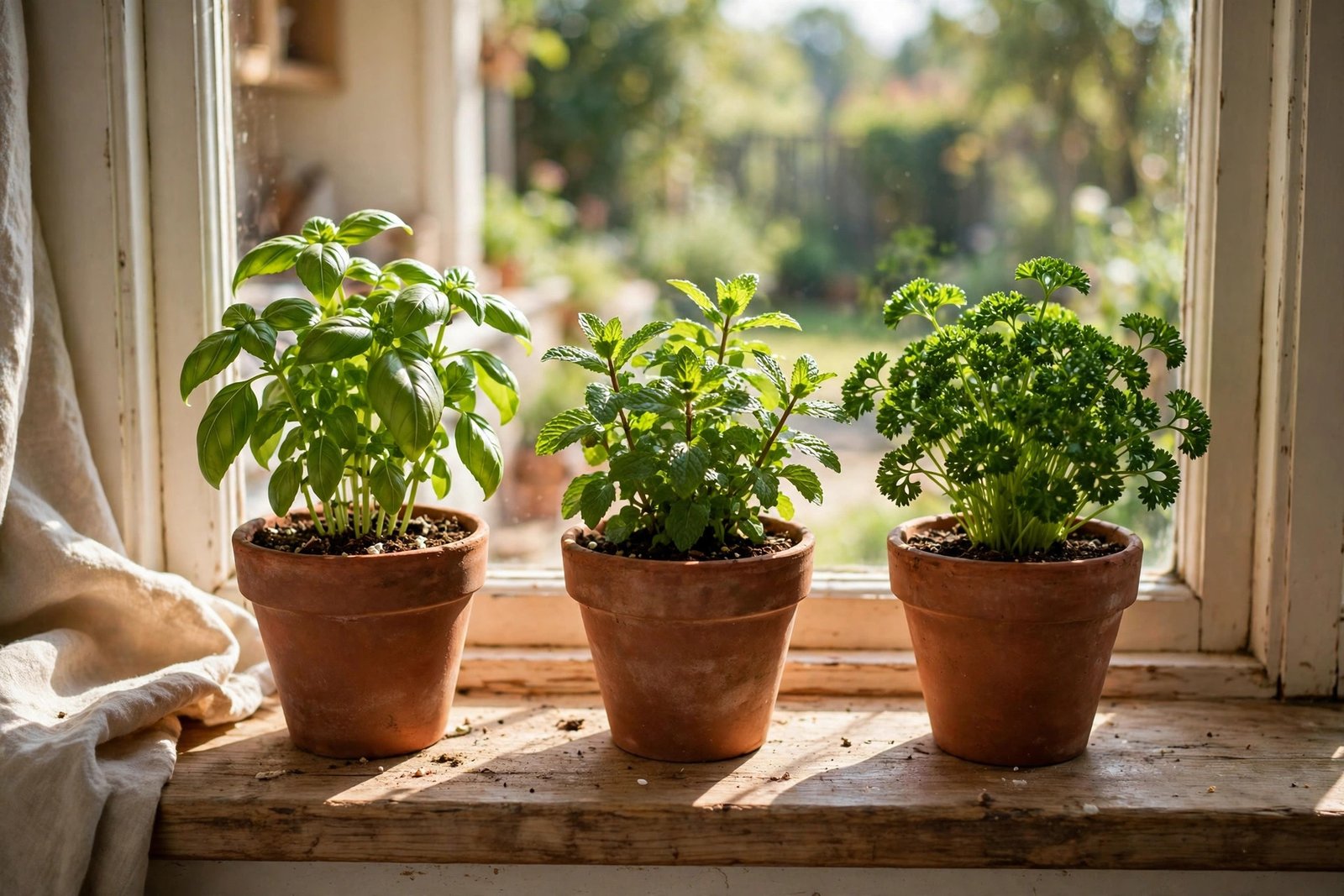
A classic start: two supermarket basil plants on a kitchen windowsill. They’re usually leggy, pale, and leaning toward the glass like they’re trying to escape — and within six weeks they’re often dead, leaving the new gardener convinced of having a black thumb. What most people don’t know is that supermarket herbs are grown in hothouses and packed six seedlings to a pot — they’re basically set up to fail in a normal home. That failure is actually a great first lesson: growing herbs indoors isn’t about talent. It’s about picking the right plants and giving them a fair setup.
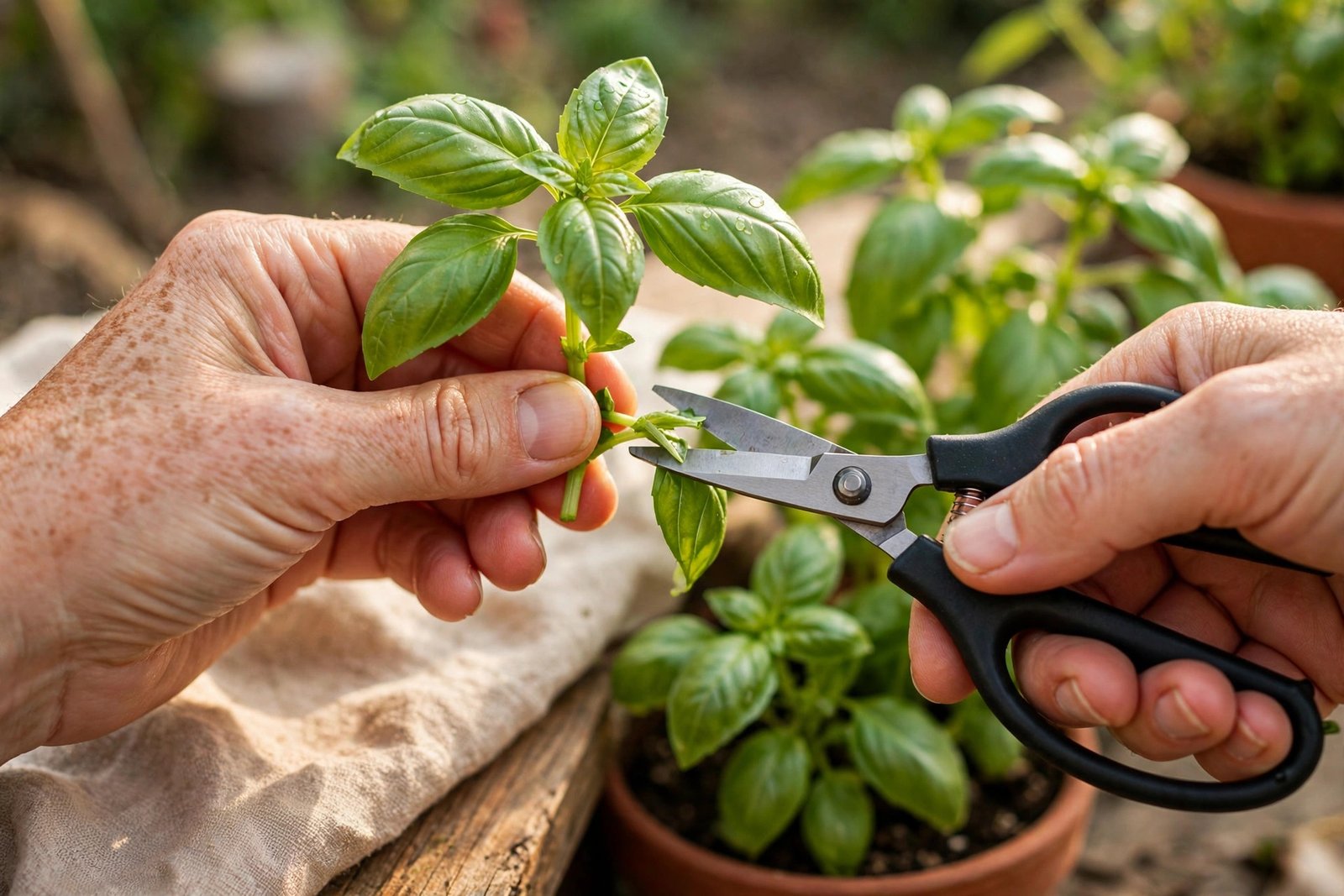
A well-stocked windowsill can hold basil, mint, chives, thyme, and parsley — enough that buying fresh herbs becomes rare. Want to grow herbs on a windowsill but not sure where to start? If you’ve got a sunny spot and a few pounds to spare, this is everything worth knowing before a first basil plant gasps its last.
Quick Tips:
- Give herbs your sunniest windowsill — most need at least 4–6 hours of direct sun a day.
- Use pots at least 6 inches (15 cm) wide with drainage holes, in a free-draining potting mix.
- Water when the top inch of soil feels dry, not on a fixed schedule.
- Harvest little and often — regular picking keeps herbs bushy and productive.
Why the Windowsill Is the Perfect Starting Point
A windowsill herb garden is the lowest-stakes gardening you can do. The pots are small, the plants are cheap, and the payoff is immediate: snipping fresh basil onto pasta or tearing mint into iced water never gets old. It also teaches you the core skills — light, water, soil, harvesting — in miniature. Everything you learn from a pot of basil transfers directly to bigger projects later, like starting a balcony garden or growing vegetables in pots. Herbs are the gateway, and a friendly one.
How to Grow Herbs on a Windowsill: the Best Herbs (and the One to Handle With Care)
Not every herb is happy indoors. Rosemary, for instance, wants serious sun and cool air circulation, and it’s fussy about wet feet — it does better on a balcony than a sill. Here’s what genuinely thrives:
Basil is the classic for a reason. ‘Genovese’ has the big sweet leaves you want for pesto. Basil loves warmth and sun — a south- or west-facing sill is ideal — and it hates cold drafts. Keep it above about 50°F (10°C) at night.
Mint grows so enthusiastically it’s almost a weed, which makes it perfect for beginners. Spearmint for drinks, peppermint for tea. One warning: never plant mint in the same pot as anything else — its roots are thugs. Give it a pot of its own and it will forgive almost any neglect.
Parsley comes in flat-leaf (more flavour) and curly (prettier garnish). It’s a biennial, so one plant gives you leaves for nearly two years. Parsley is slower than basil — seeds can take three weeks to germinate — so buy a small plant or be patient.
Chives are the herb for the truly nervous beginner. Snip them with scissors and they bounce straight back, and they tolerate a little less sun than basil.
Thyme and oregano want sun and lean, well-drained soil. They’re slower growing but once established they ask for almost nothing.
Coriander (cilantro) is the diva of the group. It bolts at the slightest warmth or stress, and it dislikes being transplanted. Sow seeds directly in its final pot, give it a slightly shadier spot, and sow a pinch of seeds every two to three weeks. Treat it as a short-term crop rather than a permanent resident.
Pots, Soil, and the Drainage Non-Negotiable
Herbs don’t need fancy containers, but they absolutely need drainage. Every pot must have holes in the bottom — no exceptions. A cute hole-less ceramic pot can turn thyme into a swampy casualty within a fortnight — a lesson many learn the hard way. Read more about why this matters in the drainage guide.
Size-wise, a 6-inch (15 cm) pot suits a single basil or parsley plant; mint wants at least an 8-inch (20 cm) pot to itself. Terracotta breathes nicely and helps soil dry between waterings, which Mediterranean herbs love; plastic holds moisture longer, which suits thirstier basil and parsley.
For soil, skip garden soil entirely; it’s too heavy for pots and compacts badly. A standard peat-free multipurpose potting mix is perfect, and for thyme and oregano, mix in a handful of perlite or coarse grit (about one part grit to four parts mix) for extra drainage. If you want to mix your own, the DIY potting soil recipe breaks it down step by step. Saucers protect your windowsill, but tip out standing water ten minutes after watering — roots sitting in water rot fast.
Light: The Thing That Makes or Breaks It
Herbs are sun worshippers. Most want 4–6 hours of direct sunlight daily, and basil wants as much as you can give it — 6 or more hours if possible. A south-facing windowsill (north-facing if you’re in the southern hemisphere) is gold. East- or west-facing sills work for most herbs too, though basil may grow a bit leggier there.
Many first basil plants die partly because they sit on a north-facing sill getting maybe an hour of weak morning light. If your only sill is dim, choose shade-tolerant herbs — chives, parsley, and mint cope far better than basil — or add a small grow light over the pots. For a deeper look at light needs, see the guide on how much sunlight your garden needs.
One practical trick: rotate your pots a quarter turn every few days so all sides get light and plants grow evenly instead of leaning.
Watering: Less Drama Than You Think
Here’s a reliable rule of thumb: stick your finger into the soil up to the first knuckle. Dry? Water. Damp? Leave it. In a warm kitchen in summer, basil in a 6-inch pot might need water every day or two; in winter, once a week can be plenty. The full guide on how often to water indoor plants covers the seasonal rhythm in detail.
Water at the base of the plant, not over the leaves — wet foliage invites fungal problems. Water until it runs out of the drainage holes, then empty the saucer. And please don’t water on a fixed schedule like “every Tuesday.” Plants don’t own calendars. Check the soil and let it tell you what it needs. Overwatering is the number one herb killer; if you want to learn the warning signs, read the piece on overwatering vs underwatering.
Feeding: Light Touch, Big Difference
Herbs aren’t heavy feeders, but pots are a closed system — nutrients wash out with every watering. Feed with a half-strength liquid seaweed feed every two to three weeks during the growing season, and nothing in winter. Thyme and oregano barely need feeding at all; too much fertiliser dilutes their flavour. More on gentle feeding in the guide to natural fertilisers for containers.
Harvesting: The More You Snip, the More You Get
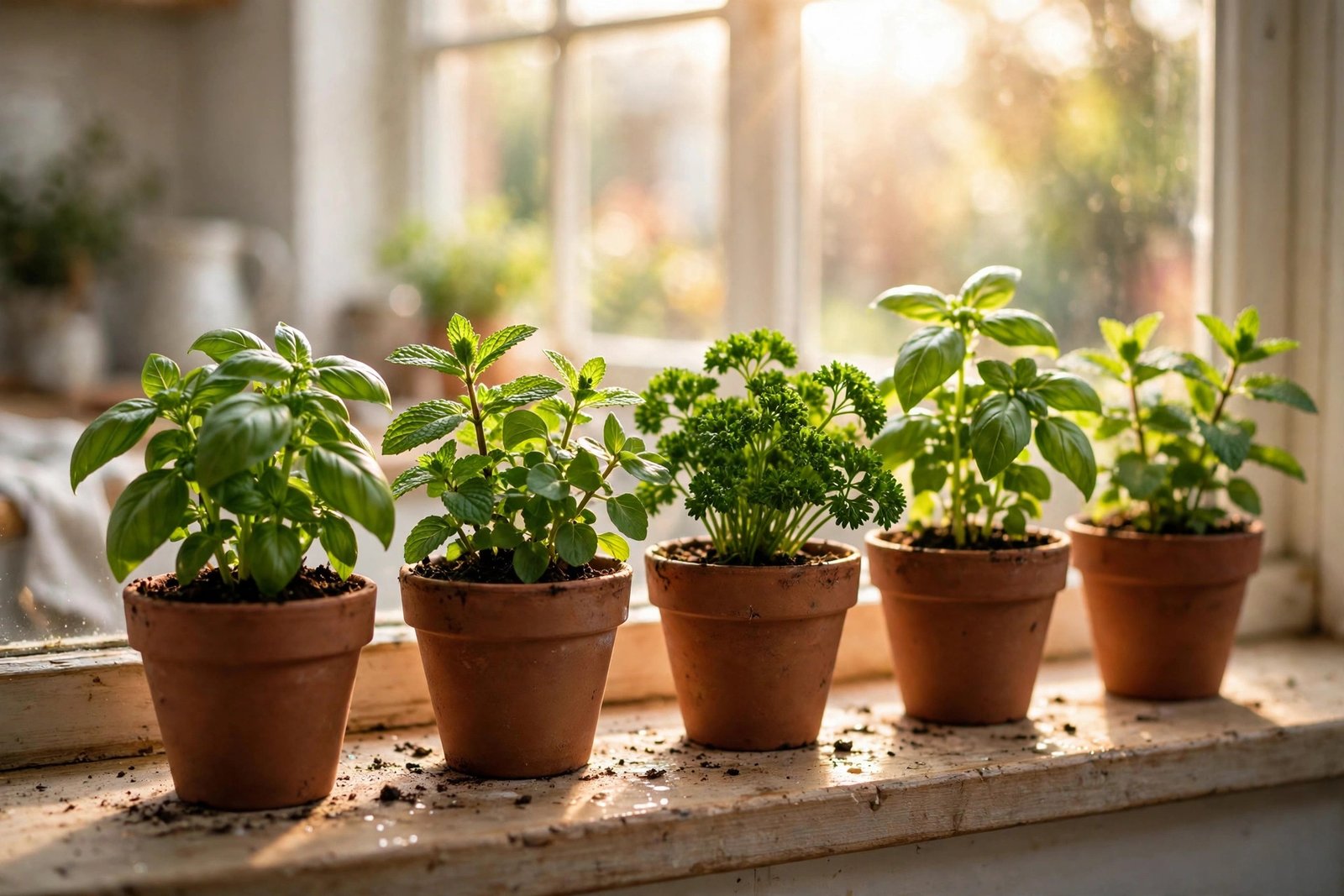
This is the part beginners get backwards. They tiptoe around their herbs, afraid to pick too much, and the plants go leggy and flower early. Herbs are the opposite of precious: regular harvesting keeps them bushy, leafy, and productive.
For basil, pinch the growing tip just above a pair of leaves — two new stems sprout from that point, doubling your plant. Start once the plant has 5–6 sets of leaves, and never take more than about a third at once. If you see flower buds forming, pinch them off; flowering turns the leaves bitter.
For parsley, chives, and coriander, harvest the outer stems first, cutting near the base. For mint, cut whole stems down to a few inches above the soil and it regrows with enthusiasm. Thyme and oregano: snip sprigs as needed, never stripping more than a third. Harvest in the morning when the essential oils are strongest.
Starting From Seed vs Buying Plants
Seeds are cheaper and give you far more choice of varieties. Basil, chives, parsley, and coriander all start well from seed on a warm windowsill (around 65–70°F / 18–21°C). But there’s no shame in buying small plants — a nursery pot of thyme or mint costs little and gives you a months-long head start. Just avoid leaving overcrowded supermarket pots as they are: split the rootball into two or three chunks, repot into fresh mix, and they’ll do far better.
Troubleshooting: What Usually Goes Wrong
Leggy, stretched stems mean not enough light. Move the plant to a brighter sill or add a grow light, and pinch back the leggy growth. (More on this in why is my plant leggy.)
Yellowing lower leaves usually mean overwatering or a pot with no drainage. Let the soil dry out, and repot into fresh mix if the roots look brown and mushy instead of white and firm.
Whiteflies or aphids love tender indoor herbs. A strong spray of water knocks most off; for stubborn cases, insecticidal soap or neem oil works. The guide to common houseplant pests covers the natural remedies in detail.
Basil suddenly wilting despite wet soil often means cold damage or root rot. Basil is a tropical plant at heart; a cold draft from an open window in spring can finish it.
Frequently Asked Questions
Can I grow herbs on a windowsill that doesn’t get direct sun?
You can, but choose shade-tolerant herbs: mint, parsley, and chives cope best with bright indirect light. Basil will struggle and grow weak and flavourless without direct sun. If your sill is truly dark, a small LED grow light running 12–14 hours a day makes an enormous difference — it’s the single best upgrade for a gloomy kitchen.
How long do windowsill herbs last?
It depends on the herb. Basil grown indoors typically gives you 3–4 months of good harvests before it gets woody; sow new plants in succession for a continuous supply. Parsley lasts up to two years. Thyme, oregano, chives, and mint are perennials that can live for years in pots with occasional repotting and a trim. Coriander is the shortest-lived — treat each sowing as a 6–8 week crop.
Should I use fertiliser on herbs I eat?
Yes. A half-strength liquid seaweed feed or any balanced organic liquid fertiliser is fine — just follow the label and don’t overdo it. Always water the soil first if it’s bone dry, then feed, so you don’t burn the roots.
Why did my supermarket basil die so fast?
Supermarket herb pots are grown fast in perfect greenhouse conditions, with far too many seedlings crammed into one pot. The fix: split the pot into 2–3 smaller clumps, repot into fresh potting mix with drainage, put it in your sunniest spot, and water carefully. Even then, treat it as a head start — sow your own seeds alongside it.
Can I grow herbs on a windowsill in winter?
Yes, with adjusted expectations. Growth slows dramatically in short winter days, so harvest lightly and don’t feed. Keep herbs away from cold drafts and radiators. Perennial herbs like thyme and chives will tick over quietly until spring; basil may give up, so sow fresh basil in early spring instead of nursing winter plants.
Growing herbs on a windowsill is where many gardening stories start, dead basil and all — and snipping leaves you grew yourself never stops feeling like a small thrill. Start with one pot — basil if your sill is sunny, mint if it isn’t — and see what happens. Before long you’ll be the one giving away bunches of parsley to neighbours.

2 Comments on “Grow Your Own Herbs on a Windowsill: Basil, Mint, Parsley and More”