
A respectable crop of carrots can come from a pot on a high-rise balcony — stubby little round carrots grown in a bucket, eaten like sweets. That kind of moment is when containers stop feeling like a compromise and start feeling like a different — and honestly quite brilliant — way to grow vegetables.
Nearly everything on this list thrives in pots. Containers warm up faster in spring, you control the soil completely, and there are no weeds to speak of. Here are ten favourites, roughly ordered from easiest to most ambitious.
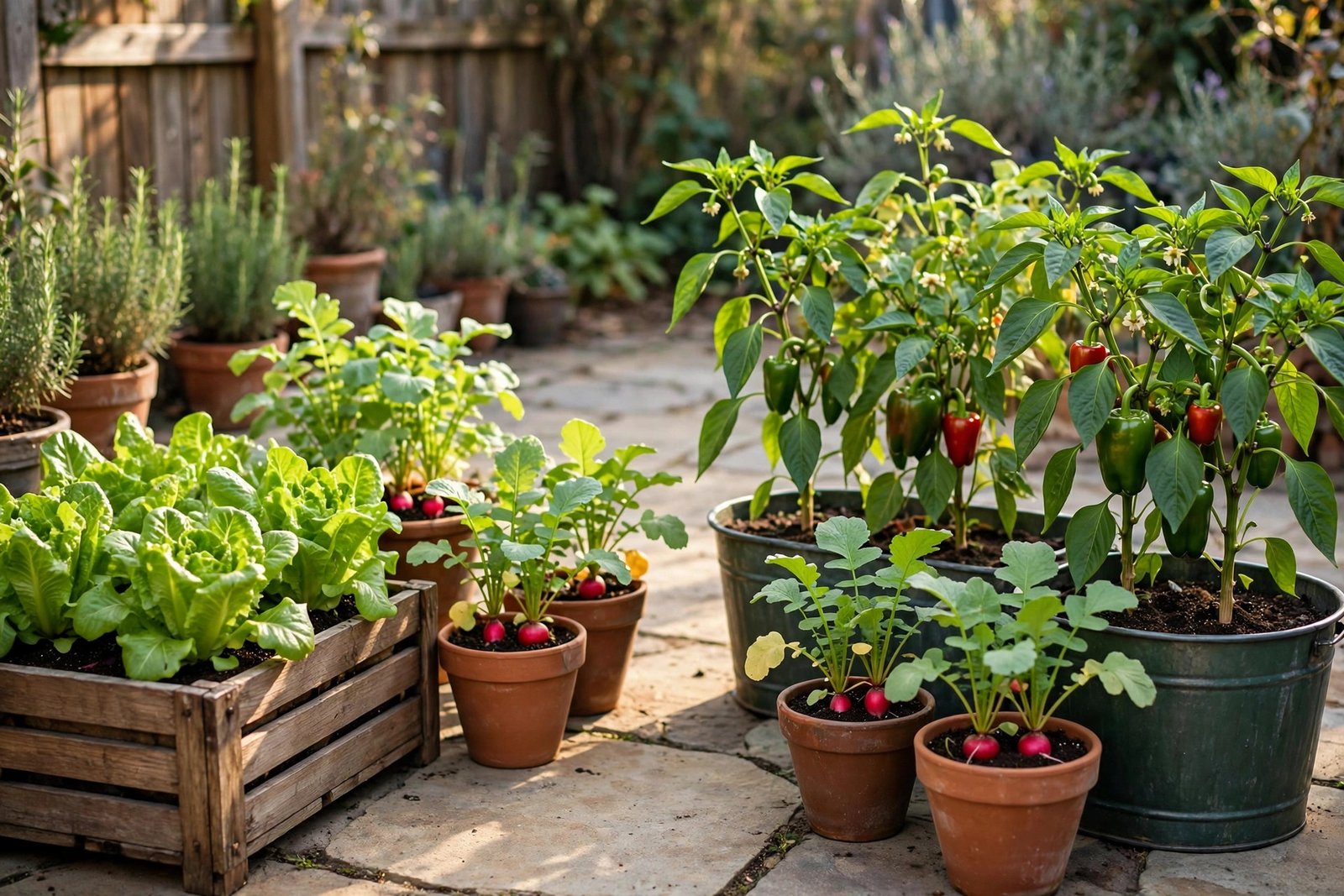
1. Radishes — the Instant Gratification Vegetable
If you’ve never grown anything edible, start here. Radishes go from seed to harvest in about 25–30 days, which means you get proof that you can actually do this within a month. Sow ‘French Breakfast’ or ‘Cherry Belle’ seeds half an inch deep in a pot at least 6 inches (15 cm) deep, keep the soil evenly moist, and thin seedlings to about an inch apart. The classic beginner mistake is letting them dry out, which makes them hot and woody — consistent moisture keeps them crisp and mild. Sow a small pinch of seeds every two weeks from spring to early autumn for a rolling supply.
2. Salad Leaves — the Gift That Keeps Giving
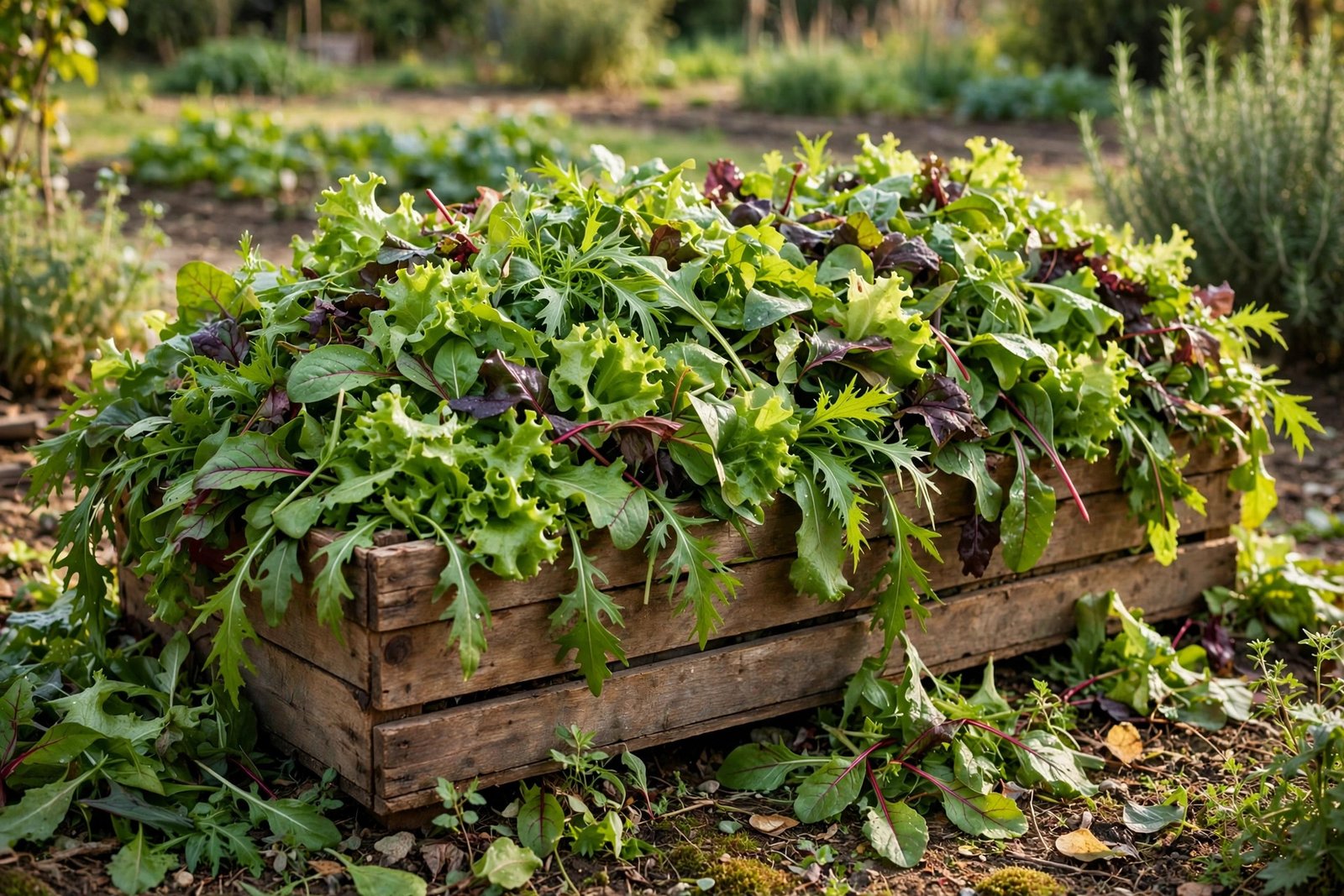
Loose-leaf lettuce, rocket, and mizuna are made for pots. A shallow but wide container — a 12-inch (30 cm) trough or even a washing-up bowl with drainage holes drilled in — gives you cut-and-come-again harvests for months. Sow thickly, then snip the outer leaves when they’re a few inches tall and let the centre keep growing. ‘Salad Bowl’, ‘Lollo Rosso’, and ‘Red Sails’ are reliable varieties. In high summer, move the pot to afternoon shade to delay bolting. There’s a whole guide to cut-and-come-again salad greens if you want to go deep on this one.
3. Bush Beans — Low Effort, Big Harvest
Dwarf French beans like ‘Provider’ or ‘Tendergreen’ need no trellis, no staking, and very little fuss. Sow two or three seeds per 10-inch (25 cm) pot in late spring once nights stay above 50°F (10°C), and you’ll be picking handfuls of beans about 50 days later. Pick them young and often — every bean you leave to swell signals the plant to slow down production. One hard-won tip: beans hate sitting in cold, wet soil, so don’t sow too early. Warm soil, warm nights, happy beans.
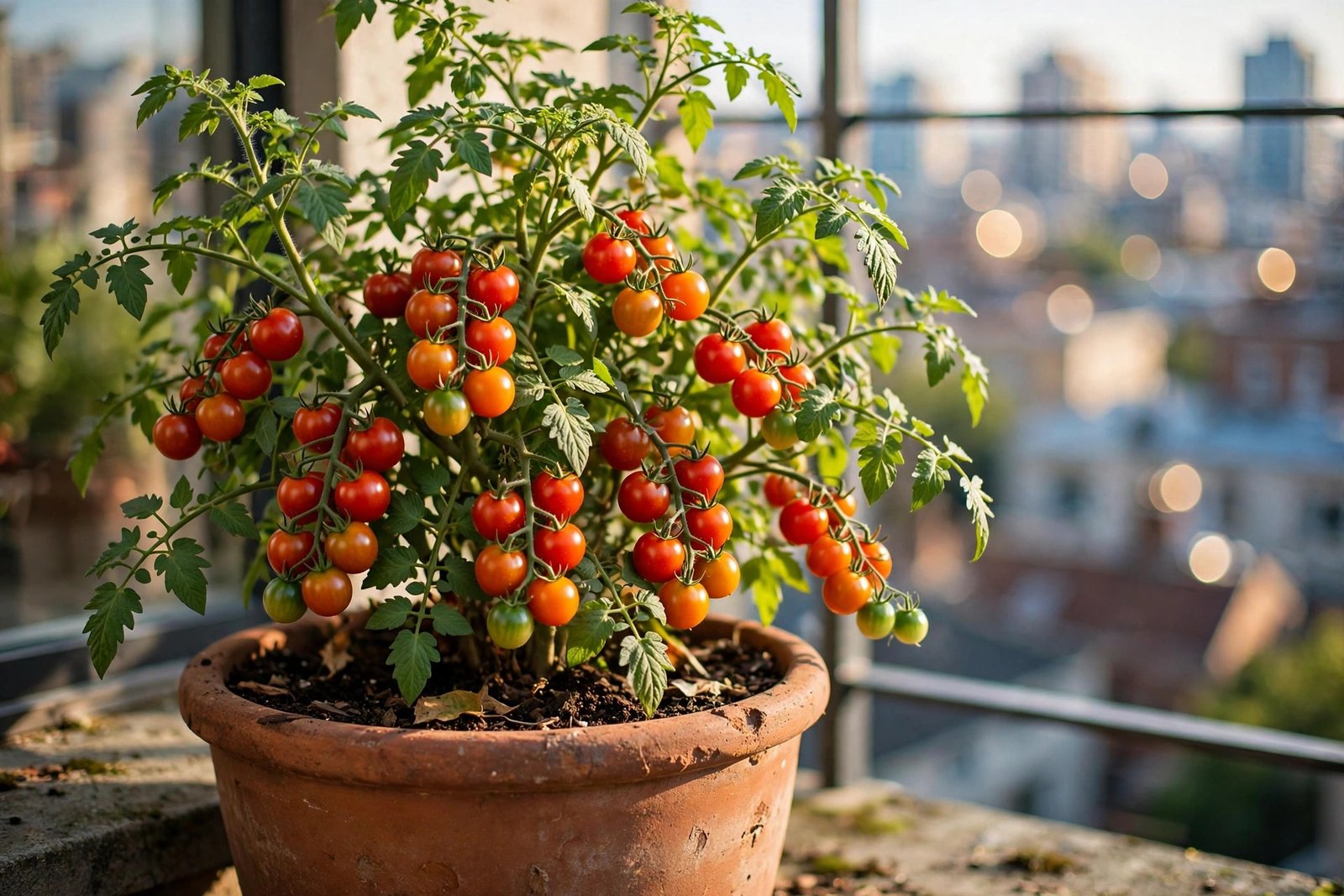
4. Cherry Tomatoes — the Balcony Classic
No surprises here, but it had to make the list. Compact varieties like ‘Tiny Tim’, ‘Tumbling Tom’, and ‘Vilma’ were practically designed for pots — they stay under 18 inches tall and pump out sweet little fruits all summer. Give each plant a 3–5 gallon pot (roughly 12–14 inches / 30–35 cm wide), the sunniest spot you have (6–8 hours), and consistent watering. The full tomato growing guide covers feeding, support, and blight prevention in detail.
5. Sweet Peppers — Slow Starters, Worth the Wait
Peppers need patience — they germinate slowly and grow slowly — but ‘Lunchbox’ snack peppers and ‘Gypsy’ do beautifully in pots. Start seeds indoors 8–10 weeks before your last frost, or buy young plants in late spring to skip the slow part (no shame in that — it’s what most gardeners do). Each plant wants a 3-gallon (12-inch / 30 cm) pot, full sun, and warm temperatures — peppers sulk below 55°F (13°C). A sheltered balcony against a warm wall is ideal. Feed every two weeks once flowers appear, and pick the first small fruits early to encourage the plant to set more.
6. Cucumbers — Yes, Really
This is the vegetable that surprises most growers. Compact varieties like ‘Patio Snacker’ and ‘Spacemaster’ grow happily in a 5-gallon (14-inch / 35 cm) pot with a small trellis or tomato cage to climb. They need sun, warmth, and — this is the key — absolutely consistent moisture. A cucumber plant that dries out between waterings produces bitter fruit, so mulch the surface with straw or bark and water daily in hot weather, sometimes twice. One plant gives you plenty; two plants will have you handing cucumbers to neighbours.
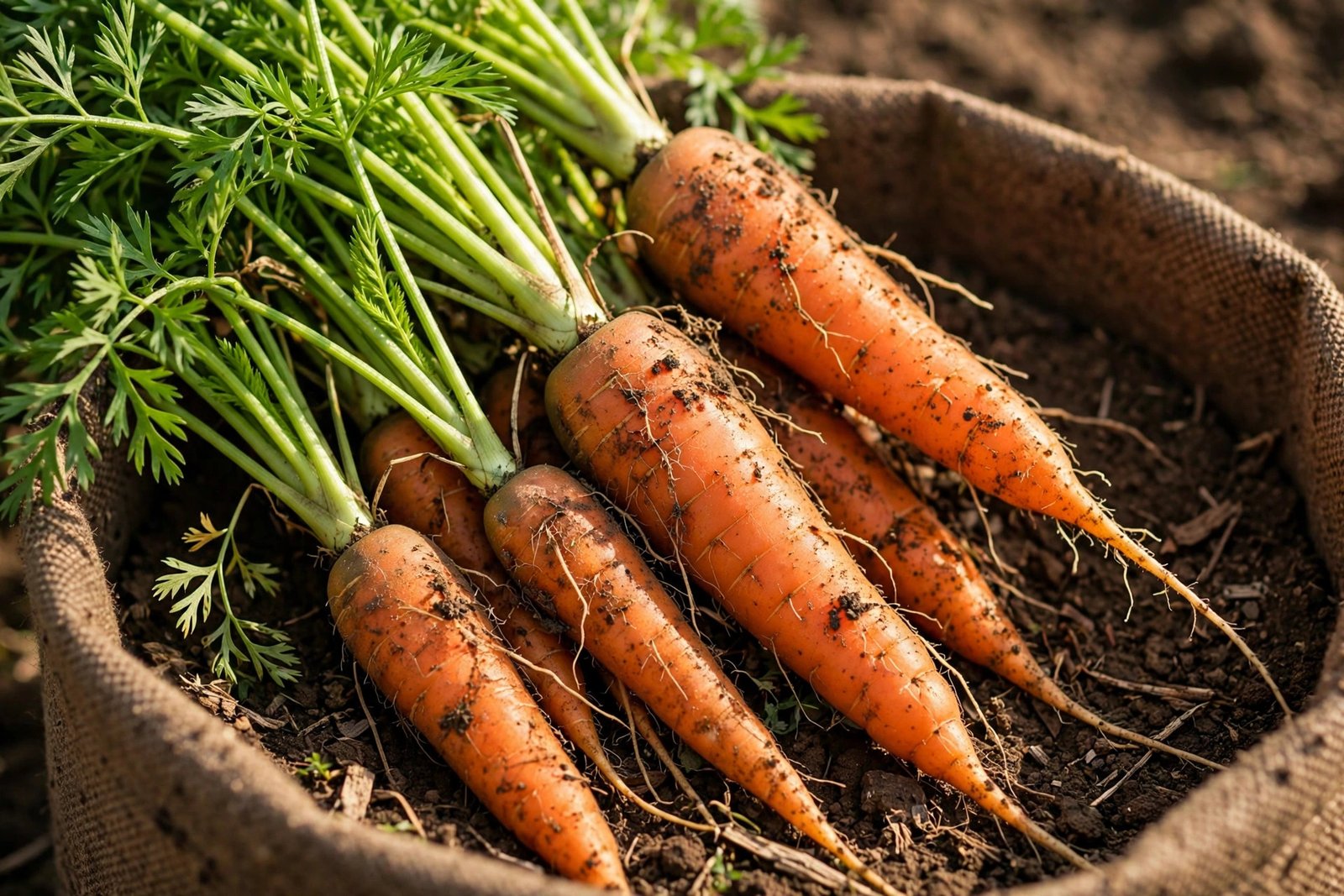
7. Carrots — the Round Ones Are the Secret
Long carrots need deep, stone-free soil, which is why most beginners fail at them in pots. The trick is choosing round or stubby varieties bred for shallow ground: ‘Paris Market’ (golf-ball sized and adorable), ‘Little Finger’, or ‘Thumbelina’. A pot 10–12 inches (25–30 cm) deep filled with light, sandy potting mix does the job. Sow thinly, keep moist until germination (a piece of cardboard over the pot helps), and thin ruthlessly — crowded carrots grow into tangled mutants. They’re slow — 60–75 days — but pulling your first homegrown carrot is pure magic.
Quick Tips:
- Bigger pots are more forgiving: they dry out slower and hold more nutrients. When in doubt, size up.
- Always use potting mix, never garden soil — it’s too dense for containers and compacts badly.
- Most vegetables need 6+ hours of sun; leafy greens cope with 4–5.
- Feed container veg every 1–2 weeks in summer — nutrients wash out of pots fast.
8. Spring Onions — Practically Unkillable
Sow ‘White Lisbon’ seeds in any spare pot, window box, or even the gaps around your tomatoes, and you’ll have spring onions in 8–10 weeks. They ask for almost nothing: average potting mix, regular water, a reasonably sunny spot. Sow a pinch every month from March to August so there’s always a batch coming along. You can also regrow shop-bought spring onions by standing the root ends in water until they sprout, then potting them up — a fun trick, though seed-grown ones are sturdier.
9. Beetroots — Two Crops in One
Beets like ‘Boltardy’ (bolt-resistant, great for beginners) or ‘Detroit Dark Red’ grow sweet roots in pots 8–10 inches (20–25 cm) deep, and the young leaves are delicious cooked like spinach — so you genuinely get two harvests. Sow three seeds per station (each “seed” is actually a cluster), thin to the strongest seedling, and keep the soil consistently moist — dry spells make woody roots. Harvest when roots are golf-ball to tennis-ball sized; left too long they get tough. They’ll tolerate a bit of shade, making them one of the better choices for less-than-perfect balconies.
10. Courgettes — the Ambitious One
One courgette plant in a very large pot (15+ gallons / 18 inches / 45 cm wide) on a sunny balcony will keep you in courgettes all summer — possibly more than you want. Choose a compact variety like ‘Patio Star’ or ‘Defender’ rather than a sprawling field type. They are hungry and thirsty: rich potting mix, a big handful of slow-release organic fertiliser at planting, liquid feeds every week once fruiting starts, and daily watering in heat. The main job is harvesting — pick fruits at 4–6 inches long, every day or two. Miss one and it becomes a marrow overnight while the plant stops producing new ones. You’ve been warned.
Setting Your Pots Up for Success
A few things apply to everything on this list. First, drainage: every pot needs holes, and pots should never sit in waterlogged saucers. The drainage guide explains the whole system. Second, soil: use a good peat-free multipurpose mix, or mix your own with the DIY potting soil recipe. Third, feeding: container vegetables are hungry because watering flushes nutrients out. A balanced liquid feed every week or two through summer makes a visible difference — see the notes on natural fertilisers.
Watering deserves its own mention because it’s where most container veg fails. Pots dry out far faster than garden beds, especially small ones in sun and wind. In a heatwave, a 10-inch pot can need water twice a day. Mulching the soil surface, grouping pots together, and choosing larger pots all buy you margin. When in doubt, stick a finger in the soil — and if you’re unsure whether you’re over or underdoing it, the guide to overwatering vs underwatering will sort you out.
Also, don’t underestimate vertical space. A railing planter or a simple trellis doubles what a tiny balcony can hold, and trailing varieties like ‘Tumbling Tom’ look spectacular cascading from a hanging basket.
Growing Vegetables in Pots: Questions I Get Asked a Lot
How big do pots need to be for vegetables?
Bigger than you think, generally. Salad leaves and radishes manage in 6-inch-deep containers; beans, peppers, and beets want 10–12 inches; tomatoes, cucumbers, and courgettes need 14–18 inches (5+ gallons). Larger pots hold moisture and nutrients longer, which means less work and healthier plants. If you’re choosing between two pot sizes, take the bigger one.
Can I grow vegetables on a shady balcony?
You can grow some. Leafy greens (lettuce, spinach, rocket), radishes, spring onions, and beets cope with 4–5 hours of sun. Fruiting vegetables — tomatoes, peppers, cucumbers, courgettes — really need 6–8 hours of direct sun to produce well. In shade they’ll grow leaves but little fruit. Check the guide on how much sun your garden needs to assess your space honestly.
Do I need to start from seed?
Not at all. Seeds are cheaper and offer more varieties, but buying young plants from a nursery in late spring is a completely legitimate shortcut — especially for slow starters like peppers and tomatoes. A sensible approach: start easy things (radishes, beans, salad) from seed and buy pepper and tomato plants. Gardening has no purity test.
Why are my container vegetables not producing fruit?
The usual suspects: not enough sun (fruiting veg needs 6–8 hours), underwatering at flowering time (drought causes flower drop), or no pollinators reaching a high balcony. For the last one, you can hand-pollinate courgettes and cucumbers with a small paintbrush — dab the male flower’s centre, then the female flower’s (the one with a tiny fruit behind it). Also check you’re not overfeeding nitrogen, which grows leaves at the expense of fruit.
Can I reuse potting soil next year?
Yes, with a refresh. Tip it out, pick out old roots, mix in about a third fresh compost or potting mix, and add a slow-release organic fertiliser. Don’t reuse soil from pots where plants had disease — blight-infected tomato soil, for instance, should go in the bin (not the compost). Rotating crops helps too: don’t grow tomatoes in the same soil two years running.
Start with two or three vegetables from the easy end of this list — radishes, salad leaves, and bush beans are the safest pick — and add more as your confidence grows. That hallway-carrot moment is waiting, and honestly, shop carrots will never taste quite as good again.

3 Comments on “10 Vegetables That Grow Surprisingly Well in Pots”