Here is a controversial opinion: a small balcony is a better vegetable garden than a big one. Not despite its size — because of it. A big garden lets you be lazy — scatter seeds, forget to water, and still get something. A small balcony forces you to pay attention, and attention is the actual secret ingredient of a big harvest. Every plant gets watered on time. Every inch gets used. Nothing is planted and abandoned.
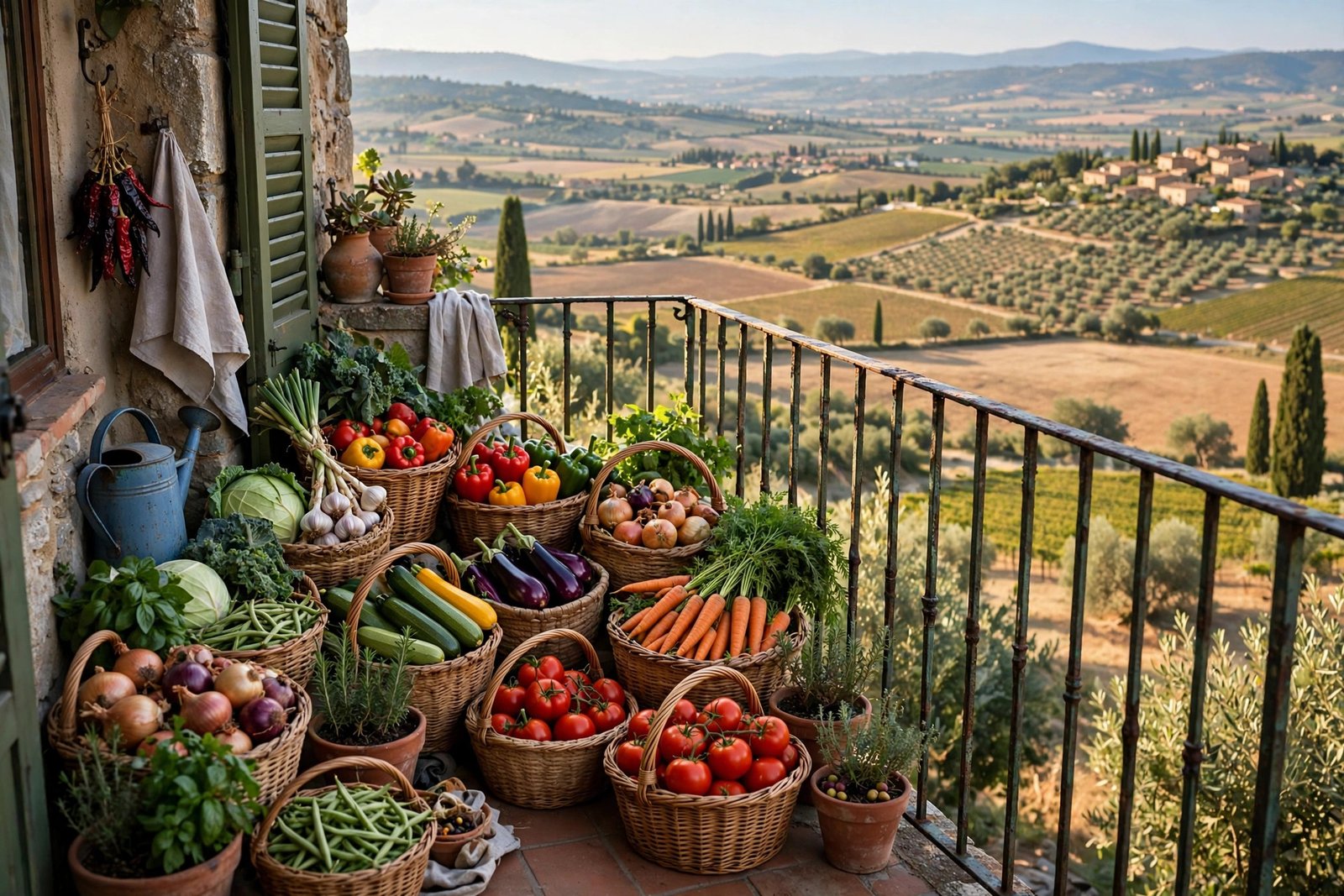
A balcony of roughly 4 by 10 feet can produce over 60 pounds of food in a summer — cherry tomatoes by the bucketful, salads from April to November, enough basil to make pesto through winter, beans, peppers, cucumbers, strawberries, and herbs beyond counting. All from containers. If your balcony is small, you don’t have a disadvantage. You have a system waiting to happen.
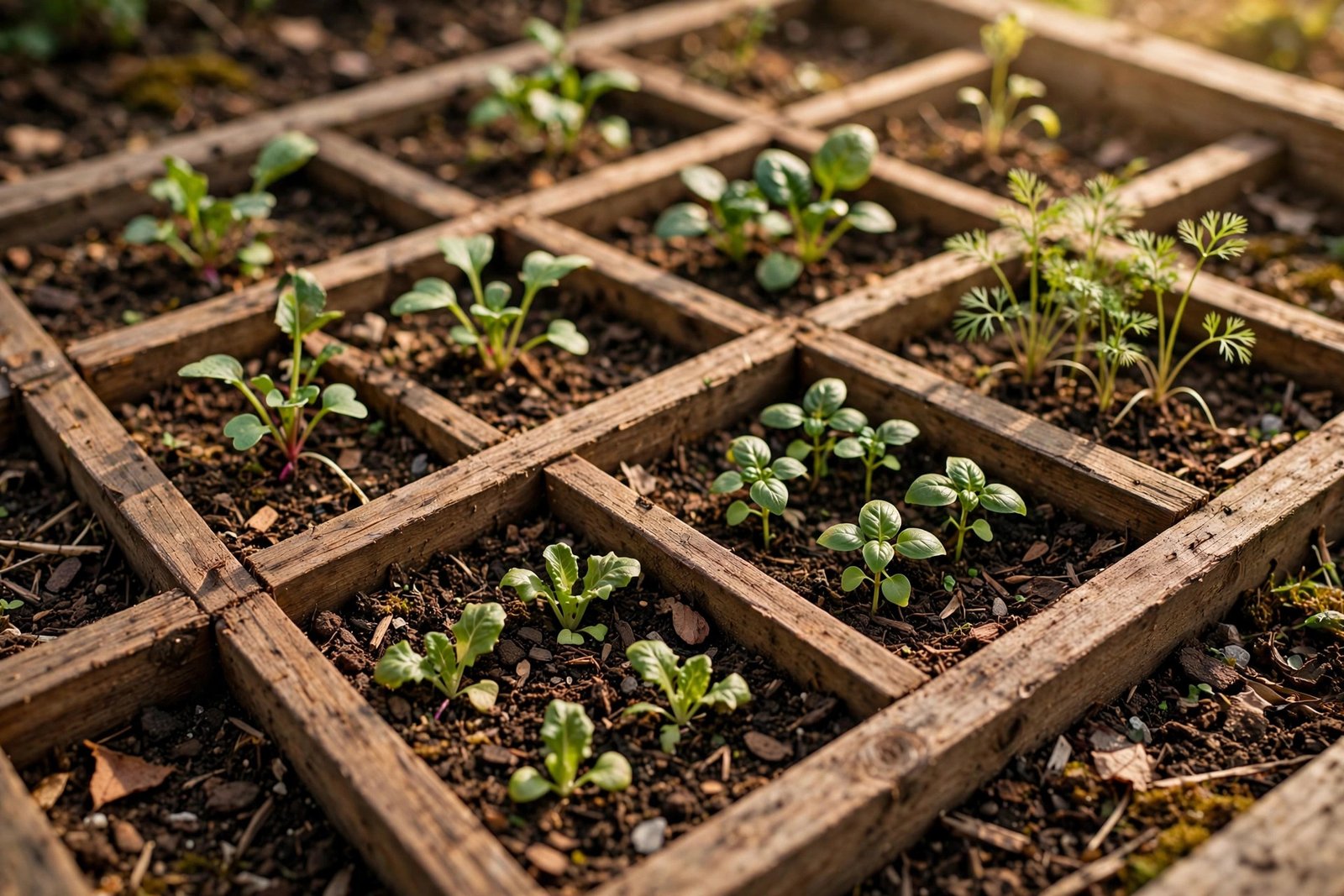
The Harvest-First Mindset
Most beginners choose plants by what sounds fun. Harvest-focused growers choose plants by yield per square foot, and that single shift changes everything. A cabbage takes up a square foot for three months and gives you one head. In the same space and time, cut-and-come-again lettuce gives you a dozen harvests. Both are fine plants. Only one of them respects your square footage.
Rank your crops by three things: how much they produce, how long they produce for, and how much space they demand. Cherry tomatoes score brilliantly — one plant in a 5-gallon (19-liter) pot fruits for three to four months. Climbing beans are even better, producing handfuls every few days from a single pot. Herbs are the champions of the whole system: a $3 basil plant returns many times its cost in leaves over a season.
This doesn’t mean growing only the efficient crops. It means giving the efficient crops the prime spots and letting the fun-but-space-hungry ones earn their place. One courgette plant each year is a luxury many growers allow themselves, even though it hogs a huge pot for a modest return. It is a luxury line item. Everything else has to justify its footprint.
Choose Crops That Punch Above Their Weight
Some plants are simply born for small spaces. These are the highest-yield container crops, the ones to plant first every spring:
Cherry tomatoes. One plant, one 5-gallon (19-liter) pot, and you will be giving tomatoes away by August. Grow ‘Gardener’s Delight’ for reliability and ‘Tumbling Tom’ for hanging baskets. Full details are in how to grow tomatoes in containers — the feeding and watering discipline in that article is what separates a good harvest from a great one.
Climbing beans. French beans like ‘Cobra’ or runner beans climb six feet up a trellis from a 10-inch (25 cm) pot and produce for months. Pick every two to three days to keep them coming — neglect them and they go to seed and stop.
Cut-and-come-again salad leaves. Lettuce, rocket, spinach, and Asian greens like mizuna. Sow thickly, cut the outer leaves, and they regrow. A single window box can supply a household’s salads for weeks. The full routine is in cut-and-come-again salad greens.
Herbs. Basil, parsley, chives, mint, thyme, rosemary. Small footprint, constant harvest, expensive to buy. A pot of ‘Genovese’ basil by the door will out-produce anything else per square inch.
Compact peppers and chillies. One chilli plant in a 3-gallon (11-liter) pot can produce fifty or more fruits. Sweet peppers like ‘Lipstick’ do well in containers too. They love heat, so give them your sunniest spot.
Container cucumbers. ‘Patio Snacker’ or ‘Spacemaster’ climb a trellis and fruit heavily. Two plants keep a household in cucumbers all summer.
Worth skipping or limiting: full-size carrots (too deep, too slow), sweetcorn (needs a block for pollination — impossible on a balcony), standard-size courgettes (one plant, one huge pot, modest yield), and potatoes (fun, but the yield per pot rarely justifies the space unless you love the process).
Quick Tips:
- One cherry tomato plant in a 5-gallon pot out-produces ten pots of low-yield crops.
- Sow salad leaves every 2–3 weeks from spring to autumn for a continuous harvest.
- Pick beans, cucumbers, and courgettes often — harvesting keeps plants producing.
- Feed fruiting crops weekly once flowers appear; hungry plants drop their fruit.
- Weigh your harvests for a month — seeing the numbers will change how you plant.
Succession Sowing: The Harvest Multiplier
Here is the technique that doubles harvest without adding a single pot: succession sowing. It just means planting a little, often, instead of a lot, once.
Most beginners sow everything in spring, get a glut in July, and then stare at empty pots in September wondering what happened. Instead, sow a pinch of salad seeds every two to three weeks from March through August. When the spring lettuce bolts in the heat, the next sowing is already coming up. When summer beans finish, that pot gets autumn rocket. Every pot should have a next tenant lined up.
Keep a simple sowing calendar on your phone — recurring reminders like “sow lettuce,” “sow beans,” “sow rocket.” Each reminder takes five minutes to act on. Five minutes, every few weeks, is the difference between a balcony that produces for four months and one that produces for eight.
Intercropping is succession’s clever cousin: growing fast crops in the gaps around slow ones. Sow radishes around the base of a tomato plant — the radishes harvest in 25 days, long before the tomato needs the space. Plant lettuce under climbing beans; the beans’ light shade actually suits lettuce in summer heat. Every gap in a pot is a wasted opportunity.
Going Vertical and Using Every Surface
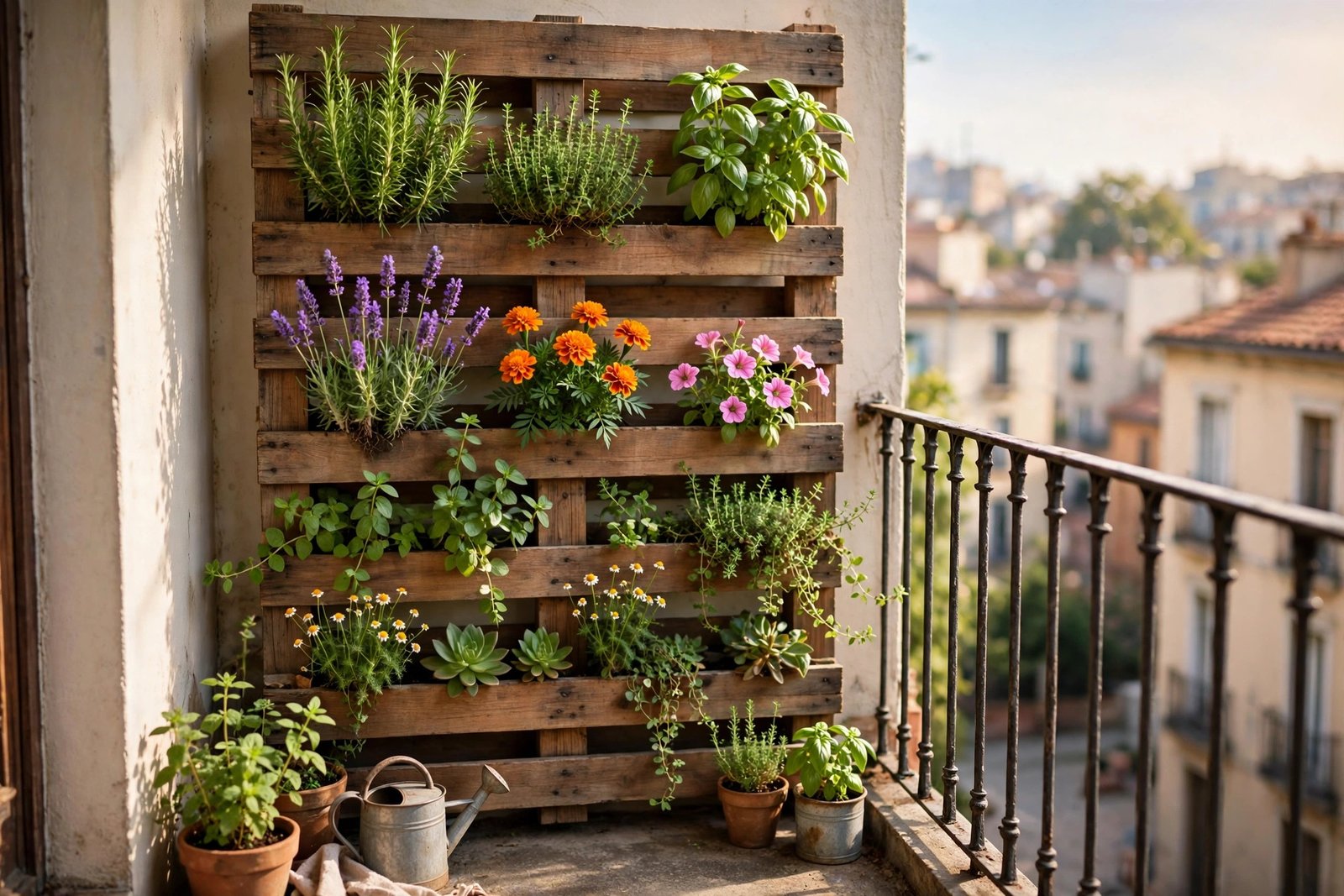
Floor space is the scarcest resource, so get plants off it. This is where the space-maximizing strategies all connect: vertical gardening ideas for tiny balconies for walls and trellises, railing planters for the railing strip, hanging baskets for the ceiling, and tiered shelving for everything else.
Think of your balcony as having four growing zones: floor, railing, walls, and air. Most beginners use one. Using all four is how a 40-square-foot balcony holds thirty or more productive plants. A trellis of beans occupies one square foot of floor and produces from six vertical feet. A hanging strawberry basket occupies zero floor space at all.
Light-layer your setup deliberately. Sun-lovers (tomatoes, peppers, basil, cucumbers) go on the railing and top shelves where light is strongest. Shade-tolerant crops (lettuce, spinach, parsley, mint) go on lower shelves and shadier walls, where they actually prefer the cooler conditions. Matching plant to microclimate is free yield — a lettuce in shade out-produces a lettuce baking in full sun.
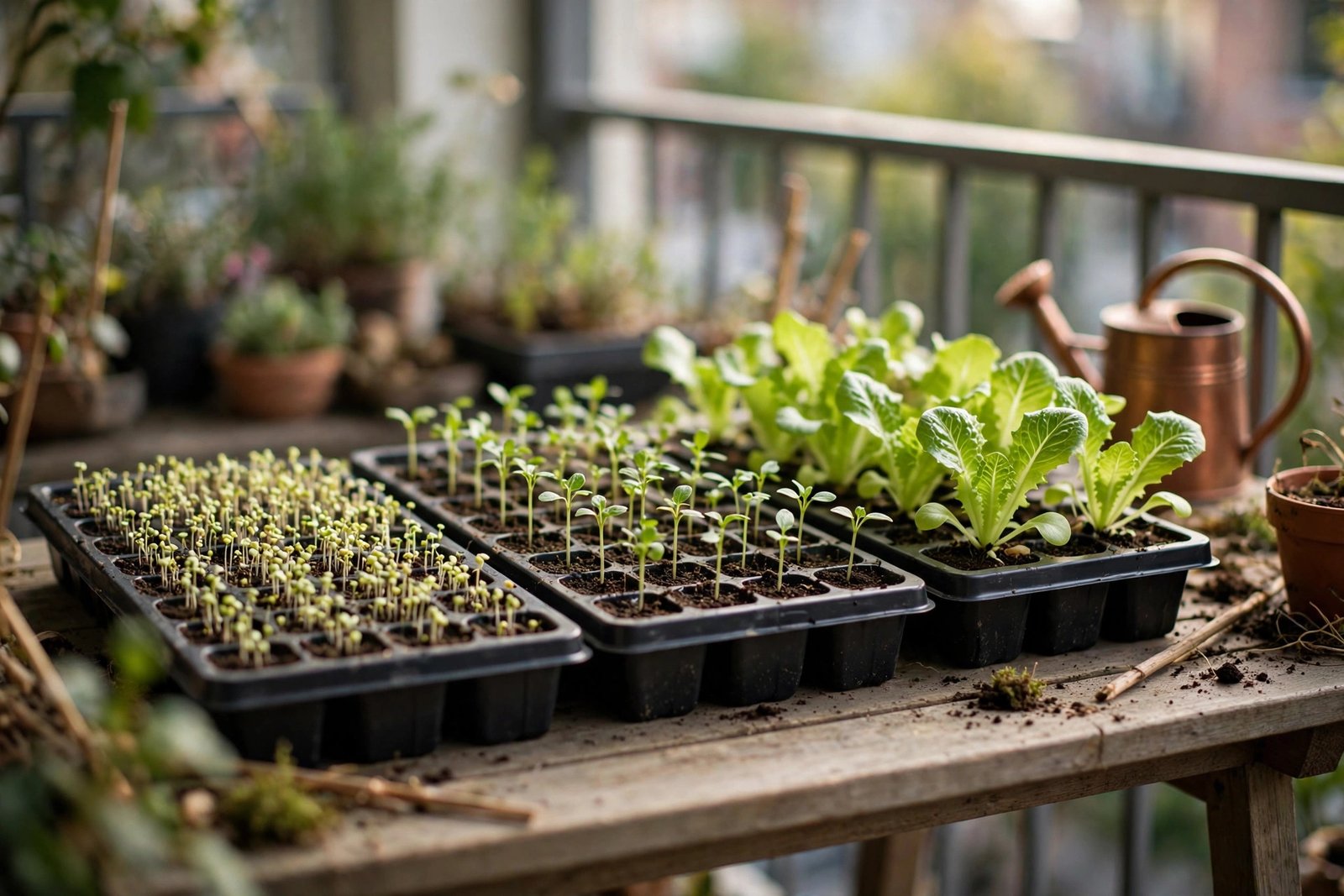
Feeding: Small Pots Mean Hungry Plants
This is the unglamorous truth behind every big balcony harvest: containers are not soil ecosystems, they are hydroponic systems with dirt. Nutrients wash out with every watering, and a tomato plant pumping out fruit for three months will strip a pot bare by midsummer if you don’t feed it.
A simple feeding schedule. At planting time, mix slow-release organic fertilizer granules into the potting mix — a handful per 5-gallon pot. Then, once plants start flowering and fruiting, feed weekly with liquid tomato feed (high in potassium, which is what fruiting plants crave). Herbs and salads get a lighter touch: liquid seaweed feed every two weeks, since too much nitrogen makes lush leaves with no flavor.
Compost tea, worm castings, and other natural fertilizers for container plants all work. Pick one approach and stick to it. The number one feeding mistake is enthusiasm in May and abandonment by July, right when plants need food most. Set a weekly reminder. Your tomatoes will thank you in August.
Mulch every pot with an inch of bark chips, straw, or even shredded newspaper. Mulch cuts watering needs dramatically, keeps soil temperature stable, and slowly feeds the soil as it breaks down. Where every pot dries fast, mulch is the cheapest yield-booster there is.
Watering Discipline and Harvest Habits
Small pots dry fast, and inconsistent watering is the silent harvest-killer. A tomato that swings between soaked and parched develops blossom end rot and split fruits. Peppers drop their flowers. Lettuce bolts. None of this is mysterious — it is all water stress.
Water deeply and consistently: every morning in summer, checking with the finger test first. Mulched pots in partial shade might go two days; small pots in full sun might need evening top-ups in heatwaves. The goal is evenly moist soil, always. If you travel, this is where self-watering pots earn their keep — see the comparison of watering cans vs self-watering pots.
Then harvest like you mean it. Picking is not just collecting — it is pruning. The more you pick beans, the more beans the plant makes. The more you cut salad leaves, the bushier they grow. Let a courgette become a marrow and the plant decides its job is done. Harvest tomatoes the moment they color up; the plant will pour that energy into the next truss. A productive balcony is a frequently picked balcony.
Small Balcony Harvest: Quick Answers to Common Questions
How much food can a small balcony really produce?
More than you’d think, but stay realistic. A 4×10-foot balcony can produce about 60 lbs (27 kg) in a good year — mostly tomatoes, salads, beans, herbs, and cucumbers. That supplemented our vegetables all summer but didn’t replace grocery shopping. Expect meaningful contributions to salads, herbs, and summer vegetables, not self-sufficiency. The value isn’t just the food — it’s the freshness and the absurd satisfaction of it.
Which single crop gives the best return for a beginner?
Cherry tomatoes, and it isn’t close. One plant in a 5-gallon (19-liter) pot, given sun, water, and weekly feeding, will produce 100+ fruits over the season. They are forgiving, the harvest is obvious and exciting, and nothing tastes like a sun-warm tomato you grew yourself. Start there, then add salad leaves as your second crop.
Should I grow from seed or buy seedlings?
Both, strategically. Buy seedlings for slow or fiddly crops — tomatoes, peppers, chillies — to get a head start, especially with a short season. Sow seeds directly for fast, easy crops — salad leaves, radishes, beans, herbs like parsley and basil. Seeds cost pennies and succession sowing only works if sowing is cheap and quick. Many gardeners buy about six seedlings a year and sow everything else.
How do I keep pots producing into autumn and winter?
Plan for it in August, not October. As summer crops finish, sow autumn salads (rocket, mizuna, winter lettuce), plant garlic in pots in October for next summer, and move tender herbs like basil indoors before the first frost. Hardy herbs — rosemary, thyme, sage, chives — stay out all winter in most climates. A balcony that winds down in September is a choice, not a necessity.
Is it actually cheaper than buying vegetables?
Honestly? In year one, probably not — pots, soil, and plants add up. By year two and three, absolutely, especially for herbs and salads, which are wildly overpriced in shops relative to how easy they are to grow. A $3 basil plant returns $30+ of supermarket basil over a season. Tomatoes break even quickly too. But cost is never the real reason for most growers — flavor and freshness are, and those pay out from day one.
A small balcony won’t feed a family. But it will change how you eat all summer — salads you cut minutes before dinner, tomatoes still warm from the sun, herbs by the handful instead of the plastic packet. Start with the high-yield crops, sow a little and often, feed weekly, and pick constantly. The square footage was never the limit. Your attention was the whole game, and you have plenty of that.