
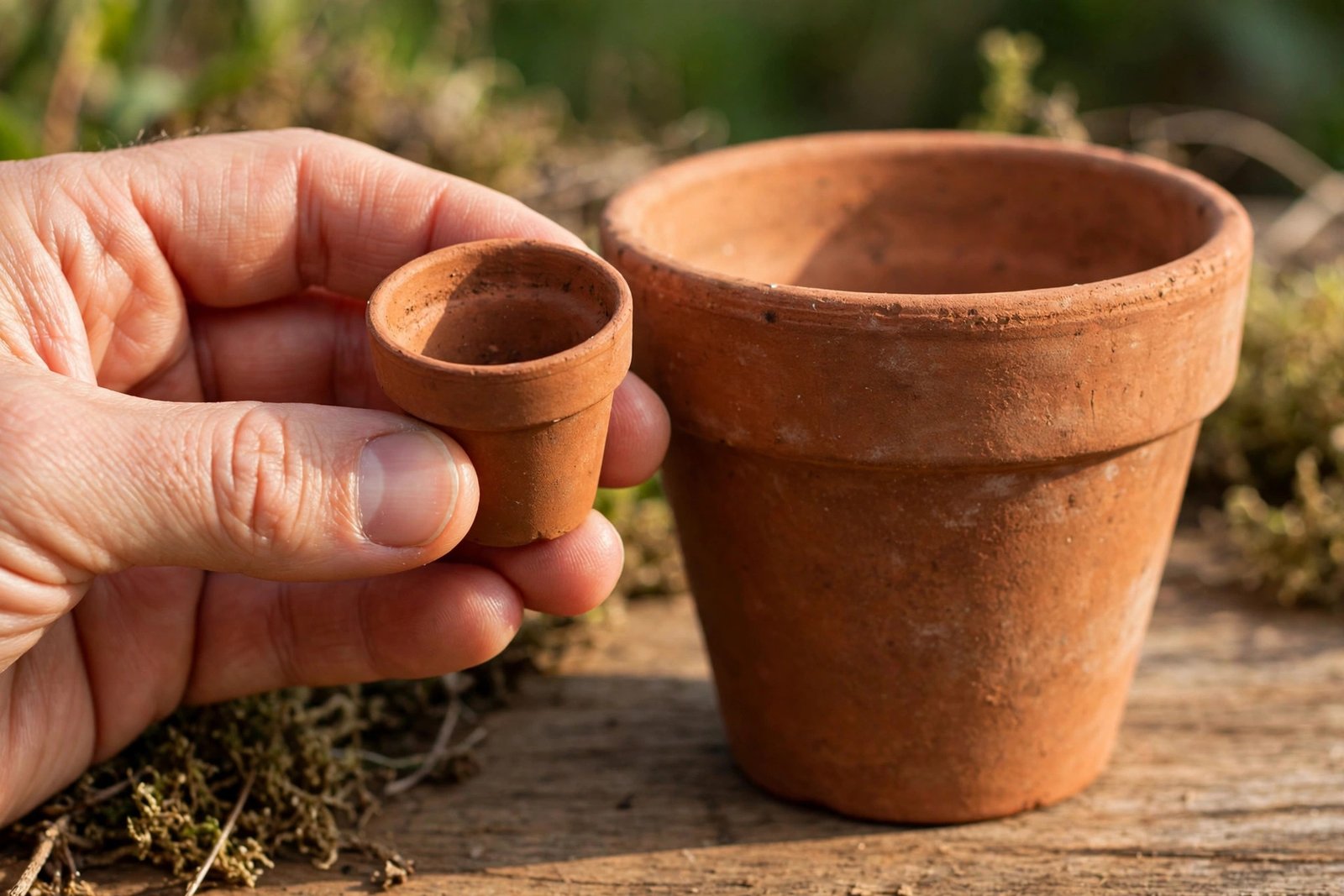
Many first pots are chosen the way people choose most things at twenty-six: by how cute they look. Tiny pastel ceramic pots, a novelty owl planter, a set of miniature galvanised buckets that held roughly a thimbleful of compost each. They were adorable. They were also, without exception, plant death traps — too small, no drainage holes, and made of materials that either baked roots or stayed permanently soggy. An entire first season can pass wondering why the plants keep dying, with the answer sitting right under them the whole time.
Pots are the foundation of container gardening in a very literal sense: everything your plant needs — water, air, nutrients, root space — is mediated by that container. Get the pot right and you’re halfway to a thriving plant before you’ve even bought the compost. Get it wrong and you’re fighting uphill all season. Here’s everything worth knowing about choosing the right pots and containers, including budget options that actually work.
Quick Tips:
- Drainage holes are non-negotiable. Pretty pot with no holes? Use it as an outer cache pot.
- Bigger is almost always better — small pots dry out fast and stunt roots.
- Terracotta breathes (great for Mediterranean herbs); plastic retains moisture (great for thirsty veg).
- Check the weight: a 12-inch pot of wet compost is heavy. Know your balcony’s limits.
The Honest Pros and Cons of Common Pots and Containers
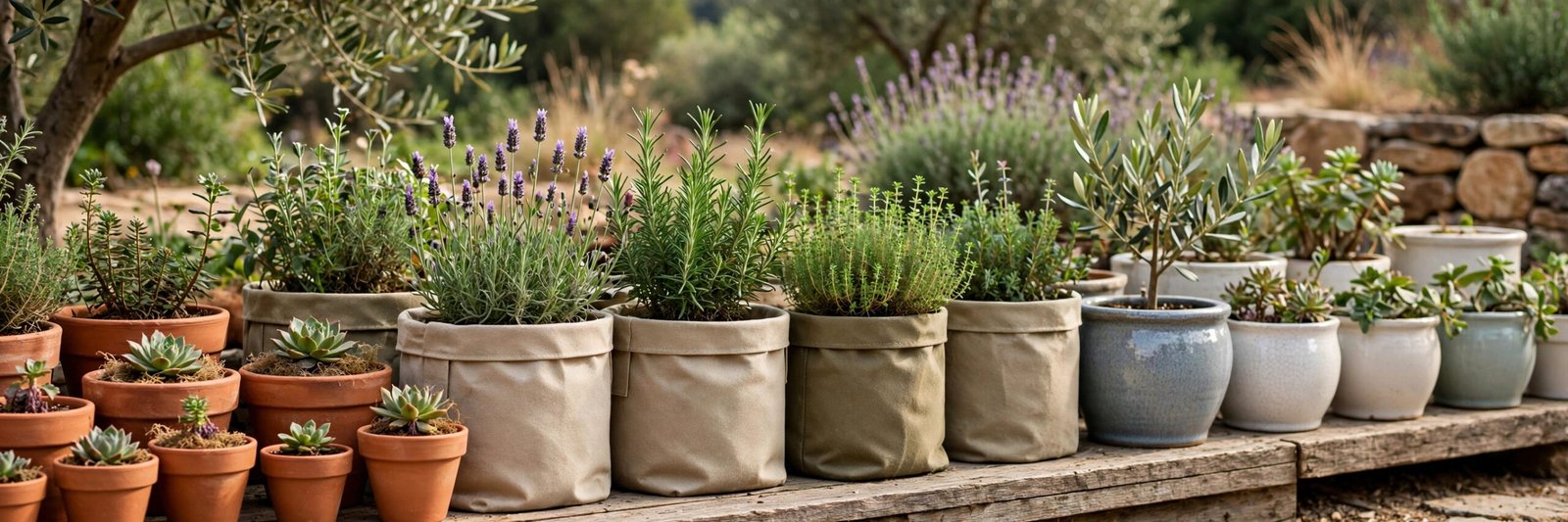
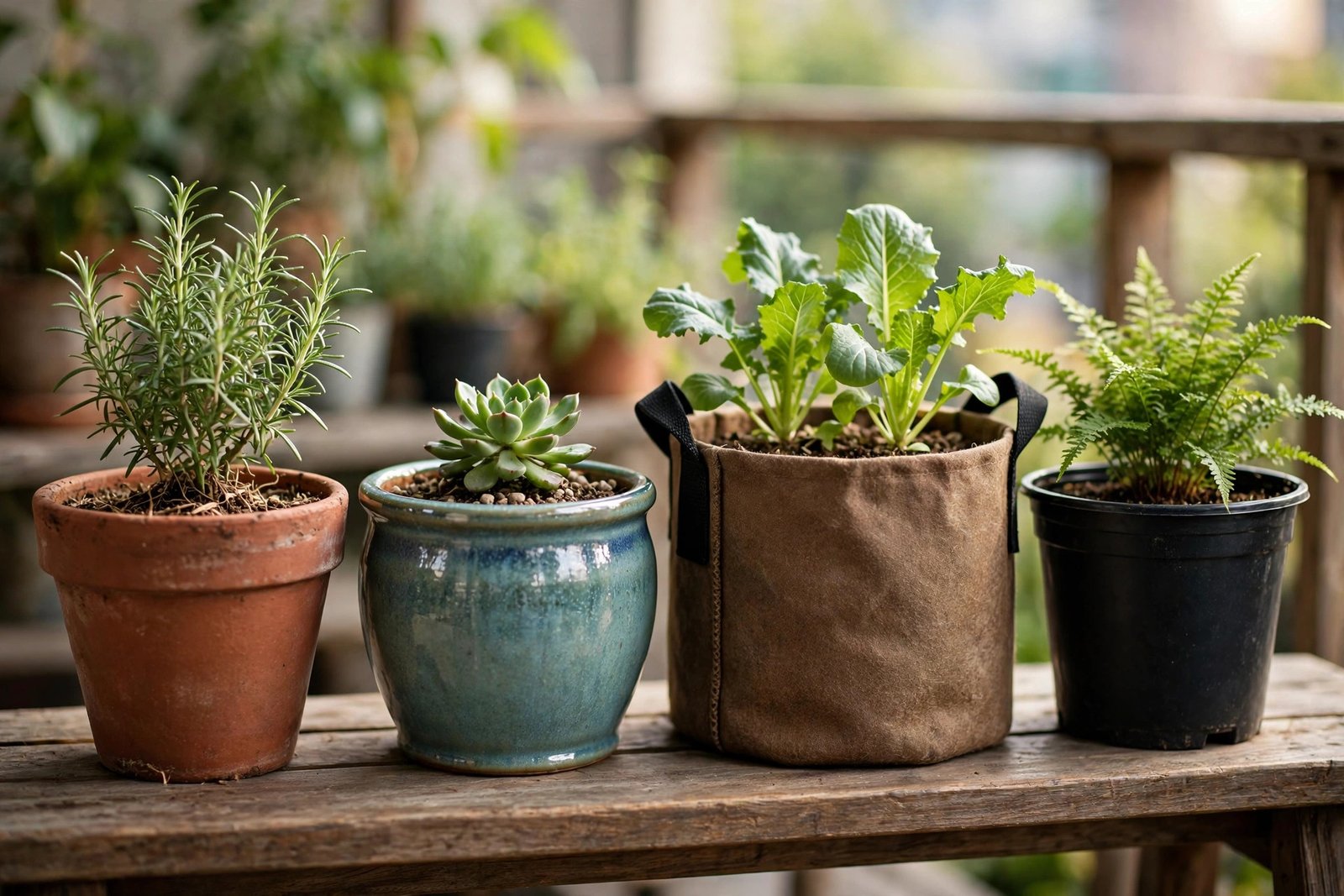
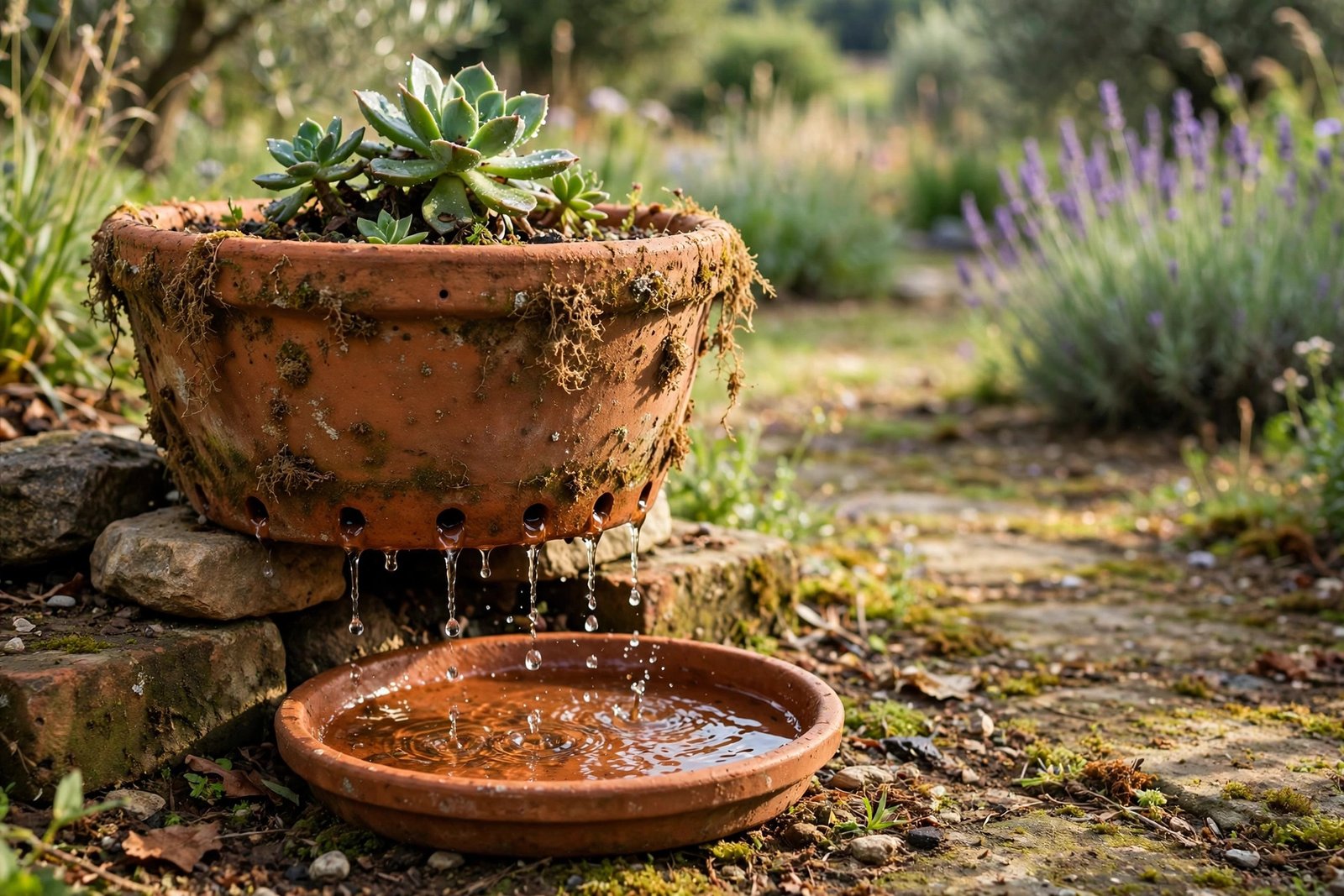
Terracotta (clay). The classic for good reason. Terracotta is porous, so it breathes — excess moisture evaporates through the walls, which makes it very forgiving for overwaterers and perfect for Mediterranean herbs like thyme, rosemary, and oregano that hate wet feet. Downsides: it dries out fast in sun and wind (you’ll water more), it’s heavy, and it cracks in hard frosts if left out with wet compost inside. Terracotta suits herbs well, with the extra watering accepted as the trade-off.
Plastic. Cheap, light, and excellent at retaining moisture — ideal for thirsty plants like tomatoes, cucumbers, and salad greens. A black plastic nursery pot is the workhorse of any budget balcony. Downsides: it looks utilitarian (solve with a decorative cache pot), dark colours absorb heat and can cook roots in full sun, and cheap thin plastic goes brittle after a couple of seasons. Choose light colours for sunny spots, and look for UV-stabilised pots if you want them to last.
Glazed ceramic. Beautiful and comes in every colour imaginable. The glaze makes them non-porous, so they hold moisture like plastic, and they’re heavy enough to be stable in wind. Downsides: expensive, heavy, and — critically — many decorative glazed pots have no drainage holes. Always check before buying. Glazed pots work beautifully with nursery pots hidden inside them.
Fabric grow bags. The insider’s choice that looks scruffy but performs brilliantly. Fabric “air-prunes” roots (when roots reach the edge, exposure to air stops them circling, promoting a dense fibrous root system), drainage is excellent, and they’re cheap and lightweight. Downsides: they dry out quickly, they look like laundry bags, and they only last 2–3 seasons. Potatoes and extra tomatoes thrive in them year after year, with consistently excellent harvests.
Wood (planters and troughs). Lovely for salad troughs and larger plantings; wood insulates roots against temperature swings. Use rot-resistant wood or line with plastic (with drainage holes punched through), and expect 3–5 years of life. Avoid old treated timber of unknown origin for edibles — modern treatments are generally fine, but untreated or clearly food-safe wood is the safe choice for anything you’ll eat.
Metal. Looks stunning, especially zinc and copper planters. Heats up dramatically in sun though — soil temperatures in a metal planter can run 10°F (5°C) hotter than in the terracotta pot next to it. Fine for shaded spots or with a plastic liner pot inside; risky for sun-baked balconies. Also rusts eventually unless it’s properly galvanised or stainless.
Size: The Chart I Wish I’d Had
If you remember one thing from this article: beginners buy pots that are too small, every time. Here’s what actually works:
- Small herbs (basil, mint, chives, parsley, thyme): 6–8 inch (15–20 cm) diameter, one plant per pot
- Cherry tomatoes: 12 inch (30 cm) minimum, deeper is better
- Peppers: 10–12 inch (25–30 cm)
- Salad greens: wide trough, at least 6 inches (15 cm) deep
- Radishes and spring onions: 6 inches (15 cm) deep, any width
- Dwarf beans: 8–10 inch (20–25 cm)
- Strawberries: 10–12 inch (25–30 cm) pot or trough, or a dedicated strawberry planter
- Courgettes (if you’re brave): 16 inch (40 cm) — they’re hungry beasts
Small pots aren’t just cramped — they dry out in hours on a hot day, which means a missed watering becomes a dead plant. A bigger pot is a buffer against forgetfulness. Moving cherry tomatoes from 6-inch to 12-inch pots can take a harvest from three tomatoes to more than you can eat. Same plant, same compost, same balcony. Just room to grow.
Drainage: The Hill I’ll Die On
Every pot needs drainage holes. Every single one. Without them, water collects at the bottom, roots rot, and the plant dies looking exactly like it needs more water — which is how beginners end up drowning already-drowning plants. If you take nothing else from this guide, take this.
What about that old advice to put stones or broken pottery at the bottom “for drainage”? It’s a myth — a layer of stones actually creates a perched water table that keeps the lower soil wetter, not drier. Skip the stones; just make sure the holes are clear and the pot sits on feet or a saucer so water can actually escape. The science goes deeper in drainage explained: pots, holes and saucers.
Saucers catch excess water and protect your balcony floor — essential if you have neighbours below. Empty them 20–30 minutes after watering so pots aren’t sitting in puddles. Pot feet (little risers under the pot) improve airflow underneath and stop wooden decking from rotting. Both cost pennies and prevent real problems.
Weight: The Balcony-Specific Consideration
Here’s something ground-floor gardeners never think about: wet compost is heavy. A 12-inch (30 cm) pot filled with damp compost can weigh 15–20 kg (35–45 lbs). A trough full of wet soil can easily top 30 kg. Most modern balconies handle this fine, but older buildings, wooden decks, and Juliet balconies have limits — and water makes everything heavier than the “dry” weight on the label.
Practical rules: spread weight across the balcony rather than clustering every big pot in one corner; keep the heaviest planters near load-bearing walls rather than the outer edge; and if you’re planning something ambitious like a raised bed, check with your landlord or building management first. Fabric grow bags and plastic pots are your friends here — the same volume of compost in a fabric bag weighs noticeably less to move around than in a thick terracotta pot.
Buying Smart: Budget Tips That Actually Work
You do not need to spend a fortune on pots. A balcony can be a glorious mismatch of sources:
- Supermarket and discount shops sell perfectly good plastic pots for a pound or two. Ugly? Sometimes. Functional? Completely.
- Charity shops and flea markets are goldmines for terracotta and ceramic — sets of six terracotta pots for £4 turn up regularly. Just check for cracks and drill drainage holes if needed.
- End-of-season sales (September/October) slash pot prices by half or more. Buy then for next spring.
- Nursery pots — those plain black plastic pots plants come in — are free if you ask. Garden centres often give them away. They’re the perfect inner pot for decorative cache pots.
- DIY options: wooden crates lined with landscape fabric, old buckets with holes drilled, even sturdy tote bags. Just ensure drainage and food-safety for edibles.
What I’d skip: self-watering pots for beginners (they’re great, but they mask the watering instincts you’re trying to build — more on that in the watering cans vs self-watering pots comparison), and anything without drainage that you can’t drill.
Repotting: When the Pot Becomes the Problem
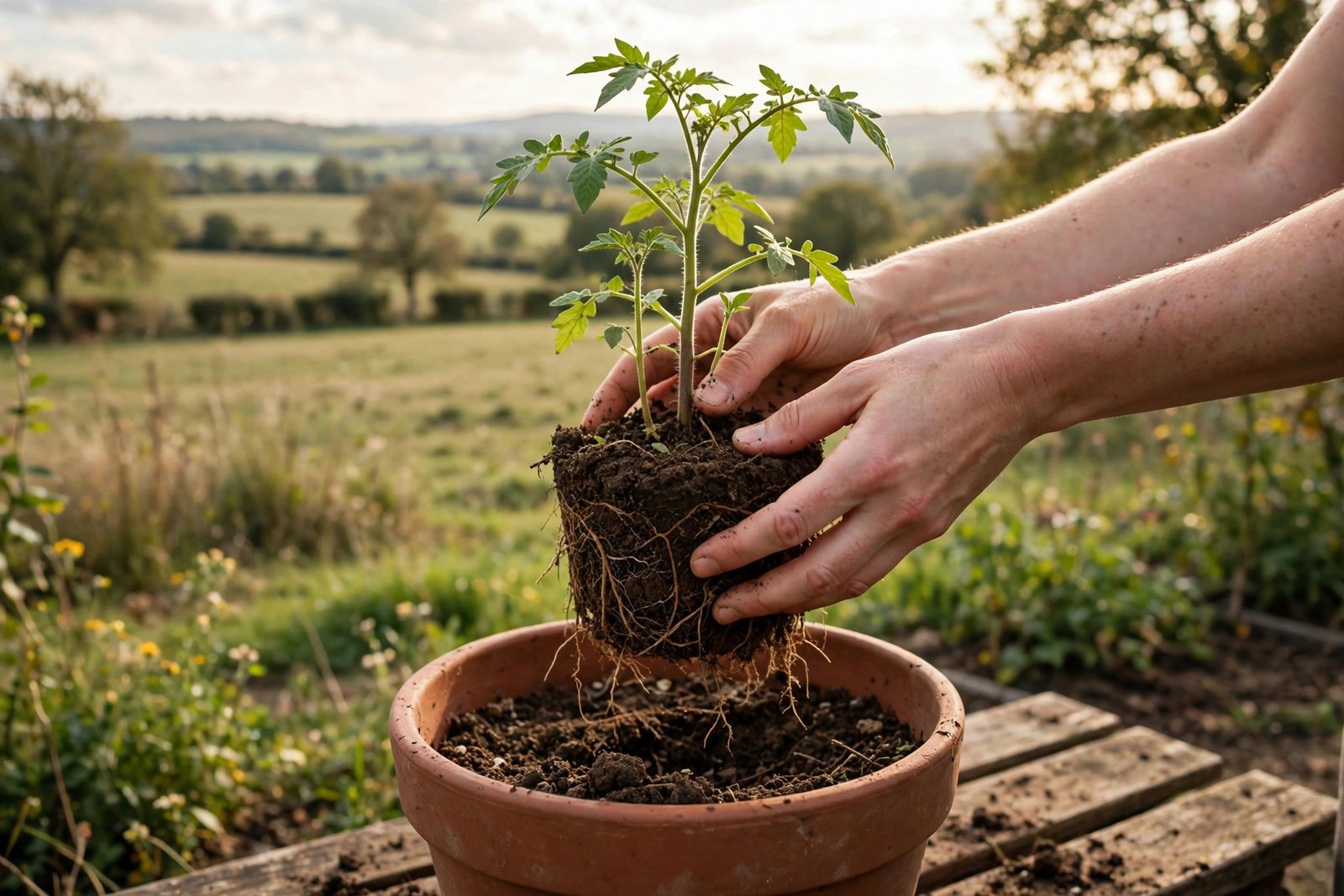
Even a well-chosen pot eventually gets outgrown. Signs your plant needs a bigger home: roots circling out of the drainage holes, water running straight through without absorbing, growth stalling despite feeding, or the plant becoming top-heavy and tipping over. Most container plants want repotting every 1–2 years.
Go up just one or two inches in diameter — jumping from a 6-inch to a 14-inch pot shocks the plant, because all that extra wet compost around a small root ball stays soggy. Spring is the ideal time, just as growth resumes. The step-by-step how to repot a plant guide walks through the whole process if you’ve never done it.
Quick Answers to Common Questions
How many drainage holes does a pot need?
One generous hole (at least ½ inch / 1 cm) is the minimum; several smaller holes are better. For pots over 12 inches (30 cm), aim for 4–6 holes. If water can’t get out freely, you don’t have drainage — you have a pond.
Can I grow vegetables in hanging baskets?
Cherry tomatoes (‘Tumbling Tom’ was bred for it), strawberries, and trailing herbs do well in hanging baskets. But baskets dry out brutally fast — sometimes twice-daily watering in summer — and they’re exposed to wind. Line them with plastic (with holes) to slow moisture loss, and check your railing or bracket’s weight limit first.
Are expensive pots worth it?
For the plant? No — a £2 plastic pot grows basil exactly as well as a £40 designer planter, provided the size and drainage are right. Expensive pots buy you looks, durability, and frost-resistance, which are legitimate reasons to spend — just know you’re paying for aesthetics, not plant health. Spend the savings on better compost; that actually matters. The budget-friendly planters roundup lists favourite cheap finds.
What about growing in unusual containers — old boots, teapots, drawers?
Fun for ornamentals — chives can live happily in a chipped enamel jug for years. Two rules: drainage holes are still mandatory (drill them), and avoid anything that held chemicals or lead paint for edibles. Also consider size honestly: a teapot fits a succulent, not a tomato.
Should pots match? Does it matter?
Only to you. Plants genuinely don’t care. A balcony that’s a cheerful chaos of terracotta, black plastic, one blue glazed pot, and a fabric grow bag produces just as well as any curated Instagram grid. If matching pots make you happy, go for it — gardening should please the gardener too.
The Bottom Line
Choosing the right pots and containers is half the battle: right size, right material for the plant’s thirst, drainage holes always, and weight your balcony can handle. Everything else — colour, style, matching sets — is personal taste, and your plants will thrive in a £2 plastic pot just as happily as in a designer planter.
That novelty owl planter from the intro? It holds a succulent now — the one plant category that actually tolerates tiny cute pots. Everything else got an upgrade, and harvests have never looked back.

2 Comments on “Choosing the Right Pots and Containers for Your Plants”