Here’s a controversial opinion: most “easiest plants for beginners” lists are rubbish. They recommend things like lavender topiary and espaliered fruit trees — technically growable in pots, practically a one-way ticket to disappointment for someone who has never kept anything alive. Easy doesn’t mean “possible.” Easy means forgiving: plants that bounce back when you forget to water, tolerate your dodgy light, and still give you something to eat or admire.
So this list has a strict entry requirement. Every plant below earned its place by surviving real beginner conditions — real balconies, real beginner mistakes. The difference between “easy” and “easy if you already know what you’re doing” only becomes clear after killing a few plants. These fifteen are the real deal.
Quick Tips:
- Buy seedlings, not seeds, for everything except radishes and salad leaves — instant head start.
- One plant per pot for herbs; they compete badly when crammed together.
- Match the plant to your light first, your appetite second. Check the sunlight guide if you’re unsure what you’ve got.
- Start with five plants maximum. You can always add more in August.
The Herbs (Your Highest-Return Plants)
Nothing repays a beginner like herbs. They’re cheap, they grow fast, and snipping fresh basil into pasta you made yourself never stops feeling like a small miracle.
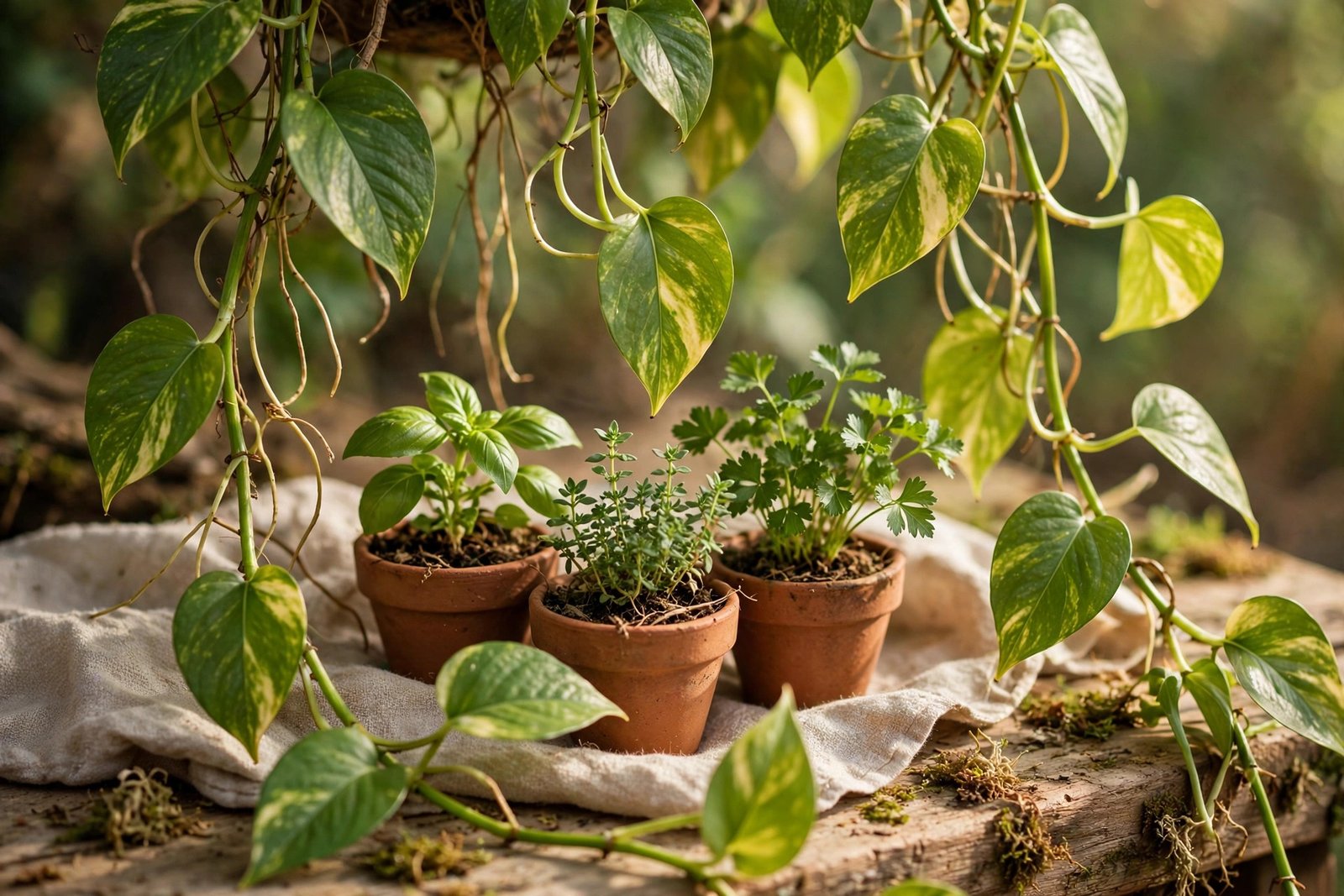
1. Basil (‘Genovese’) — The classic for a reason, with one caveat: buy a seedling, not the supermarket potted kind (those are greenhouse-grown and collapse outdoors). One plant in a 6-inch (15 cm) pot, 6+ hours of sun, water when the top inch dries. Pinch off flower buds to keep leaves coming. A healthy first-year basil can produce enough for pesto roughly every ten days from July onwards.
2. Mint (‘Moroccan’ or spearmint) — Nearly indestructible and the most forgiving plant on this list. Tolerates 3–4 hours of sun, bounces back from underwatering like nothing happened, and grows fast enough that harvesting feels consequence-free. One non-negotiable rule: its own pot, always. Mint roots are invasion artists. A 6–8 inch (15–20 cm) pot is plenty.
3. Chives — The “set it and forget it” herb. Buy a small clump, plant in a 6-inch (15 cm) pot, snip outer leaves as needed, and it regrows indefinitely. Survives light frost, tolerates partial shade, and produces pretty purple pom-pom flowers in early summer that bees adore. Divide the clump every couple of years when it gets crowded.
4. Flat-leaf parsley — Slower than basil but tougher and longer-lasting. One plant in a 6–8 inch (15–20 cm) pot gives you garnish from May to November. Handles partial shade (4+ hours) happily. Soak seeds overnight before sowing if growing from seed — they germinate infuriatingly slowly otherwise, which is why beginners should just buy a seedling.
5. Coriander (‘Calypso’) — Coriander’s reputation for bolting (flowering and turning bitter) scares people off, but slow-bolt varieties like ‘Calypso’ are a genuine game-changer for balcony growers. Sow every 2–3 weeks for continuous supply, keep it out of the harshest afternoon sun, and never let it dry out completely. A wide 8-inch (20 cm) pot fits a good succession sowing.
6. Thyme — The herb for people who forget to water. Thyme wants sun (6+ hours), gritty well-draining soil, and to be left alone — overwatering kills it faster than drought. A 6-inch (15 cm) terracotta pot is ideal because terracotta wicks away excess moisture. It survives winter outdoors in most of the UK and southern Europe; in colder US zones, bring it in.
The Vegetables (Real Food, Real Fast)
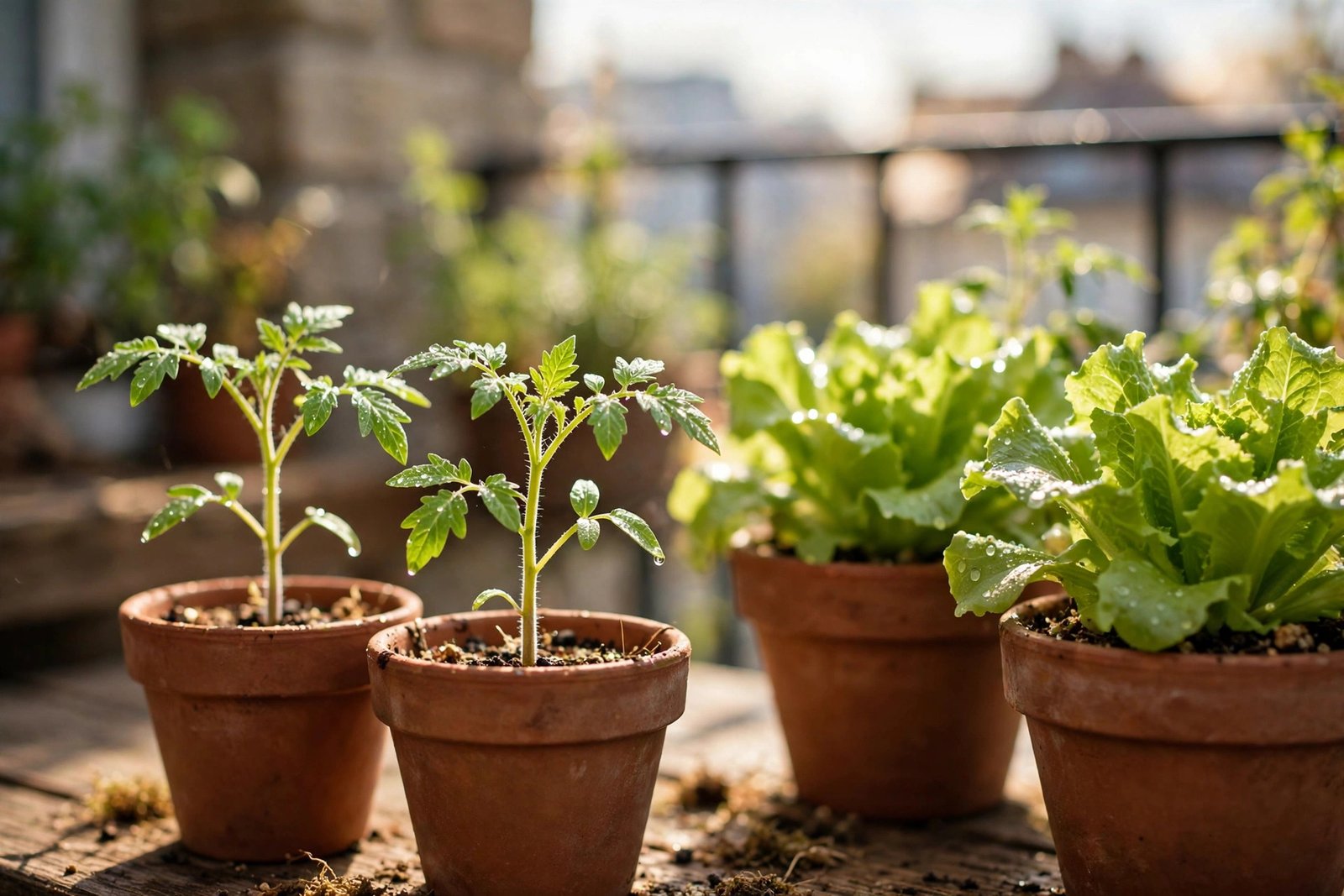
7. Cherry tomatoes (‘Tiny Tim’ or ‘Tumbling Tom’) — These compact varieties were bred for pots and don’t need staking or pruning like full-size tomatoes. One plant per 12-inch (30 cm) pot, 6+ hours of sun, water deeply and feed weekly once fruits form. ‘Tumbling Tom’ cascades beautifully over hanging baskets. Expect your first ripe fruits about 60–70 days after planting the seedling. Nothing — nothing — tastes like a sun-warm cherry tomato eaten three steps from where it grew.
8. Radishes (‘French Breakfast’) — The instant-gratification vegetable and the one thing I’d always grow from seed. Sow directly into a 6-inch-deep (15 cm) trough, keep moist, harvest in 25–30 days. Sow a new row every two weeks for continuous crops. They tolerate partial shade and even forgive slightly crowded sowing. If a radish fails, something is deeply wrong with your soil — they’re that easy.
9. Cut-and-come-again lettuce (‘Saladin’ or ‘Lollo Rosso’) — Sow or plant seedlings in a wide trough, harvest outer leaves while the centre keeps growing, and one planting feeds you salads for weeks. Lettuce prefers partial shade in summer — full blazing sun makes it bolt (shoot up and turn bitter). In a heatwave, move the trough into afternoon shade. The salad greens guide has the full succession-planting method.
10. Spring onions — Absurdly easy and oddly satisfying. Sow thickly in any pot 6 inches (15 cm) deep, snip at whatever size you like, and sow more every few weeks. They tolerate partial shade, need little feeding, and the “bunching” varieties never form bulbs so there’s no timing pressure. They grow well in the gaps around slower plants — free food from wasted space.
11. Dwarf French beans (‘Purple Queen’ or ‘Speedy’) — Bush varieties grow 12–18 inches tall with no trellis needed. Sow two seeds per 8-inch (20 cm) pot (thin to the stronger), give them 5+ hours of sun, and pick pods young to keep them producing. ‘Purple Queen’ pods are deep violet (they turn green when cooked, which never stops delighting) and easy to spot for harvesting. One warning: slugs love seedlings, so protect young plants on ground-floor balconies.
12. Oregano — Nearly left off this list, yet it’s the herb harvested most after basil. Perennial, drought-tolerant, happy in a 6-inch (15 cm) pot in full sun, and the flowers are a bee magnet in midsummer. Dries beautifully — hang bunches upside down in the kitchen and you’ll have homegrown oregano all winter. Divide every 2–3 years.
The Bonus Round (Slightly Braver, Still Forgiving)
13. Strawberries (alpine or ‘Mara des Bois’) — Alpine strawberries are tiny, intensely flavoured, and crop from June to October with almost no effort. ‘Mara des Bois’ gives you proper-sized fruits with wild-strawberry perfume. Plant in a 10–12 inch (25–30 cm) pot or trough, 5+ hours of sun, keep watered in fruit season. Net against birds if you’re above the ground floor — pigeons absolutely will find them.
14. Spinach (‘Perpetual’ or ‘Medania’) — ‘Perpetual spinach’ (actually a chard) is the beginner’s secret weapon: sow once, harvest for months, survives light frost, and barely bolts. True spinach varieties like ‘Medania’ are best sown in spring and autumn, avoiding midsummer heat. Either way, partial shade suits them and a 8-inch-deep (20 cm) trough works well.
15. Rocket (arugula) — Sow, ignore slightly, harvest peppery leaves in 3–4 weeks. Rocket loves cool weather and bolts in heat, so it’s a spring and autumn star — sow it when your summer crops are finishing. Let one plant flower and it’ll self-seed into neighbouring pots, giving you free rocket for years — many gardeners never sow it twice.
Your Questions, Answered
Should I really start with seedlings instead of seeds?
For your first season, yes — with the exceptions noted above (radishes, salad leaves, spring onions, rocket). Seedlings cost a few pounds each and skip the fiddliest 4–6 weeks of a plant’s life: germination, damping off, thinning, hardening off. Once you’ve kept seedlings alive for a season, seeds become fun instead of stressful.
How many plants should a beginner start with?
Five. Three herbs and two vegetables is an ideal starter garden — enough variety to feel like a garden, few enough that watering takes ten minutes. Beginners who start with fifteen plants usually end the season frazzled; everyone who starts with five wants more by August. Start small and let success make you ambitious.
What if my balcony is shady? Which of these still work?
Mint, chives, parsley, lettuce, spinach, spring onions, and radishes all cope with 3–4 hours of sun. Coriander prefers shade from harsh afternoon sun anyway. Skip the tomatoes, basil, thyme, and oregano until you have more light — or grow them anyway in your sunniest corner and accept a smaller harvest. Matching plants to light is half the battle; the guide to starting from scratch walks through assessing your space.
When should I plant all of this?
After your last frost date — typically May in the UK and northern US, earlier further south. Hardy herbs like chives, mint, and thyme can go out a few weeks earlier. If you’re starting in midsummer, skip the spinach and rocket until September and lean into basil, beans, and tomatoes, which love the heat.
Do I need different soil for different plants?
No — one good multi-purpose potting compost works for everything on this list. The only tweak: Mediterranean herbs (thyme, oregano, rosemary) appreciate extra grit or perlite mixed in for drainage, about one part grit to three parts compost. Everything else is happy in straight compost. If you get keen, the DIY potting soil recipe is the upgrade path.
Go On, Pick Five of the Easiest Plants
That’s the whole list — fifteen plants that forgive beginner learning curves. Don’t try to grow all of them at once (a classic beginner mistake). Pick five that match your light and your cooking, get them in pots, and enjoy the particular joy of a balcony that feeds you.
The safest bet for most beginners: basil, mint, chives, cherry tomatoes, and lettuce — the easiest plants on this list, and the ones I’d plant first all over again. But honestly? The best starter plant is the one you’re excited to eat. Go with your appetite.