
Here’s a question that sounds ridiculous until plants have been killed over it: how much sunlight does a balcony garden actually need? Because when a first basil dies, the plant label said “full sun,” and the north-east balcony definitely had… some sun. There was a bright patch for a couple of hours! That counts, right?
It does not count. And that single misunderstanding costs many beginners an entire season of leggy seedlings, scorched leaves, and plants that just sit there doing nothing. Sunlight is the number-one factor that decides whether your balcony garden thrives or merely survives, and most beginners get it wrong because plant labels use vague words and balconies are weird little light traps.
So let’s fix that. Here’s how sunlight actually works for container gardens, how to measure what your balcony really gets, and which plants to choose once you know.
What Plant Labels Actually Mean by “Full Sun”
Plant labels and seed packets throw around three phrases, and they have specific definitions:
- Full sun: 6 or more hours of direct sunlight per day. Direct means the sun is actually hitting the leaves — not bright ambient light, not a sunny sky, actual rays.
- Partial sun / partial shade: 3–6 hours of direct sun per day. (These two terms are used almost interchangeably, which is annoying, but the hour range is what matters.)
- Full shade: Less than 3 hours of direct sun, or only dappled/indirect light all day.
That “direct” distinction is where many beginners go wrong. A balcony can be bright all day — bright enough to read a book out there without a lamp — while the sun itself only hits the floor for about two hours. Bright shade is lovely for humans and nearly useless for a tomato plant. When you’re assessing your balcony, only count hours when sunlight is physically touching the spot where the pot will sit.
Also worth knowing: not all sun hours are equal. Morning sun (before about 11am) is gentler and cooler — most plants love it. Afternoon sun, especially between 1pm and 4pm in midsummer, is intense and hot. Three hours of afternoon sun can stress a plant more than five hours of morning sun. A west-facing balcony with blazing 2–7pm sun is a harsher environment than the hour count suggests, while an east-facing balcony with 7am–12pm sun is basically plant paradise.
How to Measure Your Balcony’s Sunlight (Three Ways)
You don’t need fancy equipment, but you do need a real answer to how much sunlight your balcony gets — not vibes. Pick whichever method suits you:
1. The notebook method (free, most reliable). On a typical day, check your balcony every two hours from morning to evening and write down whether each growing spot is in sun or shade. Do this once on a sunny day and you’ll have a solid map. A crude sketch of the balcony with little sun/shade symbols takes maybe ten minutes total across the day. This is the most reliable method because it’s free and it reflects your actual balcony, not an average.
2. A phone light-meter app (free-ish, fun). Apps like Photone or Lux Light Meter turn your phone into a rough light meter. Full sun outdoors reads around 10,000+ foot-candles (100,000+ lux); bright shade might read 1,000–2,000. Take readings at your pot spots a few times through the day. It’s not lab-grade accuracy, but it settles arguments about whether a corner is “basically sunny.”
3. A sun calculator gadget. These little devices sit in your pot for a day and log the hours of direct sun. They cost around £15–£25 and are genuinely handy for double-checking new spots before committing a fussy plant to them.
Whatever method you choose, measure in the growing season if you can — a balcony that’s sunny in June might be shaded in March when the sun is lower. And remember that nearby buildings, trees, and even your own railing cast shadows that move through the day. A balcony can lose a whole corner to the neighbouring building from 3pm onwards in summer — the kind of thing you only notice by watching.
Quick Tips:
- Count only direct sun — rays physically hitting the leaves — not general brightness.
- Morning sun is gentler than afternoon sun; 4 morning hours beat 4 afternoon hours for delicate plants.
- Re-check your light map each season; the sun’s angle changes more than you’d think.
- When in doubt between two labels, believe the lower number and choose plants accordingly.
How Much Sunlight Different Plants Need
Once you know your hours, choosing plants gets easy. Here’s a handy cheat sheet:
6+ hours of direct sun (full sun balconies): This is the dream for edibles. Tomatoes (‘Tiny Tim’, ‘Gartenperle’), peppers, cucumbers (‘Patio Snacker’), basil (‘Genovese’), rosemary, thyme, strawberries, and most flowers will thrive. You’ll water more often — big pots in full sun can need daily watering in a heatwave — but the harvests are worth it. Mulch the soil surface to slow evaporation.
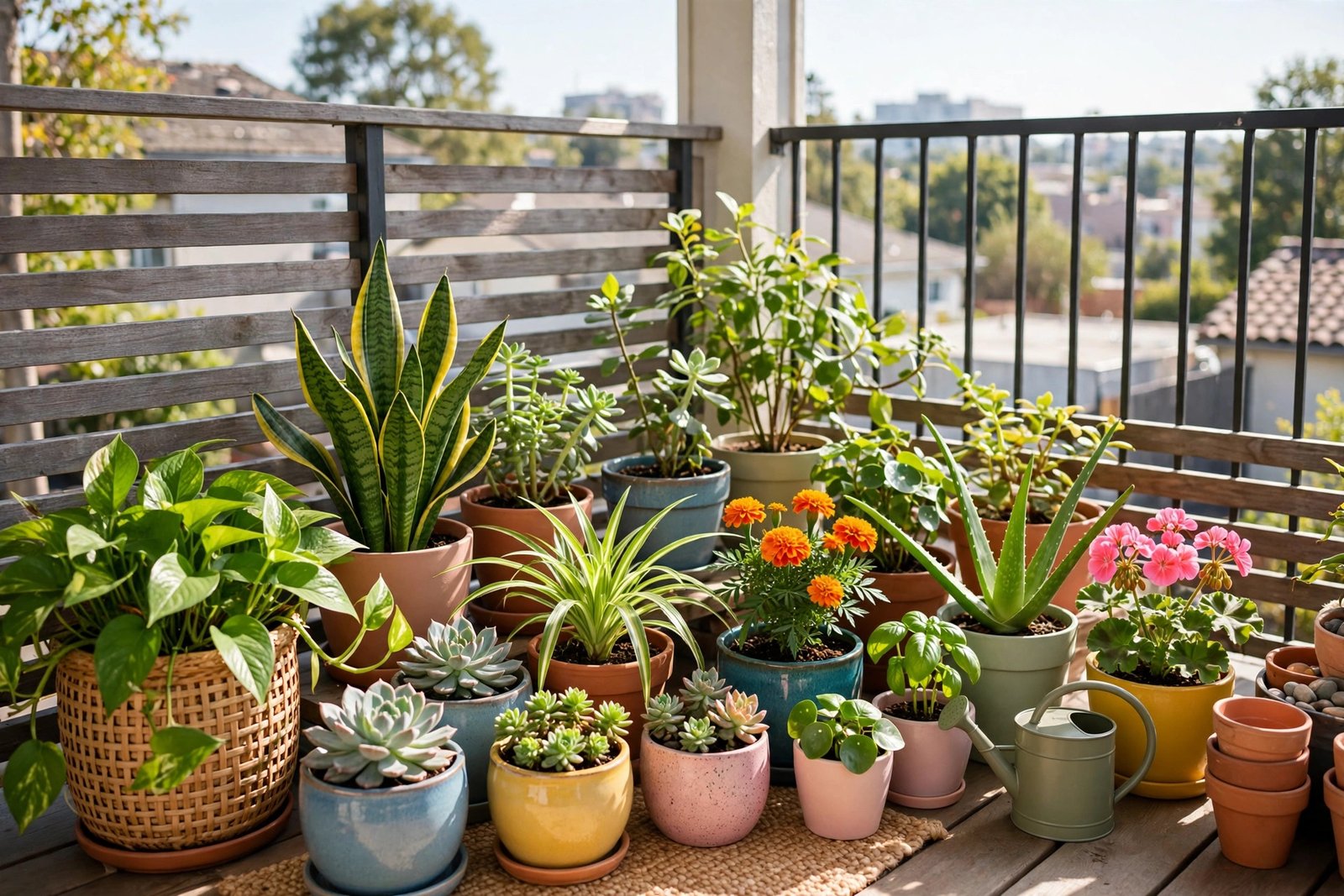
3–6 hours (partial sun): The most common balcony situation, and honestly a great one. Lettuce and salad greens actually prefer this in summer (they bolt less), as do chives, parsley, mint, coriander, radishes, and bush beans. Cherry tomatoes can work here if they get at least 5 hours, but expect a smaller harvest. This is also perfect territory for most houseplants you summer outdoors.
Under 3 hours (shade balconies): Don’t despair — shade balconies grow beautiful things, just different ones. Mint, chives, and parsley tolerate low light. Leafy greens like spinach and rocket manage with 2–3 hours. And this is where ornamental shade-lovers shine: ferns, hostas in pots, impatiens, and begonias. If your heart is set on tomatoes but your balcony faces north, that’s what grow lights are for — no shame in it.
One more trick for low-light balconies: light-coloured walls, white pots, and even a strategically placed mirror can bounce meaningful extra light onto your plants. A pale cream wall behind the herbs genuinely helps them grow stockier. It won’t turn shade into sun, but every little helps.
The Seasonal Shift Nobody Warns You About
Here’s something that trips up many gardeners in their second year: sunlight is not a fixed feature of your balcony. In summer, the sun is high and your south-facing balcony might actually get less direct sun than you’d think — the balcony above shades it, or the sun passes overhead and only hits the railing. In spring and autumn, the lower sun angle can flood that same balcony with light for hours.
This matters most at the shoulders of the season. Seedlings started in March on a “sunny” balcony can stretch and go leggy because the spring sun is still weak and low — which is exactly what happens to many a first basil. And heat-loving plants sulk in a shady June if a neighbouring building blocks the high summer sun.
Practical takeaway: observe your light in the season you’re planting for, not just once. And if a plant looks leggy (stretched stems, big gaps between leaves, pale colour), it’s telling you it wants more light — move it to your sunniest spot before it gives up. There’s more about this in why your plant is leggy and how to fix it.
Dealing With Too Much Sun
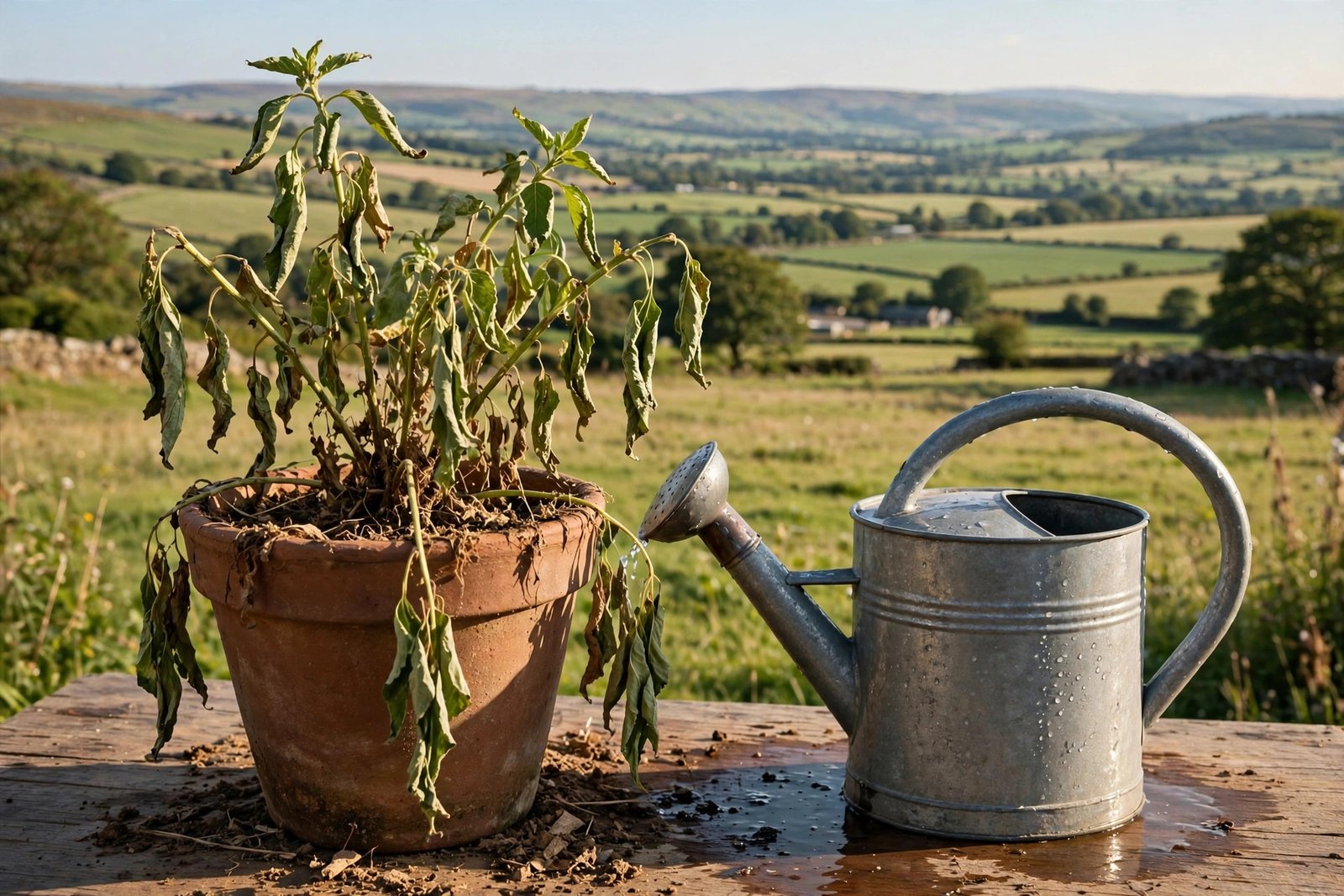
Too much sun is a real problem too, especially on south and west-facing balconies in a heatwave. Signs of sun stress: leaves bleaching pale or developing brown crispy patches, soil drying out within hours, plants wilting every afternoon even when watered in the morning.
Fixes that actually work:
- Move pots a foot or two back from the railing into the balcony’s own shade during heatwaves. Containers are portable — use that superpower.
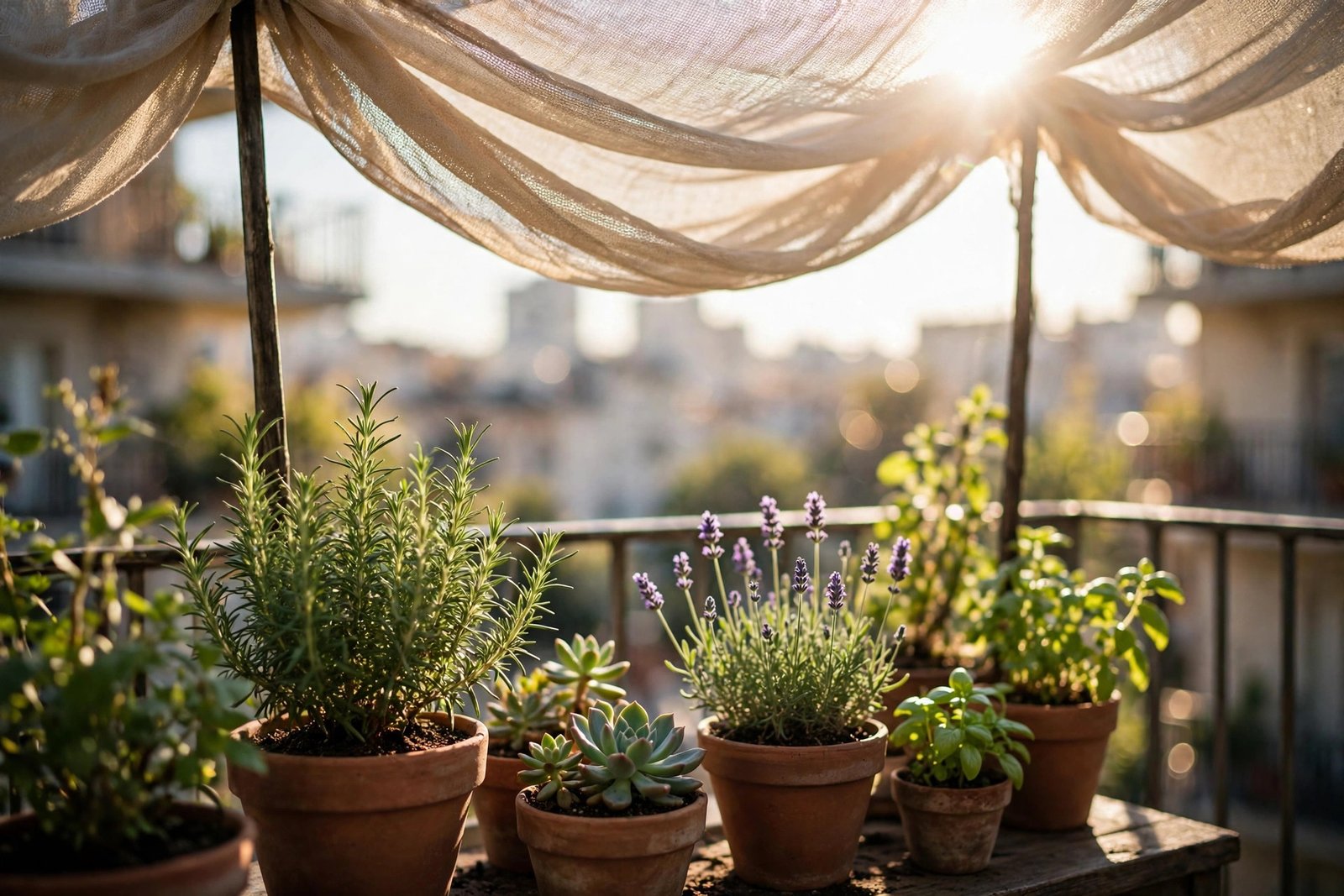
- Shade cloth (30–50% shade) draped over a couple of canes is cheap and remarkably effective. Rig one up every July over salad greens.
- Water deeply in the morning and mulch pots with bark chips to keep roots cool. Dark pots absorb heat; light-coloured pots stay noticeably cooler.
- Group pots together so they shade each other’s sides. It also raises local humidity a touch, which stressed plants appreciate.
Cherry tomatoes in black plastic pots can get so hot the roots practically cook — the plant wilts no matter how much it’s watered. Switching to light-coloured pots and mulching fixes it fast. If your plants are struggling in a heatwave, read the guide to protecting balcony plants in summer heatwaves for the full playbook.
Questions I Get Asked a Lot
My balcony only gets 2 hours of sun. Is gardening pointless?
Not at all — it’s just a different garden. Grow shade-tolerant herbs (mint, parsley, chives), leafy greens like spinach and rocket, and lean into ornamental shade plants like ferns and begonias. You’ll never grow prize tomatoes there, but you’ll grow plenty of things worth growing. The only pointless garden is one planted with sun-lovers in shade.
Can I use a grow light on my balcony?
You can, and plenty of people do for north-facing balconies. A weatherproof LED grow light on a timer (12–14 hours a day) can turn a dark corner productive. It’s an extra cost and needs a safe outdoor power setup, so it’s only worth it once you’ve maxed out what your natural light can do. The grow lights explained guide covers the basics.
Do plants need direct sun, or is bright indirect light enough?
For fruiting plants (tomatoes, peppers, cucumbers) and most herbs, direct sun is non-negotiable — they need those 6+ hours. For leafy greens and many herbs like mint and parsley, bright indirect light plus a few hours of direct sun does the job. True full-shade survival is limited to a short list: ferns, hostas, impatiens, and a handful of tough herbs.
Why are my seedlings tall and floppy?
Classic insufficient light. Seedlings stretch toward whatever light exists, producing weak leggy stems. Move them to your brightest spot immediately, and for future batches, start seeds later when light is stronger, or use a small grow light for the first few weeks. Leggy seedlings can sometimes be saved by transplanting them deeper (tomatoes especially), but prevention beats cure.
Does window glass filter out light plants need?
Yes, a bit. Standard window glass blocks some UV and reduces overall intensity by roughly 10–30% depending on the glass and how clean it is. That’s why a “sunny windowsill” often disappoints for sun-loving edibles. If you’re growing herbs on a windowsill rather than an open balcony, choose accordingly — or accept slightly slower growth.
The Takeaway
Sunlight isn’t about optimism; it’s about hours. Spend one day actually watching your balcony, write down what you see, and choose plants that match the reality rather than the dream. Many beginners lose a whole season to wishful thinking about a “sunny” north-east balcony. The single most useful gardening skill isn’t watering or feeding — it’s paying attention to light.
Get the light right and everything else gets easier. Your plants will be stockier, healthier, and more productive, and you’ll stop blaming yourself for failures that were really just a mismatch between plant and place. Go watch your balcony this weekend — future you says thanks.

7 Comments on “How Much Sunlight Does a Balcony Garden Really Need?”