
Most people find their first spider mite infestation the way everyone does: too late. A calathea looks dusty for weeks, then one morning there’s fine webbing between the stems, leaves stippled yellow like they’ve been sandblasted, and a sinking stomach. Three rounds of treatment and a lot of pruned leaves later, the plant survives — and the lesson learned is important: most houseplant pests are beatable with simple, natural methods, as long as you catch them early and treat consistently.
You don’t need harsh chemical insecticides inside your home — and honestly, you don’t want them around your living space, your kids, or your pets. This guide covers the seven most common houseplant pests and how to beat each one with methods that are safe for indoor use: physical removal, water, soap, oils, and beneficial organisms. Let’s meet the usual suspects.
Quick Tips:
- Quarantine new plants for 2 weeks and inspect every plant monthly — early detection wins.
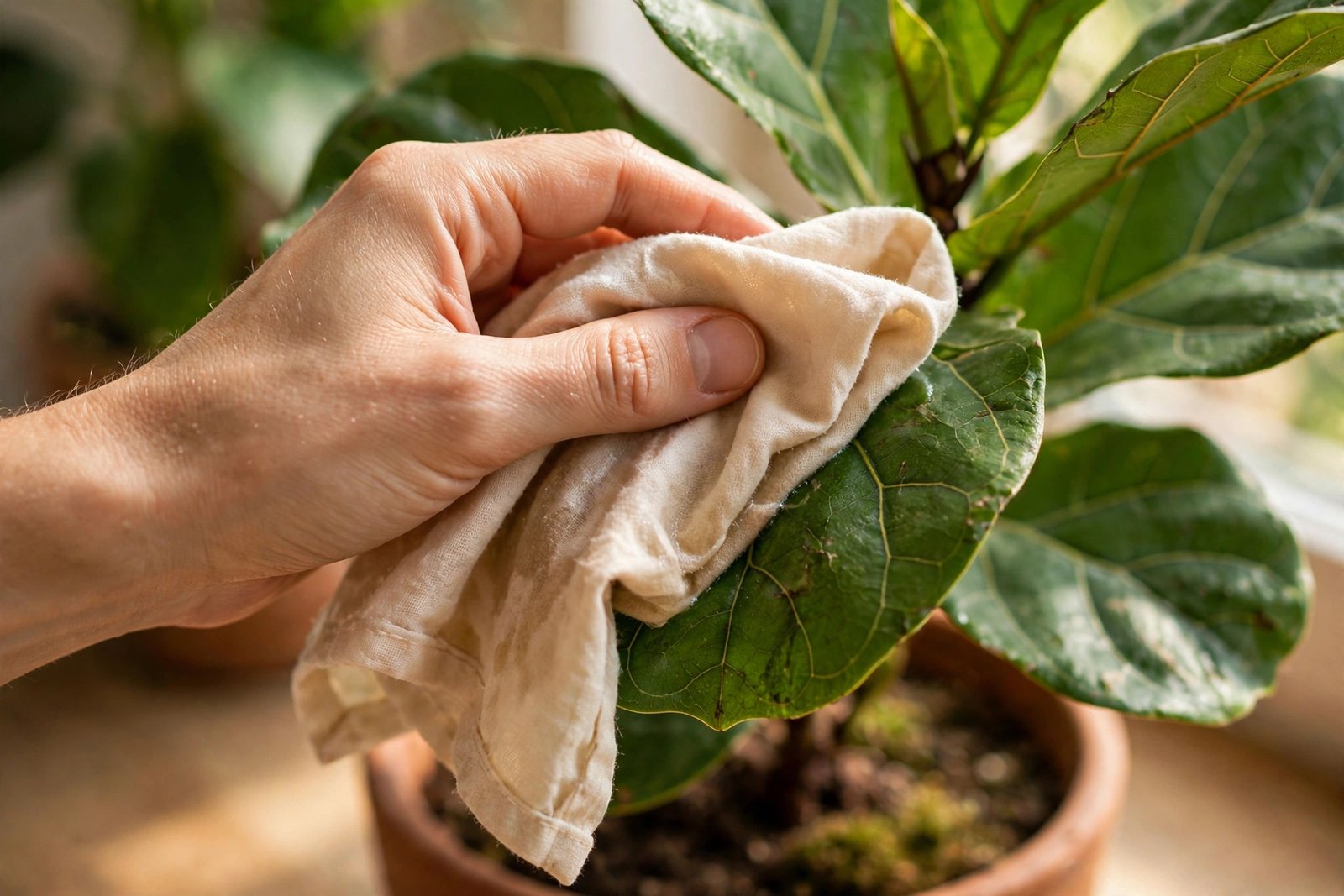
- Most pests hate being disturbed: a strong shower or leaf-wiping removes huge numbers instantly.
- Treat 2–3 times, 7–10 days apart, to catch newly hatched pests — one treatment is never enough.
- Never use chemical insecticides indoors if you can avoid it; natural methods work with persistence.
Before the Rogues’ Gallery: Preventing Common Houseplant Pests
An ounce of prevention genuinely applies here. Quarantine every new plant for two weeks — nursery plants are the number one way pests arrive. Inspect leaf undersides and stem joints monthly with your phone torch; most pests start there. Don’t overcrowd plants, avoid over-fertilising (soft, sappy growth is pest candy), and wipe leaves occasionally. Healthy, unstressed plants resist pests far better than struggling ones.
When you find pests, the first response is always the same: isolate the plant immediately, then physically remove as many pests as you can. A strong shower in the bath or sink, a wipe-down with a damp cloth, or blasting with a spray bottle dislodges an astonishing proportion of most infestations. Then follow up with the specific treatment below. Pest life cycles mean eggs survive the first treatment, so plan on two to three rounds, seven to ten days apart.
1. Fungus Gnats — the Tiny Flies Over Your Soil
What they look like: Small black flies, like tiny mosquitoes, hovering around your pots and running across the soil surface. The adults are annoying; the real damage comes from their larvae — translucent little worms in the top inch of soil that munch fine root hairs and can stunt seedlings.
Why they show up: Constantly damp soil surface. If you’re watering before the top of the soil dries, you’re running a gnat nursery. They’re the classic sign of overwatering.
Natural treatment: Let the top 1–2 inches of soil dry out between waterings — this alone breaks the breeding cycle. Put yellow sticky traps in the pot to catch adults. For the larvae, water with a solution containing Bacillus thuringiensis israelensis (Bti, sold as mosquito bits soaked in water) — a naturally occurring bacterium that’s harmless to plants, pets, and people but lethal to gnat larvae. A top dressing of sand or fine gravel also deters egg-laying. Expect two to three weeks for full control.
2. Spider Mites — the Nearly Invisible Sap-Suckers
What they look like: You usually see the damage before the mites: leaves stippled with tiny yellow or bronze dots, fine webbing between leaves and stems, and a general dusty, declining look. The mites themselves are pinhead-sized dots (red, brown, or pale) on leaf undersides — tap a leaf over white paper and watch for moving specks.
Why they show up: Hot, dry, dusty conditions. They adore central heating in winter and stressed plants — they strike during dry winter months when the heating is blasting.
Natural treatment: Mites hate water and humidity. Start with a forceful shower, washing the undersides of every leaf. Then spray thoroughly with neem oil solution (follow the label dilution — usually about 1–2 teaspoons per litre of water with a drop of soap as an emulsifier), coating leaf undersides. Repeat weekly for three weeks. Raising humidity around the plant (pebble tray, grouping plants) helps prevent reinfestation. Badly damaged leaves won’t recover — prune them so the plant puts energy into new growth.
3. Mealybugs — the Cotton-Wool Impostors
What they look like: White, cottony clusters in leaf joints, along stems, and under leaves. They look like tiny bits of fluff but they’re sap-sucking insects, and they excrete sticky honeydew that can grow sooty mould.
Why they show up: They spread from infested new plants or hitchhike in from outdoors in summer. They love the sheltered crevices of plants like hoyas, jades, and orchids.
Natural treatment: For light infestations, dab each cluster with a cotton bud dipped in rubbing alcohol (isopropyl alcohol) — it dissolves their waxy coating on contact. For heavier infestations, spray the whole plant with insecticidal soap or neem oil, getting into every crevice, and repeat after a week. Check neighbouring plants — mealybugs wander. Persistent cases sometimes need the plant to be unpotted, rootball inspected (they hide on roots too), and repotted in fresh mix.
4. Aphids — the Soft Green Clusters
What they look like: Clusters of small soft-bodied insects (green, black, white, or pink) packed onto new growth, buds, and flower stems. Leaves may curl, and sticky honeydew drips onto surfaces below.
Why they show up: They target soft new growth, especially on plants pushing out sappy spring growth after heavy feeding. They also blow in through open windows in summer.
Natural treatment: Aphids are the easiest pest on this list. A strong blast of water knocks off the vast majority. Follow up with insecticidal soap spray on any stragglers, repeating after a week. Outdoors, ladybirds and lacewings do the job for you; indoors, you’re the predator. Avoid over-fertilising with nitrogen, which produces the soft growth aphids love.
5. Scale Insects — the Bumps That Aren’t Part of the Plant
What they look like: Small brown or tan bumps stuck to stems and leaf undersides, looking like part of the plant. They don’t move. Scrape one off with a fingernail and you’ll find it’s an insect. Sticky honeydew on leaves below is often the first clue.
Why they show up: Usually arrive on new plants. They favour citrus, ficus, palms, and hoyas. Because they barely move, infestations build slowly and get noticed late.
Natural treatment: Their waxy shell repels sprays, so start mechanical: scrape them off with an old toothbrush, a blunt knife, or your fingernail. Then spray with neem oil or insecticidal soap to catch the mobile juvenile “crawlers” — timing matters, so repeat after 7–10 days. Rubbing alcohol on a cotton bud works for the adults too. Check back monthly; scale is a long game, and missed individuals restart the colony.
6. Whiteflies — the Little White Clouds
What they look like: Tiny white moth-like insects that puff up in a cloud when you disturb the plant, then settle back onto leaf undersides. Leaves yellow, and honeydew leads to sooty mould.
Why they show up: They love warm, still air and soft foliage — herbs on windowsills, fuchsias, and anything in a warm kitchen are prime targets.
Natural treatment: Hang yellow sticky traps near the plant to catch adults — this both monitors and reduces numbers. Vacuum them gently with a handheld vacuum (seriously, it works) or shake the plant and spray the rising cloud with insecticidal soap. Spray leaf undersides with neem oil weekly for three weeks to break the egg-to-adult cycle. Good air circulation discourages them from settling.
7. Thrips — the Silvery Streakers
What they look like: Silvery or bronze streaks and speckles on leaves, tiny black dots (droppings), and sometimes deformed new growth. The insects are slender, barely 1–2mm, and hide in buds and leaf folds. Shake a flower over white paper to spot them.
Why they show up: They fly in from outdoors or arrive on cut flowers and new plants. They’re most active in warm weather and love flowering houseplants.
Natural treatment: Thrips are the trickiest on this list because they hide so well. Start by removing the worst-affected leaves and any flowers (thrips love pollen). Spray the entire plant — especially buds and leaf joints — with insecticidal soap or neem oil, repeating every 7 days for at least three rounds. Blue sticky traps catch adults and help you monitor. For bad infestations, predatory mites (Neoseiulus cucumeris) ordered online are a genuinely effective biological control that’s completely safe indoors.
The Natural Arsenal: What to Keep on Hand
You don’t need a chemical cupboard. A basic pest kit fits in a shoebox: ready-mixed insecticidal soap (or pure castile soap to dilute — about 1 teaspoon per litre), cold-pressed neem oil, rubbing alcohol with cotton buds, yellow sticky traps, and a decent spray bottle. Everything here is safe indoors with normal ventilation and won’t harm pets once dry — the trade-off versus chemicals is simply that you must repeat treatments and be thorough.
One caution: test any spray on a couple of leaves first and wait 48 hours. A few sensitive plants (ferns, some succulents) can react to oils and soaps. And never spray in direct sun — wet leaves plus strong sun equals leaf burn. Evening treatment is best.
Frequently Asked Questions
How do I know which pest I have?
Look at the evidence. Tiny flies over soil: fungus gnats. Fine webbing plus stippled leaves: spider mites. White cottony fluff: mealybugs. Clusters on new growth: aphids. Immobile brown bumps: scale. White clouds when disturbed: whiteflies. Silvery leaf streaks: thrips. When in doubt, take a close-up photo and compare with reference images online. Correct identification matters because treatments differ.
Can pests spread to all my plants?
Yes, and fast. Most of these pests walk, fly, or hitchhike to neighbouring plants within days. That’s why the first step is always isolation. When you find pests on one plant, inspect everything within a few feet immediately, and treat the neighbours preventatively with a soap spray even if you can’t see pests yet. Check new plants in quarantine before they join the collection.
Are neem oil and insecticidal soap safe around cats and dogs?
Once dry, both are considered low-risk for pets, which is why they’re the go-to indoors. Keep pets away from freshly sprayed plants until dry, store concentrates out of reach, and never let pets chew treated leaves. If your pet is a dedicated plant-chewer, also check the list of pet-safe houseplants — pest treatment and plant choice go hand in hand in a pet household.
Why do pests keep coming back?
Almost always because the treatment stopped too early. Eggs and pupae survive sprays that kill adults, so stopping after one clear-looking week lets the next generation hatch untouched. Commit to three rounds, 7–10 days apart, even if the plant looks clean after round one. Also fix the underlying conditions — damp soil for gnats, dry air for spider mites — or you’re just inviting them back.
Should I just throw away a badly infested plant?
Sometimes, honestly, yes. If a cheap plant is heavily infested with scale or thrips and you have a large healthy collection at risk, the pragmatic choice is the bin (sealed bag, not compost). It can feel guilty, but protecting twenty healthy plants matters more than heroics for one. For a beloved or expensive plant, though, persistent treatment almost always wins eventually.
These common houseplant pests are part of plant ownership, not a verdict on your skills — every long-term plant person has battled at least three things on this list. Stay observant, act fast, treat thoroughly, and keep that shoebox of natural remedies handy. Your plants will forgive the occasional infestation as long as you’re paying attention.

2 Comments on “The 7 Most Common Houseplant Pests and How to Get Rid of Them Naturally”