I’m going to say something that will annoy the tomato growers: radishes are the best first vegetable a beginner can grow. Not tomatoes, not peppers, not herbs — radishes. Nothing else takes you from seed to harvest in three to four weeks, forgives your mistakes, and asks for nothing but a pot, some compost, and a bit of water.
Tomatoes make you wait three months to find out whether you did it right. Radishes tell you in a month. That fast feedback loop is pure gold when you’re learning, because you can try, adjust, and try again in a single season. Here’s everything I know about growing radishes in pots — the right depth, sowing, thinning, watering, and the varieties I grow every single year.
Why Radishes Forgive Beginners
Radishes are the rare vegetable that seems designed for impatient beginners on balconies. Most varieties go from seed to harvest in 21–30 days — my Cherry Belles are usually ready in about 24. Their roots are shallow, so they’re perfectly happy in pots that would be far too small for carrots or tomatoes. They’re cold-tolerant, shrugging off the light frosts that would finish off a basil plant, and a packet of seeds costs next to nothing and sows dozens of plants.
Best of all, you sow them exactly where they’ll grow. No seed trays, no pricking out, no transplant shock — radishes hate being transplanted, so direct sowing isn’t just easier, it’s actually the correct method. If you’ve never grown a single vegetable, this is where I’d start, every time.
The Right Pot: Shallower Than You’d Think
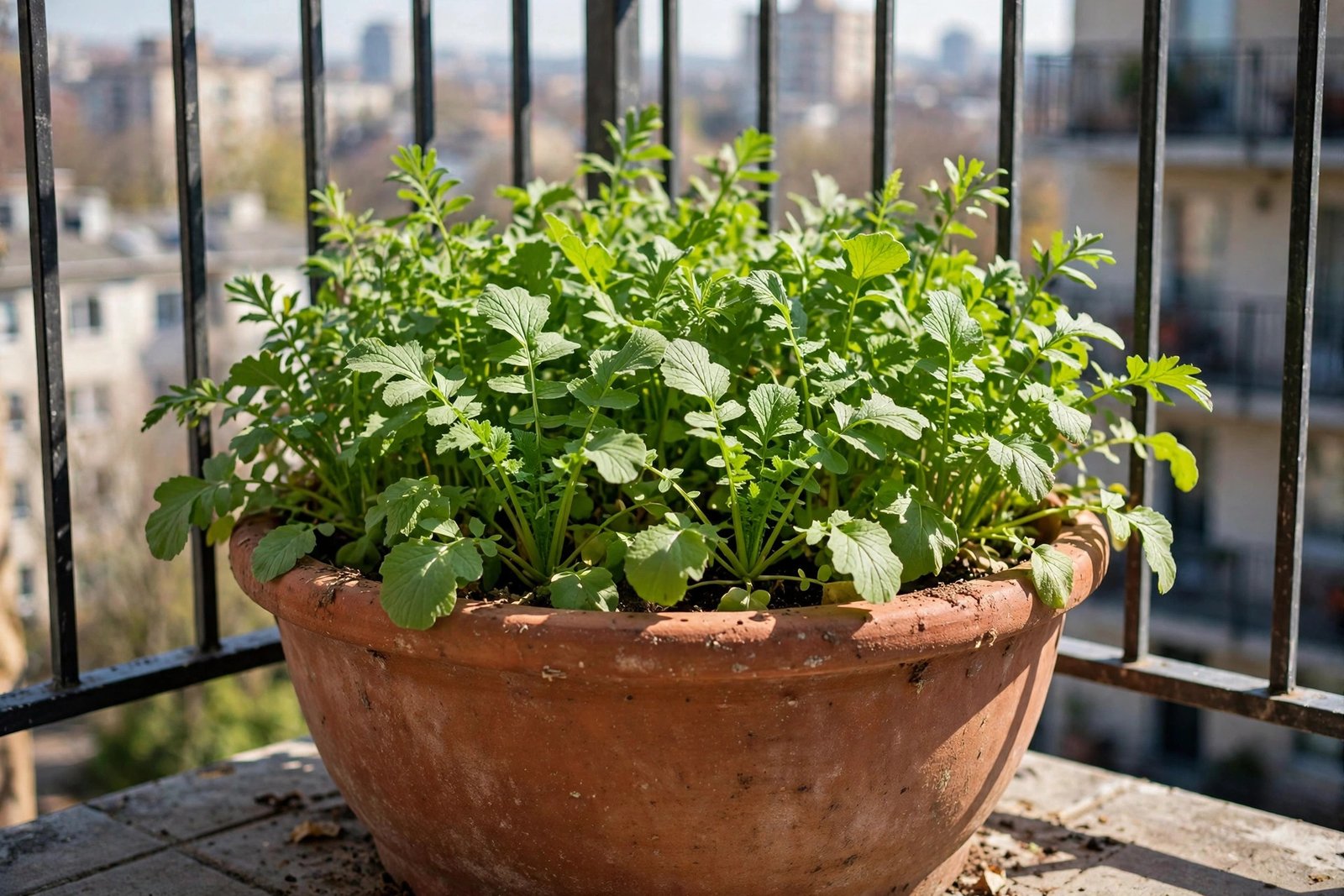
You don’t need a deep pot for radishes. Six inches (15 cm) of depth is the minimum; eight inches (20 cm) is the sweet spot. What matters more is width — a 12-inch (30 cm) wide bowl or a window box lets you sow a proper row or two, which means an actual harvest rather than three lonely radishes. My setup is a 14-inch (35 cm) trough on the balcony railing, and it holds two neat rows.
Drainage holes are non-negotiable, with a saucer underneath to protect the balcony floor. Radishes sit in damp soil for weeks, and without drainage you’ll get rot instead of roots. They’re one of the easiest wins on my list of vegetables that grow well in pots — if you only grow one thing this spring, make it these.
Soil: Keep It Loose and Stone-Free
Radishes swell underground, so the compost needs to be loose enough to let them push outward. Compacted or stony soil gives you forked, stunted roots — still edible, but sad-looking, and smaller than they should be. My mix is simple: two parts multipurpose compost to one part perlite or coarse sand, filled to about an inch below the rim so watering doesn’t wash soil over the edge.
Don’t use heavy garden soil in pots — it compacts into a brick within weeks. I use my standard DIY potting mix recipe with an extra handful of perlite for looseness, and the radishes have never complained. Skip the fertiliser at sowing time, too: rich soil grows magnificent leaves and disappointing roots.
Sowing: Half an Inch Deep, a Finger’s Width Apart
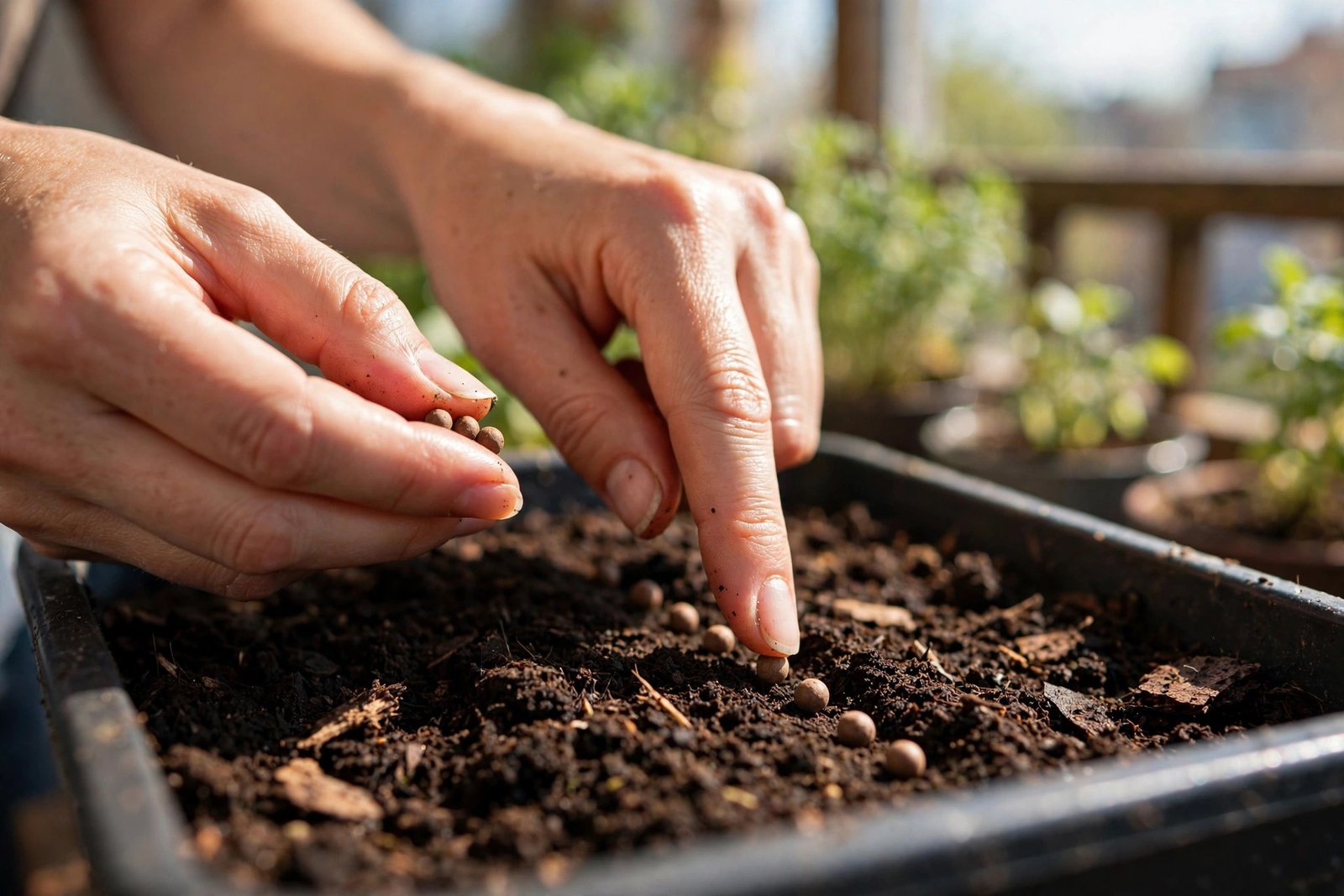
Sow direct, half an inch (1 cm) deep and about an inch (2.5 cm) apart. Press each seed in with a fingertip, cover lightly, and water gently with a fine rose — a heavy pour washes the seeds into clumps, and my very first attempt ended with every seed in one corner of the pot in what I can only describe as a radish traffic jam. Then put the pot in full sun: radishes want at least six hours of direct sun a day.
The real secret to a long harvest is succession sowing. One sowing gives you one flush of radishes over about a week. Sow a new small batch every two weeks from spring into early autumn and you’ll have a continuous supply. I keep a little dish of seeds by the back door as a reminder — every other Sunday, another row goes in.
Quick Tips:
- Sow radish seeds half an inch (1 cm) deep and an inch (2.5 cm) apart, direct in the pot.
- Thin seedlings to 2 inches (5 cm) apart once they have their first true leaves.
- Keep the compost evenly moist — drying out makes radishes woody and extra hot.
- Sow a new batch every two weeks from spring to early autumn for non-stop harvests.
- Pull radishes young, at about an inch (2.5 cm) across — don’t leave them to get big.
Thinning: The Hardest Part (Emotionally)
Once the seedlings have their first true leaves, thin them to two inches (5 cm) apart. I know — pulling up healthy seedlings feels wrong. But crowded radishes give you a forest of leaves and no roots at all, because each root needs space to swell. The first time I skipped thinning, I harvested what can only be described as red string.
Two things make it easier. First, sow thinly to begin with — it saves the guilt. Second, eat the thinnings. They’re peppery little microgreens, perfect scattered over a sandwich or a salad. Nothing wasted, and suddenly thinning feels like an early harvest.
Watering: Even and Steady
Even moisture is the difference between crisp, mild radishes and woody little firecrackers. Check the pot daily in warm weather — small containers dry fast, and a radish that dries out then gets flooded will often split. I water in the morning, enough that it drains from the bottom, and I skip only if the top inch of compost still feels damp.
Uneven watering is also behind most “why are my radishes so hot?” complaints. Heat plus dry spells concentrates the bite. A steadily watered radish pulled young is crunchy and pleasantly peppery; a stressed one will clear your sinuses. You’ve been warned — kindly.
Varieties I Actually Grow
You don’t need a dozen varieties. Three cover everything:
- Cherry Belle — the classic round red radish, ready in 22–25 days. Reliable, crunchy, and the one I recommend to every beginner.
- French Breakfast — oblong, red with a white tip, milder than Cherry Belle. My favourite for slicing into buttered bread with flaky salt, which is a shockingly good snack.
- Easter Egg II — a mix of pink, purple, and white roots. If you have kids, or you are a kid at heart, grow these. Pulling up a purple radish never gets old.
Harvest: Pull Them Young
Radishes are ready when their shoulders — about an inch (2.5 cm) wide — push up through the soil, usually three to four weeks after sowing. Don’t go by the packet date alone; pull one and taste it. That’s the real test, and it’s the best part of the whole process.
Don’t leave them in the ground hoping they’ll get bigger. Oversized radishes turn pithy, woody, and mouth-burningly hot — I’ve made this mistake more than once, always thinking “one more week.” It is never worth one more week. Pull them small and sweet.
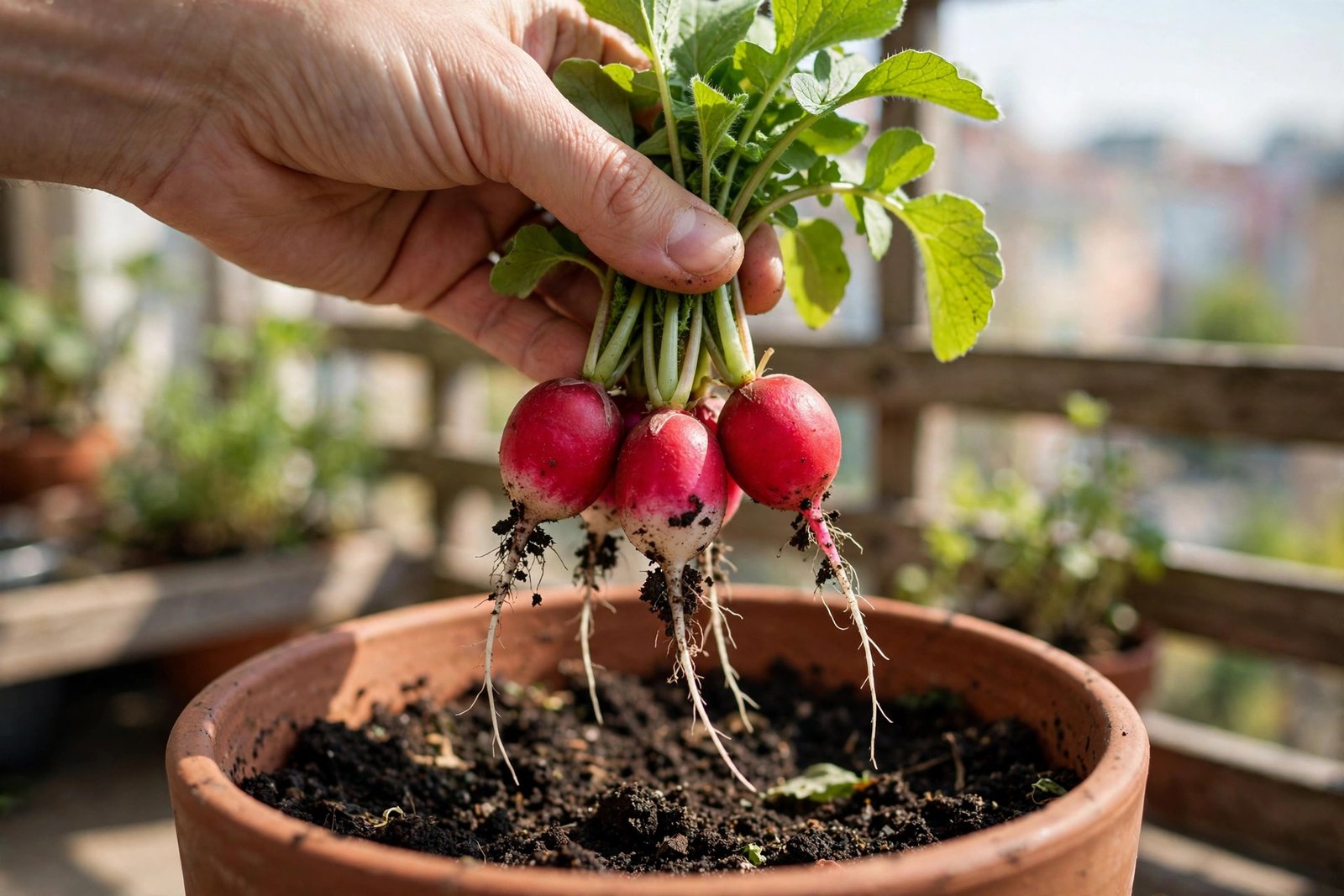
For storage, twist off the leafy tops first — tops left attached draw moisture out of the roots and they’ll go limp in a day. The radishes keep for about a week in the fridge in a damp bag or box. And don’t bin the leaves: they’re peppery and delicious wilted in butter with garlic, or blitzed into pesto. Waste nothing.
Your Questions, Answered
Can I grow radishes indoors?
It’s possible, but needy. Radishes want strong light — a genuinely sunny windowsill or a grow light running 12 or more hours a day. I’ve done a windowsill batch in February and they were leggy and slow compared to the balcony ones. If you have any outdoor space at all, even a railing, grow them there.
Why are my radishes all leaves and no roots?
The classic beginner heartbreak, and it’s almost always one of three things: sown too thick (thin to 2 inches apart), too much nitrogen fertiliser (which grows leaves at the expense of roots), or too much heat. Radishes bulk up their roots in cool weather, so sow in spring and autumn rather than the height of summer.
Why do my radishes taste painfully hot?
Heat, dry spells, and being left in the ground too long — usually all three at once. Grow them in the cool shoulders of the season, water evenly, and pull them young at about an inch across. A well-grown radish is crunchy with a pleasant peppery warmth, not a dare.
Can you eat radish leaves?
Yes, and you should. They’re peppery, like a milder rocket, and they’re my favourite use for thinnings. Wash them well (they can be a bit gritty), then sauté with garlic, stir into soup at the last minute, or blend into pesto with whatever nuts you have. The leaves from one trough make a very respectable side dish.
How late in the year can I sow?
Later than you’d think. In the UK and much of Europe you can sow into September, sometimes October if the autumn is mild — radishes shrug off light frosts. In the US, sow up to four to six weeks before your first expected frost for a fall crop. I sow my last batch around mid-September and I’m usually still pulling radishes in October.
Once you’ve pulled your first crunchy homegrown radish four weeks after sowing, something clicks — you realise you can actually do this. When you’re ready for the next step, cut-and-come-again salad greens grow in the same trough, and a radish-and-leaf salad you grew yourself in a month is a dangerous gateway into full balcony vegetable growing.