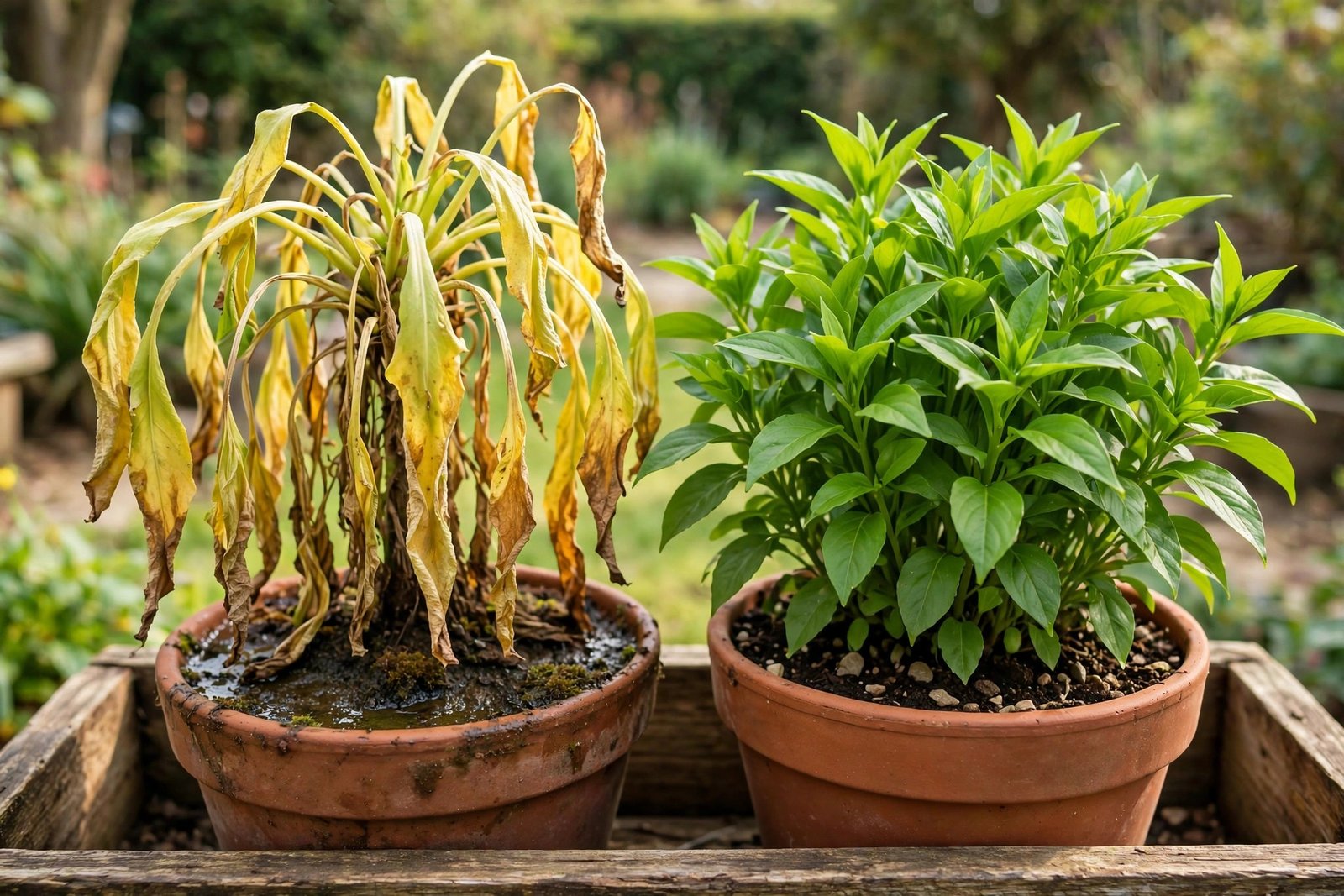
Here’s something that might sound harsh: most plant deaths are decided in the garden centre aisle, before the plant even gets home. Not by bad luck or a black thumb — by someone buying a plant that never stood a chance in their conditions, because they never read the label. Or read it and had no idea what any of it meant. (This happens repeatedly to many gardeners.)
Plant labels are genuinely useful. They’re a compressed instruction manual written by people who know the plant. Once you learn how to read a plant label properly, you’ll stop bringing home sun-lovers for your north-facing balcony and start choosing plants that actually fit your life. Here’s how to read the whole thing.
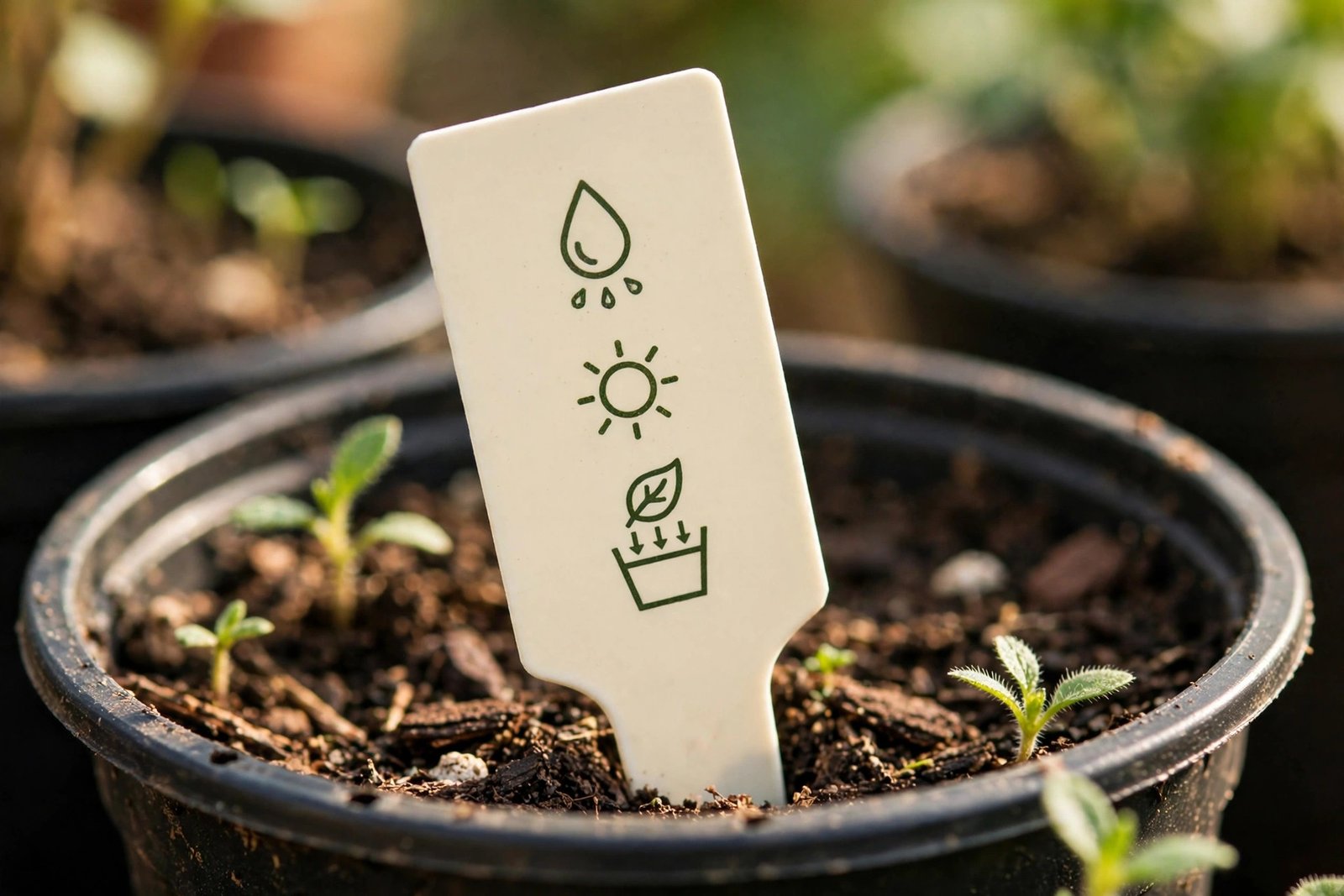
Quick Tips:
- The sun symbol is the single most important thing on the label — match it to your actual balcony conditions, not your wishes.
- Hardiness zones tell you if a plant survives your winter; container plants need extra protection beyond their rating.
- “Full sun” on a label assumes in-ground garden conditions — pots dry out faster, so container plants often want a touch more shade and water.
- Take a photo of the label before you throw it away; you’ll want that cultivar name later.
The Sun and Shade Symbols: Start Here
This is the bit that matters most, so let’s get it right. Labels use a small set of sun/shade terms, and they have fairly standard meanings:
- Full sun — 6 or more hours of direct sunlight per day. Think south-facing balcony, no shade. Tomatoes, peppers, most herbs, and lavender live here.
- Part sun / part shade — 3 to 6 hours of direct sun, or dappled light through the day. These two terms get used almost interchangeably and it drives everyone mad. Roughly: part sun leans toward the sunnier end, part shade toward the shadier end.
- Full shade — less than 3 hours of direct sun. Note this means shade, not darkness — most “shade” plants still want bright indirect light. Ferns, hostas, and impatiens are classic full-shade plants.
- Dappled shade — light filtered through leaves or a screen. Lovely for plants that scorch in harsh afternoon sun.
Here’s the catch: these ratings assume the plant is in the ground, where roots stay cool and moisture is buffered. In a pot on a sunny balcony, “full sun” plants can still struggle because their roots bake. A south-facing balcony gets blazing afternoon sun, and even cherry tomatoes appreciate a bit of afternoon shade in heatwaves. So read the sun symbol, then mentally adjust one notch kinder for containers. If you’re not sure how much sun your space actually gets, the guide on how much sunlight a balcony garden needs walks you through measuring it.
Common symbols: a full yellow sun for full sun, a half-shaded sun for part sun/shade, and sometimes a sun behind a cloud or a tree for shade. Different nurseries use slightly different icons, but the words are usually printed alongside.
Hardiness Zones and Temperature Ratings
You’ll see something like “Hardy to USDA zone 7” or “RHS H4” or “minimum −10°C (14°F).” This tells you the coldest winter the plant survives — in the ground.
Two things beginners miss. First, the zones differ by country: the US uses USDA zones, the UK uses RHS hardiness ratings (H1–H7), and much of Europe uses minimum-temperature bands. They roughly correspond, but check the system your label uses. Second — and this is the big one — pots are colder than the ground. Soil in the ground barely freezes a few inches down; a pot freezes through. A plant rated hardy to −10°C in the ground might die at −5°C in a pot on an exposed balcony.
A good rule: treat container plants as one to two zones less hardy than the label says, and have a plan for preparing your container garden for autumn and winter or overwintering tender plants indoors. A bay tree teaches this the hard way — the label said hardy, and it was, just not in a pot on a windy high-rise balcony in January.
Watering Icons and Moisture Needs
Labels usually describe water needs in words, sometimes with droplet symbols:
- Drought tolerant / low water — let the soil dry out between waterings. Lavender, rosemary, succulents. These are the plants for forgetful waterers.
- Average / moderate water — water when the top inch or two of soil is dry. Most houseplants and vegetables live here.
- Moist / keep moist — likes consistently damp (not soggy) soil. Ferns, many shade plants. Don’t confuse “moist” with “waterlogged” — drainage still matters.
- Bog / water plant — wants wet feet. Rare on a balcony, skip unless you fancy a mini pond.
The droplet icons usually show one, two, or three drops corresponding to low, medium, and high water needs. Simple once you know. And if you’re constantly second-guessing yourself, the piece on overwatering versus underwatering will help you read what the plant itself is telling you.
Size, Spacing, and Growth Habit
Labels list a mature height and spread — e.g. “H 60 cm (24 in), S 45 cm (18 in).” Read these as promises, not suggestions. That cute little 4-inch tomato seedling labelled “indeterminate, 6 ft” will absolutely try to become six feet tall on your balcony. This is how people end up with a jungle.
For containers, the mature size tells you the pot size. A plant with a 45 cm spread wants at least a 12-inch (30 cm) pot. For vegetables, spacing guidance (“thin to 6 inches apart”) matters too — cramming is the classic beginner error; the mistakes beginners make was written with photographic-level regret about overcrowded lettuce.
Also watch for words like trailing, climbing, compact, dwarf, and bush. On a small balcony, “compact” and “dwarf” are magic words. A dwarf cultivar like ‘Patio Snacker’ cucumber or ‘Tiny Tim’ tomato was bred for exactly your situation.
The Fine Print Worth Reading
Bloom time / harvest time. “Flowers June–September” or “harvest 60 days from sowing” helps you plan. For vegetables, “days to maturity” counts from transplanting (for seedlings) or sowing (for direct sow) — it’s approximate, but useful.
Annual / biennial / perennial. Annuals live one season (most vegetables, petunias). Biennials take two years (parsley is technically biennial, though most of us grow it as an annual). Perennials come back yearly — but remember the container hardiness caveat above.
Cultivar name. The bit in single quotes, like lavender ‘Hidcote’ or basil ‘Genovese’. Cultivars are specific bred varieties, and the name tells you exactly what you’re getting. Two “cherry tomato” plants can behave completely differently; ‘Tiny Tim’ stays 12 inches tall while an unnamed cherry type might hit six feet. When a plant does brilliantly for you, the cultivar name is how you find it again — which is why photographing every label is a habit worth building.
Care notes. Little lines like “deadhead to prolong flowering,” “cut back in spring,” or “protect from frost” are genuinely worth following. They’re the distilled experience of the grower.
The Latin name. Ocimum basilicum is basil in every language on earth. When you’re shopping in a foreign garden centre or searching online, the Latin name cuts through all confusion. You don’t need to memorise them — just know they’re there when common names fail.
How to Read a Plant Label: Decoding a Real Label, Line by Line
Here’s a walk-through of a typical herb label — say, rosemary:
Rosmarinus officinalis ‘Tuscan Blue’ — the Latin name plus cultivar
Full sun — 6+ hours direct sun; on a balcony this means the sunniest spot
Hardy to −10°C (14°F), USDA zone 8 — survives mild winters in the ground; in a pot on the balcony, shelter it below freezing
Low water; well-drained soil — let it dry between waterings, hates wet feet
H 90 cm (36 in) — it will get big; give it a 12-inch pot minimum and prune
Evergreen perennial — keeps its leaves year-round, comes back every year
That’s the whole care guide, right there on a 2-inch piece of plastic. Six lines, and a gardener knows where to put it, how to water it, what pot it needs, and whether it’ll survive winter.
What Labels Don’t Tell You
Labels are honest but incomplete. They won’t tell you that “full sun” in Arizona and “full sun” in Scotland are different experiences, that your specific balcony has a wind tunnel effect, or that the potting mix it came in is mostly peat and will need replacing. They also tend toward optimism — “easy to grow!” on a plant that’s easy to grow in the right conditions. Even once you know how to read a plant label like a pro, remember it is the starting point; your eyes on the actual plant are the rest. Yellow leaves, legginess, drooping — the plant will tell you what the label couldn’t.
Your Questions, Answered
What does “part shade” actually mean in hours?
Roughly 3 to 6 hours of direct sun per day, or bright indirect light all day. If your balcony gets morning sun until about noon and shade after, that’s classic part shade. When in doubt, most “part shade” plants tolerate a bit more sun better than a bit more shade.
Why do some labels show a sun symbol with a red cross through it?
That means “no direct sun” — bright indirect light only. Common on ferns, calatheas, and other shade-lovers. A north-facing windowsill or a spot a few feet back from a bright window is usually perfect.
Do I need to worry about hardiness if I bring plants indoors for winter?
Less so, but the label still helps you decide which plants are worth the effort. A tender perennial like a lemon verbena is worth overwintering indoors; a cheap annual like basil usually isn’t — just sow fresh in spring. The hardiness rating tells you which camp a plant falls into.
The label says “moist soil” — how moist is moist?
Think “wrung-out sponge,” not “puddle.” Water thoroughly, let excess drain, and water again when the top inch feels dry-ish but the soil below is still damp. If water pools on the surface or the pot feels heavy days later, that’s too moist — check your drainage.
Are the symbols the same in every country?
Mostly, but not entirely. Sun, water, and temperature icons are fairly universal, but hardiness systems differ (USDA zones vs RHS ratings vs minimum temperatures), and some European labels use their own pictograms. The words printed next to the symbols are your backup — read those when the icon is unfamiliar.
Next time you’re in a garden centre, slow down at the label rack. Thirty seconds of reading can save you a season of frustration — and it turns shopping from guesswork into something that feels almost like cheating. The information was there all along; we just had to learn the language.