Many gardeners own a bulb planter. Say that again slowly: a bulb planter. A metal tube with a handle, designed for planting bulbs in open ground, and used exactly zero times. Bought in a first spring, swept up in the excitement of a garden center’s “everything 20% off” sale, along with a kneeling pad (the balcony is concrete; standing is the norm), a soil thermometer (for basil, not orchids), and a dibber set unidentifiable a year later.
Here is what nobody tells beginners: gardening companies make most of their money selling you tools for problems you don’t have. A balcony gardener needs a fraction of what a garden center wants to sell. These days, an entire toolkit fits in one small crate. These are the ten gardening tools that earned their place.
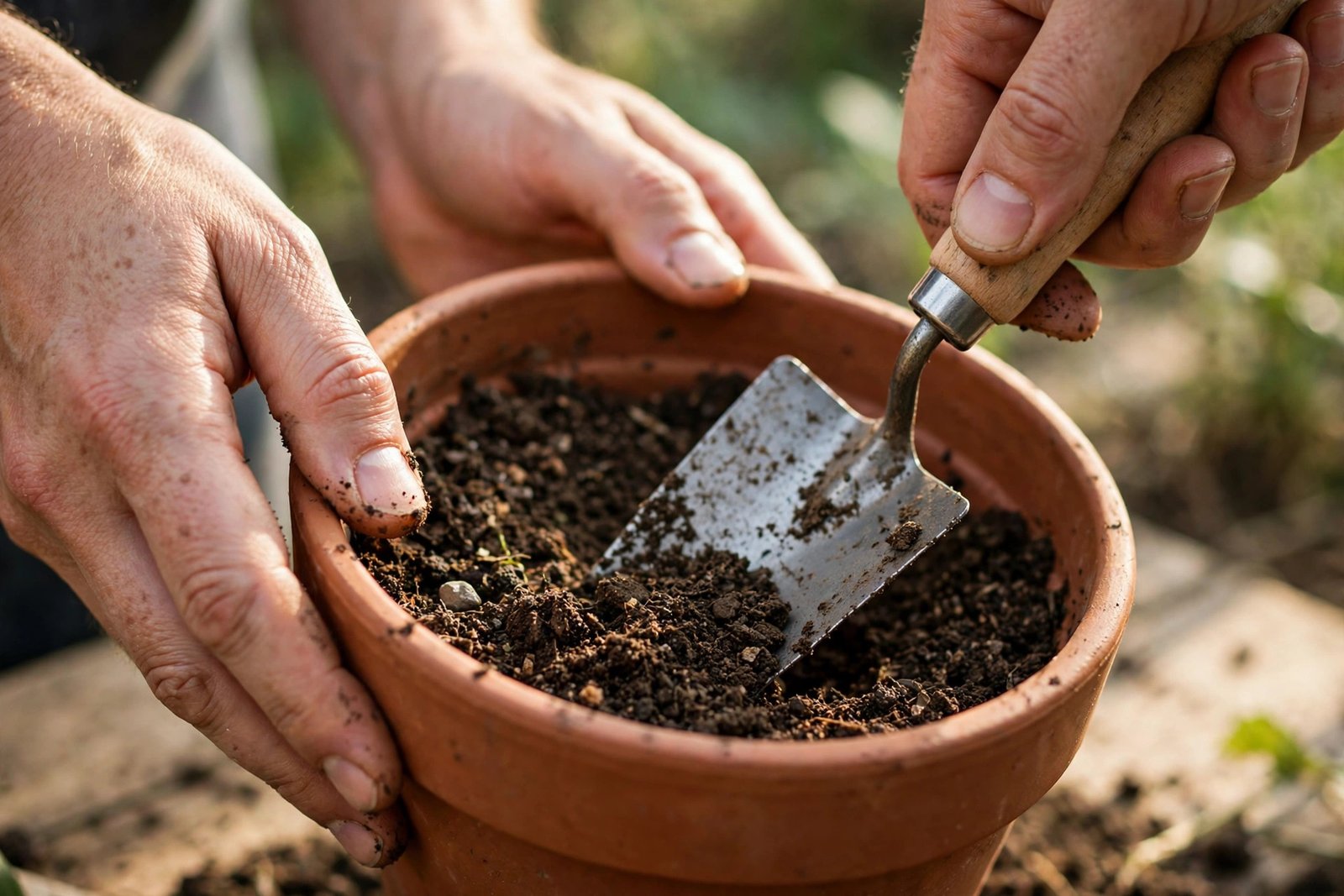
1. A Proper Hand Trowel
If you buy one thing from this list, make it this. A hand trowel digs planting holes, scoops soil, mixes fertilizer, transplants seedlings, and pries the occasional stubborn root ball out of a pot. A good trowel plants literally hundreds of plants.
Spend real money here — this is the tool where cheap genuinely costs more. A $4 stamped-metal trowel will bend the first time it meets compacted soil. Look for a one-piece forged steel or cast aluminum trowel with a comfortable grip, around $12–18. A quality trowel lasts for years and works as well as the day it was bought.
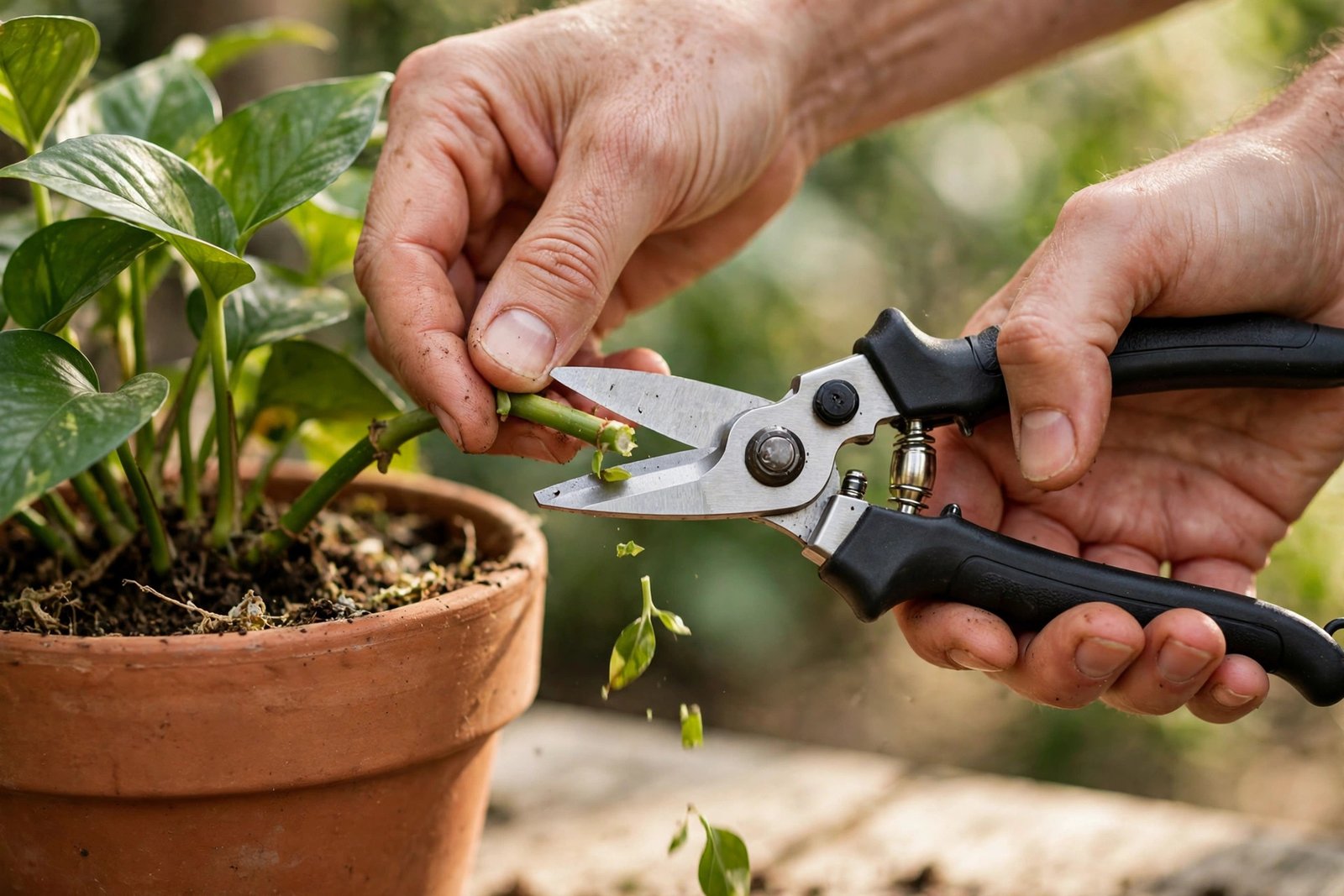
2. Bypass Pruners (Secateurs)
Pruners cut stems cleanly for harvesting, deadheading, pruning, and taking cuttings. Bypass pruners — where two curved blades slide past each other like scissors — are the right type; anvil pruners crush stems and invite disease.
You don’t need the $60 professional pair, but avoid the $8 bargain-bin ones with loose pivots. Something in the $20–30 range will hold an edge for years. Keep them clean — wipe the blades with rubbing alcohol between plants if you’re cutting anything diseased — and oil the pivot occasionally.
3. A Watering Can With a Rose
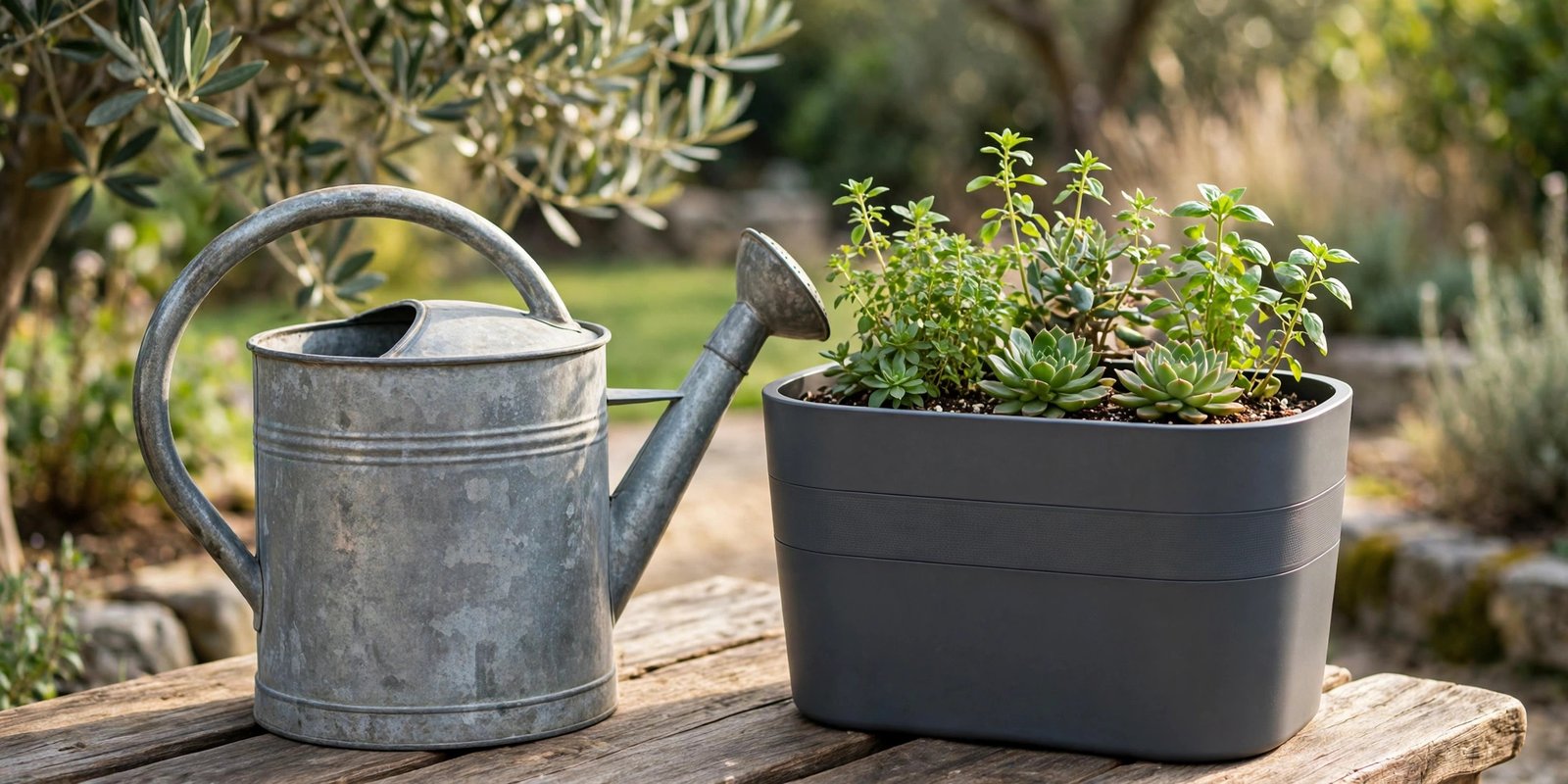
You need to water plants, obviously, but the rose — the sprinkler head attachment — is what makes a watering can a precision tool instead of a flood. A gentle shower from a rose won’t blast seedlings out of their soil, erode potting mix, or bruise delicate leaves. Take the rose off and you get a direct stream for deep-watering big pots.
Size matters on a balcony. A 2-gallon (7.5-liter) can is the sweet spot: big enough that you’re not refilling constantly, small enough to carry when full. For the full debate on cans versus automated options, see watering cans vs self-watering pots.
4. Gloves You Will Actually Wear
The best gloves are the ones you put on. Thick leather gauntlets protect against thorns but are so clumsy you’ll take them off to do anything fiddly — which defeats the purpose. For balcony gardening, lightweight nitrile-coated fabric gloves do the job well: grippy enough to handle wet pots, thin enough to tie twine and pick up seeds, and cheap enough (around $5–8 a pair) that wearing them out is no tragedy.
Keep two pairs. One lives by the door for quick jobs, one lives with the tool crate. Gloves protect against blisters during big repotting sessions and keep potting mix out from under your nails.
5. A Hand Fork (Cultivator)
The trowel’s scrappy little sibling. A hand fork loosens compacted soil surfaces, scratches fertilizer into the top inch of potting mix, weeds small pots, and aerates soil without disturbing roots. Whenever the top of a pot goes hard and crusty — and it will, especially with frequent watering — a quick going-over with the hand fork restores drainage and lets water actually soak in instead of running off.
This is a tool where the cheap ones are fine. A basic three-pronged hand fork for $6–10 does the job perfectly. A hand fork sees use almost daily in summer, usually for thirty seconds per pot while checking on things. It’s the definition of a small tool that earns its keep.
Quick Tips:
- Spend money on the trowel and pruners; go cheap on the hand fork and gloves.
- A 2-gallon (7.5-liter) watering can with a rose head is the balcony sweet spot.
- Keep a spray bottle of rubbing alcohol with your tools to disinfect pruners between plants.
- Store everything in one crate or bucket so tools never migrate around the flat.
- Buy twine, labels, and a marker once — running out mid-season is absurdly annoying.
6. Sharp Scissors or Snips
Pruners are for stems; scissors are for everything else. Harvesting herbs, snipping salad leaves, cutting twine, opening seed packets and compost bags, trimming dead leaves — garden scissors get reached for constantly. Any sturdy pair works; micro-tip snips suit precision work like deadheading, and a regular pair of household scissors handles the rough stuff.
Keep them out of the kitchen drawer. A dedicated pair with green handles lives in the tool crate, and the house rule is that green handles never cut anything but plants.
7. A Spray Bottle
A simple trigger spray bottle, 1-liter or so, is absurdly useful. Misting seedlings, applying diluted liquid feed as a foliar spray, spritzing the undersides of leaves to discourage spider mites, dampening the surface when sowing tiny seeds — the list goes on. It’s also how you apply most homemade pest remedies without drenching the whole plant.
Buy one with an adjustable nozzle (mist to stream) and label it clearly. If you ever use it for anything other than water, never use that bottle for plain water again — keep one bottle for water and one for treatments.
8. Plant Ties and Supports
Plants need holding up, and improvisation only goes so far before your tomato is flopping across three pots. Soft garden twine is the all-rounder: tie tomatoes to canes, secure climbing beans to trellises, bundle herbs for drying. A $5 ball lasts a whole season or more.
Add a pack of bamboo canes — 3-foot (90 cm) ones for most pots, taller for tomatoes — and some Velcro plant ties for anything you adjust often. The Velcro ones are brilliant for tomatoes because you can loosen them as stems thicken; twine tied too tight will strangle a growing stem — a girdled pepper plant in year two is a classic lesson. Check ties monthly and loosen anything digging in.
9. A Soil Scoop or Old Jug
This sounds ridiculous until you’ve tried filling twelve pots with a trowel. A dedicated scoop — or a cut-down plastic milk jug, the practical favourite — moves potting mix from bag to pot fast and with minimal spilling. When you’re repotting or filling a batch of containers in spring, a scoop turns a forty-minute chore into a fifteen-minute one.
The milk-jug version is free, has a handle, and pours neatly. Sometimes the best tool is rubbish with a second career.
10. Labels and a Permanent Marker
You will not remember what you planted. This is a promise. Every spring, gardeners tell themselves they’ll remember which pot is ‘Genovese’ and which is Thai basil; every summer they’re squinting at seedlings playing guessing games. Labels fix this for pennies.
Wooden or plastic plant labels plus a fade-resistant permanent marker — the ordinary kind fades to illegibility by July. Write the variety and the sowing date. Future you, staring at six identical green seedlings, will be enormously grateful.
What NOT to Buy (My Regret Shelf)
The bulb planter, obviously. But also: the kneeling pad (balcony gardeners stand or sit on chairs), the soil thermometer (poke your finger in; if it feels warm, it’s fine), the fancy dibber set (a pencil makes the same hole), the long-handled full-size spade (for what? your pots are 12 inches deep), and the 47-piece tool set in a canvas roll (you will use four of them).
The pattern in the regrets: tools designed for in-ground gardening, tools that duplicate something already owned, and tools bought on sale without a specific job waiting. Before buying anything, ask: what exact task will this do, and what is currently used for that task? If the answer is “nothing, but it looks useful,” put it back.
Storing It All in a Small Space
Ten tools plus twine, labels, feed, and a watering can still need a home, and “scattered around the balcony” isn’t one. Everything lives in a single plastic crate (about 16 x 12 inches / 40 x 30 cm) tucked under the potting shelf, with the watering can beside it. One crate. That’s the whole system.
The crate matters more than it sounds. When tools have a home, you put them back. When you can find them, you actually do the little jobs — the deadheading, the tying-up, the quick feed — instead of postponing them because the scissors have vanished into the flat again.
Clean tools before they go back in the crate: knock soil off the trowel, wipe pruner blades, empty the spray bottle. It takes thirty seconds and doubles tool life. Once a year, oil the pruner pivot, sharpen anything dull, and replace the gloves. That’s the entire maintenance program.
Gardening Tools: Frequently Asked Questions
How much should a beginner spend on tools total?
Around $60–80 for everything on this list if you shop sensibly — more like $40 if you thrift the watering can and use a milk jug as a scoop. Spend the most on the trowel ($12–18) and pruners ($20–30); go budget on everything else. This kit will last years, so the per-season cost is tiny. For pots and planters on the same budget philosophy, see the best budget-friendly planters.
Can I just use kitchen scissors and a spoon instead of garden tools?
For the first month, honestly, yes — a spoon digs a hole and kitchen scissors cut a stem. But spoons bend, kitchen scissors go blunt on woody stems, and you’ll quickly spend more time fighting your tools than gardening. Upgrade the trowel and pruners first; those are the two where proper tools genuinely change the experience. Everything else can wait until you feel the lack.
What’s the single most important tool for container gardening?
The watering can, practically speaking — you’ll use it more than everything else combined. But the trowel is the one to rescue from a fire. Watering keeps plants alive; the trowel is how you plant, repot, feed, and fix things. If only two tools could be kept, it would be those, plus a pair of gloves.
How do I clean and maintain pruners?
Wipe blades with rubbing alcohol after cutting anything diseased, and give them a general clean every few weeks in season. A drop of oil on the pivot keeps the action smooth. When they start tearing rather than cutting, sharpen with a small sharpening stone or take them to a garden center that offers sharpening. Well-maintained pruners last a decade; neglected ones last two seasons.
Are expensive brands worth it for beginners?
For the trowel and pruners, mid-range from an established brand is the sweet spot — you get proper steel and a warranty without paying for professional features you’ll never use. For everything else, cheap is fine. The priciest tool isn’t better if you don’t know what you’re doing with it yet; buy decent, learn, and upgrade only the things you wear out. Wearing a tool out is the sign you chose well.
So that’s the whole kit: ten gardening tools, one crate, under eighty dollars, zero bulb planters. Everything in the garden was planted with these ten things. They are enough. Now go get soil under your nails.