
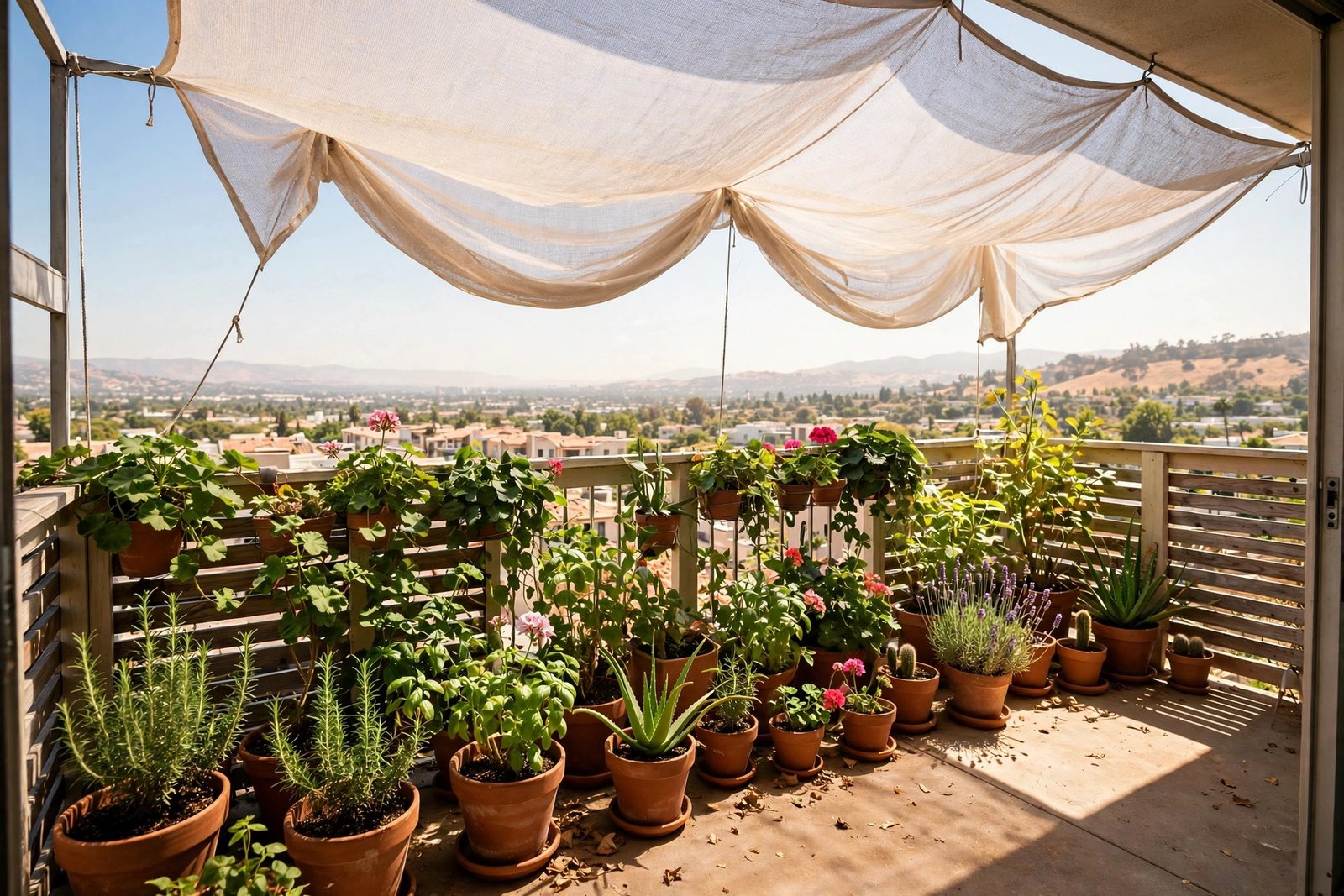
One brutal summer nearly ends many a balcony garden: nine days over 95°F / 35°C, a top-floor balcony turned into a brick oven, and an evening homecoming to cucumbers collapsed flat like deflated balloons, basil crisped at the edges, and a tray of seedlings that had simply given up and died standing up. Standing there with a watering can feeling like the world’s worst plant parent, the only useful move is to start learning how heat actually affects container plants instead of just panicking with water.
Four summers later, a prepared balcony sails through heatwaves that used to devastate it. Not because of fancy equipment — most of what works is free or nearly free — but because heat protection is about preparation and water management, not heroics. Here’s everything to do before and during extreme heat, roughly in order of impact.
Why containers suffer more than garden beds
A plant in the ground has metres of soil buffering its roots from temperature swings. Your potted tomato has a few litres of dark potting mix inside a container that absorbs heat all day. On a sunny balcony, pot surfaces can hit 120°F / 49°C — hot enough to literally cook the fine roots pressed against the pot wall. That’s why container plants wilt in heat that garden plants shrug off: their roots are being slow-roasted.
Dark plastic pots are the worst offenders. A kitchen thermometer on one August afternoon tells the story: black plastic hit 118°F / 48°C while a light-coloured ceramic pot in the same spot stayed under 100°F / 38°C. If you’re buying new containers, light colours are genuinely worth it for hot balconies — more on this in choosing the right pots and containers.
Wind makes everything worse too. Balconies are windier than ground level, and hot wind strips moisture from leaves faster than roots can replace it. A plant that would be fine at 95°F in still air can collapse at the same temperature in a hot wind.
Before the heatwaves: the preparation checklist
Heatwaves are forecast days in advance, which gives you a precious preparation window. When three or more days over 90°F / 32°C are coming, run through this list:
Water deeply the evening before. Soak every pot until water runs freely from the drainage holes. Well-hydrated soil and plants handle the first hot day far better than ones going in already dry. Evening watering also means less evaporation loss than morning watering in extreme heat.
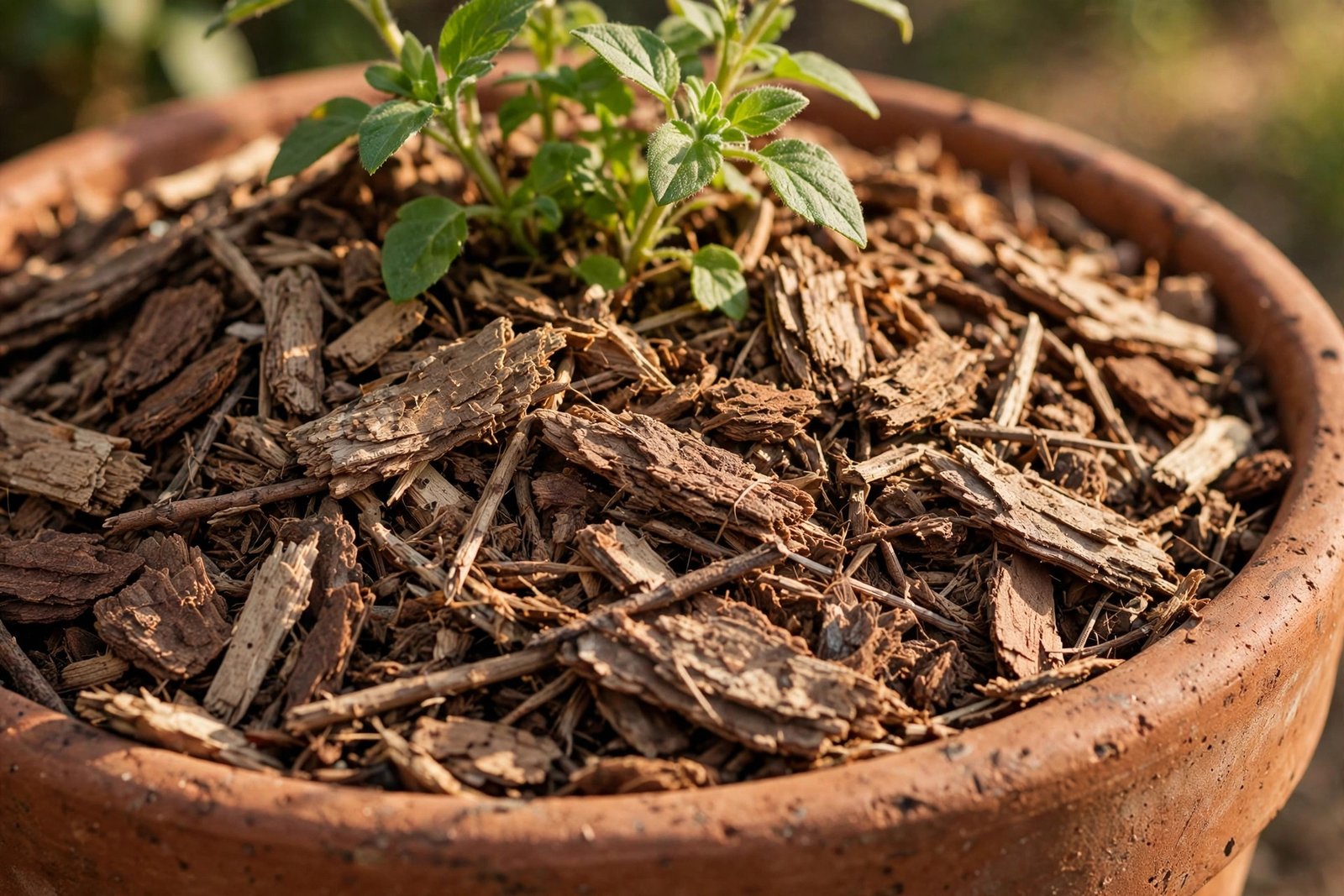
Mulch everything. A 2-inch / 5 cm layer of mulch on the soil surface — straw, wood chips, compost, even shredded newspaper — can cut moisture loss by a third or more. It also keeps the soil surface cooler. Mulching tomatoes and cucumbers every June as a matter of routine is the single highest-impact heat preparation.
Group pots together. Clustered pots shade each other’s sides, cutting that root-cooking effect dramatically. Pull everything into the shadiest corner of the balcony into a tight group, with the most heat-sensitive plants (salad greens, young seedlings) in the middle of the huddle. It looks messy for a week. The plants don’t care about aesthetics.
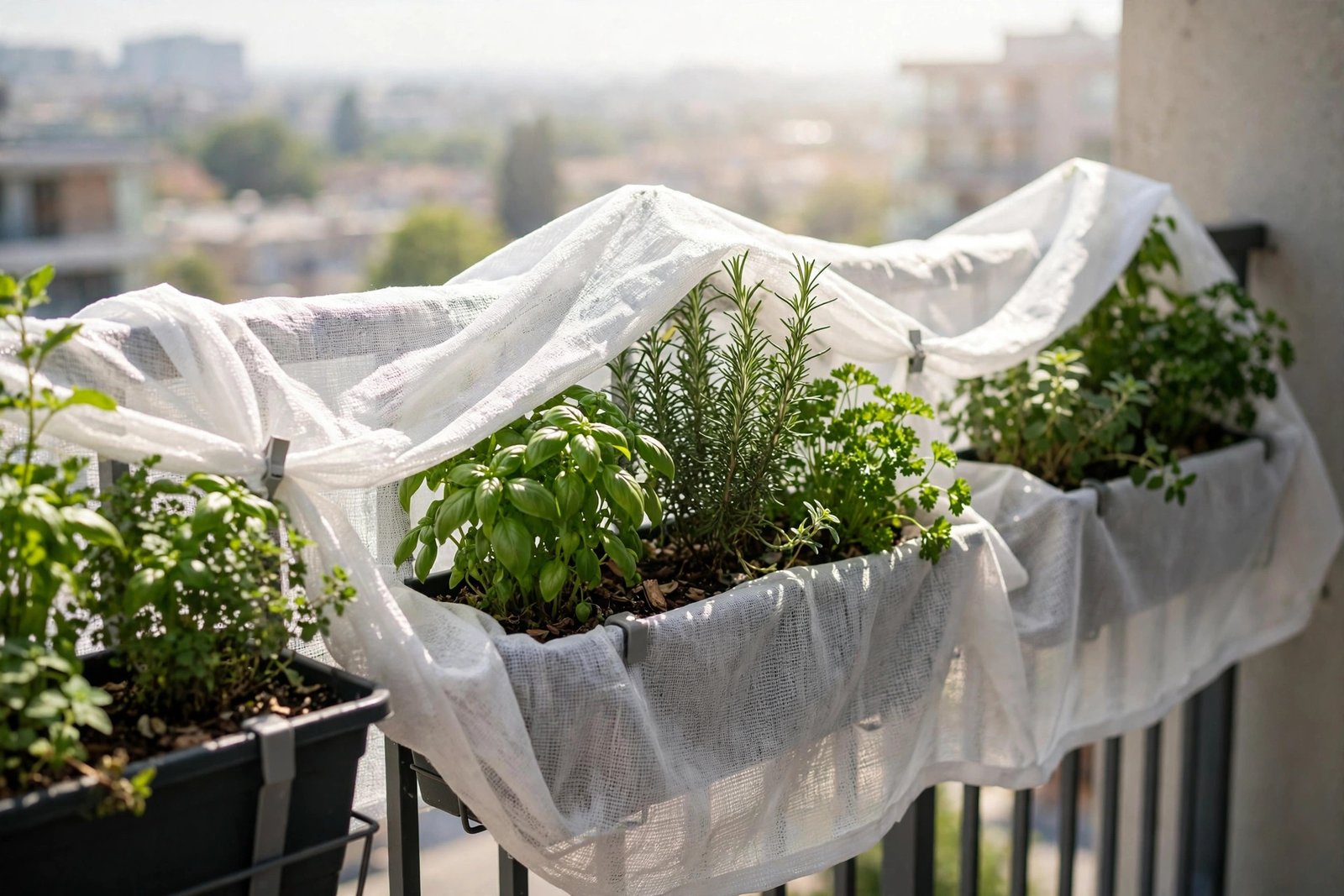
Set up shade. A piece of shade cloth (30–50% density) draped over canes or the railing takes the brutal edge off afternoon sun. No shade cloth? A white bedsheet works surprisingly well — white reflects heat while still letting light through. Rig it with clothes pegs and string — it takes ten minutes. Focus shade on the afternoon sun side; morning sun is gentler and plants still need light.
Fill saucers and self-watering reservoirs. This is the moment self-watering pots earn their keep. Top up every reservoir to the brim. For regular pots, leaving an inch of water in saucers during a heatwave is fine — normally the advice is to avoid soggy saucers (see overwatering vs underwatering), but in extreme heat the plant will drink it within hours.
Quick Tips:
- Water early morning or late evening in heatwaves — midday watering loses half to evaporation and can scorch wet leaves
- Wilted in the afternoon sun but recovered by evening is normal; wilted in the cool morning means water immediately
- Move small pots indoors or into full shade for the worst days — there’s no shame in a tactical retreat
- Skip fertilizer entirely during heatwaves; stressed roots can’t use it and salts build up in hot, dry soil
During the heatwave: daily tactics
Water twice a day if needed. In serious heat, 12-inch / 30 cm tomato pots need water morning and evening. The test: push your finger two inches into the soil. Dry at that depth means water now, regardless of what the schedule says. Small pots (under 8 inches / 20 cm) may need three waterings a day — honestly, in a heatwave moving small pots into the shade beats trying to keep up with watering them in full sun.
Water the soil, not the leaves. Wet leaves in blazing sun can scorch, and damp foliage overnight in heat invites fungal problems. Aim the can at the base. If you must cool plants down midday, a light misting of the air around them (not a drenching) gives brief relief through evaporation — but it’s a comfort measure, not a substitute for soil watering.
Don’t feed, don’t repot, don’t prune hard. All three stress plants, and stressed-plus-hot is a bad combination. Pause the entire fertilizing routine when temperatures pass 95°F / 35°C and resume when the heat breaks. The plants won’t starve in a week; they might die if you push them.
Watch the most vulnerable first. The heatwave casualty ranking goes: seedlings and new transplants (die first), salad greens and spinach (bolt and turn bitter), cucumbers (wilt dramatically but usually recover), basil (leaf edges crisp), then tomatoes and peppers (complain loudly, survive). Prioritize your watering and shade accordingly. If you can only save some plants, save the ones that can’t be replaced — a mature tomato plant is worth more than a tray of radish seedlings you can resow in September.
Reading heat stress: what’s normal and what’s an emergency
Some wilting in afternoon heat is normal and not a crisis. Plants wilt to reduce water loss — it’s a defense mechanism. The key test is the morning check: if the plant has perked up by morning, it coped. If it’s still wilted in the cool of the morning, it needs water immediately and possibly shade.
Real emergency signs: leaves that are crispy and brown (not just limp), stems that have gone soft and mushy at the base, or soil that has shrunk away from the pot edges (it’s so dry it’s become hydrophobic — water will run straight through without soaking in). For hydrophobic soil, set the whole pot in a bucket of water for 20–30 minutes and let it soak from the bottom. Top-watering a hydrophobic pot just wastes water out the drainage holes.
Blossom drop on tomatoes and peppers during extreme heat is frustrating but normal — most varieties won’t set fruit above about 90°F / 32°C. The flowers will come back when temperatures drop. Don’t rip the plant out in despair; many gardeners nearly do and would miss the enormous September harvest that follows.
After the heatwave: recovery
When temperatures drop back below 85°F / 29°C, resist the urge to immediately “make up for it” with extra water and fertilizer. Return to normal watering first. Remove genuinely dead leaves (brown and crispy, not just pale) so the plant isn’t wasting energy, but leave anything that’s still green — even sad-looking green leaves are photosynthesizing.
Resume feeding about a week after the heat breaks, at half strength for the first feed. A seaweed tonic at this point is gentle and helps with stress recovery. Then it’s just patience. Most established container plants bounce back within two weeks, and you’ll often get a flush of new growth as if the plant is making up for lost time.
One lasting change after a summer like that: keep a “heatwave kit” in the balcony storage box from June onwards — shade cloth, clothes pegs, string, a spare mulch bag, and a big watering can. When the forecast turns scary, fifteen minutes of preparation beats scrambling.
Quick Answers to Common Questions
Should I move all my plants indoors during a heatwave?
Small pots and heat-sensitive plants (seedlings, salad greens, ferns), yes — bring them into the coolest room for the worst 2–3 days. Big established plants like tomatoes are better off staying put with shade and water; moving a large tomato plant usually damages it more than the heat would. Think of it as triage, not evacuation.
Is it okay to water in the middle of the day during extreme heat?
If a plant is wilting badly and the soil is dry, water it immediately regardless of the time — a thirsty plant matters more than perfect technique. But as a routine, stick to morning and evening. Midday watering evaporates fast, and cold water on baking-hot roots is a shock. The ideal is deep watering in the cool hours so plants face the hot day fully hydrated.
Will misting my plants help in a heatwave?
Briefly, and only the air around them. Misting cools through evaporation for maybe 20 minutes on a dry, windy balcony; in humid heat it does almost nothing and can encourage fungal disease on wet leaves. It’s pleasant for you and harmless in moderation, but it’s not a heat strategy — shade, mulch, and soil moisture are.
My plant’s leaves turned white/pale after the heatwave. What happened?
That’s sunscald — leaves that developed in milder conditions got bleached by intense sun and heat. Pale, papery patches on the sun-facing side are the signature. The damaged leaves won’t recover, but new growth will be adapted to the stronger light. Provide a bit of shade for a week while the plant adjusts, and don’t prune all the damaged leaves at once — they’re still protecting the stems beneath.
Do I need to water succulents more in a heatwave?
Slightly more, but don’t drown them — this is where most succulent casualties happen. Succulents are built for heat; what kills them in heatwaves is usually well-meaning overwatering that rots their roots. Water when the soil is fully dry as usual, maybe a day earlier than normal, and make sure their pots drain freely. They’re the lowest-maintenance plants on a hot balcony, which is exactly why they’re worth keeping around.
Heatwaves are stressful for gardeners too — nobody enjoys watching their plants suffer. But a prepared balcony garden is remarkably resilient. Shade, mulch, deep water, and the discipline to leave stressed plants alone will carry you through the worst of it. And when the cool evening finally comes and the tomatoes are still standing, watering them back to life is the best possible end to a hard day.

2 Comments on “How to Protect Balcony Plants During Summer Heatwaves”