
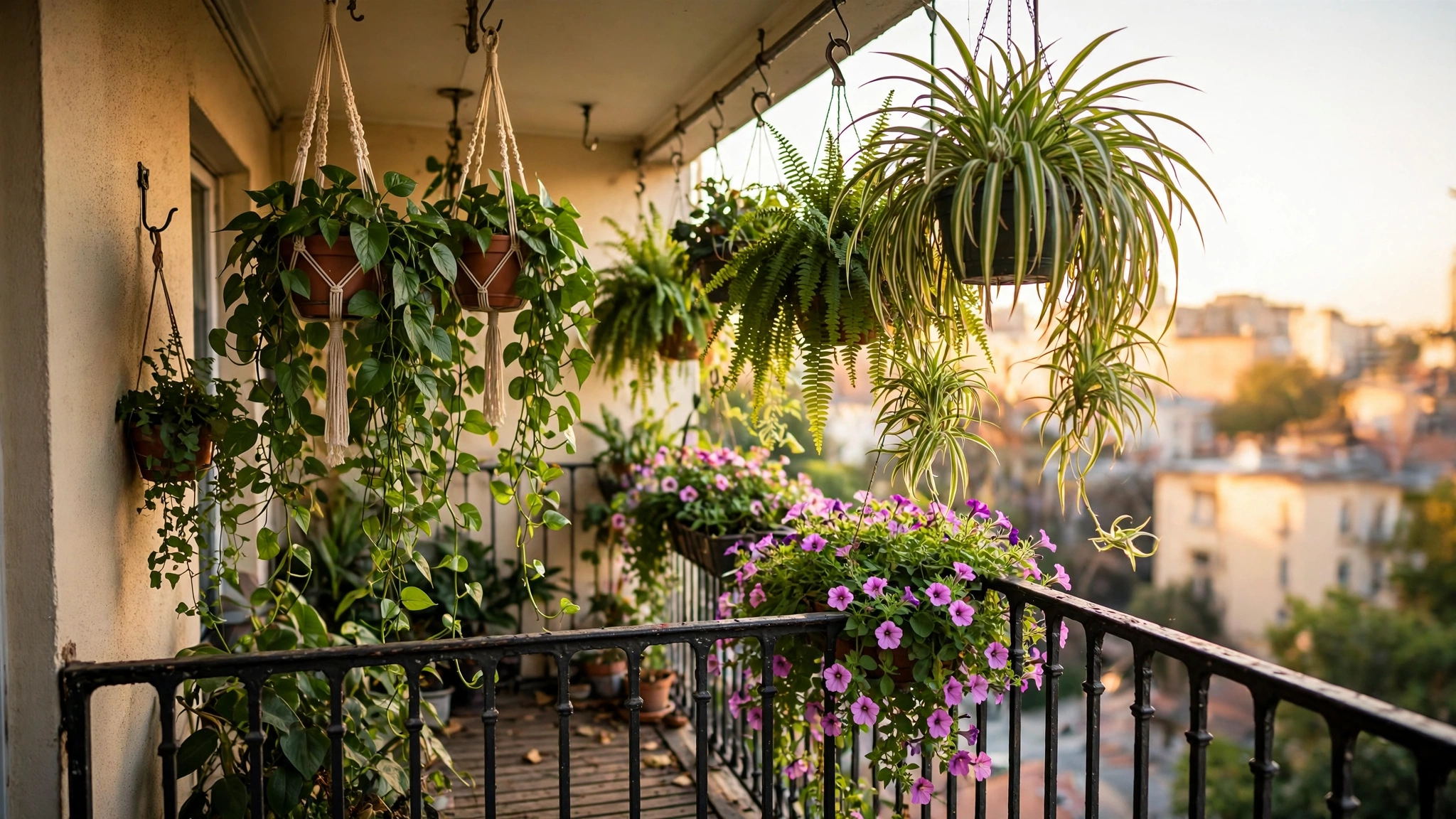
My balcony is four feet wide and ten feet long — a corridor with a view. For the first year, every pot I owned sat on the floor, which meant never actually sitting out there. Then a friend gave me a hanging pothos. One hook in the ceiling beam, and within a month it trailed down like a green waterfall. That one basket taught me: the best hanging plants for small balcony spaces aren’t decoration, they’re square footage you didn’t know you had.
Three years of hanging, killing, rescuing, and re-hanging later, here are the ten I keep coming back to, with honest notes on light, watering, and why each earns its hook.
Before You Hang Anything: The Hardware Basics
A hanging basket full of wet soil is shockingly heavy. A 10-inch (25 cm) basket, freshly watered, can weigh 5–7 kg (11–15 lbs) — a detail I skipped when I hung my first spider plant from a cheap adhesive ceiling hook. It held for two weeks. Then, at 2 a.m.: a crash, a cascade of soil, and a very flat spider plant. Before you pick the best hanging plants for small balcony displays, sort the hardware. The hook matters more than the plant.
Where to hang: a solid ceiling beam or joist with a proper screw hook (never a stick-on one), a wall-mounted bracket arm, or an S-hook looped over a sturdy metal railing. No beam? A spring-loaded toggle bolt spreads the load and holds far more than a plain screw.
Weight limits: one bracket into a stud or masonry anchor usually handles 10–15 kg, which covers even a large basket. What it won’t cover is three baskets chained off one hook. One hook, one basket, always. Renting? Check your lease before drilling — many landlords allow a wall bracket but not ceiling holes. Railing planters are the no-drill alternative that gives you the same airspace without a single screw.
Drainage: every basket needs drainage holes plus a saucer or drip tray underneath — nobody wants runoff raining onto the neighbour below. Baskets dry out far faster than floor pots, since air circulates all around them.
Quick Tips:
- One hook, one basket. Watered soil is heavy — never chain baskets off a single fixing.
- Hang from a stud, beam, masonry anchor, or sturdy railing. Adhesive hooks are for fairy lights, not plants.
- Saucers under every basket — your downstairs neighbours will thank you.
- Check your lease before drilling. When in doubt, use S-hooks on the railing.
The 10 Best Hanging Plants for Small Balcony Gardens
Every plant below is one of the best hanging plants for small balcony growing I’ve tested — each survived at least one full season on my east-facing balcony. Pick the ones that match your light.
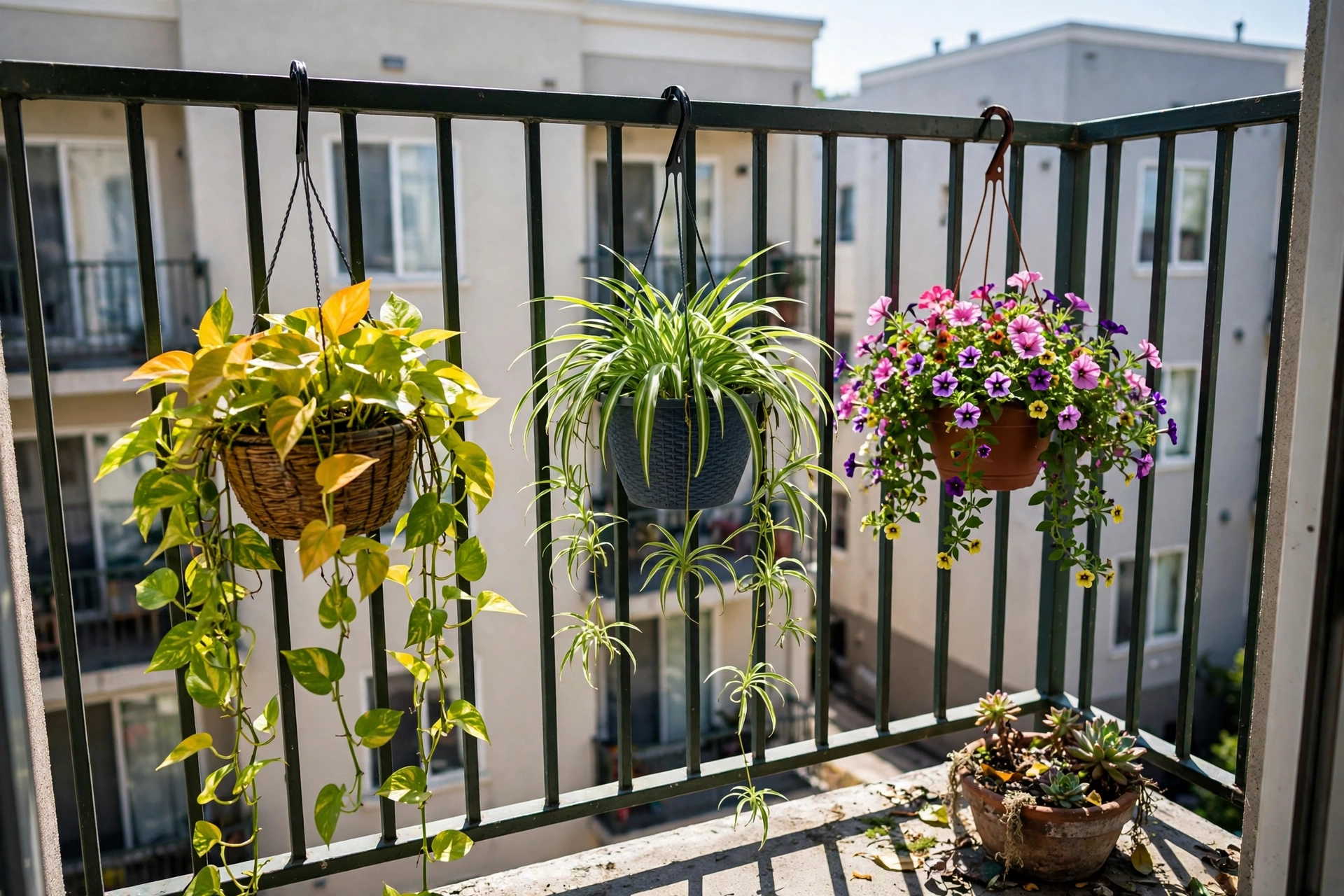
1. Pothos
The plant that started it all. Pothos trails 2–3 metres, tolerates low light, and bounces back from neglect that would kill almost anything else. Light: bright indirect to medium; direct hot afternoon sun scorches leaves, so give it the shadier end. Water: when the top 5 cm (2 inches) of soil is dry — roughly weekly in summer, less in winter. Why it fits: it grows down, not out, adding greenery without eating floor space.
2. Spider Plant
Spider plants have hung in kitchens since the seventies because they’re nearly indestructible. The arching striped leaves look great in a basket, and mature plants send out baby “spiderettes” for free new plants. Light: bright indirect; tolerates morning sun but bleaches in harsh midday sun. Water: evenly moist — water when the top few centimetres dry. Why it fits: fills a basket fast, forgives missed waterings, and the dangling babies add movement at eye level.
3. String of Pearls
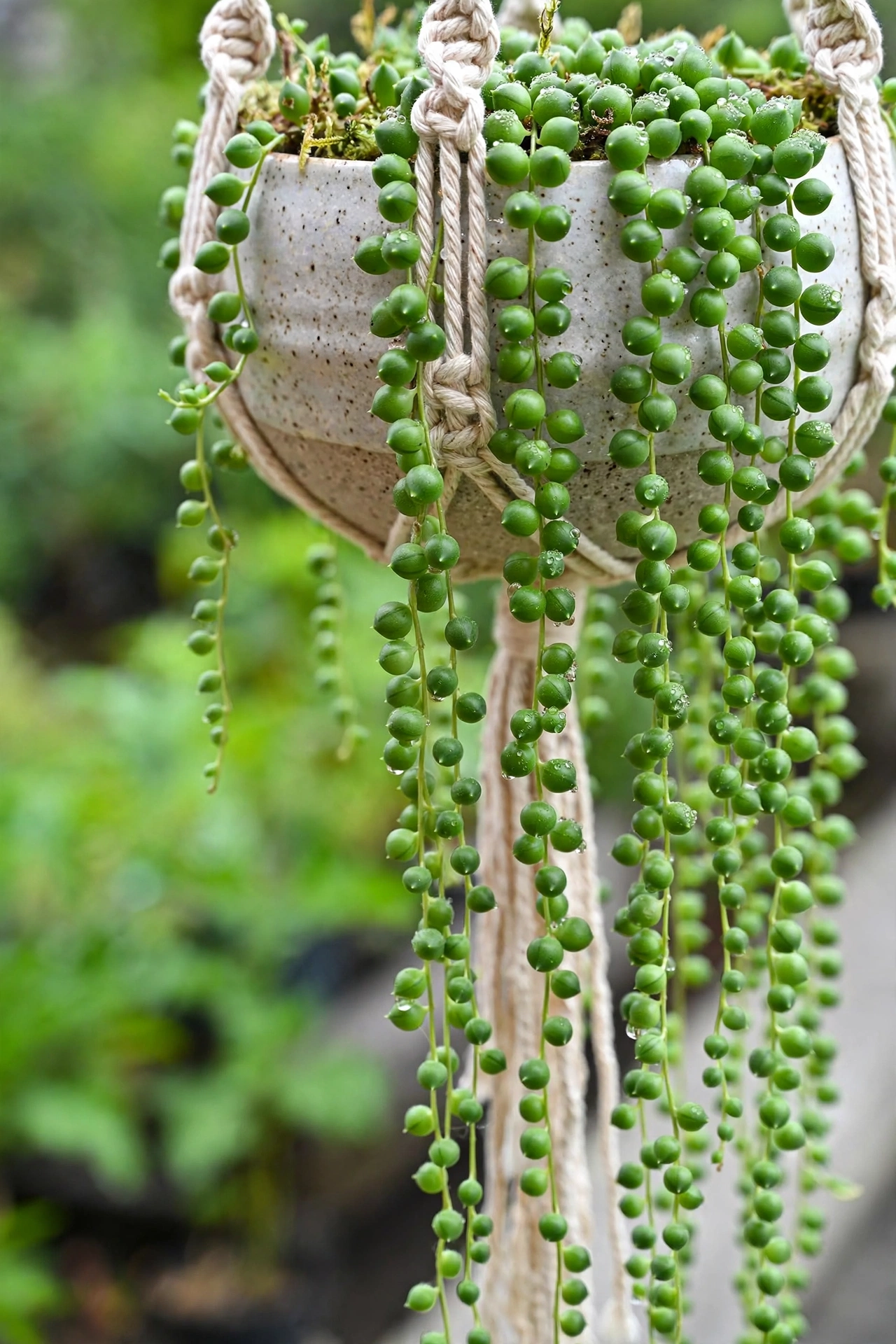
The show-off: strands of perfect green beads cascading a metre from a high basket. Honest confession — I killed my first one by misting it daily. It’s a succulent; it wants to be left alone. Light: bright light with a few hours of gentle direct sun; east-facing is ideal. Water: let soil dry completely, then soak — every 10–14 days in summer, barely monthly in winter. Why it fits: strands fall straight down, so its whole footprint is the pot. Nothing gives this much drama per square centimetre.
4. Boston Fern
A Boston fern in a basket is the classic look — arching fronds like a green fountain. But ferns are divas about humidity and wind. My first went crispy in three weeks; the second thrived once I moved it to the sheltered corner by the wall. Light: bright indirect or dappled shade; direct sun burns fronds. Ideal for north-facing balconies. Water: consistently moist (not waterlogged); mist fronds on hot days. Can mean watering every day or two in summer. Why it fits: one fern fills a large basket into a lush fountain — maximum foliage per hook.
5. Trailing Petunias and Calibrachoa
For flowers — masses of them, all summer — this is the plant. Trailing petunias and calibrachoa (million bells) pour over a basket in pink, purple, red, or white all summer. Light: full sun, 6+ hours; they won’t bloom properly in shade. Water: thirsty — daily in heat, sometimes twice for small baskets. Feed weekly with liquid tomato or flower feed to keep blooms coming. Why they fit: unbeatable flower-to-space ratio. Deadhead petunias and shear back by a third in midsummer if leggy.
6. Fuchsia
The ballerinas of the hanging basket world — dangling two-tone flowers in pink, purple, and white. Fuchsias are also one of the few flowering plants that genuinely prefer shade, which makes them gold for north-facing balconies where petunias would sulk. Light: partial to full shade; morning sun fine, hot afternoon sun wilts them. Water: keep consistently moist; a wilted fuchsia looks dramatic but usually recovers within hours of watering. Feed every two weeks in summer. Why it fits: trailing varieties were made for baskets, blooming for months where almost nothing else flowers.
7. Ivy Geranium
Ivy geraniums are the tough, sun-loving cousins of regular geraniums, with stems spilling a metre over the basket edge. They handle heat, wind, and some drought — mine survived a week of neglect in a July heatwave and still bloomed. Light: full sun to light shade; more sun, more flowers. Water: let the top of the soil dry between waterings. Why it fits: wind-tolerant (a real asset on upper floors), flowers early summer to frost, colours from scarlet to lilac.
8. String of Hearts
Heart-shaped leaves on thread-thin vines trailing 2 metres or more — the romantic one. It looks fragile but it’s a tough succulent relative storing water in small tubers along the stems. Light: bright indirect with some gentle direct sun; harsh sun bleaches leaves, too little fades the silver patterning. Water: dry out between waterings, then soak — rots if kept constantly wet. Why it fits: the vines add a curtain of softness with zero bulk, and the little tubers propagate easily for friends.
9. Burro’s Tail
Thick braided ropes of blue-green succulent leaves trailing up to a metre — it looks like something from another planet. Slow-growing, which means almost no maintenance. One warning: leaves pop off if bumped, so hang it where it won’t get knocked. Light: bright light with several hours of direct sun; a south- or west-facing balcony is perfect. Water: drench, then let dry completely — every 2–3 weeks in summer, less in winter. Why it fits: needs the smallest pot here (a 6-inch basket is plenty), sips water, and looks spectacular within a year or two.
10. Trailing Herbs: Thyme and Mint
Hanging plants you can eat — and in my opinion, the best hanging plants for small balcony cooks. Creeping thyme spills over basket edges in a cascade and loves the sharp drainage a basket gives it. Mint isn’t a natural trailer, but its stems flop over the edge beautifully — and keeping it airborne stops it invading every nearby pot. Light: thyme wants full sun (6+ hours); mint is happy in partial shade. Water: thyme likes to dry out between waterings; mint likes steady moisture — don’t share a basket. Why they fit: fresh herbs at hand height with zero floor space sacrificed.
Sunny vs Shady: My Quick Picks
Matching plant to light determines whether your hanging garden thrives or merely survives. When people ask me for the best hanging plants for small balcony corners, my first question is always: which way does it face?
Sunny balconies (6+ hours of direct sun): trailing petunias or calibrachoa, ivy geranium, burro’s tail, trailing thyme, and string of pearls (with a little afternoon shade in hot climates). These turn a sun-baked balcony into the prettiest spot in the building.
Shady balconies (under 3 hours of direct sun): pothos, spider plant, Boston fern, fuchsia, string of hearts, and mint. Shade isn’t a disadvantage — it’s a specialty, and fuchsias will out-bloom anything in cool shade. Not sure which you have? Spend a weekend noting when the sun hits your balcony — it changes everything about what you buy.
Hanging Basket Care That Actually Matters
Everything about basket care comes down to one fact: even the best hanging plants for small balcony life dry out faster than floor pots. Air moves around the whole container and the soil volume is small.
Check, don’t calendar. Push a finger in to the second knuckle — dry means water, damp means wait. Then water slowly until it drains from the bottom.
Feed the bloomers. Constant watering washes nutrients out. Half-strength liquid feed every week or two, June to September, keeps petunias, fuchsias, and geraniums blooming instead of fading by August.
Rotate and overwinter. Quarter-turn baskets every few weeks so all sides get light. And plan for frost: petunias, calibrachoa, fuchsias, and geraniums are tender — bring them in before the first frost or treat as annuals. Pothos, spider plants, and strings of hearts come inside too. The vertical gardening ideas for tiny balconies include ways to overwinter plants on walls and shelves.
Frequently Asked Questions
How much weight can my balcony railing hold?
It depends. Solid metal usually handles several baskets; older wood or glass panels may have strict limits. When in doubt, hang from ceiling or wall instead, and check your lease.
Can I hang plants without drilling?
Yes. S-hooks over a sturdy railing are the easiest option — use hooks rated for the weight that can’t slip off. Over-the-railing saddle brackets work well, and tension rods between two walls suit narrow balconies for lighter plants.
Why does my hanging plant dry out so fast?
More air circulation, more sun angles, less soil. Fibre-lined wire baskets are the worst offenders — they breathe beautifully, which means they dry beautifully too. Line the basket with a bit of plastic (holes poked for drainage) to slow evaporation, or switch to a solid-sided pot.
What size basket should a beginner start with?
A 10 to 12-inch (25–30 cm) basket is the sweet spot. Smaller ones dry out in hours and cramp roots. A 12-inch basket holds enough soil to buffer a missed watering and gives trailers room to establish. One big lush basket always beats three tiny struggling ones.
Your Turn
Start with one basket on one hook you trust. Learn its rhythm, then add a second. A small balcony doesn’t need ten hanging plants to feel like a garden — two or three well-chosen trailers at different heights will do it.
Match the plant to your light, hang it securely, and check the soil before you water. By midsummer you’ll be out there with your coffee, watching your string of pearls sway in the breeze, wondering why you ever kept everything on the floor. That’s my honest ranking of the best hanging plants for small balcony gardeners — the ten I’d rebuy tomorrow. And if you’re dreaming bigger, the cozy balcony garden corner on a budget shows how a few baskets plus a chair can turn the whole space into your favourite room.


One Comment on “10 Hanging Plants That Turn a Tiny Balcony Into a Garden”