My first snake plant died in under three months, which offended me, because everyone had said snake plant care was foolproof: “You can’t kill one. Easiest houseplant in the world.” Challenge accepted, apparently. I loved that plant to death — literally — watering it every week like a thirsty basil. By the time I caught on, the leaf bases had turned to mush and the pot smelled like a swamp.
That was years ago. Since then I’ve kept more than a dozen snake plants alive — in a dim hallway, a bright sunroom, an office far from any window — and good snake plant care isn’t about a green thumb. It’s about knowing a few things that matter and resisting the urge to “help” the plant by watering it. This is the guide I wish I’d had back then; I learned most of it by doing it wrong first.
Quick Tips:
- Water only when the soil is bone dry all the way through — usually every 2–4 weeks, even less in winter.
- Bright, indirect light grows the strongest plants; dim corners just slow them down.
- Every pot needs drainage holes. Terracotta forgives mistakes faster than plastic.
- Feed 2–3 times a year, spring and summer only.
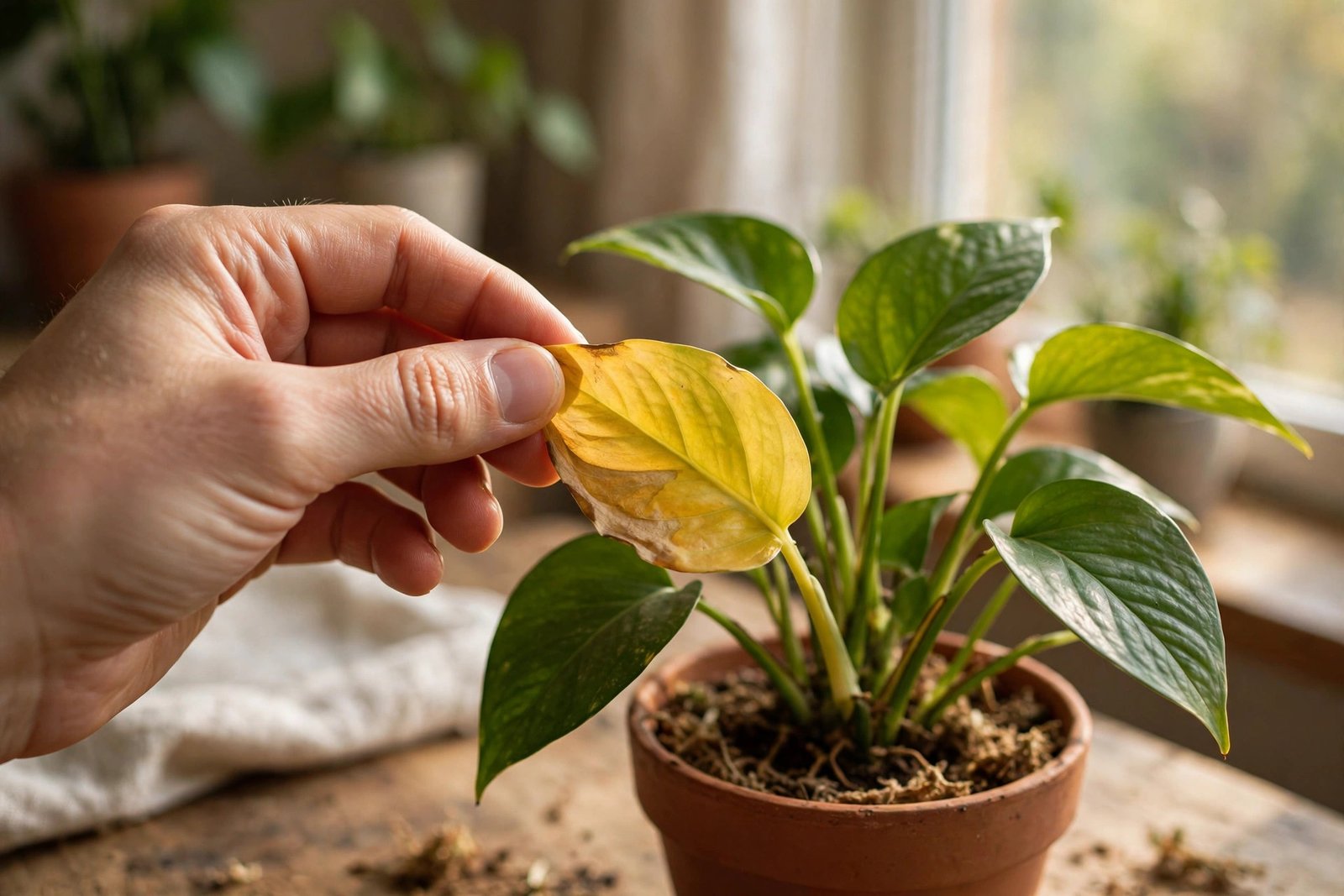
- A leaf turning mushy at the base means root rot — stop watering immediately.
Why Snake Plants Forgive Almost Everything
The snake plant (Sansevieria trifasciata) comes from the dry, rocky parts of West Africa, and that origin story explains everything: thick leaves that store water for weeks, a talent for sitting quietly in poor conditions, and total intolerance for wet soil. It survives forgotten waterings, dark corners, and pots that have been too small too long — which is why most of snake plant care comes down to the watering section below.
Snake Plant Care Starts With Light
Here’s what the plant-shop tags don’t quite spell out: a snake plant will tolerate low light, but it prefers bright, indirect light. In a dim corner it sits there looking fine for months — then you notice it hasn’t grown a leaf in a year and the older leaves are leaning. In bright, indirect light the same plant pushes out new spears through summer, stands up straight, and keeps its variegation crisp.
My strongest lives four feet from an east window; my slowest, ten feet from a north-facing one, has looked identical for three years. If you’re working with a dark room, my roundup of low-light houseplants that survive almost anything is worth a look — the snake plant made the list, with a warning about exactly this.
No light meter needed: hold your hand over white paper where the plant would sit. A sharp shadow means bright indirect light; a faint one means low light — survivable, but water even less often since the soil stays damp longer. East-facing windows are the sweet spot, and a few feet back from a south- or west-facing window works behind a sheer curtain. Blazing afternoon sun can scorch leaves, so rotate the pot a quarter-turn every month or two if it leans toward the glass.
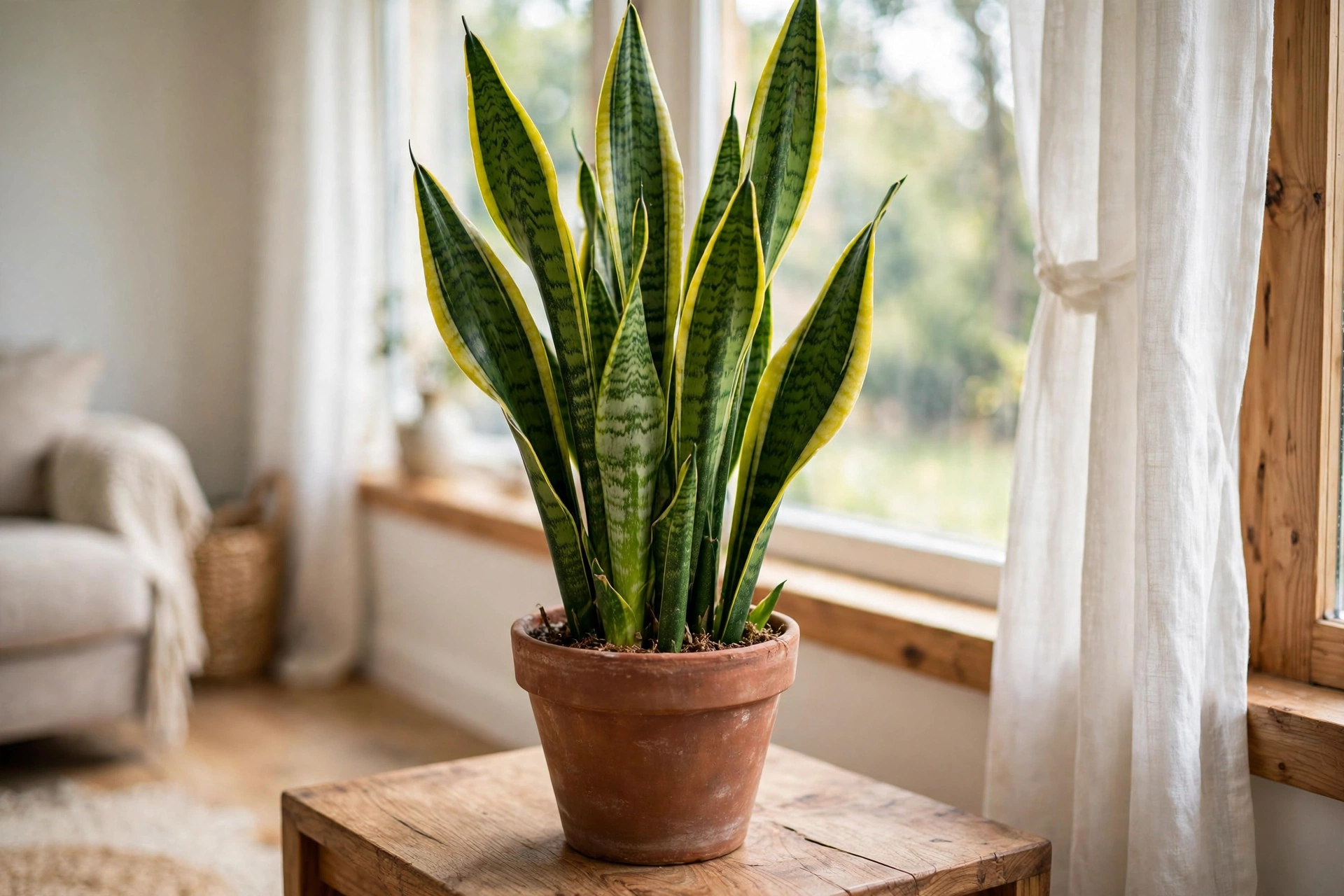
Watering: How Most People Kill Their Snake Plant
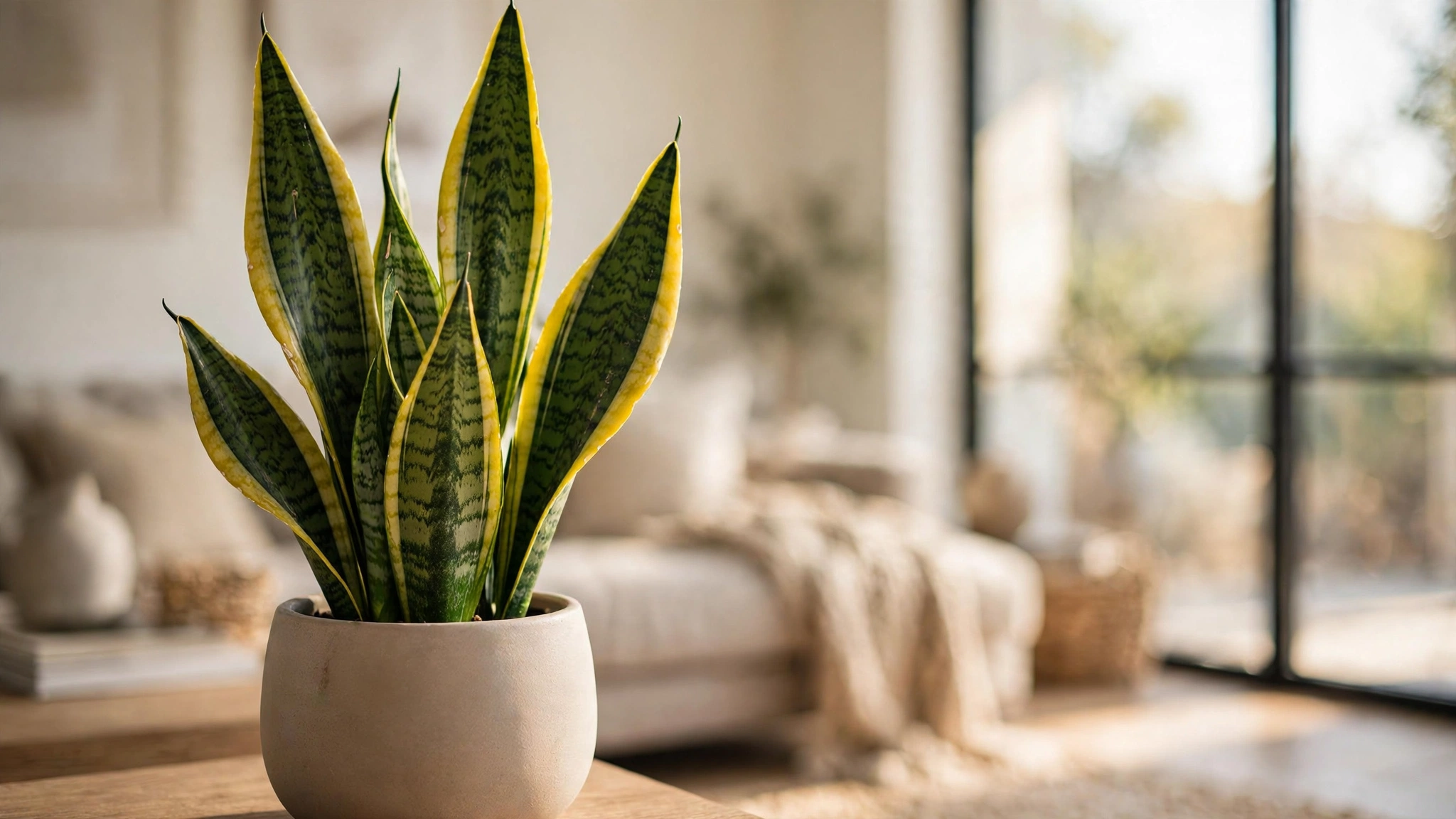
Plant number one was a handsome ‘Laurentii’ — the classic kind with yellow edges — in a glazed pot with no drainage hole. I watered it every Sunday, a full cup. For a month it looked perfect — then leaves developed soft spots at the base, and within two weeks the whole clump collapsed into wet green spaghetti. The soil had been a swamp the whole time, and I’d been topping it up weekly like a caring, lethal landlord.
What rewired my brain: those thick leaves are water tanks, so weekly watering is refilling a full tank. Roots sitting in moisture they can’t use will rot. Getting watering right is honestly eighty percent of snake plant care, and the whole philosophy is one sentence: soak it rarely, and let it dry completely between waterings.
The only watering rule you need
Forget the calendar. Stick your finger into the soil up to the second knuckle — or push a wooden chopstick to the bottom and leave it a minute. Any dampness means walk away. When it’s dry all the way through, water thoroughly until water runs out of the drainage holes, then empty the saucer after ten minutes. That’s roughly every 2–4 weeks in spring and summer, stretching to 6–8 weeks in winter. More detail in how often to water indoor plants.
Soil, Pots, and Drainage: Get This Right Once
Snake plants want gritty, fast-draining soil that never stays soggy — getting this mix right is a snake plant care basic you only do once. I use roughly two parts potting mix to one part perlite or coarse sand; a ready-made cactus mix works too. Avoid dense garden soil and mixes with water-retaining gel crystals.
The pot matters just as much. Drainage holes are non-negotiable, and terracotta is the beginner’s best friend — the clay breathes and wicks moisture out, forgiving a slightly early watering. Keep the pot snug: these plants like being a little crowded, and an oversized pot holds wet soil the roots can’t reach, which invites rot. Love a decorative pot with no holes? Use it as a cache pot with a nursery pot inside, and always dump the collected water after watering.
Temperature, Humidity, and the Perfect Spot
Snake plants like the same temperatures you do: roughly 15–27°C (60–80°F), kept above 10°C (50°F) — a leaf against a freezing windowpane can develop dark, water-soaked patches. Avoid radiator blasts and cold drafts from outside doors. Humidity you can ignore entirely: dry winter air or steamy bathroom air, the plant shrugs at both.
Feeding: The Easiest Part of Snake Plant Care
If watering is where people kill snake plants with kindness, feeding is the runner-up. These are slow growers from poor soils; they need a fraction of what a hungry tomato wants. My entire feeding program: a half-strength dose of balanced liquid fertilizer two or three times a year, spring and summer only. Fresh potting mix feeds a new plant for a month or two, so don’t fertilize right away — and never feed in autumn or winter, when the plant isn’t growing and salts can burn leaf tips. When in doubt, skip it.
Snake Plant Care Troubleshooting: What’s Wrong With My Plant?
Almost every problem falls into one of three buckets:
Mushy leaves and a bad smell: root rot
The big one — almost always overwatering, a pot with no drainage, or soil that stays wet. Leaves go soft at the base, sometimes topple, and the soil smells sour. You can often save it: unpot, shake off the wet soil, and cut away everything black, mushy, or slimy with clean scissors. Air-dry the healthy parts on newspaper for a day, repot into fresh dry gritty mix, and don’t water for a week. No roots left at all? Slice off firm, healthy leaf sections and propagate them — I’ve rebuilt a whole plant from three rescued leaves.
Brown, crispy leaf tips
The opposite problem, and far less dangerous. Usual suspects: long dry spells, too much fertilizer, or mineral buildup from hard tap water. Trim the dead tip with clean scissors along the leaf’s natural shape, then fix the cause — usually watering more consistently or flushing the pot once to wash out salts. A few brown tips on an old plant are normal wear and tear, not an emergency.
It’s not growing at all
Usually this is winter or low light, and the answer is patience — they can sit still from October to March, then push out three new leaves in May. If it’s growing season with decent light and still nothing, check whether it’s severely root-bound (more root than soil) — that means repotting time. And be honest about the light: my bookshelf plant wasn’t “resting,” it was starving.
Repotting: Less Often Than You Think
Most snake plants need repotting every 2–4 years. The signs: roots circling out of the drainage holes, the pot bulging or cracking, water running straight through because there’s more root than soil, or the whole plant toppling because it’s top-heavy. Repot in spring, into a pot just one or two inches wider — resist the urge to give it a mansion, for the wet-soil reasons above. Set the plant at the same depth as before, fill around it with fresh gritty mix, and wait a few days before watering so damaged roots heal.
Propagation: Free Plants From Leaves
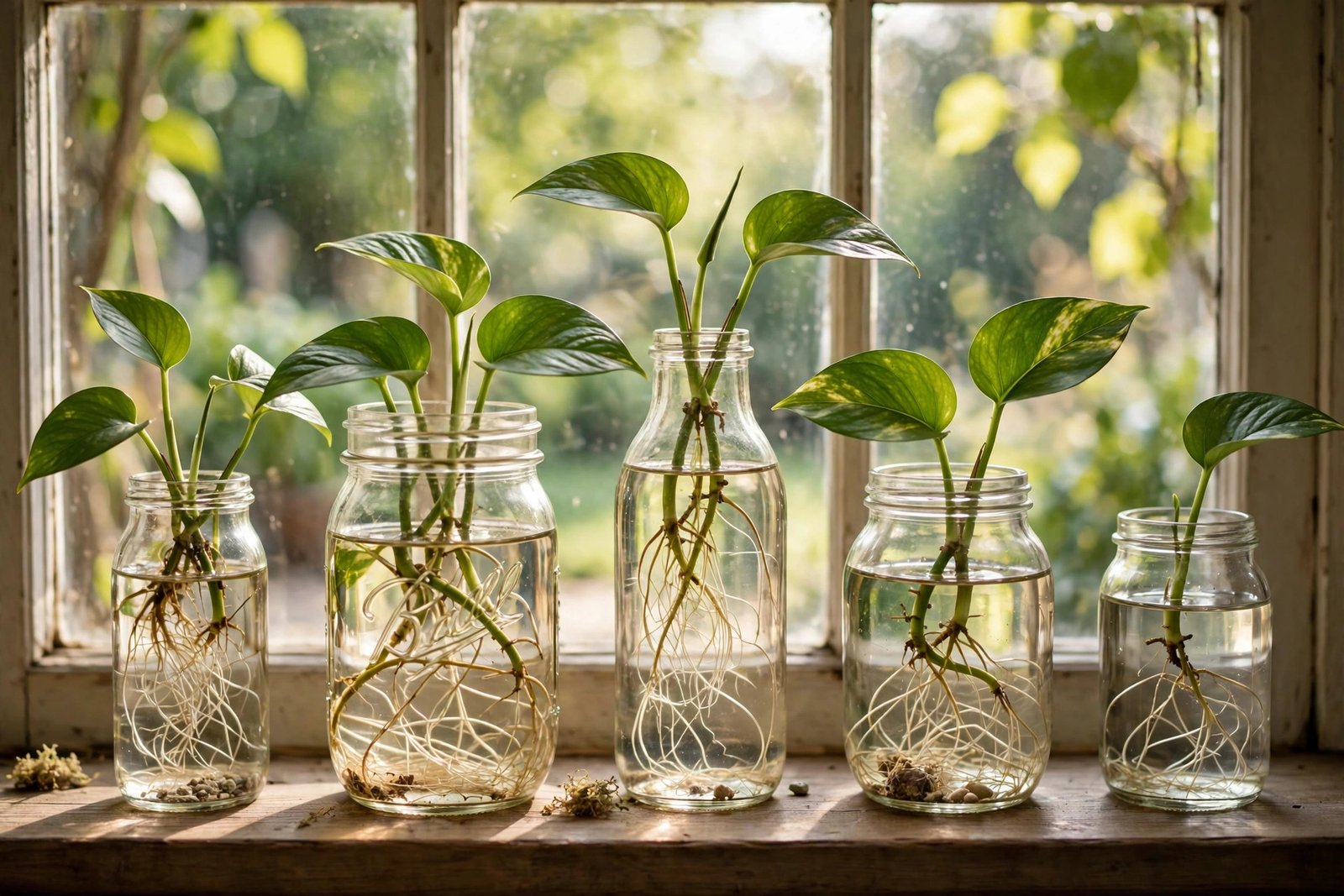
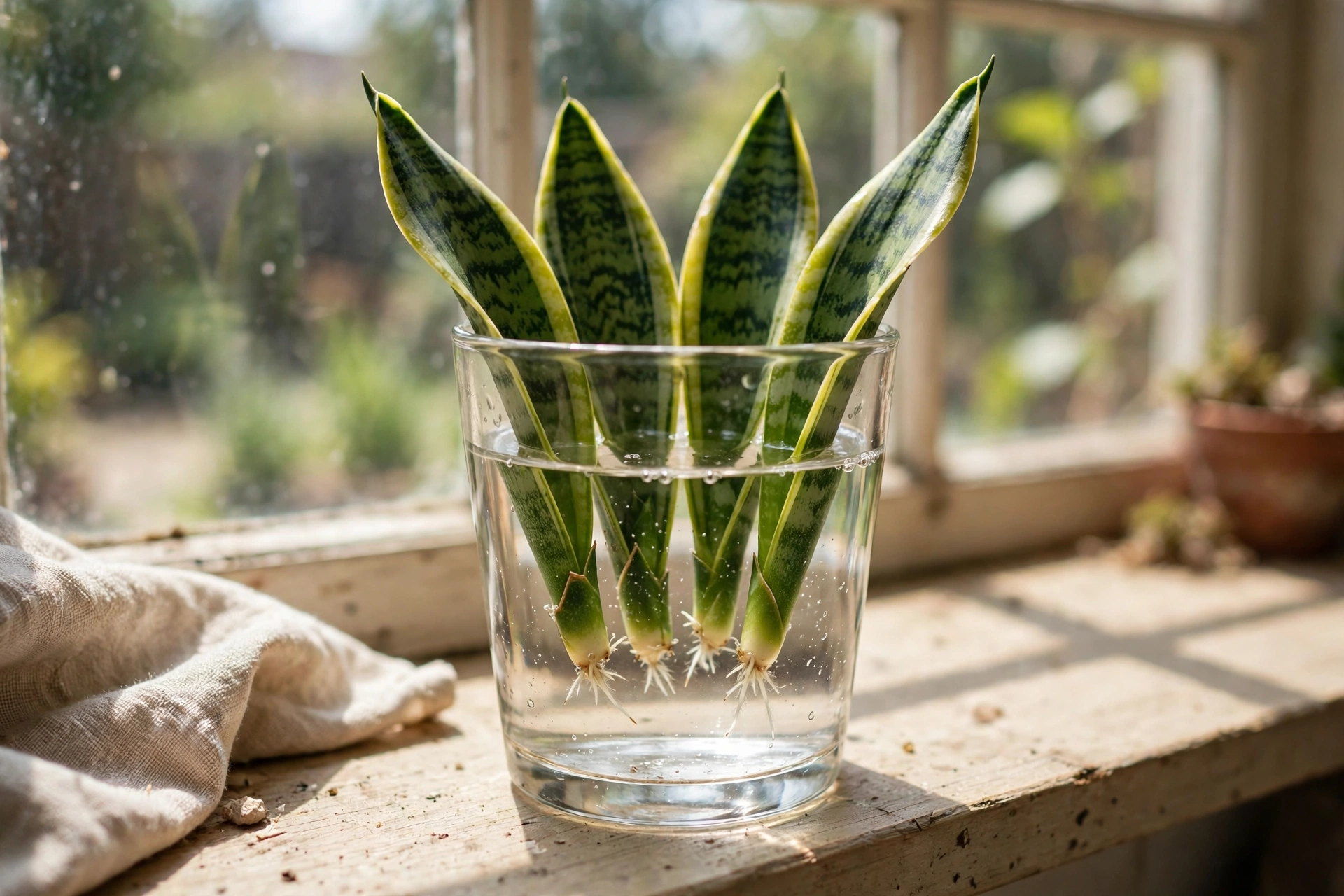
One of the most satisfying parts of snake plant care — and your rescue plan for a rotted plant. Division is fast: when you repot, you’ll often find the plant is a cluster of fans joined at the base. Split it so each piece has roots and a few leaves, pot up separately, and you have instant new plants — and the only way to keep the yellow edges of a ‘Laurentii’, since leaf cuttings from variegated types grow back plain green. Leaf cuttings are the slow, magical method: cut a healthy leaf into 3–4 inch sections, mark which end was the bottom (upside-down cuttings won’t root), let the ends callus for a day or two, then push the bottom ends an inch into moist mix or stand them in a glass of water, changing the water weekly. Roots in 3–6 weeks; a baby shoot in 2–4 months. For the full week-by-week method, see propagating houseplants in water.
A Note for Pet Owners (and Curious Toddlers)
Skipping this would be a disservice: snake plants are mildly toxic to cats, dogs, and humans if chewed. They contain saponins, which typically cause nausea, vomiting, or diarrhea — unpleasant rather than usually dangerous, but not something to gamble with. With a leaf-nibbling cat, put the plant genuinely out of reach: a high shelf or a room the cat doesn’t patrol. Mine took one bite, made a face, and never touched it again — but I still moved it upstairs, because cats repeat experiments. If your pet eats a meaningful amount, call your vet.
Frequently Asked Questions
A few questions that land in my inbox whenever snake plant care comes up:
How often should I water my snake plant?
Whenever the soil is completely dry — roughly every 2–4 weeks in spring and summer, 6–8 in winter. The finger test beats any schedule.
Can a snake plant live in a room with no windows?
Not happily, and not forever. It may survive months on stored energy, but without light it will slowly decline. A windowless room needs a grow light on a timer (8–10 hours a day) or two plants rotated between the room and a bright spot every few weeks.
Why are my snake plant’s leaves falling over?
Usually one of three things: overwatering has weakened the bases (check for mushiness), the plant is reaching for more light, or a tall, top-heavy plant is tipping in a too-small pot. Address the cause — and loosely tie the leaves together with soft twine for a few weeks until they firm up.
You’ve Got This
Here’s the whole of snake plant care on an index card: bright-ish light, gritty soil, a pot with holes, water only when bone dry, feed a couple of times a year, leave it alone otherwise. Your job is mostly to avoid loving it to death the way I did with plant number one.
Start with one plant in a terracotta pot near a window you pass daily. Check the soil when you think of it, water when it’s truly dry, and watch for that first new leaf spear in spring. After my swamp-pot disaster, I can tell you it feels like a genuine victory. Yours is coming.