Three summers ago, my neighbour knocked on my balcony door holding a drooping tomato plant and asked the question I hear every July: “How often am I supposed to water this thing?” I gave her the answer I wish someone had given me in my first year: there isn’t a magic number.
If you’re wondering how often to water balcony plants in summer, here’s the short, honest version: most balcony containers in real summer heat need water every day, sometimes twice a day. That sentence will either reassure you or terrify you, depending on your setup. So let’s unpack it properly — what I actually do each morning, why your friend’s “twice a week” doesn’t apply to you, and the one simple test that replaces every watering schedule ever written.
How Often to Water Balcony Plants in Summer: My Actual Routine
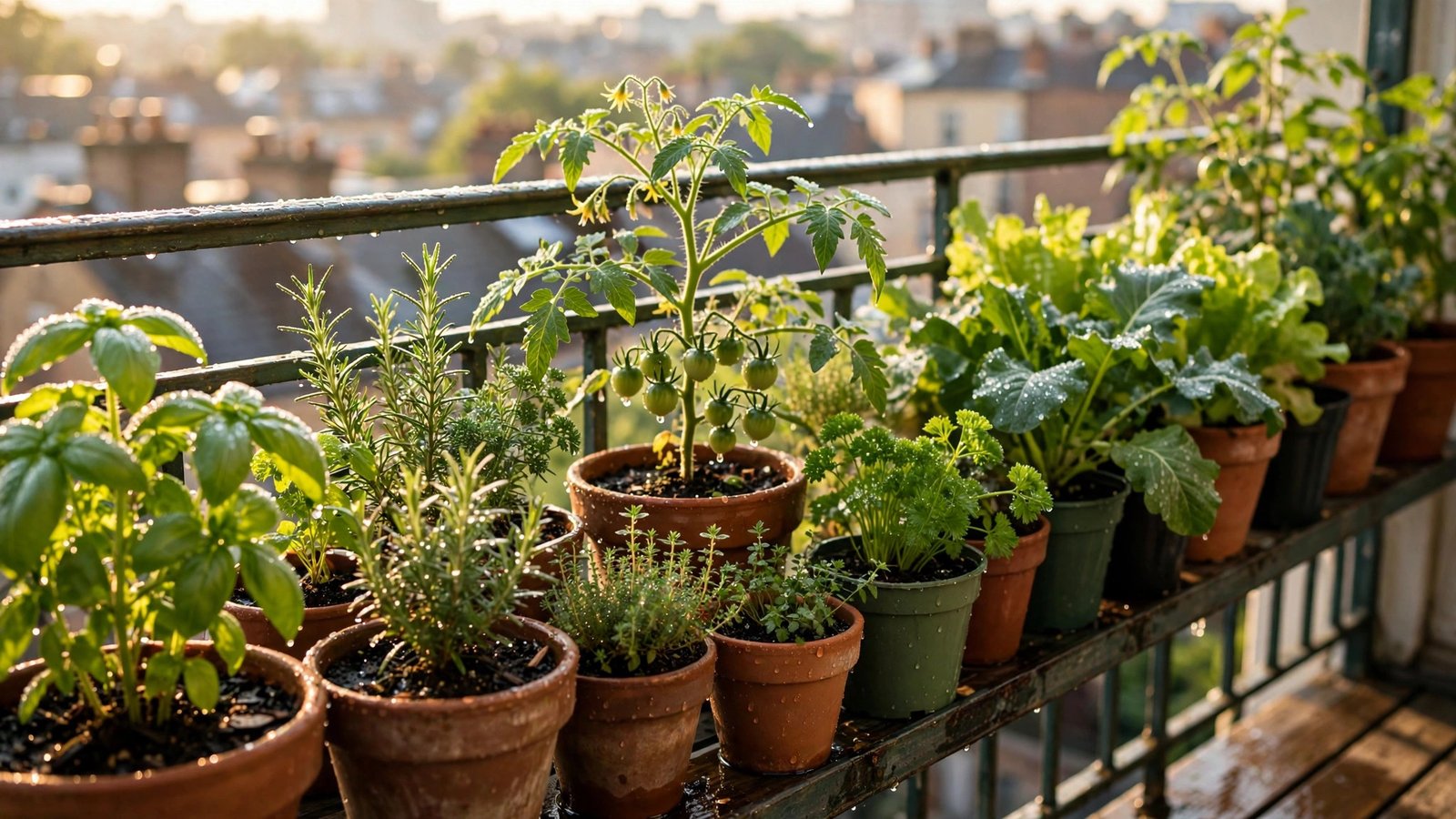
Here’s what I do, no theory. My balcony faces south-west, I’m on the fifth floor so it’s windy, and in July and August the afternoon sun is fierce. I keep about twelve pots out there: tomatoes, chillies, basil, mint, parsley, a trough of salad leaves, some petunias, and a lone succulent.
On a normal summer day — say 25–30°C — I water most of those pots every single morning: a deep soak for the big cherry tomato, water for the herbs in 6-inch pots. The succulent gets water about once a week.
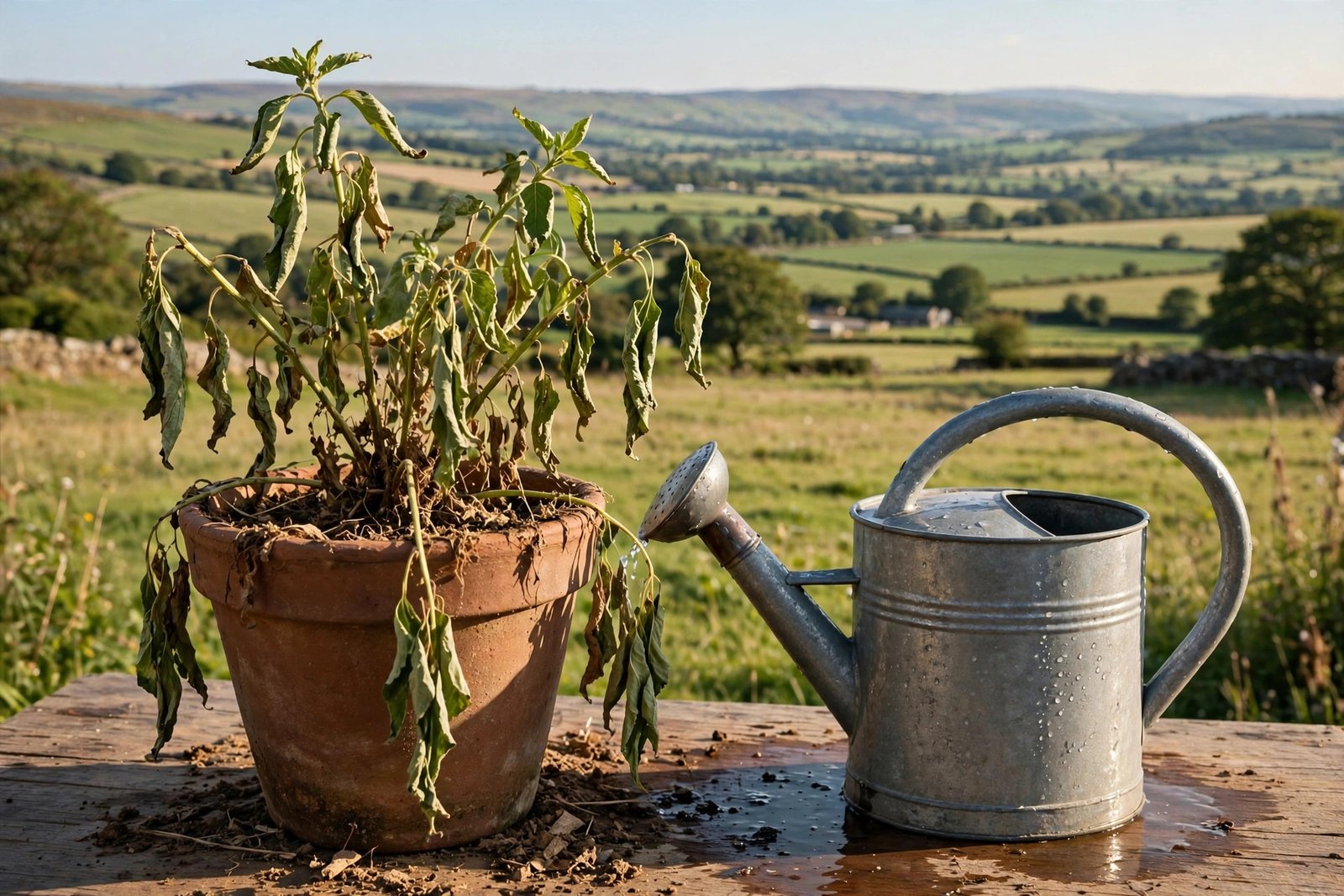
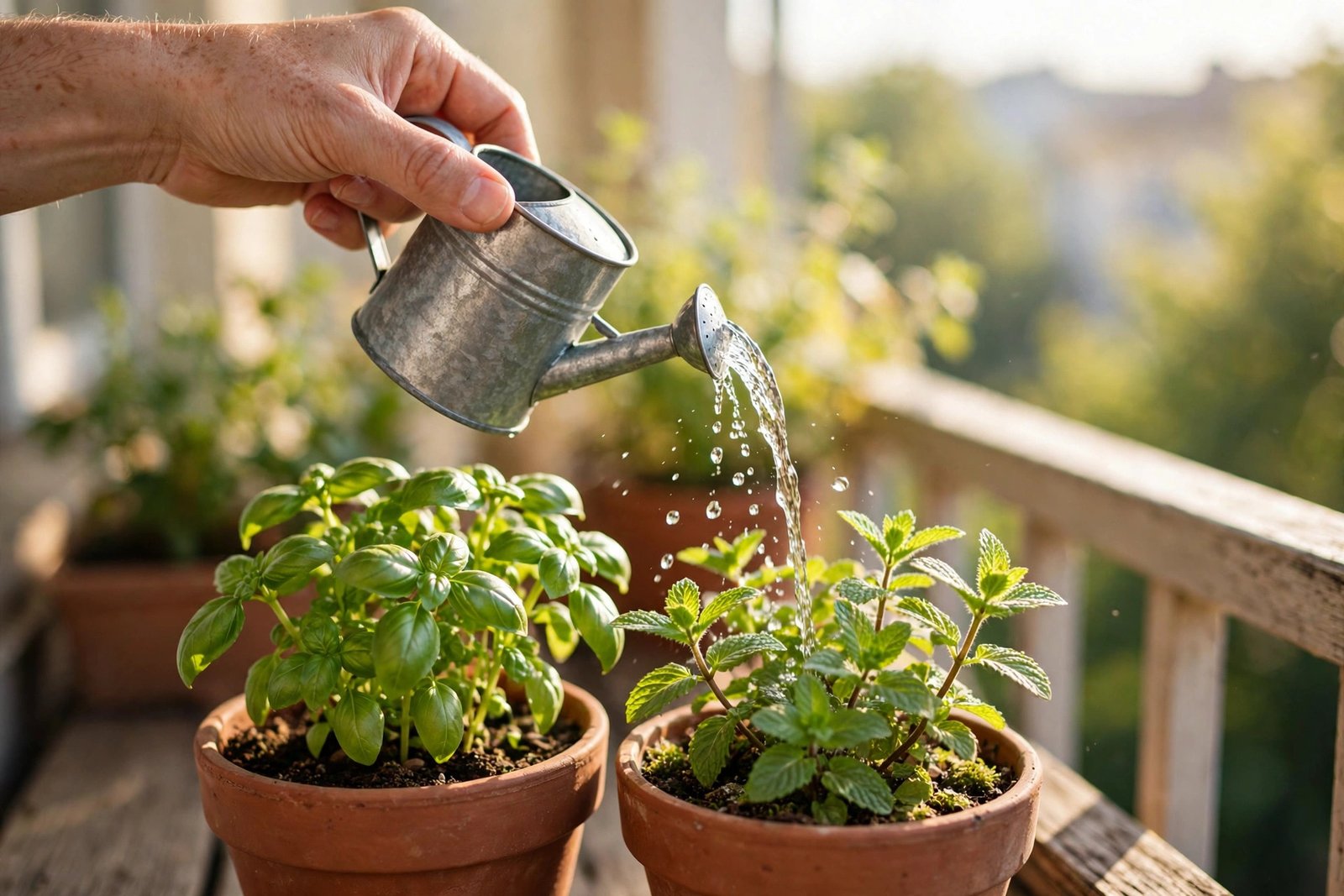
Then a heatwave hits — 35°C, air like a hairdryer — and the routine changes. The tomato, the chillies, and the basil in the small pots get watered twice: 7am and 7pm. They can look happy at breakfast and be dramatically wilted by dinner. That isn’t you failing; that’s just a small pot in serious heat.
My morning ritual takes about ten minutes. Kettle on, watering can in hand, out onto the balcony: I poke a finger into each pot and water the dry ones deeply, until water runs out of the bottom. The damp ones get skipped.
The rule I wish I’d learned in year one: check first, water second. In my first summer I set a daily 8am phone reminder and followed it religiously. Then we got three weeks of muggy, overcast weather and I kept watering anyway. My parsley sat in soggy compost and rotted. The calendar doesn’t know what the weather is doing. Your finger does.
What Changes the Answer: Five Factors That Decide Everything
This is why “how often should I water?” has no single answer. Your neighbour waters twice a week and her plants thrive; you water twice a week and yours keel over. You’re both right for your own balconies. Here’s what actually decides frequency.
1. Pot Size (The Biggest Factor of All)
A small pot is a small water tank. A 4-inch pot of basil on a sunny balcony can go from moist to bone-dry between breakfast and lunch in July, while a 14-inch tomato pot stays damp for a day or two. Pots under 6 inches need checking every day in summer, no exceptions; pots over 10 inches buy you some slack.
I learned this the expensive way: two identical tomato seedlings, one in a 6-inch pot, one in a 14-inch pot. The small one needed water twice a day, stayed stunted, and produced three sad tomatoes. The big-pot one got watered once a day and gave me salads for two months. Same plant, same balcony. The pot made all the difference.
Pot material matters too. Terracotta breathes, so moisture evaporates through the clay walls — terracotta in full sun can need daily watering where a plastic pot wouldn’t. Plastic, glazed ceramic, and resin hold moisture much longer. I keep my thirsty basil in plastic and my drought-loving rosemary in terracotta.
2. Sun Exposure
Hours of direct sun translate directly into watering frequency. My south-west balcony gets about six hours of strong afternoon sun — near the top of the thirst scale. An east-facing balcony gets gentler morning sun and dries out noticeably slower; a north-facing one barely dries at all.
During an extreme heatwave, I move my most vulnerable pots into the shadiest corner. The guide to protecting balcony plants in summer heatwaves keeps coming back to shade for good reason — it’s the single most effective thing you can do when the temperature spikes.
3. Wind
Wind is the thief nobody warns you about. It strips moisture from leaves and compost faster than sunshine does, and upper-floor balconies can be shockingly breezy. If your laundry dries sideways out there, your pots are losing water at double speed. Group pots close together so they shelter each other, or put up a cheap bamboo screen.
4. The Plant Itself
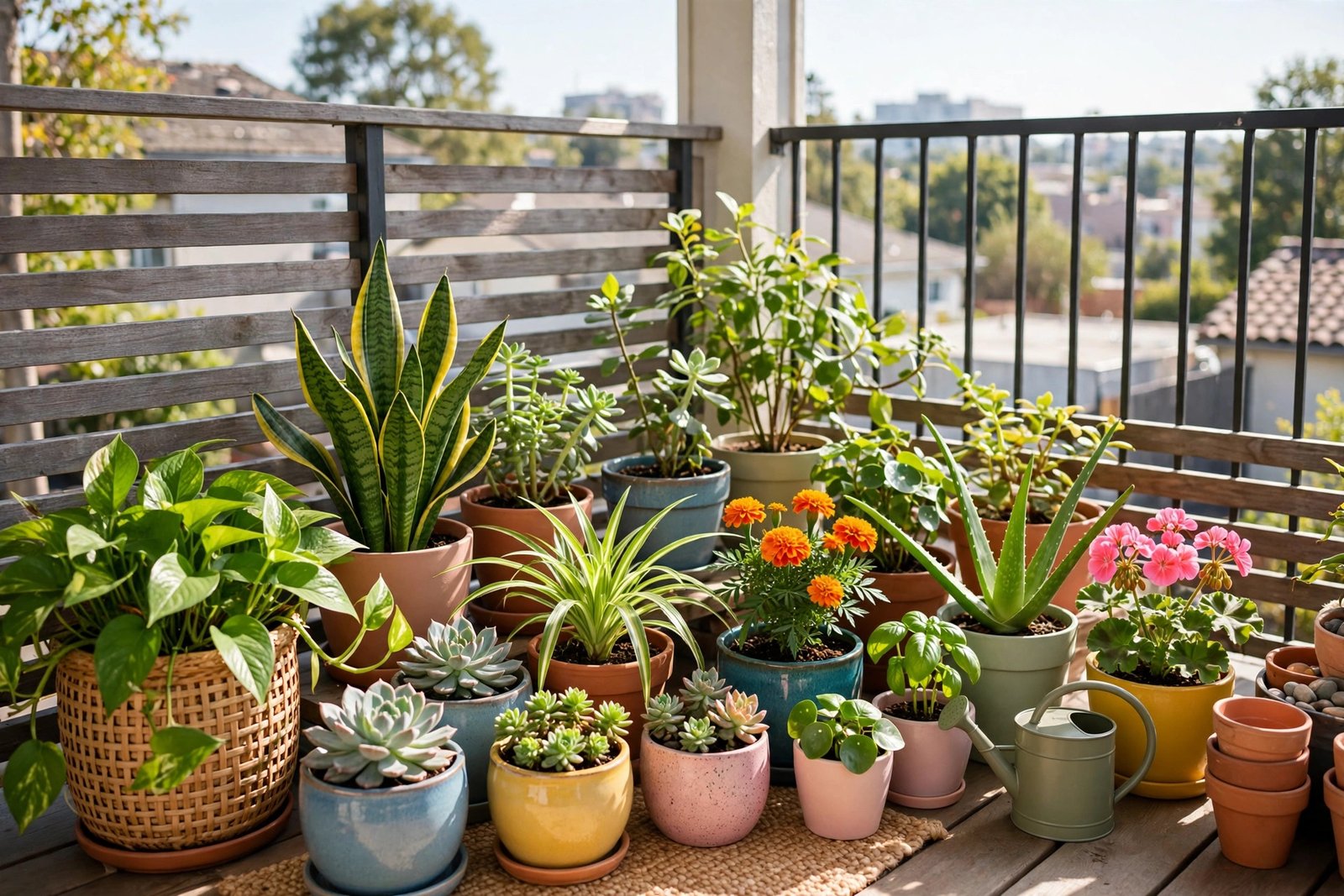
Plants have personalities when it comes to water. The thirsty ones — tomatoes, cucumbers, chillies and peppers, basil, lettuce and salad leaves — are the divas of the balcony: in high summer, expect to water them daily, sometimes twice. The easy-going middle — mint, parsley, chives, petunias, geraniums — are happy with a good drink every day or two. The camels — rosemary, thyme, lavender, sage, succulents — actively prefer to dry out between waterings. Drowning a rosemary with daily kindness is a classic beginner mistake.
One tip that saved my sanity: group plants with similar thirst together. All my thirsty pots sit in one row, so a single watering round covers them. The rosemary and the succulent live in the “leave me alone” corner.
5. Your Potting Mix
Light, free-draining mixes dry out faster than heavier ones. If compost has gone completely dry and water runs straight down the sides without soaking in, it’s become hydrophobic — stand the pot in a bucket of water for 20–30 minutes so it drinks from the bottom up.
Quick Tips:
- Check soil daily in summer, but only water the pots that are actually dry.
- Water in the morning so plants are charged up before the heat hits.
- Mulch the surface of every pot you can — it’s the easiest water-saving trick there is.
- Group thirsty plants together and drought-tolerant ones apart.
- Saucers catch runoff — empty them after 20–30 minutes so roots aren’t sitting in water.
The Finger Test: The Only Watering Schedule You Need
Forget apps and calendar reminders. Here is my real answer to how often to water balcony plants in summer — the entire watering system, and it takes five seconds:
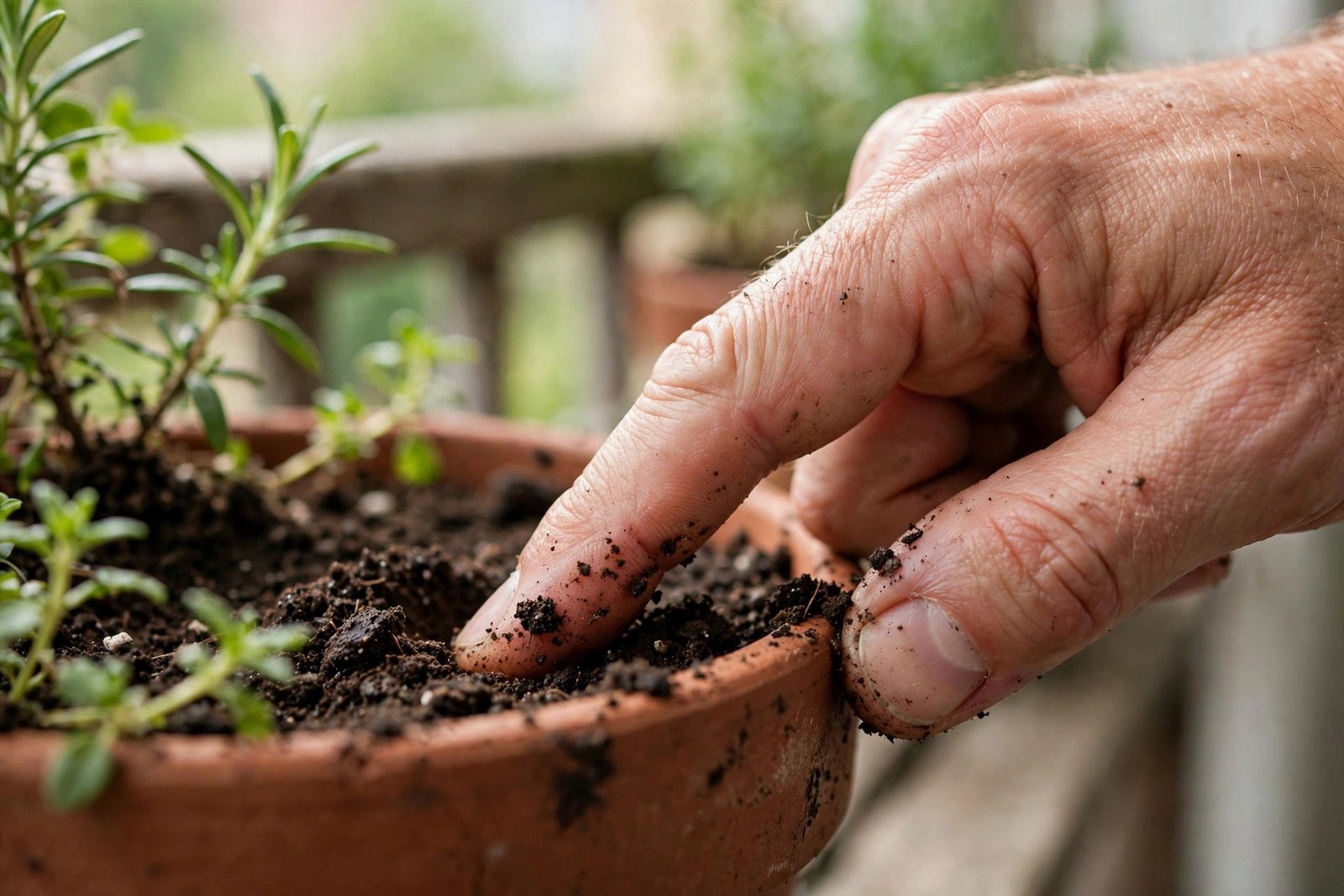
Push your index finger into the soil up to the second knuckle. If it feels dry, water deeply. If it feels cool and damp, walk away.
That’s it. It accounts for rain, cloudy weeks, heatwaves, wind, pot size, and plant type automatically, because it measures the one thing that matters: what the soil is like right now. Rainy week: your finger says damp, you skip three days. Heatwave: your finger says dry twice a day, you water twice.
If you’d rather not get your hands dirty, a cheap moisture meter from the garden centre does the same job.
Morning vs Evening: When Should You Water?
Morning wins, and it isn’t close. Watering between 6 and 9am gives the compost time to absorb moisture before the day heats up, leaves dry off quickly (which discourages fungal problems), and plants go into the hottest hours fully hydrated. My 7am round isn’t an accident — it’s the sweet spot.
Evening watering is a perfectly fine second choice if mornings are impossible — just water the soil, not the foliage. And don’t fear midday watering: the old “droplets scorch leaves like magnifying glasses” idea is mostly a myth. If a plant is wilting at 2pm on a scorching day, water it.
Mulch: The Lazy Gardener’s Secret Weapon
If there’s one summer trick I wish I’d adopted in year one, it’s mulching. A 2–3 cm layer of mulch on top of the compost — bark chips, straw, coconut husk, even decorative pebbles — slows evaporation, keeps the root zone cooler, and suppresses weeds. My cherry tomato pot, mulched with straw, went from needing water every day to every other day through most of August. Keep mulch clear of the stems to avoid rot, and top it up mid-summer as it breaks down.
Holiday Tricks: Keeping Plants Alive for a Week Away
Nothing sours the return from a lovely trip like a balcony of crispy plants. Here’s my system for five to seven days away:
- Soak everything deeply the night before you leave — a proper drench until water flows from the drainage holes, not a sprinkle.
- Move pots into the shade. A week in the shadiest corner beats any gadget. Group the pots close together too — they create their own little humid microclimate.
- Fill the saucers. Normally I’d tell you to empty them, but for a holiday a full saucer is a reserve tank the plant can draw on.
- Set up bottle drippers. Fill a plastic bottle, poke a couple of tiny holes in the cap, push it neck-down into the compost. It seeps water slowly for a few days. Ugly, and it works.
- Ask a human. Leave the watering can filled and say “these ones every other day.” People help more when it takes two minutes.
Last August I went away for five days and did all of the above except asking anyone. I came home to plants that were thirsty but alive — except the chilli I’d left in full sun. Lesson learned: shade placement matters more than any gadget. If you travel a lot, it’s worth reading about watering cans versus self-watering pots.
Troubleshooting: When Watering Goes Wrong
“My plant is wilting even though I watered it.”
If the soil is moist and the plant still droops, the roots aren’t getting the water — usually because the plant is root-bound, or the compost has gone hydrophobic and water is channelling down the sides. Fix: stand the pot in a bucket of water for half an hour so it soaks from below, then consider repotting into something bigger.
“The leaves are turning yellow.”
In summer, yellow leaves with wet soil usually mean too much water, not too little. Roots sitting in soggy compost can’t breathe. Ease off, check your drainage holes aren’t blocked, and let the top few centimetres dry out between waterings. The guide to overwatering versus underwatering walks through how to tell the two problems apart.
“The soil is dry again an hour after I watered.”
Three possibilities: a tiny pot in a heatwave (normal — water again, or repot bigger), hydrophobic compost (bottom-water it), or a splash instead of a soak. Water in two passes — once, wait ten minutes, then again. The second pass soaks in far better. And when you water, give enough that it flows out of the drainage holes, then stop: a deep soak trains roots downward, where compost stays moist longest.
Your Summer Watering Cheat Sheet
Still asking how often to water balcony plants in summer? Pin this to the fridge:
- Check the soil every day in summer; water when the top 2–3 cm are dry.
- Water in the morning, deeply, until it runs out of the drainage holes.
- Small pots, terracotta, full sun, wind, and thirsty plants = daily or twice-daily in heat.
- Big pots, plastic, shade, and drought-tolerant plants = every 2–4 days.
- Mulch everything you can — it genuinely halves the work.
- When in doubt, poke it with your finger. The finger is never wrong.
Your Turn
Here’s the truth about how often to water balcony plants in summer: the real skill isn’t a number, it’s paying attention. Ten minutes with a watering can each morning becomes one of the nicest parts of the day, and within a month you’ll know each pot’s habits — the tomato that drinks like a fish, the rosemary that wants to be ignored.
Start with the finger test tomorrow morning. Water what’s dry, skip what’s damp, and give yourself permission to learn as you go. A balcony of plants watered with attention instead of a calendar is a balcony that thrives.