What if a balcony is twice as big as it seems? Many gardeners spend their entire first growing season arranging pots on a floor barely bigger than a doormat, shuffling them around like furniture in a dollhouse, before it finally hits them: the walls are sitting there completely empty. The air above the railing? Empty. The stretch of brick beside the door? Empty. It’s like trying to farm a postage stamp with an entire billboard going to waste.
The moment growing goes upward, a balcony can go from about eight pots to more than thirty plants, plus a trellis of climbing beans. Vertical gardening sounds like one of those intimidating landscaping terms, but for balcony gardeners it just means one thing: stop putting everything on the floor.
Quick Tips:
- Use wall space first: pocket planters, mounted troughs, and pegboards cost little and hold a lot.
- Give vining plants a trellis and they will happily climb instead of sprawling across your floor.
- Anchor everything heavy properly — a wall planter full of wet soil is heavier than you expect.
- Put sun-lovers up high and shade-tolerant plants lower down, mimicking how light falls naturally.
- Water vertical planters more often: they are shallow, exposed, and dry out fast.
Why Vertical Gardening Works So Well on Balconies
Floor space on a balcony is fixed. You can’t stretch it, and every pot you add makes the whole place harder to walk through. Walls, on the other hand, are pure unused real estate. A typical balcony has at least two, sometimes three walls, plus the railing, plus the airspace above everything. Going vertical is simply the act of using the square footage you forgot you had.
There are practical bonuses beyond space. Plants up on a wall get better air circulation than pots huddled on the floor, which means fewer fungal problems and fewer slug visits — slugs are many things, but enthusiastic climbers they are not. Pests in general have a harder time with vertical setups. And there is the pure pleasure of it: a wall of green makes a concrete balcony feel like a garden instead of a storage area with ambitions.
Before you drill a single hole, though, do three things. First, check your rental agreement. Some landlords are relaxed about wall mounting; others will have opinions about holes in the masonry. Removable adhesive hooks and freestanding tension-rod systems exist precisely for this situation. Second, figure out how much sunlight your balcony actually gets on the walls, not just the floor — a north-facing wall might be a shady spot even on a sunny balcony. Third, test your wall’s strength. Brick and concrete can hold serious weight with the right anchors; hollow plasterboard in a modern apartment block is a different story entirely.
Wall-Mounted Pocket Planters
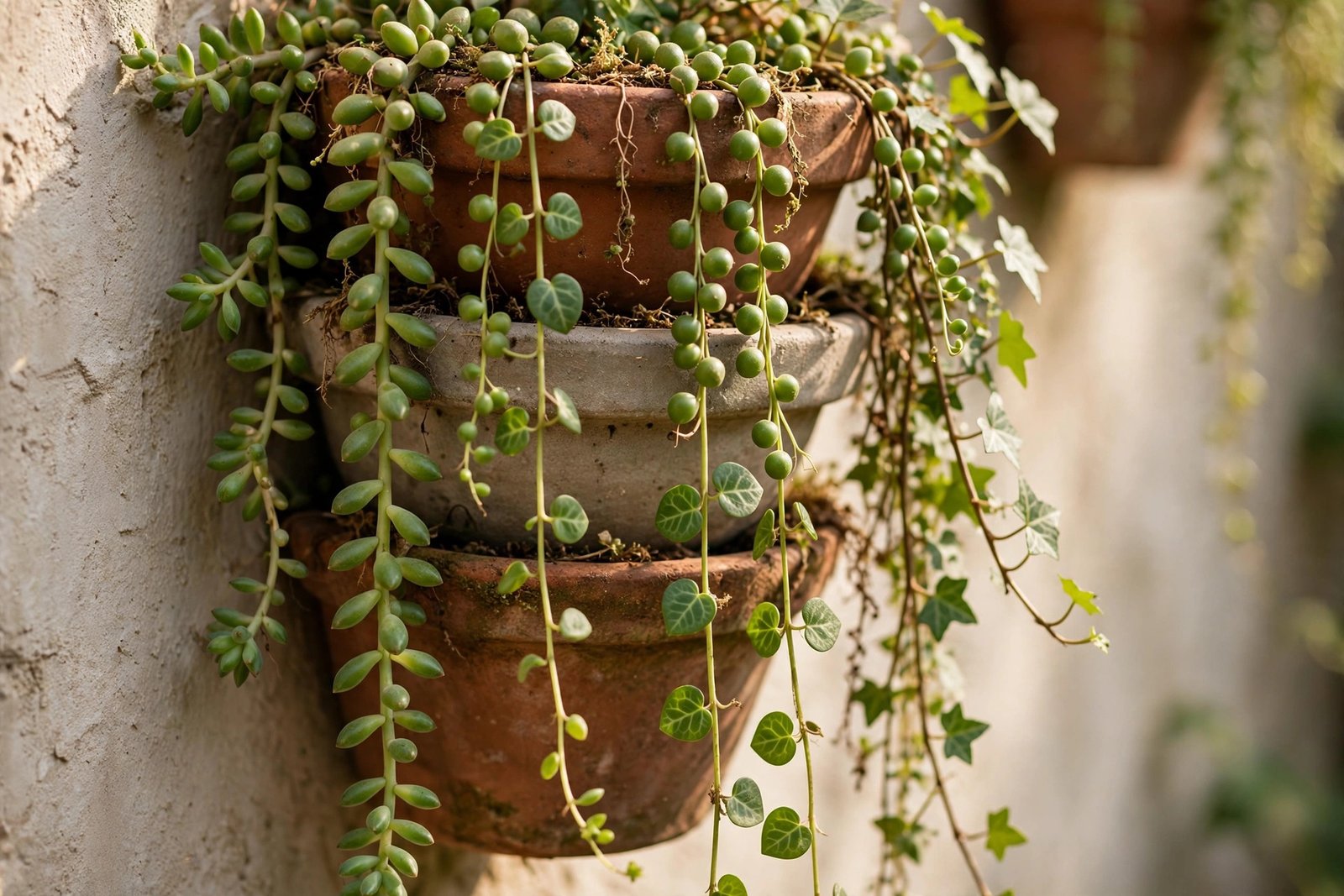
A single best vertical purchase for many gardeners is a fabric pocket planter — one of those hanging organizers with around twelve to thirty-six pockets, originally meant for shoes. Mount it on the shadiest wall and plant it with things that don’t mind a small root zone: parsley, chives, mint (which deserves containment anyway), thyme, and a few trailing nasturtiums along the bottom row. Total cost can be under twenty dollars, and it holds more herbs than one household can use.
Fabric planters have real advantages. They are light, they drain through the whole surface so roots rarely sit soggy, and they air-prune roots instead of letting them circle into a tangled mess. The downside is they dry out fast. In summer, water daily, sometimes twice on hot days, and always give the pockets a good soak rather than a sprinkle.
Plastic or metal wall troughs are the sturdier alternative. They hold soil longer between waterings and look tidier. Whatever you choose, mount it at a height where you can comfortably reach the top row. Mounting a planter so high it needs a step stool to water means the top row of basil dies of neglect within a fortnight. Reaching your plants comfortably is a design requirement, not a luxury.
Trellises, Towers, and Things That Climb
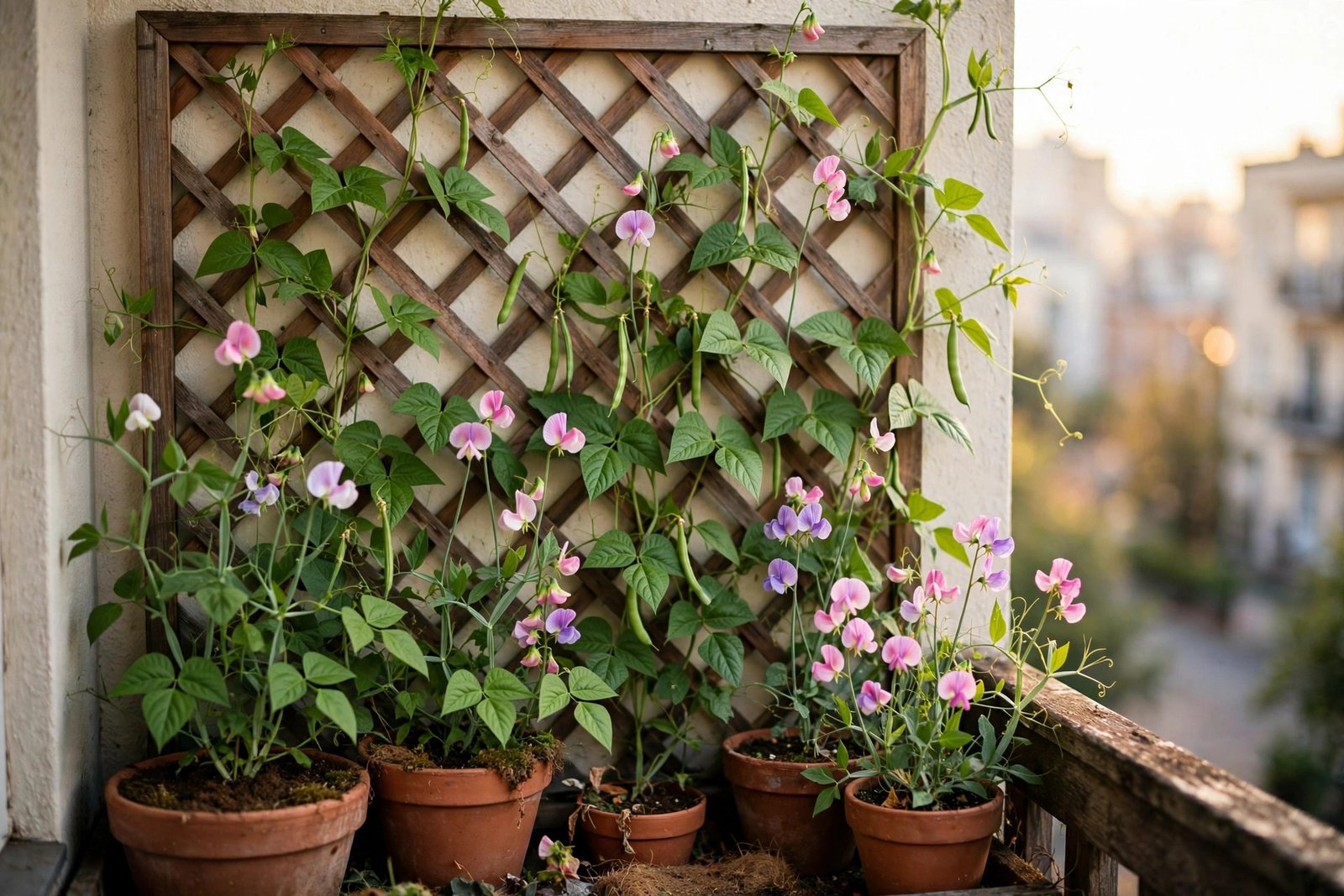
If pocket planters are the walls of your vertical garden, trellises are the skyscrapers. Climbing plants give you the biggest harvest per square inch of floor space of any container crop. A single pot of pole beans will climb six feet up a trellis and produce handfuls of beans all summer from a pot just 10 inches (25 cm) wide.
Peas are the spring version of the same trick. Dwarf varieties like ‘Tom Thumb’ barely need support, but proper climbing peas such as ‘Kelvedon Wonder’ will race up a simple bamboo wigwam made from three canes tied at the top. Cucumbers bred for containers, like ‘Patio Snacker’, climb beautifully if you give them a trellis to grip, and growing the fruits hanging in the air keeps them straight and slug-free. Even cherry tomatoes can be trained upward — ‘Tumbling Tom’ suits hanging baskets and indeterminate varieties like ‘Gardener’s Delight’ tie well to a tall obelisk.
You don’t need to buy a fancy trellis. A wooden lattice panel from a hardware store, bamboo canes arranged as a fan, or even a sturdy piece of netting stapled to a frame will do. Just make sure whatever you use is anchored. A trellis loaded with beans and wet from rain catches wind like a sail, and a toppled trellis can take out half your pots on the way down. Weighing down the base pot with a brick is a lesson learned after a gusty night rearranges a balcony at 3 a.m.
Shelves, Ladders, and Tiered Stands
Not everything climbs, and not everything belongs on a wall. Enter the humble plant shelf. A three- or four-tier wooden or metal shelving unit against a wall multiplies your growing surface without touching the wall at all — ideal for renters. A shelf holds seedlings and small pots up top where the light is best, with bigger pots and the watering can on the lower shelves.
The trick with shelving is thinking in layers of light. The top shelf gets full sun, so that is where your tomatoes, peppers, and basil go. Each shelf down gets a little more shade, which suits lettuce, spinach, and herbs like parsley and mint perfectly. Treat the shelf like a little apartment building: sun-worshippers in the penthouse, shade-tolerant tenants on the lower floors.
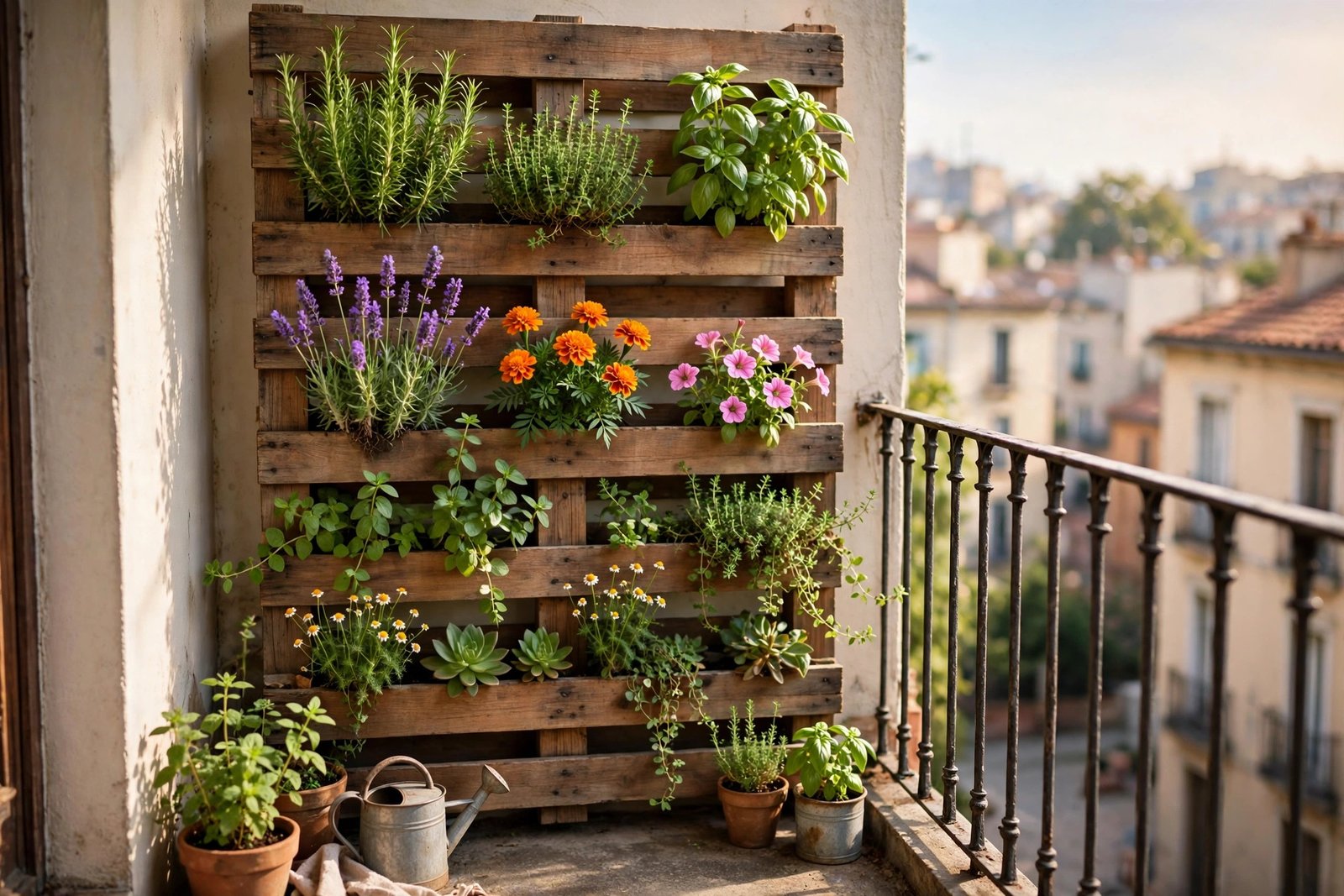
Old wooden ladders are the charming version of this. Lean one against a wall, lay boards across the rungs, and you have instant tiered growing space — proof that vertical gardening needs no fancy gear at all. Just check the ladder is stable and the boards can’t slide off.
Hanging Baskets and the Forgotten Ceiling
Look up. That ceiling, or the underside of the balcony above, is plantable. Hanging baskets of trailing cherry tomatoes, strawberries, or herbs turn dead air into productive space, and there is something deeply satisfying about picking tomatoes at eye level. A ‘Tumbling Tom’ basket can produce dozens of sweet little tomatoes over the season, all from a 12-inch (30 cm) basket.
Strawberries in hanging baskets are a particular joy because the fruits dangle in the air away from soil, slugs, and rot. Everbearing varieties like ‘Mara des Bois’ will fruit from early summer into autumn. Herbs like trailing rosemary and thyme also do well in baskets, though they need watering even more religiously than wall planters — hanging baskets are the first things to dry out in wind and sun.
One caution: use proper ceiling hooks rated for the weight, and use a drip saucer or a basket with a built-in reservoir. Nobody wants a muddy shower, least of all the neighbor whose balcony is directly underneath. Saucers under all hanging baskets prevent memorable incidents involving downstairs neighbors, white tablecloths, and apologies.
What Grows Best Vertically (and What Doesn’t)
The best plants for vertical gardening share a few traits: shallow or modest root systems, tolerance for drying out between waterings, and either a climbing habit or a trailing one. Reliable performers are herbs (basil, parsley, chives, thyme, mint), salad leaves, strawberries, trailing cherry tomatoes, peas, beans, and cucumbers bred for containers. Nasturtiums and trailing lobelia add color and attract pollinators.
What doesn’t work as well: anything that needs a huge root run, like full-size carrots or potatoes, which sulk in shallow vertical planters. Heavy feeders like corn are a non-starter. And very thirsty plants struggle in the top rows of wall planters, where everything dries fastest. If you are new to all this, start with the easiest plants for beginner balcony gardeners and move them upward as your confidence grows.
Watering discipline is the make-or-break skill for vertical growing. Check wall planters every single morning in summer with the finger test — poke a finger an inch into the soil; if it is dry, water. Mulching the top of each pocket or pot with a thin layer of bark chips slows evaporation noticeably.
Frequently Asked Questions
Will vertical planters damage my walls?
They can if you are careless, so plan for it. Moisture trapped behind a planter against a wall can stain paint or encourage mold, especially indoors or on rendered walls. Leave a small air gap behind every wall planter and take fabric planters down once a year to let the wall dry out fully. Freestanding options like shelves, ladders, and railing planters avoid the question entirely.
How much weight can my balcony wall hold?
It depends entirely on the wall. Solid brick or concrete with proper masonry anchors can hold a great deal; hollow walls and plasterboard much less. As a rule of thumb, a filled wall trough 24 inches (60 cm) long can weigh 25–35 lbs (11–16 kg) when freshly watered — heavier than most people guess. When in doubt, go freestanding, spread the load across multiple fixings, and never hang anything heavy from plasterboard with a standard picture hook.
Do vertical gardens need more watering?
Yes, noticeably more. Wall planters and hanging baskets are shallow, exposed to wind on multiple sides, and drain freely — all of which means they dry out far faster than floor pots. In summer, plan on daily watering for most vertical setups, twice daily in heatwaves above 85°F (29°C). Self-watering wall planters exist and are worth considering if you travel. For more on the trade-offs, see the notes on watering cans vs self-watering pots.
Can I grow vegetables vertically, or just herbs and flowers?
Real vegetables, absolutely. Climbing beans, peas, container cucumbers, and cherry tomatoes trained up trellises are some of the most productive crops per square foot. Leafy greens like lettuce and spinach do brilliantly in wall pockets and on lower shelves. The vegetables that grow well in pots mostly transfer straight to vertical setups — just make sure each plant still gets a big enough root zone.
What if my landlord won’t let me drill into the walls?
You still have plenty of options. Freestanding tiered shelves, leaning ladders, tension-rod frames between floor and ceiling, and heavy-duty adhesive hooks rated for outdoor use can all hold vertical gardens without a single hole. Railing-mounted planters clamp on rather than drilling in. And an over-the-door style pocket planter can hang from a balcony railing or a sturdy S-hook. Years of renting with a strict no-drilling rule still allow half a garden to grow upward.
Growing up changes a balcony more than any single plant ever does. It turned a cramped little slab into something that actually feels like a garden — layered, lush, and a little bit wild. Start with one wall or one trellis, see how it goes — the rest of the vertical space will soon start looking like an opportunity rather than just… a wall. Happy climbing.