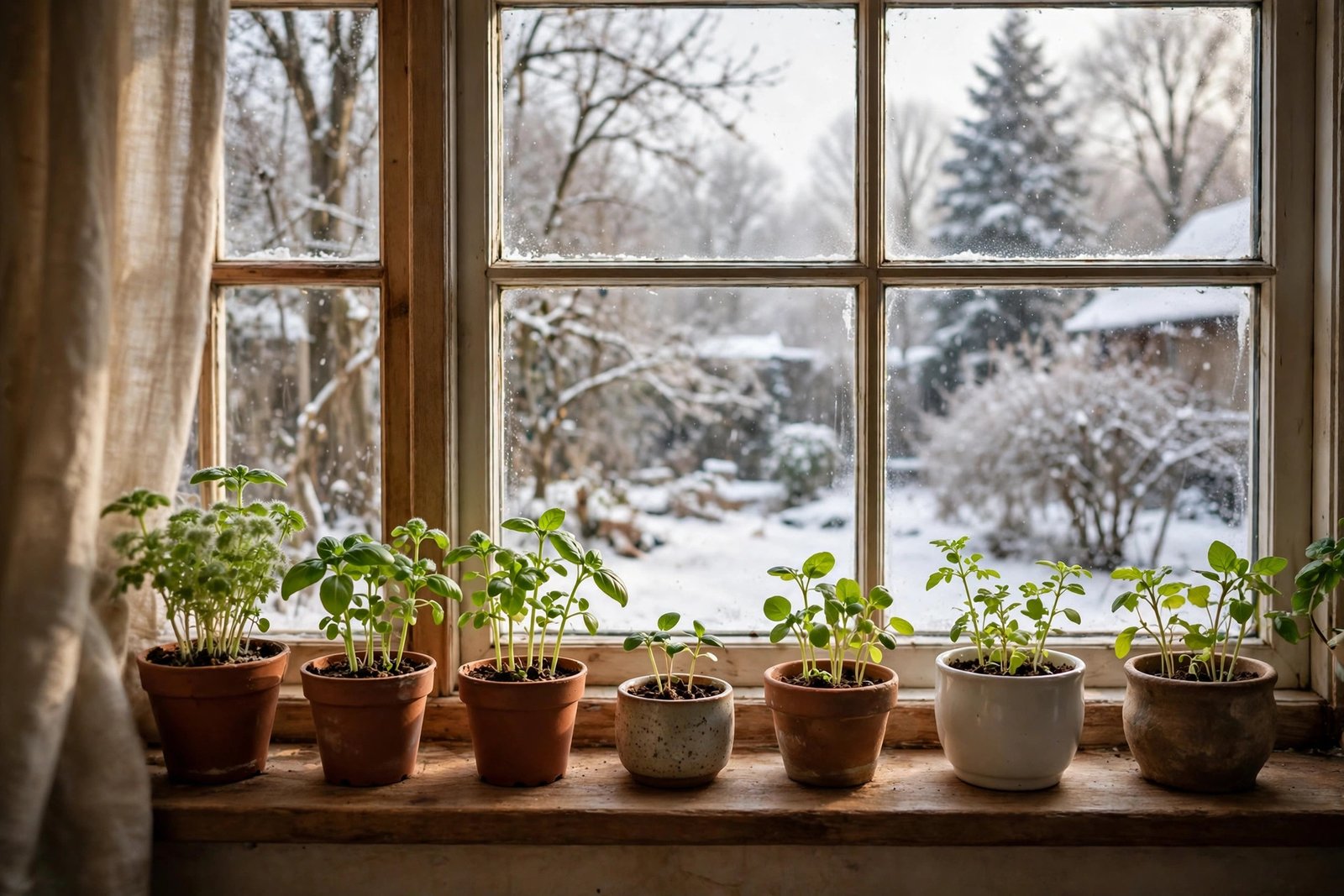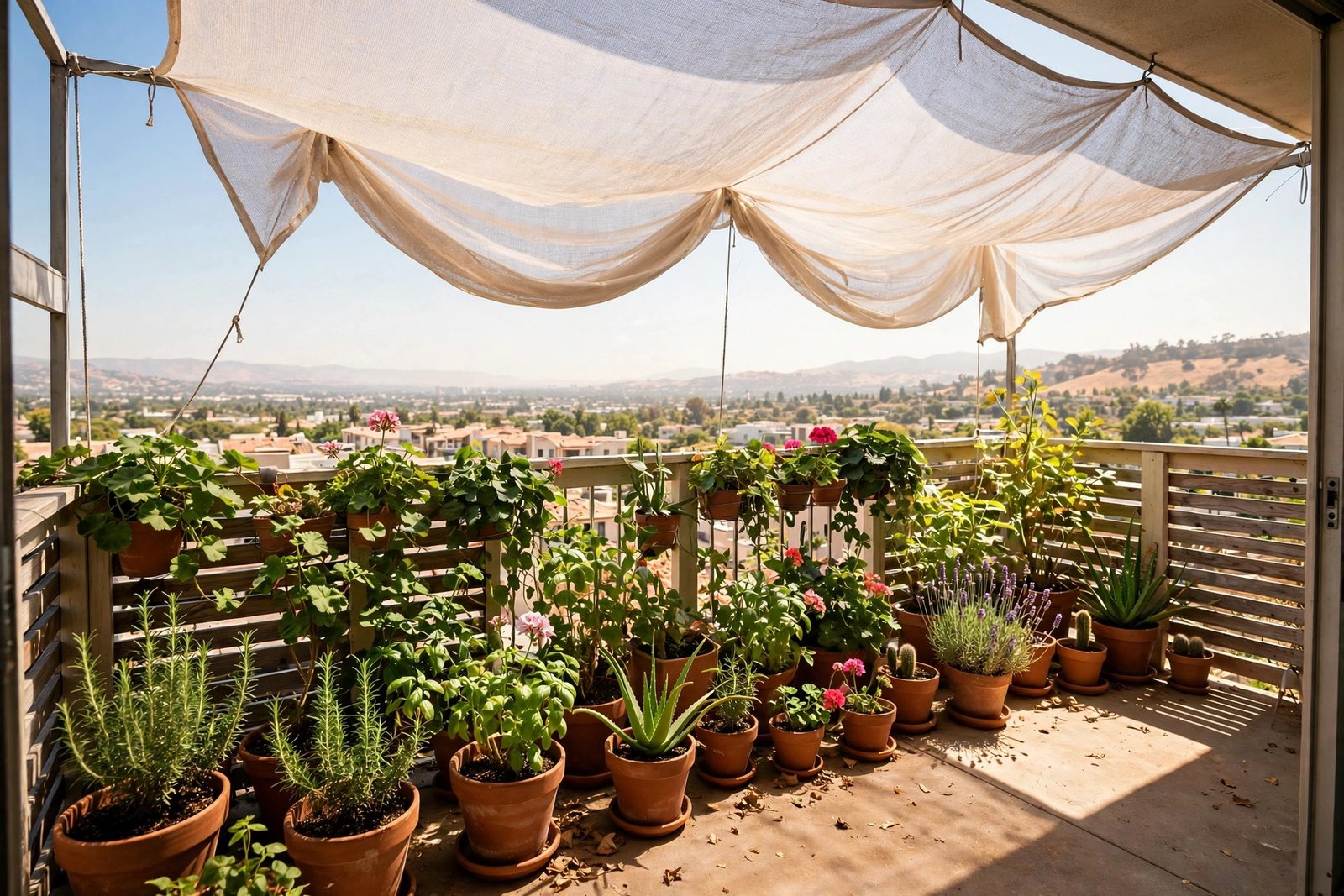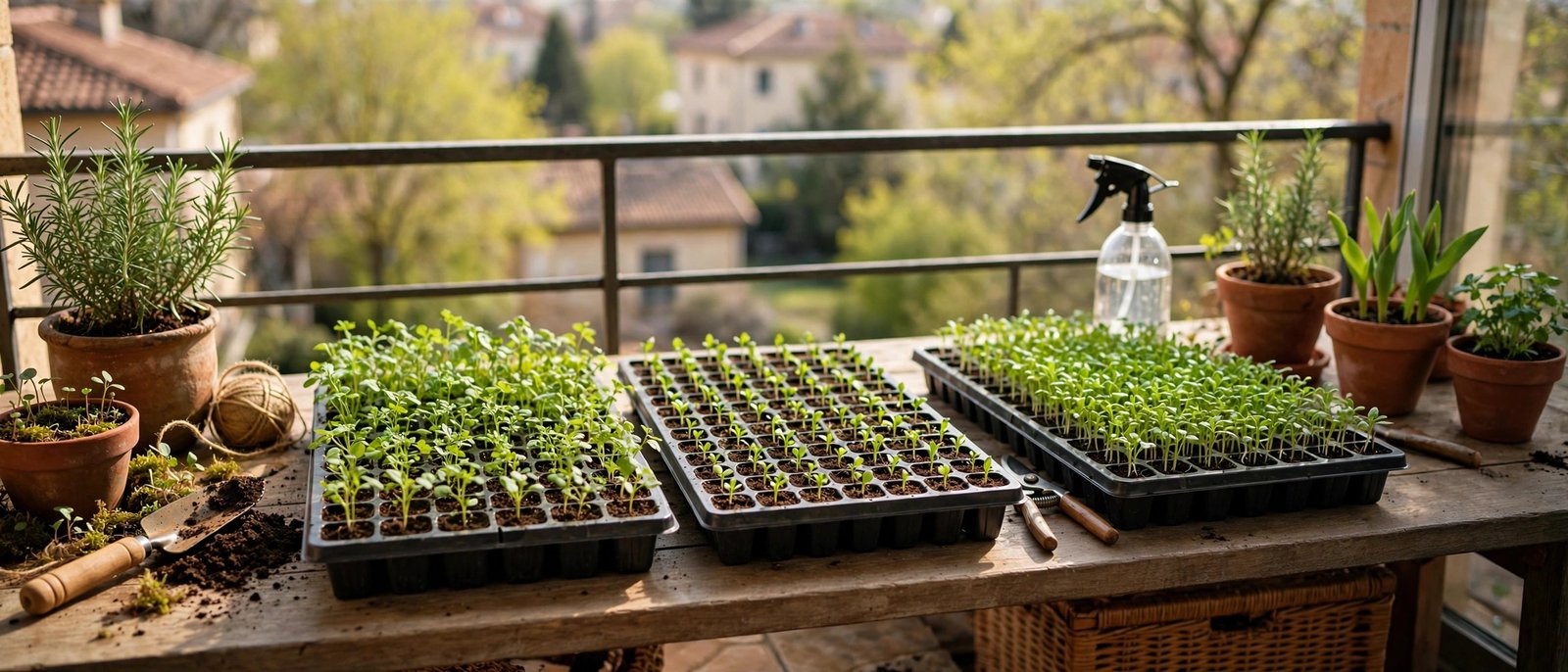
Did you know a potted plant’s roots can freeze solid while the same plant in the ground stays perfectly fine a metre away? The soil in a container has no earth around it to insulate it, so it follows the air temperature down — fast. Many gardeners learn this the expensive way: a beautiful terracotta pot of rosemary left out through a cold snap, found split clean in half, the root ball frozen like a plant ice lolly. The rosemary doesn’t make it. The pot definitely doesn’t make it. That kind of November teaches that putting a container garden to bed for winter is a real job, not just “stop watering and hope.”
The good news: autumn preparation is mostly simple, physical work, and a weekend or two in October sets your garden up for a much better spring. Here’s a full routine, refined over years of balcony winters.
The big clear-out: what stays and what goes
Late September through October, do an honest audit of every pot. Annuals that are finished — spent tomatoes, cucumbers, courgettes, bolted salad — get pulled. Be ruthless here; a dead tomato plant in November is just a slug hotel. Compost the healthy foliage (diseased stuff goes in the bin, never the compost — see composting in a small apartment for the method) and shake the old root balls out over the compost too.
What stays: perennial herbs (rosemary, thyme, sage, chives, mint), anything you’re overwintering, and autumn-planted crops. Don’t cut perennial herbs back hard in autumn — that soft new growth is frost-tender and the plant needs its existing foliage for winter photosynthesis. A light tidy, removing dead stems, is enough. The hard prune waits for spring.
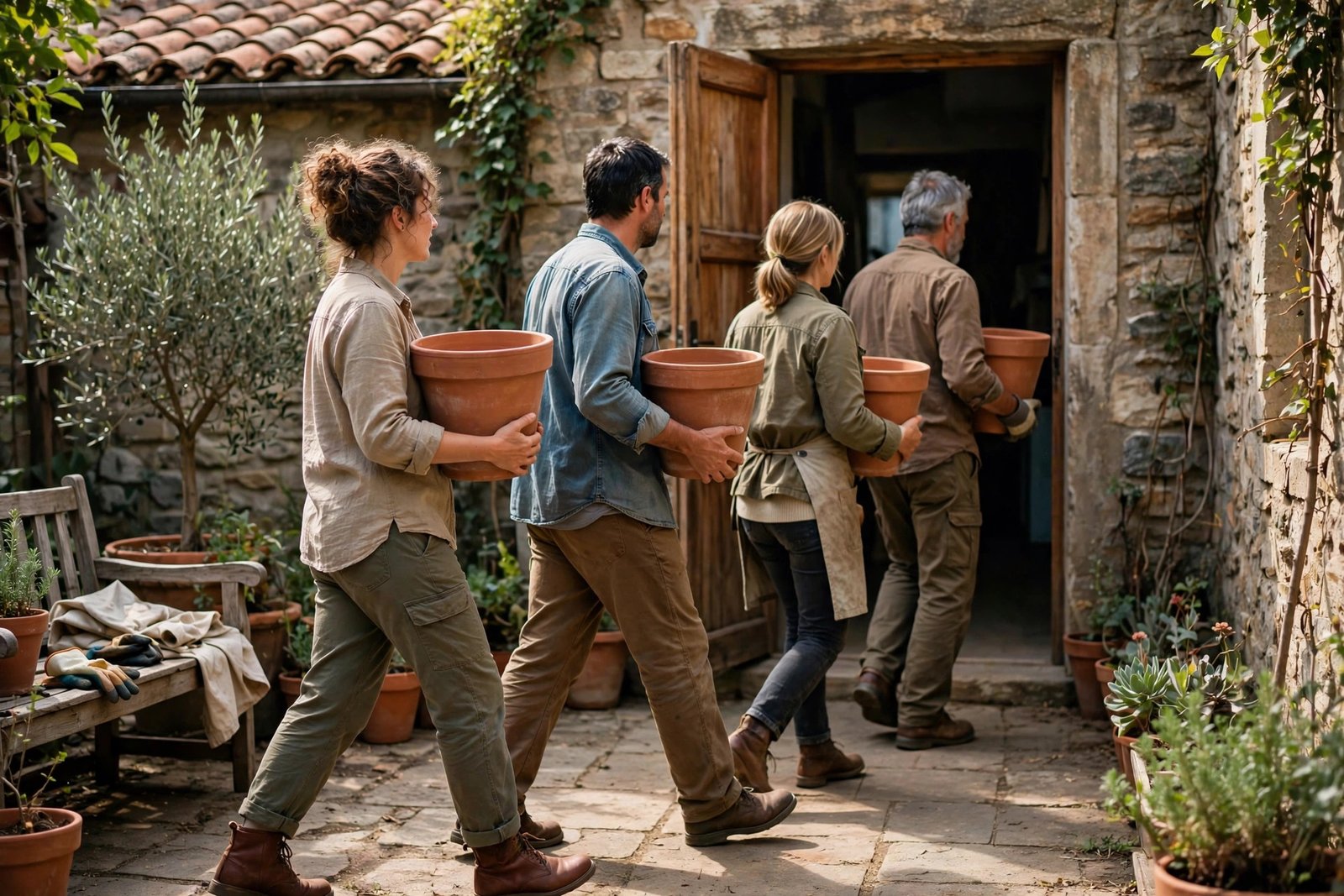
Empty pots get cleaned, dried, and stacked somewhere sheltered. Terracotta in particular should come out of the rain — it’s porous, absorbs water, and cracks when that water freezes and expands. Store them upside-down under the balcony table with a tarp over them. Plastic pots can stay out, but I still clean them; dried-on algae and old soil are just disease waiting for spring.
Protecting pots from frost
This is the part most balcony guides skip, and it’s the part that saves you the most money. A container’s roots experience roughly the air temperature, while in-ground roots stay several degrees warmer. In USDA zone 7 / RHS H4 territory, that difference kills.
Cluster and shelter. Group your remaining pots together against the most sheltered wall — ideally the building wall, which leaks a little warmth all winter. Tuck the hardiest plants on the outside of the group as windbreaks and the most tender in the middle. Raise pots off cold balcony floors on pot feet or bits of wood; floors conduct cold straight into the root ball.
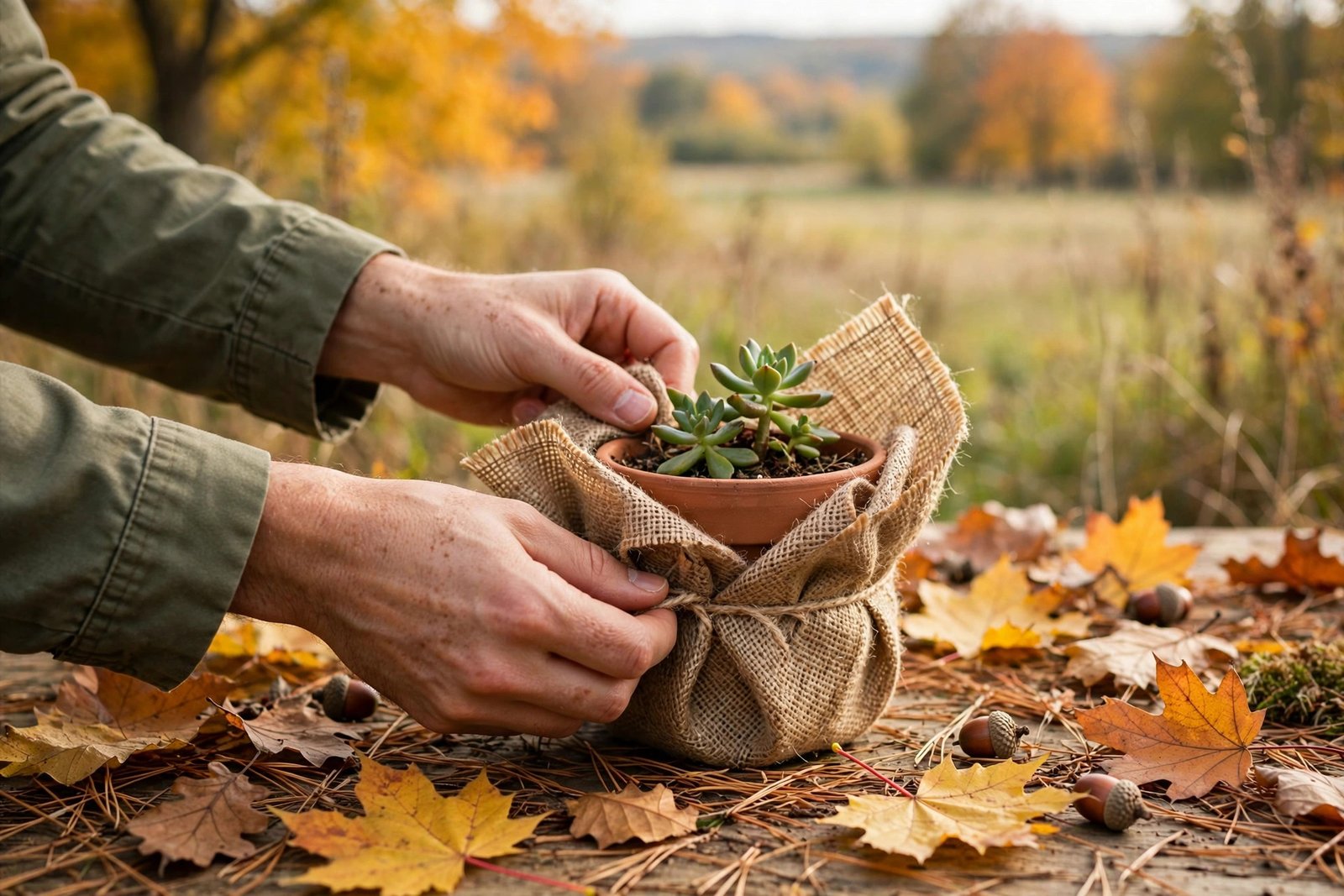
Wrap vulnerable pots. Terracotta and ceramic pots holding perennial plants get wrapped in bubble wrap or burlap for winter. Wrap the pot, not the plant — the goal is insulating the root zone. Two layers of bubble wrap secured with string does the job; it looks ridiculous and works brilliantly. Plastic pots usually don’t need wrapping unless you’re expecting a hard freeze below about 20°F / -7°C.
Mulch the surface. A thick 3-inch / 7 cm layer of bark chips or straw over the soil in each pot insulates the top of the root ball, where the most cold damage happens. Pull it back slightly from stems to prevent rot.
Know your plants’ limits. Rosemary survives down to about 15°F / -9°C in a pot (colder in the ground). Thyme and sage are tougher. Mint is nearly indestructible. Anything tender — citrus, tender pelargoniums, a beloved chilli plant — needs to come indoors before first frost, covered in detail in overwintering tender plants indoors.
Quick Tips:
- Water pots once more deeply just before a hard freeze — moist soil freezes slower than dry soil and protects roots
- Stop feeding everything by early autumn; soft new growth from late feeding is the first thing frost kills
- Check stored pots monthly for slugs and snails sheltering underneath — evict them before spring
- One hard frost below 25°F / -4°C is the trigger to wrap pots and move tender plants inside, not the calendar date
Autumn planting: the garden isn’t over
Here’s the part beginners miss: autumn isn’t just shutdown season, it’s planting season for a whole second act. A sheltered balcony can produce well into November most years.
Salad greens sown in early September — ‘Winter Density’ lettuce, mizuna, rocket, land cress — grow slowly through autumn and give you cuttings for months. They’ll survive light frosts, especially with a bit of fleece over them on cold nights. Sow a fresh container every September and eat from it until Christmas in a mild year.
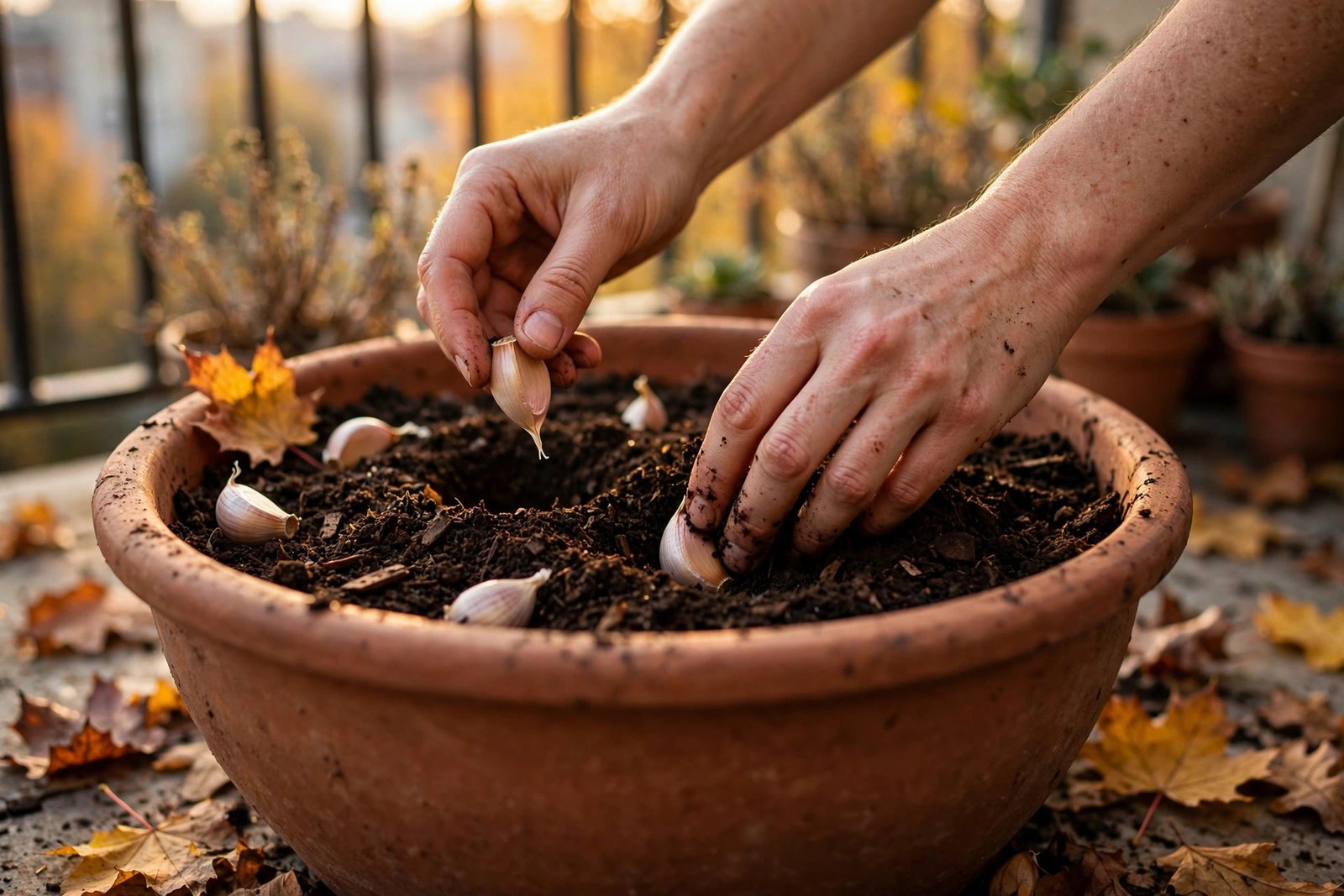
Garlic goes into pots in October-November: push cloves 2 inches / 5 cm deep into a deep container, and they’ll root over winter for a summer harvest. ‘Solent Wight’ does well in containers. It’s the lowest-effort crop — plant it, ignore it until spring, harvest in July.
Spring bulbs in pots are pure joy for almost no work. Layer daffodils, tulips, and crocuses in a big pot in October (the “bulb lasagne” — daffs deepest at 6 inches / 15 cm, tulips at 4 inches / 10 cm, crocus near the top), water once, and forget about them until March. One big bulb pot every autumn brings absurd happiness every spring.
Broad beans (‘Aquadulce Claudia’) can be sown in October in mild areas for an early summer crop. They sit through winter as small plants and take off in March. This only works where winters stay above about 20°F / -7°C — further north, wait for spring sowing.
Winter Container Garden Soil and Pot Care
Soil in pots doesn’t get a winter break the way garden soil does — it just sits there, getting compacted by rain. A few small jobs keep it healthy:
Keep soil covered. Bare potting mix erodes and compacts under winter rain. The mulch you added for frost protection does double duty here. For empty pots you’re storing with soil in them, a mulch layer or even an upturned saucer on top keeps the structure intact.
Don’t let pots waterlog. Winter’s real killer isn’t cold, it’s cold plus wet. Roots sitting in soggy soil rot, and frozen soggy soil is worse. Check drainage holes aren’t blocked by fallen leaves, tip saucers out after heavy rain, and tilt empty stored pots so they don’t collect water. If your balcony has a drainage problem in winter, drainage explained covers the fixes.
Water sparingly but don’t forget entirely. Evergreen plants (rosemary, thyme) still lose water through their leaves all winter. During dry spells with no rain for a couple of weeks, give them a drink on a mild day. Deciduous and dormant plants need almost nothing — check monthly and water only if the soil is bone-dry several inches down.
The autumn jobs list, condensed
If you want the whole season on one sticky note:
- Late September: last harvests, pull finished annuals, sow autumn salad, stop all feeding
- October: plant garlic and spring bulbs, wrap vulnerable pots, cluster everything against the sheltered wall, mulch all surfaces, clean and store empty pots
- November: move tender plants indoors before first hard frost, final tidy, check drainage holes, one last deep water before the cold sets in
- December–February: monthly checks — water evergreens in dry spells, evict slugs from stored pots, tip out waterlogged saucers, and otherwise leave everything alone
The “leave everything alone” part is genuinely the hardest for many gardeners. Winter is when the urge to fuss strikes — repotting things, “improving” stuff. But dormant plants want to be left in peace, and most winter damage comes from over-attention, not neglect. The garden is sleeping. Let it sleep.
Frequently Asked Questions
Can I leave soil in pots over winter, or should I empty them?
Leave it in — empty pots are just clutter, and soil left in place with a mulch cover stays healthier than soil dumped in a heap. The exception is terracotta pots in freezing climates: empty them, clean them, and store them dry indoors, because a soil-filled terracotta pot left out will crack. Come spring, refresh the stored soil with compost as described in the spring checklist.
Will my perennial herbs survive winter on the balcony?
Most will, with protection. Thyme, sage, chives, and mint are hardy well below freezing even in pots. Rosemary is the borderline one — fine to about 15°F / -9°C in a sheltered, wrapped pot, but bring it in if a harder freeze is forecast. Lavender survives in pots if drainage is sharp; wet winter soil kills it faster than cold. When in doubt, wrap the pot and cluster it with others.
Should I prune everything back in autumn?
No — this is one of the most common autumn mistakes. Leave perennials and shrubs alone; their existing growth protects the crown, and autumn pruning stimulates tender new growth that frost will kill. Cut back only what’s truly dead or diseased. The proper prune happens in spring when you can see what’s alive. Annuals get pulled entirely, roots and all.
My balcony gets no winter sun. Will anything survive?
Dormant plants don’t need sun — they’re asleep. Perennial herbs, bulbs, and garlic will all sit happily through a dark winter as long as they’re cold-hardy and not waterlogged. Don’t try to grow actively-growing plants (salad, herbs you want to harvest) on a sunless winter balcony without help — that’s a job for a bright windowsill or grow lights indoors.
When do I start again in spring?
Watch the plants, not the calendar. When your chives push up new green shoots and the bulbs show noses, the garden is waking up — usually March. That’s your cue to unwrap pots, refresh soil, and start the spring routine. Until then, enjoy the rest. You’ve earned it after the summer’s watering marathon.
There’s something deeply satisfying about a container garden put to bed properly for winter — pots clustered and wrapped, bulbs sleeping under the soil, garlic quietly rooting. It feels like tucking the garden in. And when spring comes and everything wakes up healthy because you did the autumn work, you’ll be so glad you spent those two October weekends on it. Future you, harvesting that garlic in July, says thank you.