
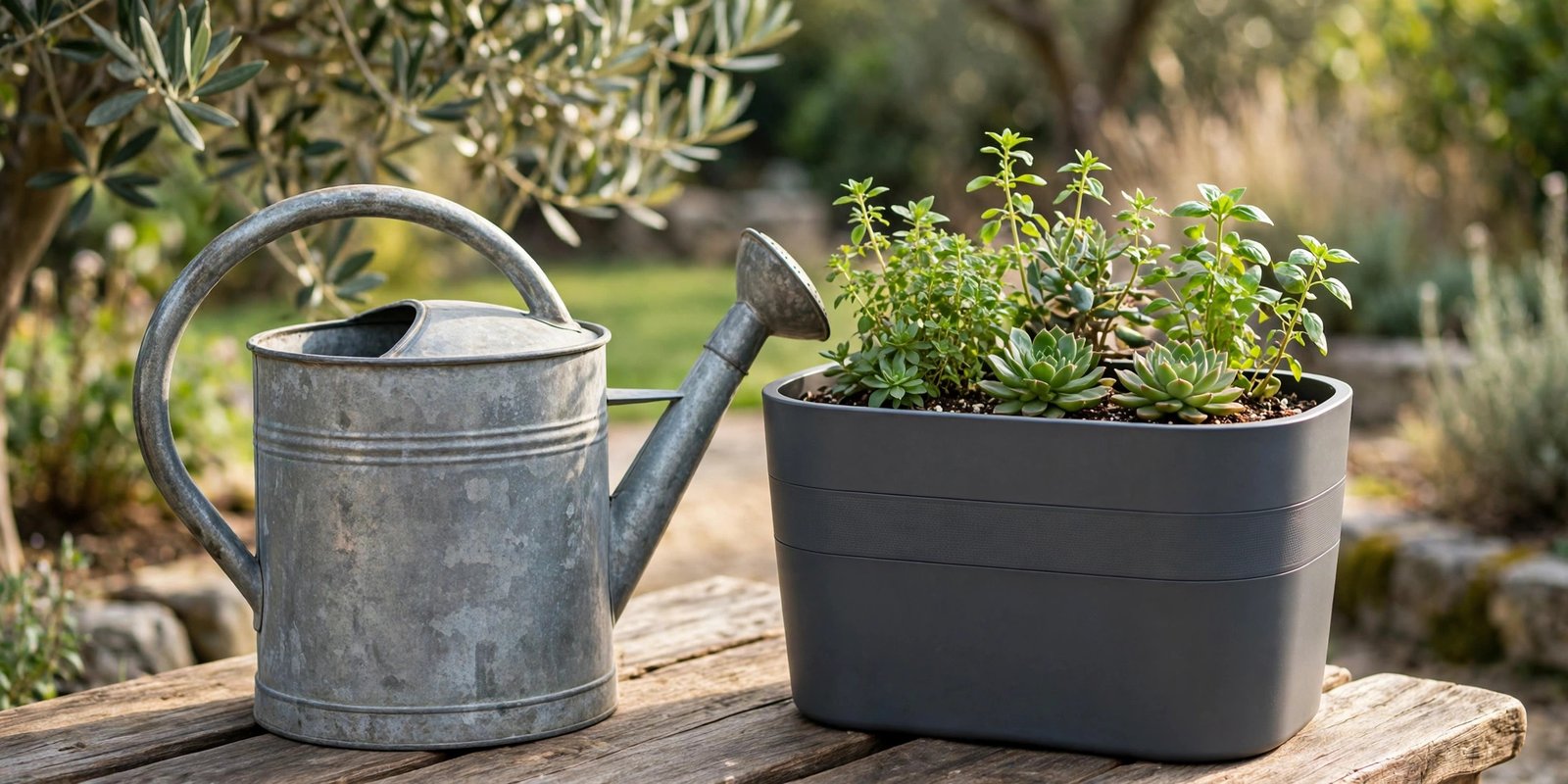
Quick question: how many plants have died of thirst while you were on holiday? If your answer is “none,” congratulations — you are either very disciplined or you have excellent plant-sitters. The common answer, before a watering system is figured out, is “an embarrassing number.” There is a special guilt to coming home from a lovely week away to a balcony of crispy brown corpses, felt more than once by most gardeners.
That guilt is exactly what self-watering pots promise to fix. Fill the reservoir, walk away, and your plants drink as they need for days or even weeks. It sounds like the answer to every busy gardener’s prayers — and the marketing certainly thinks so. But after three seasons of using both side by side, opinions form. Some plants genuinely do better in self-watering pots. Some do worse. And the watering can, unglamorous as it is, still earns its place. Here is the honest comparison.
How Self-Watering Pots Actually Work
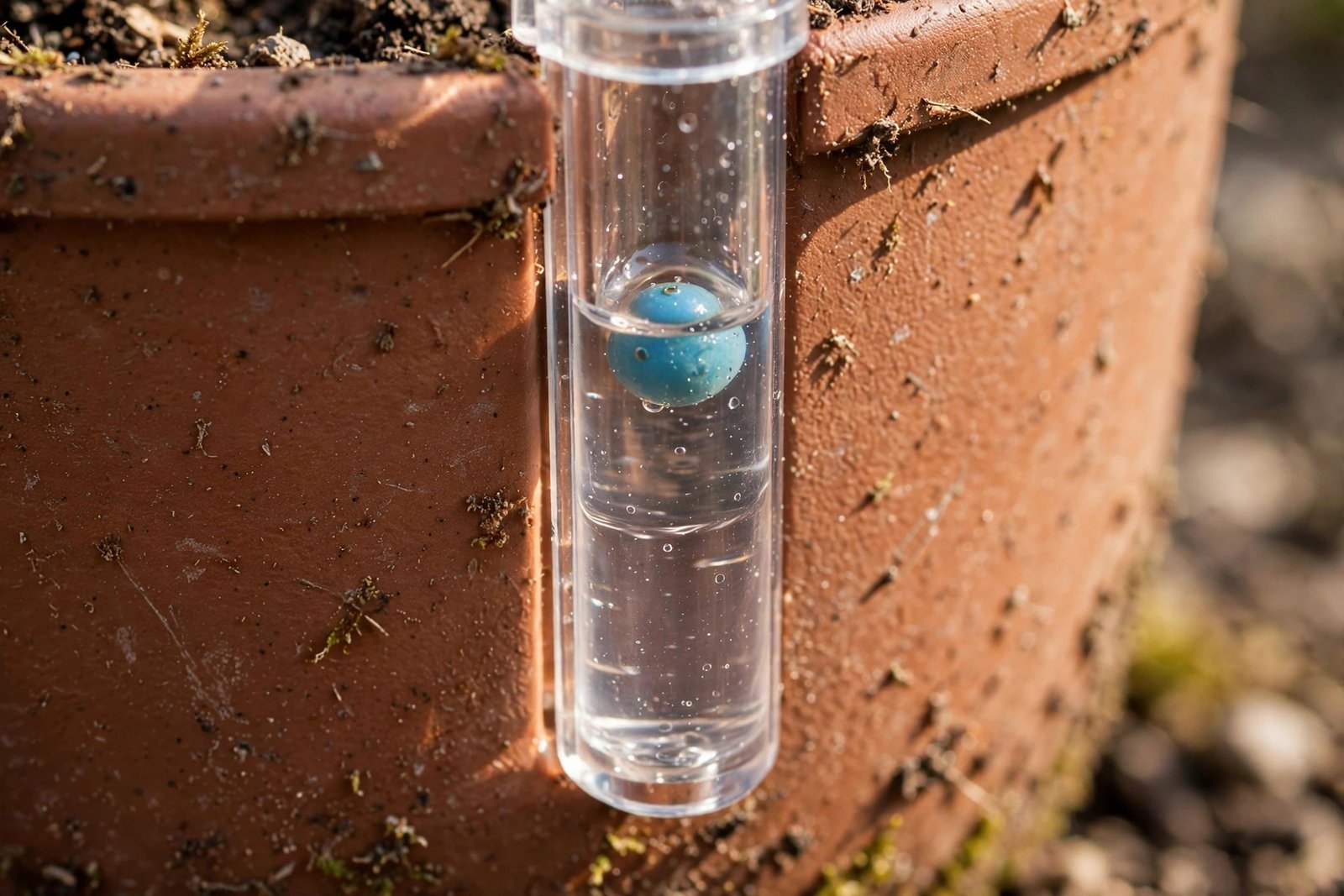
Strip away the marketing and a self-watering pot is simple: a container with a water reservoir at the bottom, separated from the soil by a perforated platform, with a wick or soil column drawing moisture upward into the root zone. You fill the reservoir through a fill tube, and capillary action keeps the soil consistently moist. A little gauge or float tells you when the reservoir is empty.
The key word is “consistently.” Self-watering pots don’t give plants more water — they give plants steadier water. No more drowning on Sunday and drought by Wednesday. For plants that hate fluctuating moisture — and that is most vegetables — this steadiness is genuinely valuable. Self-watering tomatoes rarely get blossom end rot, the classic sign of inconsistent watering, while hand-watered ones get it in hot summers when watering slips.
But “self-watering” is a stretch. Nobody is coming to refill the reservoir for you, check the gauge, or notice the wick has clogged. They are better described as “less-often-watering” pots. In midsummer, 5-gallon self-watering planters need refilling every three to four days — better than daily, but not the fortnight of freedom the box implies.
The Watering Can: Unfashionable but Honest
The watering can has no moving parts, no reservoir to clean, no wick to clog, and costs a fraction of a self-watering pot. A good 2-gallon (7.5-liter) can with a rose head — the sprinkler attachment — runs $15–25 and lasts essentially forever. It works for every plant, every pot size, and every soil type, with zero learning curve.
More importantly, hand watering forces you to look at your plants. Every time you water, you notice things: the first aphids on the beans, a tomato truss starting to color, a pot that’s draining too fast, a seedling that needs thinning. That daily inspection is plant care in disguise. Pest outbreaks, nutrient deficiencies, and memorable spider mite invasions get caught purely by standing there with a watering can, paying attention. A reservoir doesn’t look at your plants. You do — but only if you’re out there.
The downsides are obvious: it takes time, it ties you to a daily routine in summer, and it punishes inconsistency. Miss a hot day and shallow pots suffer. Go away for a week without a plant-sitter and you’re gambling. If your life involves frequent travel or genuinely chaotic schedules, the watering can alone is a risk.
Head-to-Head: The Real Comparison
Cost. A watering can: $15–25, one time, serves unlimited pots. Self-watering pots: $20–45 each for decent ones, and you need one per plant. Converting a ten-pot balcony to self-watering can easily cost $250–350. The can wins on cost by a mile — unless you count the cost of replacing plants that died while you were away, which is the math that actually matters.
Plant health. This is closer than the price suggests. For thirsty, heavy-feeding plants — tomatoes, cucumbers, peppers — self-watering pots produce visibly better results: steadier growth, fewer water-stress problems, bigger harvests. For herbs and Mediterranean plants that prefer drying out between waterings — rosemary, thyme, lavender, sage — self-watering pots can keep things too wet, and a hand-watered terracotta pot is healthier. Match the pot to the plant’s preferences, not the other way around.
Convenience. Self-watering wins for anyone who travels, works long hours, or just forgets. Refilling a reservoir twice a week beats daily watering. But reservoirs need maintenance too: algae grows in fill tubes, wicks clog with roots and mineral buildup, and gauges stick. Once a season, empty every self-watering pot, scrub the reservoir, and check the wicks. It’s a chore the watering can never asks for.
Quick Tips:
- Use self-watering pots for thirsty crops (tomatoes, cucumbers, peppers) and a can for everything else.
- Herbs like rosemary and thyme prefer drying out — keep them in regular pots, not self-watering ones.
- Refill reservoirs before they run dry; letting the wick dry out breaks the capillary action.
- In heatwaves above 90°F (32°C), check self-watering pots daily — reservoirs empty fast.
- A $15 watering can plus two self-watering pots beats ten mediocre self-watering pots.
Longevity and waste. A metal watering can lasts decades. Self-watering pots are mostly plastic, and cheap ones crack, warp, or develop stuck gauges within a couple of seasons. If you buy them, buy sturdy ones — the flimsy $12 versions are false economy and landfill fodder. Sturdy self-watering planters last into their fourth season working perfectly, while a bargain one can crack in its first winter. You get what you pay for.
Overwatering risk. Beginners fear underwatering, but overwatering vs underwatering shows that too much water kills more houseplants than too little. Self-watering pots, used correctly, actually reduce overwatering risk because the soil only wicks up what it needs — but only if the reservoir system works properly. A clogged drainage overflow or a pot sitting in rain with a full reservoir can still drown roots. They’re not foolproof; they’re fool-resistant.
My Actual Setup: The Hybrid System
After three seasons of testing, the answer isn’t one or the other. Both get used, assigned by plant personality.
Self-watering pots hold the thirstiest, most valuable crops: two cherry tomato plants, one cucumber, and one big pepper. These are the plants where consistent moisture directly translates to harvest, and where a missed watering day costs real fruit. The reservoirs get refilled every few days in summer, and the plants reward the effort.
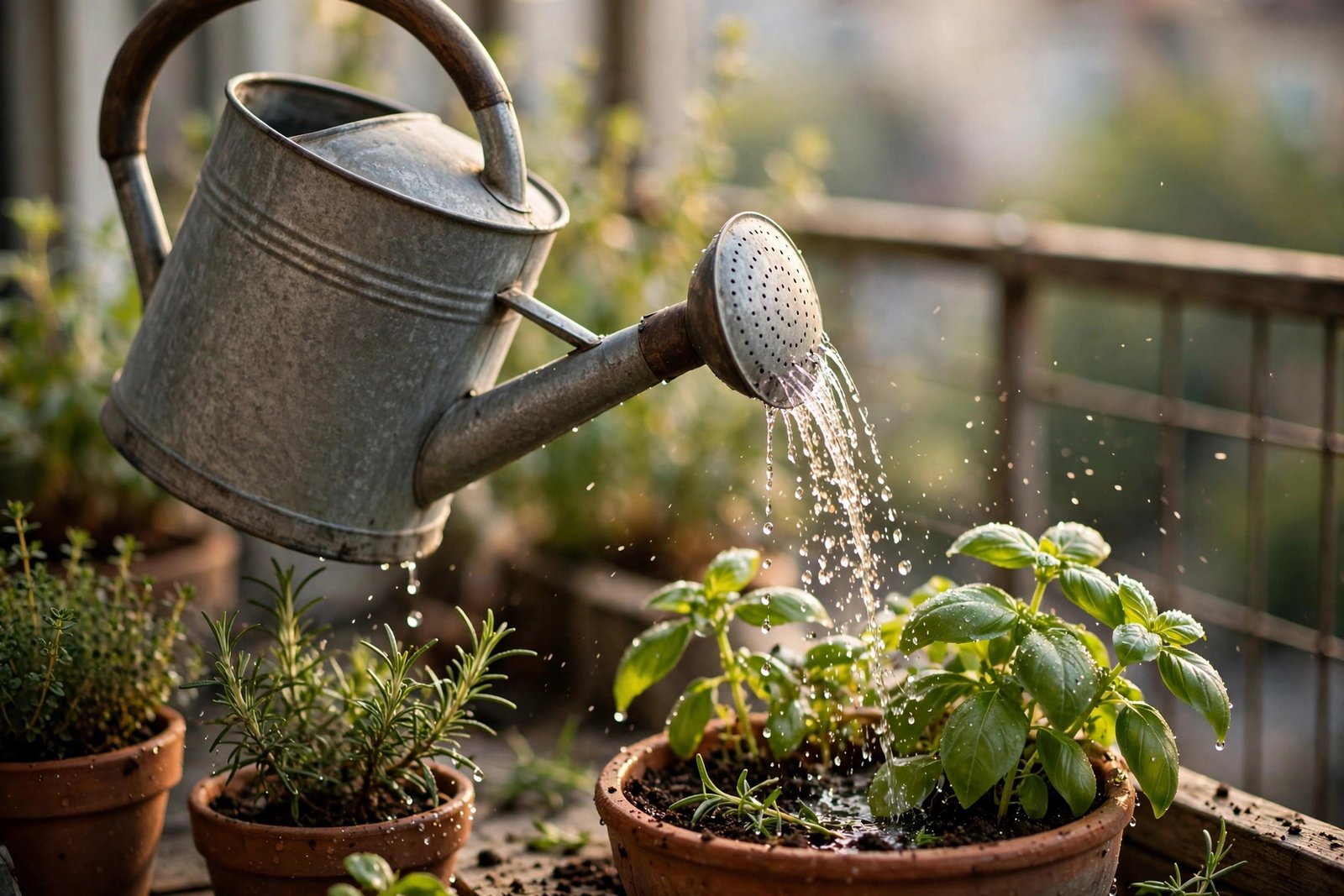
Everything else gets the watering can: herbs, salad leaves, flowers, strawberries, and terracotta pots of rosemary and thyme that actively resent constant moisture. The daily watering round takes about ten minutes — and those ten minutes double as the inspection round, the quiet time, and honestly one of the best parts of the day.
For holidays, the system stretches. Self-watering pots handle a long weekend on their own. For a full week away, move everything into the shadiest corner, mulch heavily, fill every reservoir to the brim, give everything a deep soak, and ask a neighbor to check in once mid-week. All told, exactly one plant lost to a holiday — a dramatic fern, now known to come indoors before trips. If you travel often, it’s worth reading up on how often to water indoor plants too, since holiday plant care starts before you leave.
What to Buy (and What to Skip)
When buying self-watering pots, size up: a bigger reservoir means longer between refills, and cramped self-watering pots dry out almost as fast as regular ones. Look for a clear, reliable water gauge — the little float sticks are better than opaque “just trust us” designs. Check that the reservoir is actually cleanable; if you can’t reach inside to scrub it, algae will eventually win.
Skip the gimmicky end of the market: pots with built-in “smart” moisture sensors that need batteries, tiny 6-inch self-watering pots, and anything where replacement wicks aren’t available. Also skip converting every pot at once. Buy one or two, try them for a season with your thirstiest plants, and expand only if you’re convinced.
For watering cans, the advice from the gardening tools article stands: 2-gallon (7.5-liter) capacity, comfortable handle, rose head included. Metal lasts longer than plastic and looks better doing it. And keep a small indoor can too — hauling the big outdoor one inside for houseplants gets old fast.
One more option worth knowing: simple drip irrigation kits with a timer, starting around $30–40, can water a whole balcony automatically from a tap or a gravity-fed tank. They’re more setup work than self-watering pots but cheaper per plant at scale — the logical next step for larger balconies or frequent travelers, though ten minutes with a can remains a happy place for many.
Questions I Get Asked a Lot
Do self-watering pots cause root rot?
They can, but usually it’s user error rather than the pot’s fault. Root rot happens when roots sit in stagnant water without oxygen. In a properly functioning self-watering pot, the soil wicks moisture up but the roots aren’t submerged — the reservoir is below the soil platform. Problems start when the overflow hole clogs and the reservoir floods the soil, or when the potting mix is too dense and stays soggy. Use a light, airy mix and check the overflow hole each season. More on drainage mechanics in drainage explained.
Can I leave self-watering pots for a two-week holiday?
Honestly, no — not in summer. Even the largest residential self-watering planters hold maybe a week’s worth of water in hot weather, and summer heatwaves can empty a reservoir in days. For two weeks, you need a human checking in, or a drip system on a timer. Self-watering pots turn a daily chore into a twice-weekly one; they don’t eliminate it.
Are self-watering pots worth it for herbs?
Mostly no. The classic culinary herbs — rosemary, thyme, oregano, sage — evolved in dry Mediterranean hillsides and prefer their soil to dry out between waterings. Constant moisture from a reservoir makes them leggy, flavorless, and prone to root problems. Basil, parsley, and mint are the exceptions; they’re thirsty and do fine in self-watering pots. For the rest, terracotta and a watering can is the healthier combination.
What’s the cheapest way to get started with self-watering?
DIY. A plastic storage tote with holes drilled in an inner platform, a piece of PVC pipe as a fill tube, and a fabric wick will work — there are countless tutorials, and the parts cost under $10. It won’t be pretty, but it will teach you whether the concept suits your plants before you spend real money. A DIY tote run for one season growing cucumbers worked brilliantly, ugly as sin.
Do I still need to fertilize in self-watering pots?
Yes — arguably more so. Nutrients still deplete, and because you’re watering less often from the top, top-dressed fertilizer breaks down more slowly. Mix slow-release granules into the soil at planting time and add liquid feed to the reservoir every two weeks in the fruiting season. Watch for pale leaves or stalled growth, the classic signs of a hungry plant, and don’t assume the reservoir handles nutrition as well as hydration.
So, watering can or self-watering pots? The answer after three seasons is gloriously unhelpful: yes. The can for the daily ritual and the inspection it forces on you; the self-watering pots for the thirsty crops where consistency pays in harvest. Start with the can — it’s cheap, it works for everything, and it teaches you to actually look at your plants. Add self-watering pots one or two at a time, for the plants that earn them. Your holiday-guilt days are over.

3 Comments on “Watering Cans vs Self-Watering Pots: What’s Worth It?”